
Introduction
Understanding the effectiveness of influencer marketing is crucial as brands navigate a rapidly evolving digital landscape. With the right strategies and metrics, marketers can measure their influencer campaigns with precision, ensuring they extract maximum value from their investments. But with so many variables at play, how can brands discern which metrics truly reflect success and drive future strategies? This article delves into these essential elements, empowering you to make informed decisions in your marketing efforts.
Understand Influencer Marketing Measurement
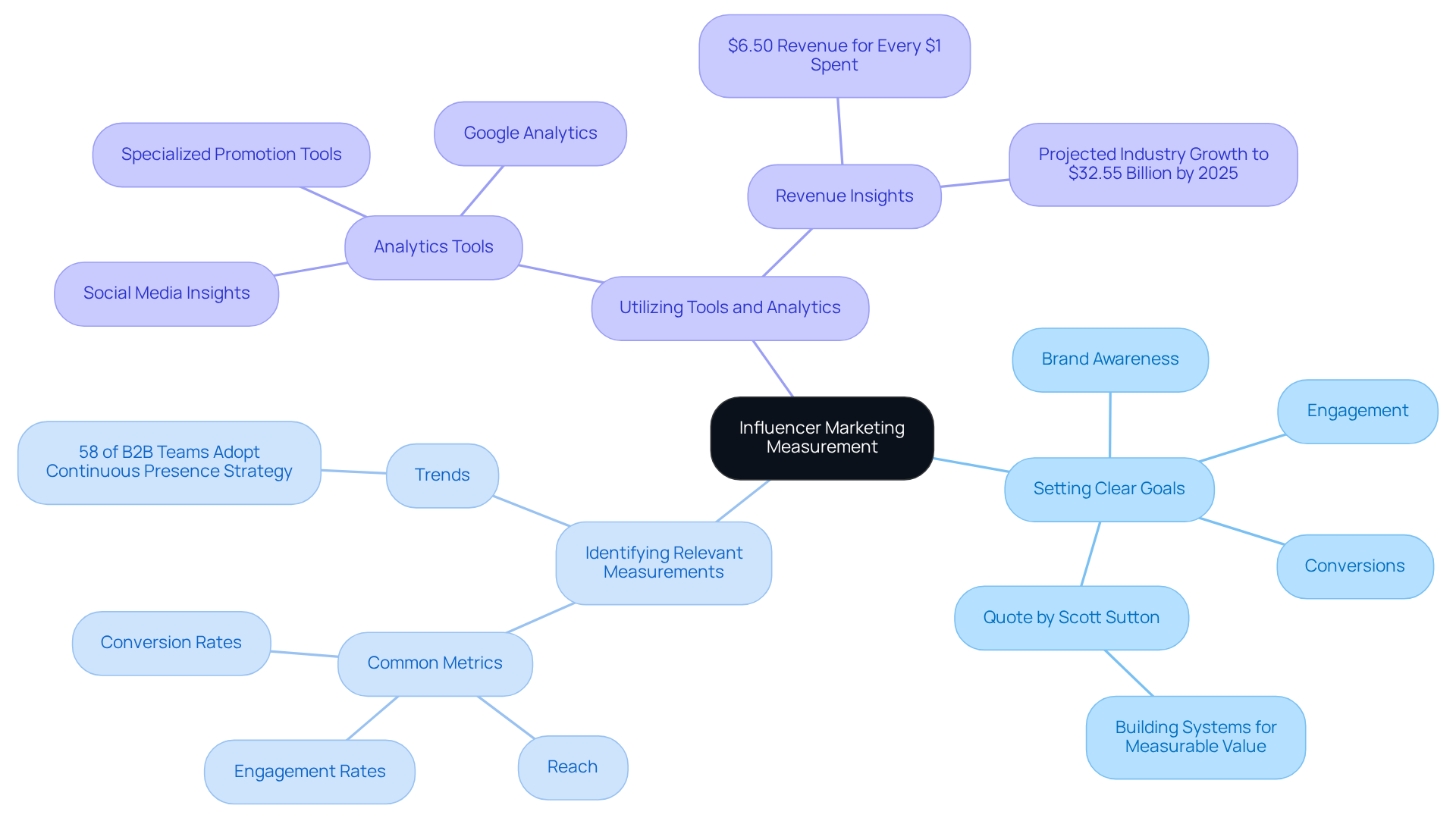
To effectively measure , it’s crucial to grasp what measurement truly involves. To measure , it involves monitoring and analyzing various indicators to assess the effectiveness of your initiatives. This starts with understanding your objectives-whether it’s brand awareness, engagement, or conversions. By clearly outlining these goals, you can select the appropriate metrics to gauge success. Key components of measurement include:
- : What do you aim to achieve with your campaign? This could range from to driving sales. As Scott Sutton, CEO of Later, aptly puts it, "The most successful marketers in 2025 aren't chasing virality; they're building systems that deliver repeatable, measurable value."
- : Choose metrics that align with your goals. Common indicators include reach, engagement rates, and conversion rates. Notably, recent trends show that are adopting a continuous presence strategy with advocates to measure , fostering long-term relationships and enhancing overall .
- : Harness to collect data on performance and audience interaction. Platforms like Google Analytics, social media insights, and specialized promotion tools can yield valuable insights. Typically, companies see around $6.50 in revenue for every $1 invested in , underscoring the importance of precise assessment in a rapidly growing sector .
Understanding these components will empower you to build a robust framework to measure and of your promotional initiatives.
Measure at Different Stages of Campaigns
Evaluating at multiple stages is essential to effectively measure .
Pre-Campaign: Establishing baseline metrics and is critical. This foundational step allows brands to measure by evaluating the campaign's impact against these benchmarks. For instance, monitoring data like audience demographics and past engagement rates can provide valuable insights into anticipated . Furthermore, the tracking method of email collection nearly doubled from 2022 to 2023, showcasing contemporary techniques that can enhance baseline measurement establishment.
During the Campaign: Real-time data tracking is vital for assessing engagement and reach. Utilize to monitor data such as likes, shares, comments, and click-through rates. This immediate feedback enables brands to make necessary adjustments on the fly, optimizing strategies to enhance . Notably, , underscoring the importance of timely engagement tracking.
Post-Campaign: After the campaign concludes, conduct a . Evaluate overall against your initial goals and s. This retrospective analysis is crucial for understanding which strategies were effective and which areas need improvement. For instance, , reflecting a shift towards assessing tangible business outcomes.
By assessing at each phase, brands can measure to ensure their promotional efforts align with objectives and adjust strategies as needed, ultimately driving improved results and maximizing ROI.

Evaluate Key Metrics for Success
To measure the success of your campaigns, focus on these key metrics:
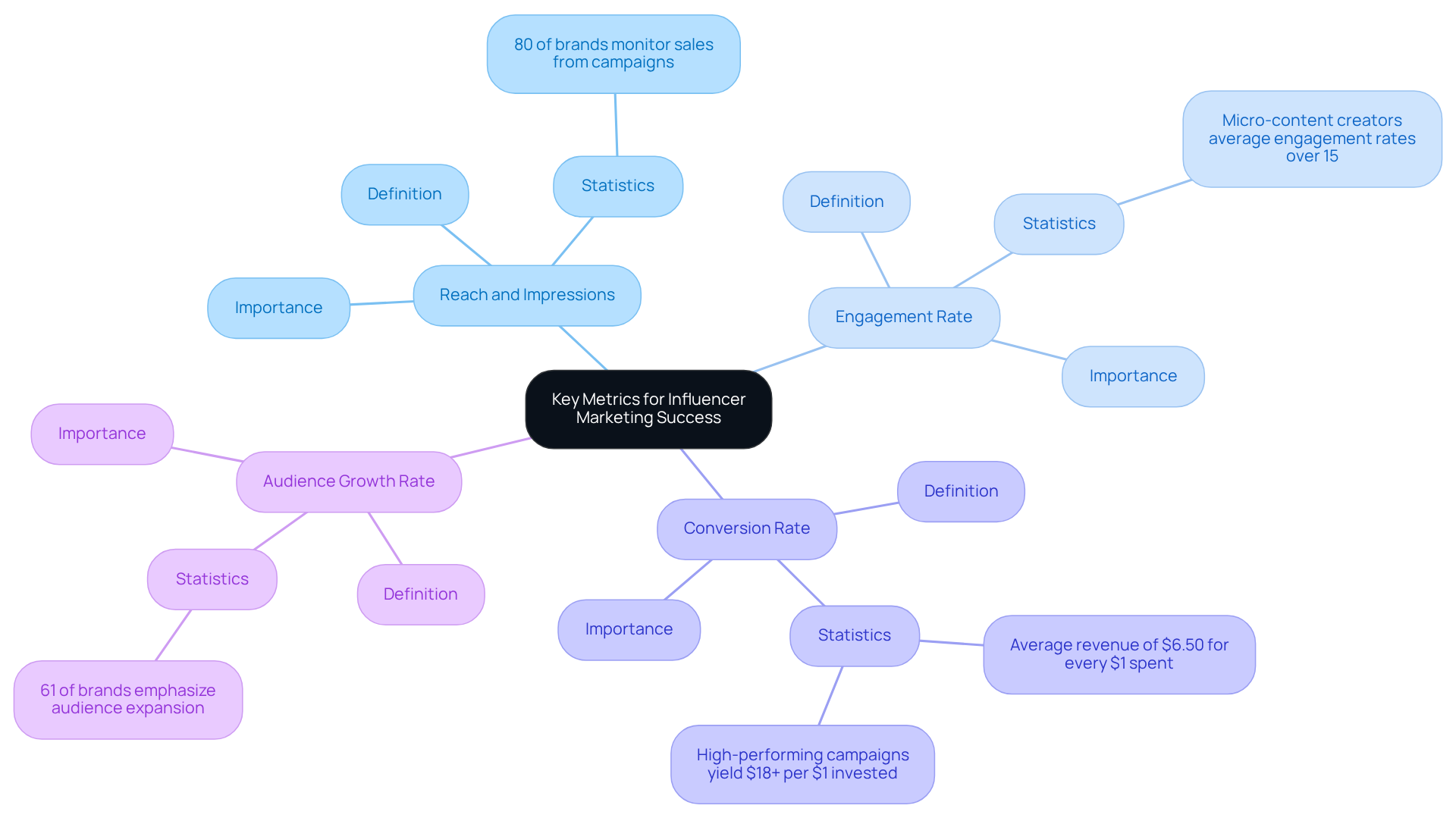
- : These metrics reveal how many people have seen your content. Reach refers to the total number of unique users, while impressions count the total number of times the content was displayed. In 2025, a striking 80% of brands , underscoring the importance of tracking sales alongside .
- : This measurement assesses how actively users engage with your content. Calculate it by dividing total engagement (likes, comments, shares) by total reach or impressions, then multiply by 100 to get a percentage. In 2025, average for content creators are significantly higher among micro-content creators, often exceeding 15% on platforms like TikTok. and deliver better ROI per dollar than celebrity endorsements.
- : This is the percentage of users who take a desired action after engaging with your content, such as making a purchase or signing up for a newsletter. Track this through or promo codes. Reports indicate that companies can generate an average of $6.50 in revenue for every $1 spent on , with $18 or more in revenue per $1 invested. This highlights the critical nature of monitoring this metric.
- : Monitor how your audience expands during and after the initiative. This can signify the initiative's effectiveness in attracting new followers. In 2025, 61% of brands emphasize audience expansion as a key performance metric, and long-term partnerships with micro-ambassadors are becoming increasingly prevalent, underscoring its importance in promotional strategies.
By assessing these indicators, you can measure effectiveness and gain valuable insights for making data-informed decisions in future projects.
Analyze Content Performance and Engagement
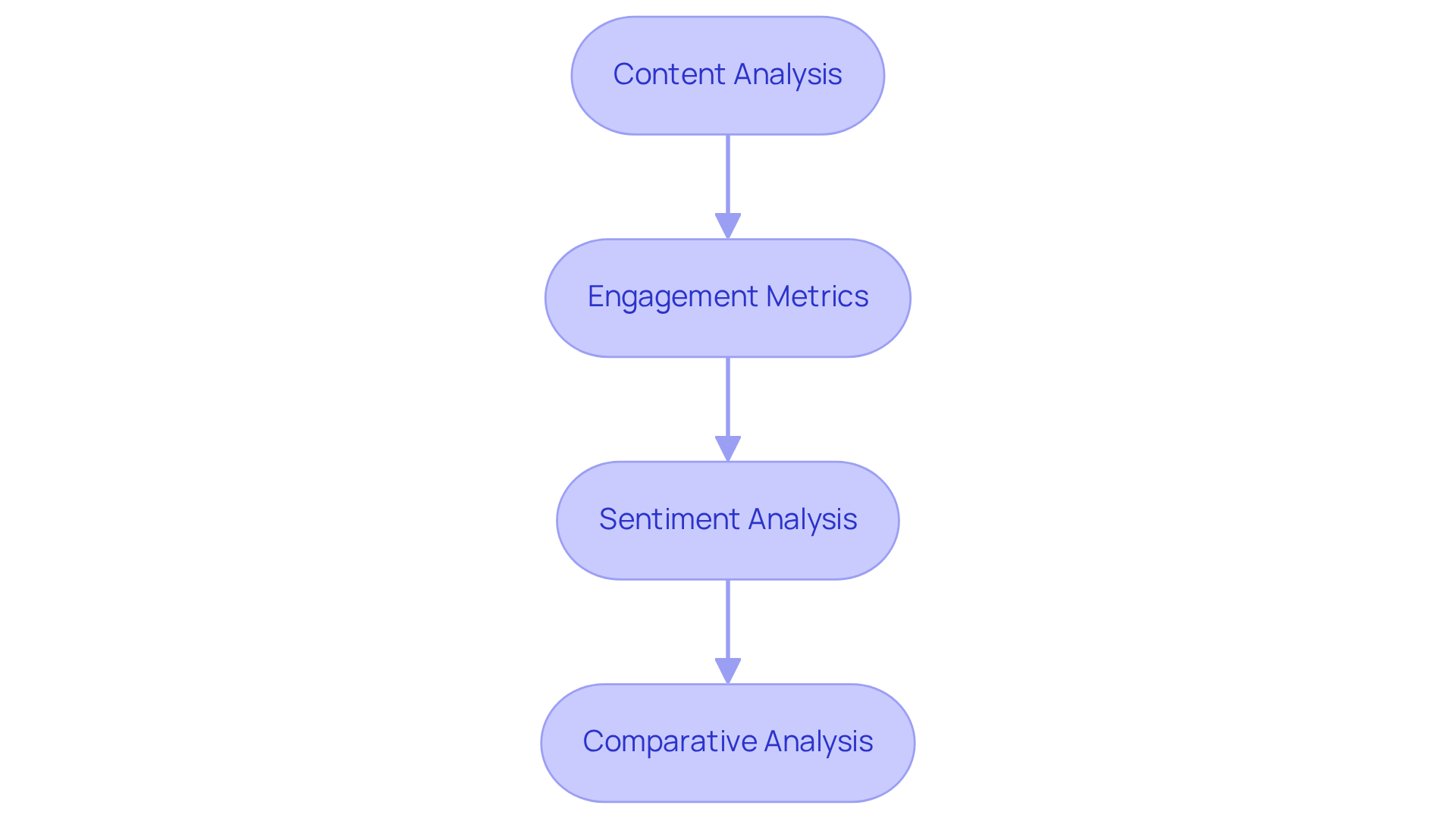
To effectively analyze , consider these essential steps:
- Content Analysis: Begin by reviewing the that have generated the most . Identify patterns in formats-be it videos, images, or stories-and themes that resonate with your audience.
- : Delve deeper into . High rates often signal that the content is resonating well with your audience.
- Sentiment Analysis: Assess the and interactions. Positive sentiment can indicate successful messaging, while negative feedback highlights areas for improvement.
- Comparative Analysis: Compare the or content types within the same initiative. This comparison can help you recognize which strategies are most effective and guide your future selections of promoters.
By thoroughly analyzing , you can measure more effectively. This ensures that your campaigns are not only effective but also aligned with audience preferences.
Conclusion
Navigating the complexities of influencer marketing requires a keen understanding of how to measure its effectiveness. A structured approach to measurement not only clarifies objectives but also significantly enhances the potential for achieving desired outcomes. By establishing clear goals, selecting relevant metrics, and employing robust analytics tools, brands can gain valuable insights that propel their marketing strategies forward.
Key elements include the necessity of measuring at various stages of campaigns, from pre-launch to post-campaign analysis. Each phase provides unique insights that empower marketers to optimize their strategies in real time and evaluate overall performance against initial goals. Metrics such as reach, engagement rates, conversion rates, and audience growth are essential for assessing the success of influencer marketing efforts and determining ROI.
The importance of measuring influencer marketing cannot be overstated. As the industry evolves, adopting best practices and utilizing advanced measurement tools will empower brands to make informed decisions that enhance their marketing effectiveness. Embracing these strategies not only maximizes ROI but also fosters long-term relationships with influencers, ensuring that campaigns resonate with audiences and achieve lasting impact.
Frequently Asked Questions
What is the first step in measuring influencer marketing?
The first step is to understand your objectives, which could include goals such as brand awareness, engagement, or conversions.
Why is it important to set clear goals for influencer marketing campaigns?
Setting clear goals helps determine what you aim to achieve with your campaign, allowing you to select the appropriate metrics to gauge success.
What are some common metrics used to measure influencer marketing effectiveness?
Common metrics include reach, engagement rates, and conversion rates.
What recent trend is noted in B2B promotion teams regarding influencer marketing measurement?
Recent trends show that 58% of B2B promotion teams are adopting a continuous presence strategy with advocates to measure influencer marketing, which fosters long-term relationships.
What tools can be utilized for measuring influencer marketing performance?
Tools such as Google Analytics, social media insights, and specialized promotion tools can be utilized to collect data on performance and audience interaction.
What is the typical return on investment for influencer marketing?
Companies typically see around $6.50 in revenue for every $1 invested in influencer marketing.
What is the projected market value of influencer marketing by 2025?
The influencer marketing sector is projected to reach $32.55 billion by 2025.
How can understanding measurement components benefit marketers?
Understanding these components empowers marketers to build a robust framework to measure influencer marketing and evaluate the effectiveness of their promotional initiatives.
List of Sources
- Understand Influencer Marketing Measurement
- stackinfluence.com (https://stackinfluence.com/influencer-marketing-stats-2025-key-numbers)
- Influencer Marketing in 2026: Key Stats That Matter (https://thunderbit.com/blog/influencer-marketing-stats)
- fox5sandiego.com (https://fox5sandiego.com/business/press-releases/cision/20250625NY17796/influencer-marketing-in-2025-new-data-reveals-what-works-what-costs-and-whats-next)
- influential.co (https://influential.co/news)
- 32 influencer marketing statistics to guide your brand’s strategy in 2026 (https://sproutsocial.com/insights/influencer-marketing-statistics)
- Measure at Different Stages of Campaigns
- clickanalytic.com (https://clickanalytic.com/35-inspiring-influencer-marketing-quotes)
- 5 Top Influencer Marketing Quotes to Guide Your Marketing Strategy (https://izea.com/resources/influencer-marketing-quotes)
- 25 Influencer Marketing ROI Metrics Statistics Every Brand Should Track in 2026 (https://archive.com/blog/influencer-marketing-roi-metrics-statistics)
- 2026 Influencer Marketing Statistics: ROI, Trends & Platform Data (https://sociallyin.com/influencer-marketing-statistics)
- tinkersociety.com (https://tinkersociety.com/blog/influencer-marketing-quotes)
- Evaluate Key Metrics for Success
- stackinfluence.com (https://stackinfluence.com/influencer-marketing-stats-2025-key-numbers)
- prnewswire.com (https://prnewswire.com/news-releases/influencer-marketing-in-2025-new-data-reveals-what-works-what-costs-and-whats-next-302490369.html)
- goviralglobal.com (https://goviralglobal.com/post/influencer-marketing-facts-and-statistics-updated-september-2025)
- 2026 Influencer Marketing Statistics: ROI, Trends & Platform Data (https://sociallyin.com/influencer-marketing-statistics)
- clearvoice.com (https://clearvoice.com/resources/influencer-marketing-statistics)
- Analyze Content Performance and Engagement
- marketingtechnews.net (https://marketingtechnews.net/news/how-performance-teams-are-taking-over-influencer-marketing-in-2025)
- stackinfluence.com (https://stackinfluence.com/influencer-marketing-stats-2025-key-numbers)
- prnewswire.com (https://prnewswire.com/news-releases/influencer-marketing-in-2025-new-data-reveals-what-works-what-costs-and-whats-next-302490369.html)
- 14 Influencer Marketing Growth Statistics for 2026 (https://archive.com/blog/influencer-marketing-growth-statistics)
- 32 influencer marketing statistics to guide your brand’s strategy in 2026 (https://sproutsocial.com/insights/influencer-marketing-statistics)