Introduction
In a digital landscape saturated with brands vying for attention, influencer marketing stands out as a formidable strategy for enhancing visibility and engagement. By partnering with influencer agencies, brands can leverage the unique strengths of various influencers, from mega to nano, each offering distinct advantages in audience connection and engagement. Yet, many brands find it challenging to sift through numerous agencies and implement strategies that truly deliver results.
What best practices can brands adopt to ensure their influencer marketing efforts not only resonate with their target audience but also yield significant returns on investment?
Understand Influencer Marketing Fundamentals
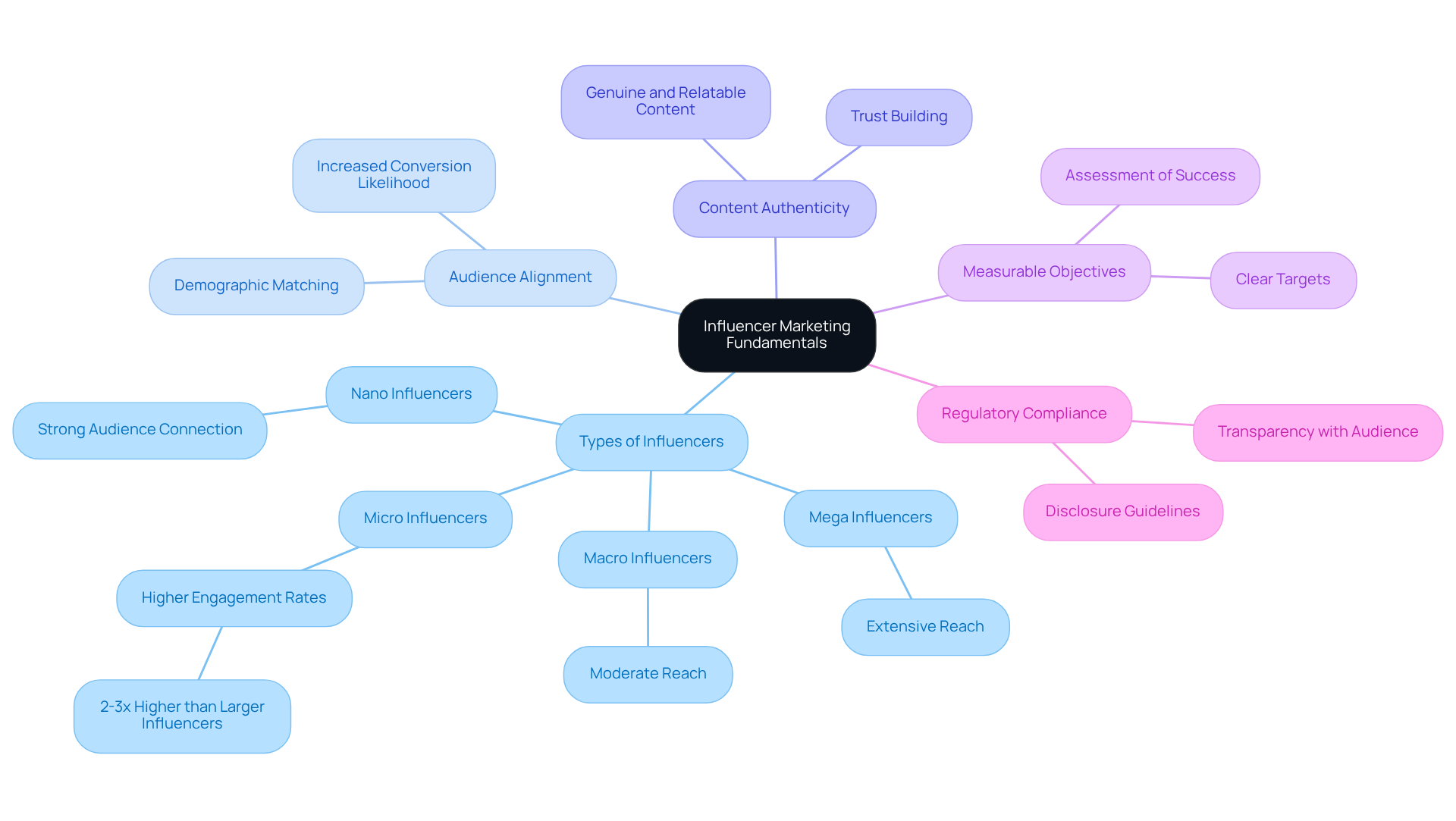
Are you leveraging the full potential of influencer agencies to elevate your brand's visibility? Influencer marketing is a strategic approach that involves partnering with influencer agencies to connect with individuals who possess a substantial following on social media platforms to promote products or services. To succeed in influencer marketing, brands need to understand these key principles:
- Types of Influencers: Influencers are categorized based on their follower count into mega, macro, micro, and nano influencers. Each type offers distinct advantages; for instance, while mega influencers provide extensive reach, micro and nano influencers often yield higher engagement rates due to their closer connections with their audiences. Research indicates that nano and micro-influencers consistently deliver engagement rates that are 2-3 times higher than those of larger influencers.
- Audience Alignment: Selecting influencers whose audience demographics align with your target market is crucial. This alignment ensures that your message reaches the right individuals, significantly enhancing the likelihood of conversion. Brands leveraging influencer agencies that focus on micro and nano influencers see engagement rates that are 2-3 times higher than those using larger influencers.
- Content Authenticity: Authenticity is paramount in marketing by social media personalities. Audiences are more inclined to engage with content that feels genuine and relatable. Brands should let influencers create content that reflects their unique style while seamlessly incorporating the organization's message. This approach fosters trust and encourages meaningful interactions.
- Measurable Objectives: Setting clear, measurable objectives for your influencer marketing efforts is essential. Whether the goal is to increase brand awareness, drive traffic, or boost sales, having specific targets will guide your strategy and facilitate the assessment of success. Brands that focus on measurable outcomes, such as sales and customer acquisition costs, are better positioned to evaluate the effectiveness of their campaigns.
- Regulatory Compliance: Understanding the legal requirements surrounding marketing by social media personalities, including disclosure guidelines, is vital. Influencers must clearly indicate when content is sponsored to maintain transparency with their audience. This compliance not only fosters trust but also safeguards companies from potential legal consequences.
Failing to adhere to these principles can lead to wasted resources and missed opportunities in reaching target audiences. By embracing these principles, brands can navigate the evolving marketing landscape and achieve impactful results.
Select the Right Influencer Agency for Your Brand
Selecting the right promotional partner is crucial; the wrong choice can derail your marketing efforts. Here are essential considerations to guide your selection process:
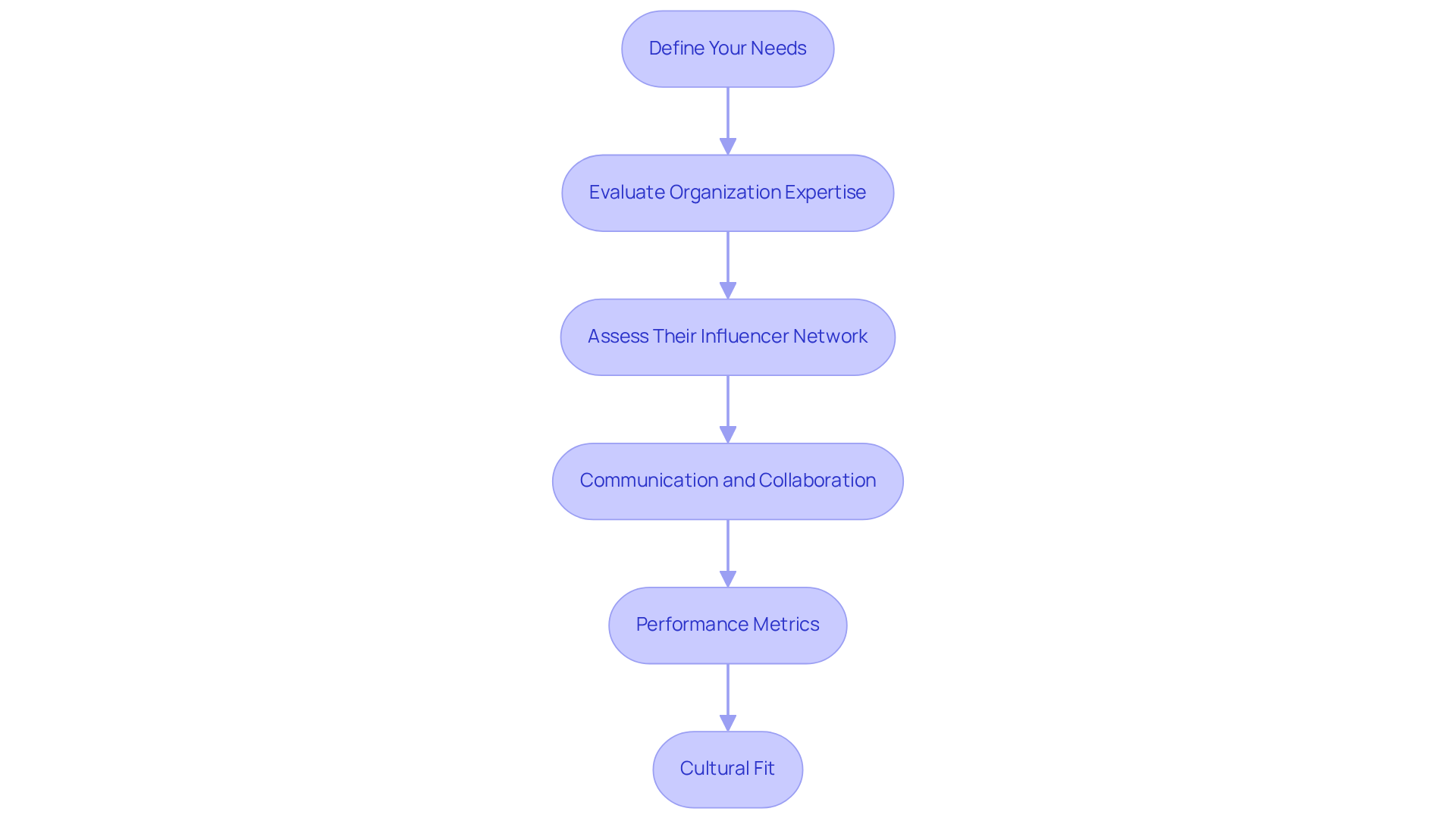
- Define Your Needs: Clearly outline your expectations from influencer agencies, including your campaign objectives, budget, and the types of influencers you wish to engage. This clarity will assist you in recognizing organizations that align with your goals.
- Evaluate Organization Expertise: Research the organization's track record within your industry. Look for case studies or testimonials that demonstrate their capability to achieve results for companies similar to yours. For instance, organizations that have successfully collaborated with renowned brands often showcase their ability to achieve measurable results. Brands report an average return of approximately $5.78 for every $1 invested in marketing through social media personalities, emphasizing the potential effect of successful partnerships.
- Assess Their Influencer Network: Inquire about the agency's influencer network. A diverse and extensive network can provide access to a variety of influencers that fit your brand's needs, including micro and nano influencers known for their strong audience engagement. These smaller influencers often cultivate genuine relationships, which can improve the effectiveness of promotions.
- Communication and Collaboration: You need to communicate effectively for a partnership to thrive. Ensure the organization is open to collaboration and values your input throughout the campaign process. Agencies that prioritize long-term relationships with creators often foster better communication and collaboration, which is essential in the evolving landscape of influencer agencies.
- Performance Metrics: Discuss how the organization measures success. They should have clear metrics and reporting processes in place to monitor performance and ROI. Agencies that focus on metrics connecting creator activity to real outcomes, such as traffic quality and conversion behavior, are more likely to deliver impactful results. Steer clear of influencer agencies that rely solely on connections to creators without a strategic method, as this can lead to unproductive efforts.
- Cultural Fit: Ensure that the organization's values and culture align with your identity. A strong cultural fit can lead to more authentic and effective collaborations, enhancing the overall campaign effectiveness. Furthermore, take into account the organization's organized procedures for safety and protection, which are essential in today's marketing landscape.
Focusing on these key areas helps brands select agency partners that meet immediate needs and foster long-term growth.
Implement Structured Creative Testing and Optimization
Are your marketing initiatives falling short of expectations? Discover how organized creative testing can elevate your results. To guarantee the success of your marketing efforts, applying structured creative testing and enhancement is crucial. Here are best practices to follow:
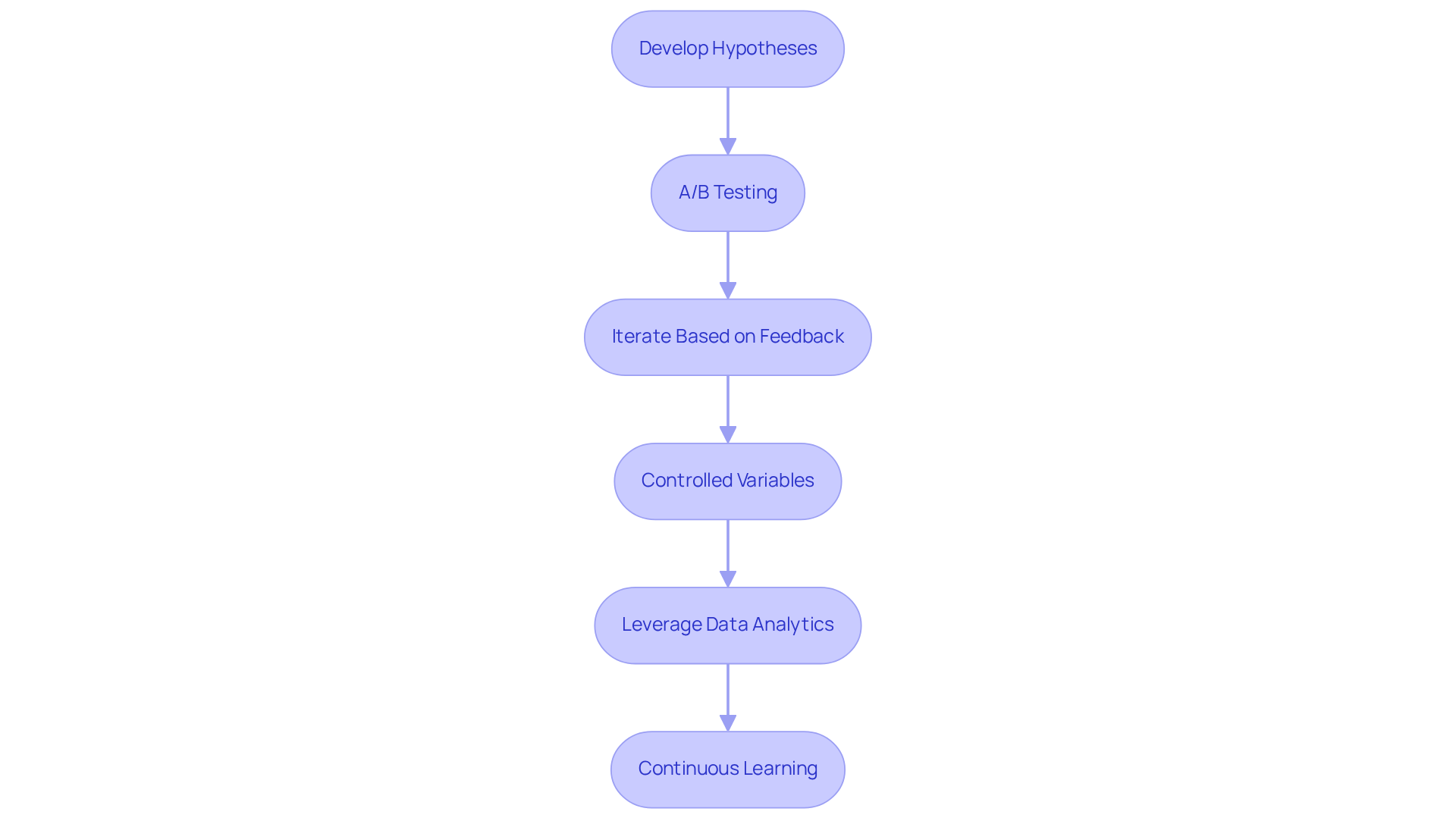
- Develop Hypotheses: Formulate hypotheses about the types of content that will resonate with your audience. This may involve exploring various messaging angles, formats, or styles.
- A/B Testing: Conduct A/B tests to compare different creative assets. This method allows you to identify which elements, such as visuals, captions, or calls to action, yield the best performance.
- Iterate Based on Feedback: Use real-time feedback from your campaigns to tweak your approach. Monitoring engagement metrics and audience responses will help refine your creative strategy continuously.
- Controlled Variables: When testing, control variables to isolate the impact of specific changes. For example, maintain a consistent promoter while varying the content style to assess its effect on performance.
- Leverage Data Analytics: Employ data analytics tools to track performance metrics effectively. Analyzing engagement rates, conversion rates, and audience demographics will inform future creative strategies.
- Continuous Learning: Treat each initiative as a learning opportunity. Document insights and outcomes to create a knowledge base that guides future collaborations with key individuals.
By 2026, companies using a systematic approach to creative testing can expect significant improvements in their performance. For instance, initiatives that employ stringent testing frameworks have shown a notable rise in engagement and conversion rates, with companies reporting an average of $5.78 earned for each dollar invested in marketing through social media personalities. Additionally, successful brands leverage continuous learning to adapt their strategies, ensuring they remain competitive in a rapidly evolving landscape. Embrace a structured approach to creative testing, and watch your marketing performance soar beyond your current limits.
Foster Collaboration and Communication with Influencer Agencies
Are you maximizing the potential of your influencer partnerships? Effective teamwork and interaction with influencer agencies can significantly enhance the success of your initiatives. Here are strategies to foster a productive partnership:
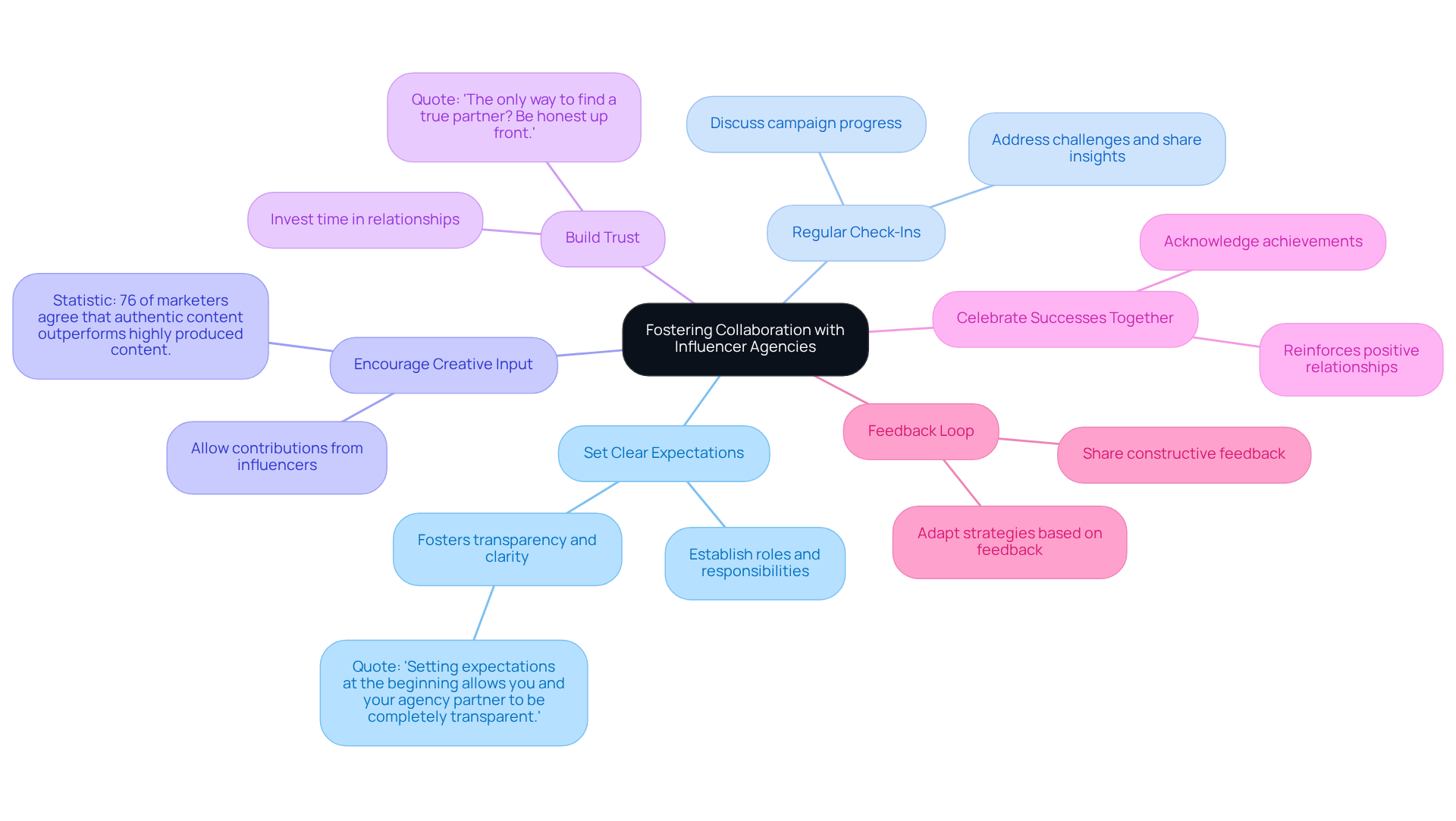
- Set Clear Expectations: At the outset of your partnership, establish clear expectations regarding roles, responsibilities, and deliverables. Without clear expectations, misalignment can lead to wasted resources and missed opportunities. As Ashley Rodriguez emphasizes, setting expectations from the beginning fosters transparency and clarity about deliverables.
- Regular Check-Ins: How often do you check in with your partners to ensure alignment? Schedule regular check-ins to discuss campaign progress, address any challenges, and share insights. This keeps the lines of communication open and allows for timely adjustments, which is essential for maintaining alignment and achieving desired outcomes.
- Encourage Creative Input: Allow influencers and team members to contribute creatively. Their insights can lead to innovative ideas that resonate better with audiences. According to a statistic, 76 percent of marketers agree that authentic content outperforms highly produced content, highlighting the value of creative contributions.
- Build Trust: Invest time in building trust with your agency. When trust is established, initiatives become more impactful and resonate with audiences. Trust promotes open dialogue and nurtures a cooperative spirit, resulting in more genuine and impactful initiatives. Brands that prioritize trust often see improved performance and engagement from their influencer agencies.
- Celebrate Successes Together: Acknowledge and celebrate achievements, no matter how small. This reinforces a positive working relationship and motivates both teams to strive for excellence, contributing to a culture of shared goals and mutual accountability.
- Feedback Loop: Create a feedback loop where both parties can share constructive feedback. This helps in refining strategies and improving future collaborations, ensuring that both sides feel valued and invested in the partnership. Consistent feedback is crucial for adapting to market changes and enhancing overall campaign effectiveness.
Ultimately, the strength of your partnerships can define the success of your campaigns.
Conclusion
Influencer marketing is not just a trend; it’s a strategic imperative for brands seeking to thrive in a crowded marketplace. To truly elevate their marketing efforts, brands must:
- Grasp the fundamentals of influencer marketing
- Choose the right agency
- Implement structured creative testing alongside effective collaboration
Key insights from this article emphasize the importance of:
- Aligning with the right influencers
- Ensuring content authenticity
- Setting clear, measurable objectives
Implementing these practices not only boosts campaign effectiveness; it also lays the groundwork for long-term growth and fosters brand loyalty.
As brands navigate the complexities of influencer marketing, many find it challenging to achieve the desired impact. However, by embracing these strategies, brands can transform their marketing outcomes. The landscape of influencer marketing continues to evolve, prompting the question: how can brands stay agile and data-driven in their strategies? Embracing best practices will not only maximize the potential of influencer partnerships but also position brands for sustained success in a competitive market. The brands that adapt and innovate will not only survive but thrive in the ever-evolving world of influencer marketing.
Frequently Asked Questions
What is influencer marketing?
Influencer marketing is a strategic approach that involves partnering with influencer agencies to connect with individuals who have a substantial following on social media to promote products or services.
What are the different types of influencers?
Influencers are categorized into mega, macro, micro, and nano influencers. Mega influencers provide extensive reach, while micro and nano influencers often yield higher engagement rates due to their closer connections with their audiences.
Why are micro and nano influencers effective?
Research indicates that nano and micro influencers consistently deliver engagement rates that are 2-3 times higher than those of larger influencers, making them effective for brands seeking meaningful interactions.
How important is audience alignment in influencer marketing?
Audience alignment is crucial as it ensures that the influencer's audience demographics match your target market, significantly enhancing the likelihood of conversion.
What role does content authenticity play in influencer marketing?
Authenticity is paramount; audiences are more likely to engage with content that feels genuine and relatable. Brands should allow influencers to create content that reflects their unique style while incorporating the brand's message.
Why are measurable objectives important in influencer marketing?
Setting clear, measurable objectives helps guide your strategy and assess success. Specific targets, such as increasing brand awareness or driving sales, enable brands to evaluate the effectiveness of their campaigns.
What are the regulatory compliance requirements for influencer marketing?
Influencers must clearly indicate when content is sponsored to maintain transparency with their audience. Understanding legal requirements, including disclosure guidelines, is vital to foster trust and avoid potential legal consequences.
What can happen if brands fail to adhere to influencer marketing principles?
Failing to follow these principles can lead to wasted resources and missed opportunities in reaching target audiences, ultimately hindering the effectiveness of marketing efforts.
List of Sources
- Understand Influencer Marketing Fundamentals
- Influencer Marketing Trends 2026 (https://creatoriq.com/blog/influencer-marketing-trends-2026)
- Influencer Marketing Trends 2026: Performance Insights (https://impact.com/influencer/influencer-marketing-trends-performance)
- 2026 Influence Trends You Should Care About | Ogilvy (https://ogilvy.com/ideas/2026-influence-trends-you-should-care-about)
- Influencer marketing trends: 2026 guide | Printful | Printful (https://printful.com/blog/influencer-marketing-trends)
- The Power of Influencer Marketing (https://prsa.org/article/the-power-of-influencer-marketing)
- Select the Right Influencer Agency for Your Brand
- Why influencer marketing agencies are the key to unlocking growth in the Creator Economy - Stagwell (https://stagwellglobal.com/why-influencer-marketing-agencies-are-the-key-to-unlocking-growth-in-the-creator-economy)
- How to Vet and Select the Right Influencer Marketing Agency for 2026 - InfluencerNexus (https://influencernexus.com/how-to-vet-and-select-the-right-influencer-marketing-agency-for-2026)
- Top 10 Influencer Marketing Agencies for 2026 (https://ubiquitousinfluence.com/post/top-10-influencer-marketing-agencies)
- Influencer Marketing Agency: How to Choose One in 2026 (https://track360.io/blog/influencer-marketing-agency-how-to-choose-2026)
- Influencer marketing in 2026: how to choose the right creators - Aploq Localization Agency (https://aploqtranslations.com/influencer-marketing-in-2026-how-to-choose-the-right-creators)
- Implement Structured Creative Testing and Optimization
- Influencer Marketing Trends & Monthly Updates (https://newengen.com/influencer-marketing-trends)
- How Rapid Pre-Testing Is Fueling the Extraordinary Rise of Influencer Marketing (https://insights.swayable.com/how-rapid-pre-testing-is-fueling-the-extraordinary-rise-of-influencer-marketing?hs_amp=true)
- Optimizing Influencer Marketing Strategies: Test & Scale - Field Guide | Superfiliate (https://superfiliate.com/field-guide/chapter/testing-optimizing-influencer-marketing-programs)
- Influencer Marketing Future: Predictions for 2026 and Beyond – Slate (https://slateteams.com/blog/influencer-marketing-future-predictions-for-2026-and-beyond)
- How can A/B testing improve your influencer content's performance? (https://linkedin.com/advice/3/how-can-ab-testing-improve-your-influencer-mgv0f)
- Foster Collaboration and Communication with Influencer Agencies
- How to Set and Manage Healthy Expectations for Your Client-Agency Relationship | Element Three (https://elementthree.com/blog/how-to-set-and-manage-healthy-expectations-for-your-client-agency-relationship)
- Effective Agency Partnerships Require Clear Goals and Trust | Katie Mack posted on the topic | LinkedIn (https://linkedin.com/posts/katie-mack1_changing-agencies-isnt-a-strategy-leading-activity-7422336798544048128-6wLb)
- Brand collaborations with influencers: The complete 7-step guide (https://impact.com/influencer/effective-practices-for-brand-collaborations-with-influencers)