
Introduction
Crafting a successful integrated digital marketing strategy is no longer optional; it’s essential for brands aiming to thrive in a competitive landscape. Establishing a unified marketing framework, leveraging multi-channel tactics, utilizing data analytics, and fostering cross-functional collaboration are key components that can significantly enhance promotional efforts. However, the challenge lies in effectively aligning these diverse elements to create a seamless customer experience.
What are the best practices that can transform a fragmented approach into a cohesive strategy that drives measurable results? By addressing this question, organizations can not only improve their marketing effectiveness but also ensure they remain relevant in an ever-evolving market.
Establish a Unified Marketing Framework
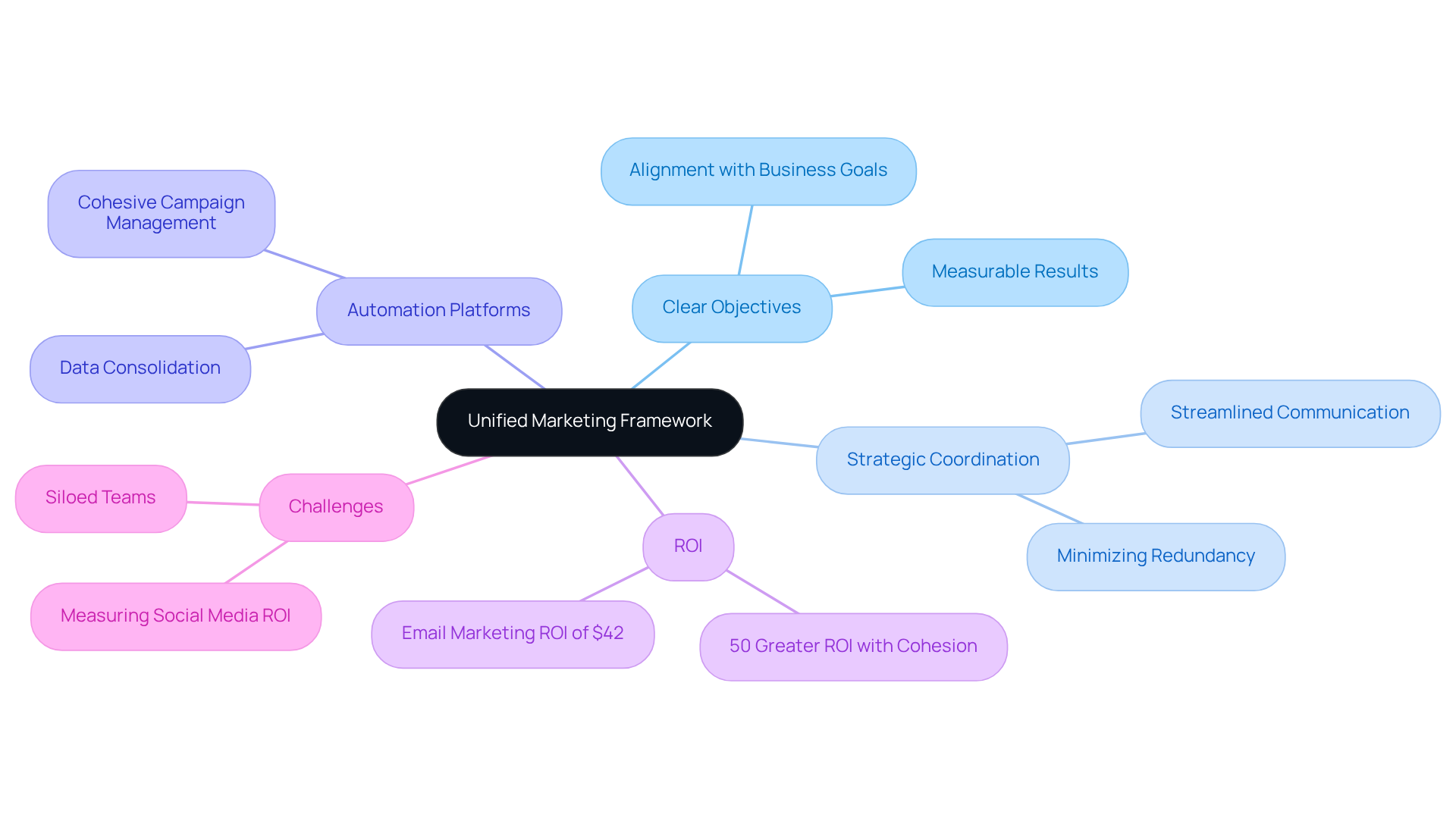
To create a successful , brands must establish a . This framework involves setting clear objectives that align with broader business aims, ensuring that all . A unified approach streamlines communication across teams and channels, minimizing redundancy and confusion.
For instance, utilizing automation platforms can consolidate data and insights, promoting a cohesive campaign management approach. Did you know that companies with a can achieve an average of 50% ? This alignment not only but also ensures that every dollar spent on is with a clear purpose, driving measurable results and supporting broader business objectives.
Case studies reveal that brands emphasizing approaches can experience a +31% boost in campaign efficiency, significantly enhancing conversion rates and overall effectiveness. As Can Ozdoruk, Head of Marketing, points out, "Measuring social media ROI remains a challenge, with 50% of marketers citing difficulties." Tackling these challenges is essential for marketers aiming to execute a cohesive promotional approach successfully.
In conclusion, establishing a is not just beneficial; it's imperative for brands looking to thrive in today's competitive landscape. Are you ready to take your promotional strategy to the next level?
Leverage Multi-Channel Tactics for Maximum Impact
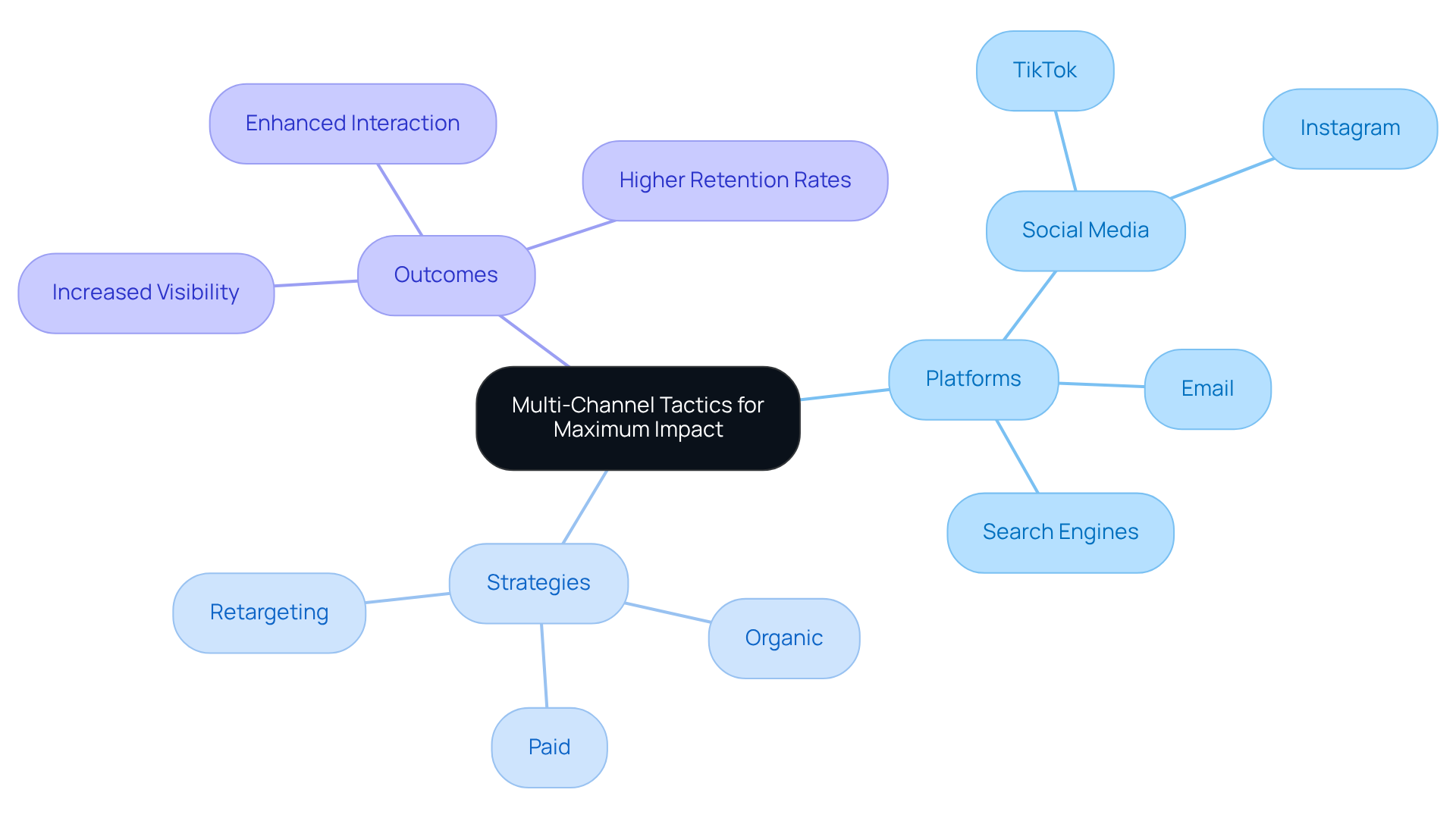
In the current digital landscape, utilizing is essential for maximizing marketing impact. Brands must engage consumers through across various platforms, such as , email, and search engines, to create a . For instance, consider a campaign that integrates with Instagram ads; this approach can effectively capture attention across diverse demographics.
Employing a combination of not only improves visibility but also enhances interaction. Furthermore, utilizing across platforms can reignite the interest of potential clients who have previously engaged with the brand. Did you know that companies adopting a see a remarkable ? This statistic underscores the effectiveness of reaching audiences through multiple touchpoints.
To truly capitalize on these insights, brands should take action by evaluating their current marketing strategies and exploring innovative ways to incorporate . By doing so, they can foster deeper connections with their audience and drive sustained engagement.
Utilize Data Analytics for Continuous Optimization
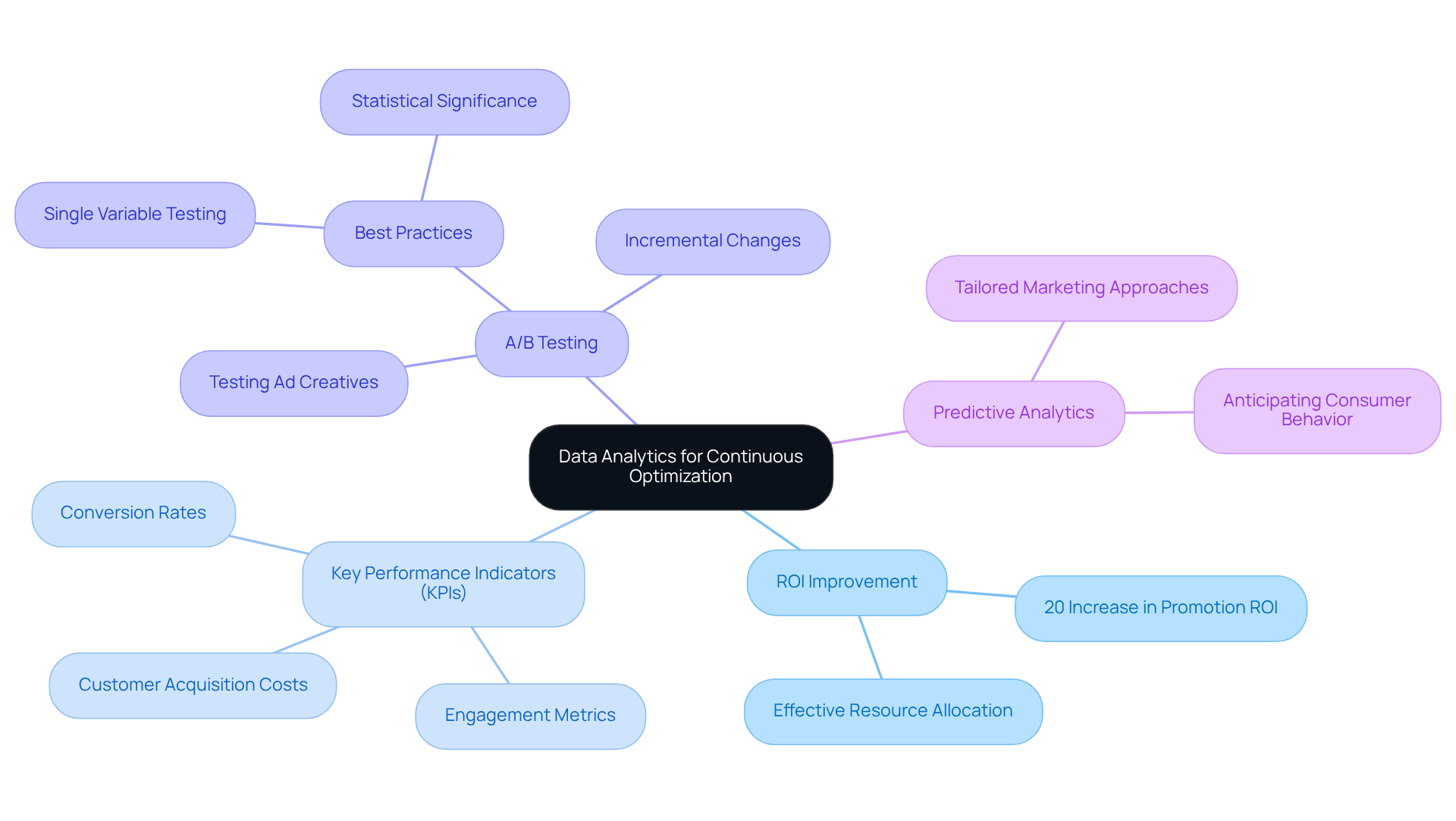
is essential for the success of integrated digital marketing strategies. Did you know that firms leveraging effectively can by up to 20%? This statistic underscores the importance of implementing robust to track (KPIs) like conversion rates, engagement metrics, and .
By analyzing this data, marketers can uncover trends and patterns that shape future campaigns. For example, can reveal which messages resonate most with target audiences, enabling more effective resource allocation. Furthermore, employing predictive analytics allows brands to anticipate and tailor their approaches accordingly.
In conclusion, the significance of cannot be overstated. Brands that prioritize integrated digital marketing not only enhance their promotional strategies but also position themselves for greater success in the competitive advertising landscape. Are you ready to harness the power of in your marketing efforts?
Foster Cross-Functional Collaboration for Cohesive Execution
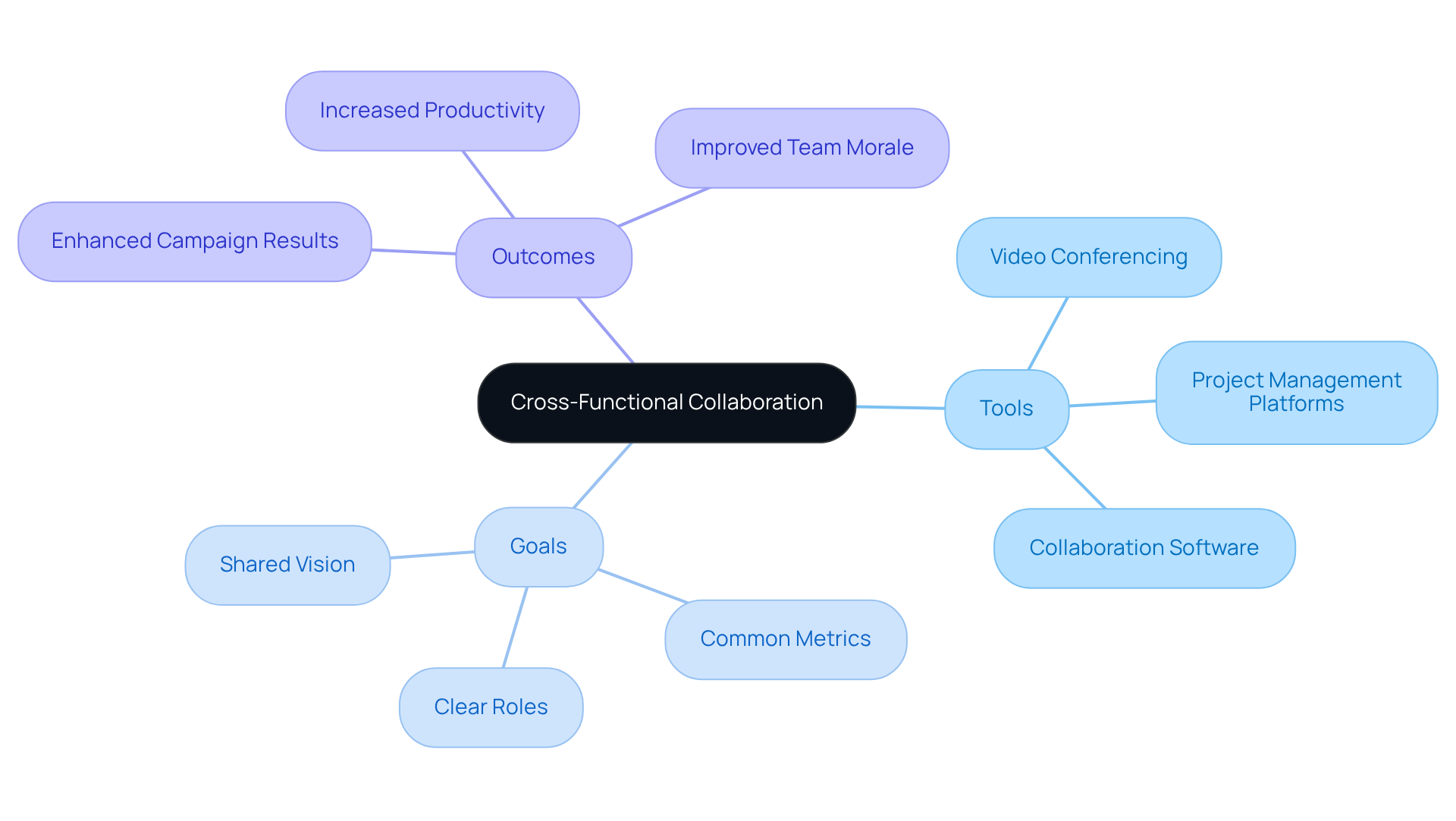
Achieving cohesive execution of strategies hinges on fostering among marketing, sales, and product groups. These departments must and share insights to drive success. Regular meetings and collaborative tools are essential for enhancing communication and ensuring that all group members are on the same page. For instance, utilizing a allows teams to monitor progress and provide real-time feedback, thereby improving transparency and accountability. In fact, a striking 76% of the global workforce relies on , underscoring their significance in boosting group performance.
Establishing further unifies efforts across departments, driving performance and accountability. Businesses that prioritize and cross-functional teamwork often witness enhanced campaign results; studies reveal that organizations with are five times more likely to meet their promotional goals. This highlights the critical role of teamwork in achieving success. Moreover, defining clear goals and roles is vital for , ensuring that all team members comprehend their responsibilities and contributions. By cultivating an environment where marketing and sales collaborate seamlessly, businesses can unlock their full potential and achieve remarkable results.
Conclusion
Establishing a successful integrated digital marketing strategy is not just important; it’s essential for brands that want to excel in a competitive landscape. A unified marketing framework streamlines promotional efforts and aligns them with broader business objectives, ensuring that every marketing dollar is spent wisely. By adopting this cohesive approach, brands can significantly enhance their campaign performance and achieve measurable results.
Key insights from the article highlight the necessity of:
- Leveraging multi-channel tactics
- Utilizing data analytics
- Fostering cross-functional collaboration
Engaging consumers across various platforms creates a seamless customer journey. In addition, data-driven decision-making empowers marketers to continuously optimize their strategies. Furthermore, collaboration among different departments enhances communication and accountability, leading to improved campaign outcomes.
The importance of integrated digital marketing cannot be overstated. As brands look to the future, embracing these best practices will not only elevate their marketing effectiveness but also cultivate deeper connections with their audience. It’s time for marketers to take decisive action towards implementing these strategies, ensuring they remain competitive and relevant in an ever-evolving digital landscape.
Frequently Asked Questions
What is a unified marketing framework?
A unified marketing framework is a strategic approach that sets clear objectives aligning with broader business aims, ensuring that all promotional activities are coordinated across teams and channels.
Why is a unified approach important in digital marketing?
A unified approach streamlines communication, minimizes redundancy and confusion, and enhances overall campaign performance, leading to better results and a clearer purpose for every marketing dollar spent.
How does automation play a role in a unified marketing framework?
Automation platforms can consolidate data and insights, promoting cohesive campaign management and improving the efficiency of promotional strategies.
What is the potential return on investment (ROI) for companies with a cohesive promotional strategy?
Companies with a cohesive promotional strategy can achieve an average of 50% greater ROI compared to those without.
What impact can integrated digital marketing have on campaign efficiency?
Brands that emphasize integrated digital marketing approaches can experience a +31% boost in campaign efficiency, leading to enhanced conversion rates and overall effectiveness.
What challenges do marketers face in measuring social media ROI?
Measuring social media ROI remains a challenge for many marketers, with 50% citing difficulties in this area, which can hinder the execution of a cohesive promotional approach.
What is the overall conclusion regarding the unified marketing framework?
Establishing a unified framework for promotion is imperative for brands looking to thrive in today’s competitive landscape, as it enhances marketing effectiveness and supports broader business objectives.
List of Sources
- Establish a Unified Marketing Framework
- nielsen.com (https://nielsen.com/insights/2025/why-strategy-matters-more-than-tools-roi)
- marketingweek.com (https://marketingweek.com/knowledge-bank/article/the-2025-roi-report-a-blueprint-for-measurable-marketing-impact)
- firework.com (https://firework.com/blog/marketing-roi-statistics)
- optimizely.com (https://optimizely.com/insights/blog/marketing-statistics)
- 2026 Marketing Statistics, Trends, & Data (https://hubspot.com/marketing-statistics)
- Leverage Multi-Channel Tactics for Maximum Impact
- 30 Cross-Channel Marketing Stats You Need to Know (https://iterable.com/blog/30-cross-channel-marketing-stats-you-need-to-know)
- amraandelma.com (https://amraandelma.com/omni-channel-marketing-statistics)
- Salesgenie® | Business & Consumer Data to Reach Your Audience (https://salesgenie.com/blog/35-must-know-multichannel-marketing-statistics-for-2025)
- gungho.global (https://gungho.global/insights/multi-channel-marketing-in-2025)
- Utilize Data Analytics for Continuous Optimization
- Marketing Analytics News | Marketing Dive (https://marketingdive.com/topic/analytics)
- Why A/B Testing and Personalization Are More Powerful Together (https://mastercard.com/us/en/news-and-trends/Insights/2025/why-ab-testing-and-personalization-are-more-powerful-together.html)
- socialhospitality.com (https://socialhospitality.com/2025/10/a-b-testing-strategies-for-digital-growth)
- directiveconsulting.com (https://directiveconsulting.com/blog/what-is-ab-testing-in-digital-marketing)
- ama.org (https://ama.org/2025/01/07/can-you-trust-your-ad-data-a-new-study-exposes-a-hidden-flaw-in-a-b-testing-on-digital-ad-platforms)
- Foster Cross-Functional Collaboration for Cohesive Execution
- culturemonkey.io (https://culturemonkey.io/employee-engagement/cross-team-collaboration)
- 31 statistics about collaboration in the workplace in 2025 (https://zoom.com/en/blog/workplace-collaboration-statistics)
- proofhub.com (https://proofhub.com/articles/workplace-collaboration-statistics)
- Collaboration Counts: Eye-Opening Teamwork Statistics for 2025 | Runn (https://runn.io/blog/teamwork-statistics)
- forbes.com (https://forbes.com/councils/forbesagencycouncil/2024/02/20/how-marketers-can-build-strong-relationships-with-sales-teams)