Introduction
In a world where consumer preferences shift rapidly, how can brands effectively connect with their audience? Effective marketing campaigns rely on a deep understanding of target demographics and consumer behavior. By leveraging advanced tools and strategies, marketers can craft tailored messages that resonate profoundly with potential customers.
Furthermore, in a landscape where innovation is key, brands must ensure their advertising not only captures attention but also fosters trust and loyalty. This article explores best practices for crafting impactful marketing agency ads, revealing how to:
- Align brand identity
- Implement structured testing
- Cultivate creativity
to drive successful campaigns in 2026 and beyond. Without a strategic approach, brands risk losing their relevance in an ever-evolving market landscape.
Identify and Understand Your Target Audience
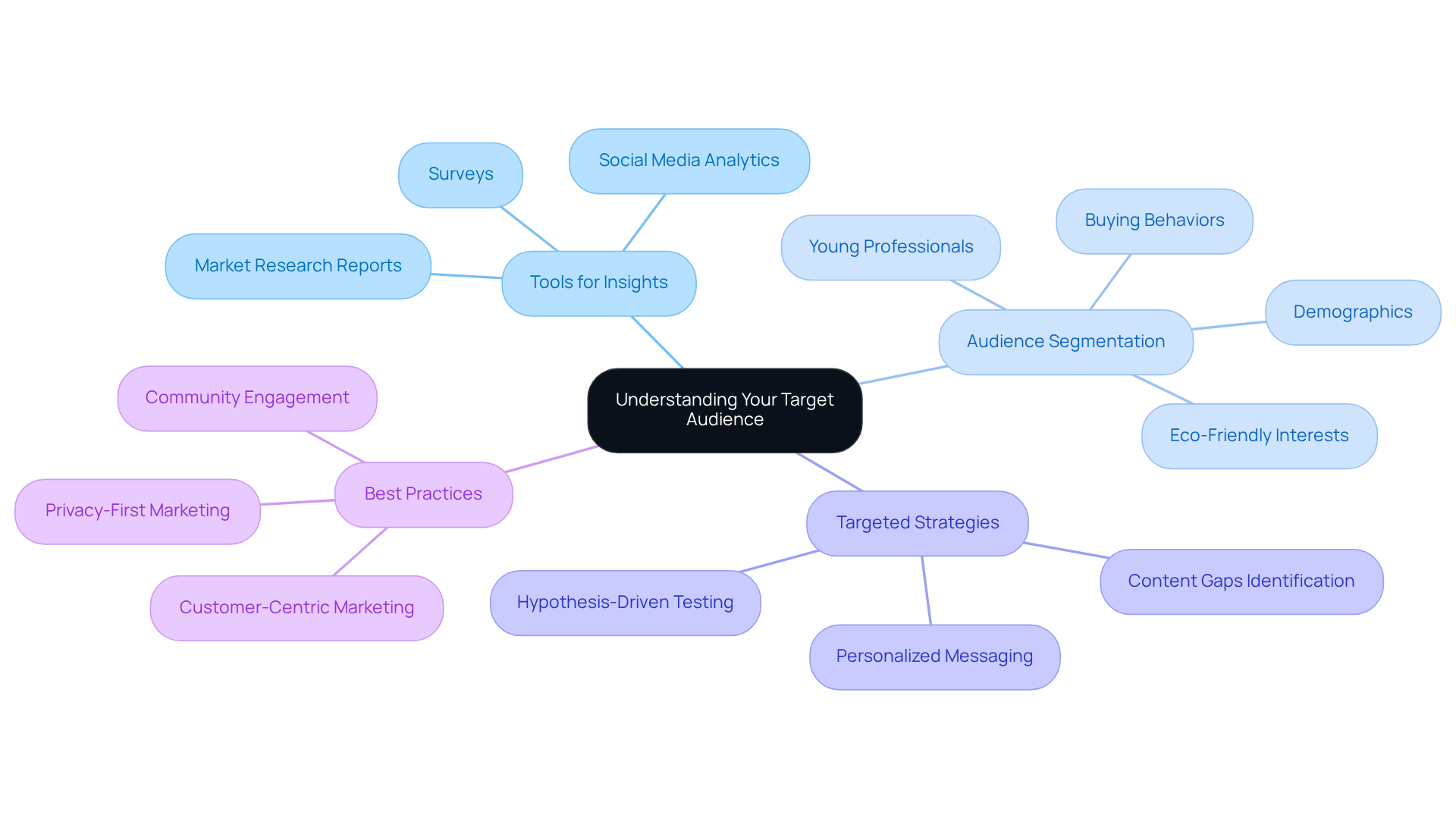
Effective marketing campaigns hinge on a deep understanding of your target audience. Use tools like surveys, social media analytics, and market research reports to gain insights into demographics, interests, and buying behaviors. For instance, Google Analytics (GA4) provides detailed information on user interactions, helping marketers understand how different groups engage with content.
- Segment your audience into distinct groups based on these insights, allowing for more personalized messaging.
- If data shows a significant portion of your audience is young professionals interested in sustainability, tailor your ad content to emphasize eco-friendly practices and products.
- This targeted strategy not only boosts engagement but also raises conversion rates, as the messaging aligns closely with the values and needs of the intended group.
- Furthermore, social media analytics can reveal content gaps and unfulfilled viewer needs, enabling companies to enhance their strategies effectively.
- By focusing on market segmentation and employing best practices, such as hypothesis-driven testing, marketers can create campaigns that resonate deeply with their target demographics and drive measurable growth.
- Ultimately, neglecting to segment your audience could mean leaving potential growth on the table.
Align Ad Design with Brand Identity
Are your ads truly resonating with your audience, or are they falling flat? To connect your ads with your audience, align your design with your brand identity. This enhances performance and drives scalable revenue growth. Start by clearly defining your organization's core values, mission, and visual elements, including color schemes and typography.
Developing a comprehensive style guide that outlines these elements will help maintain consistency across all advertising platforms. For instance, if your company embodies a playful and vibrant personality, your ads should reflect this through bright colors and engaging visuals. Furthermore, incorporating your company's voice into the ad copy fosters a unified message. This alignment enhances product recognition and significantly strengthens the overall impact of your marketing efforts.
In 2026, companies that maintain consistent messaging across all platforms can achieve up to 20% higher revenue growth, underscoring the importance of clarity in advertising. Furthermore, 88% of customers believe trust is more crucial than ever in 2026, emphasizing the necessity for companies to establish trust through consistent and genuine messaging.
Successful case studies show that companies with a well-defined identity and cohesive approach outperform those with vague messaging. This leads to increased customer loyalty and engagement. On the other hand, without clear guidelines, brands risk losing consumer trust and loyalty. By aligning innovative strategies with media goals and focusing on organized testing, brands can achieve impressive growth. Inconsistent messaging not only confuses consumers but can also cost your brand dearly in trust and loyalty.

Implement Structured Testing and Optimization
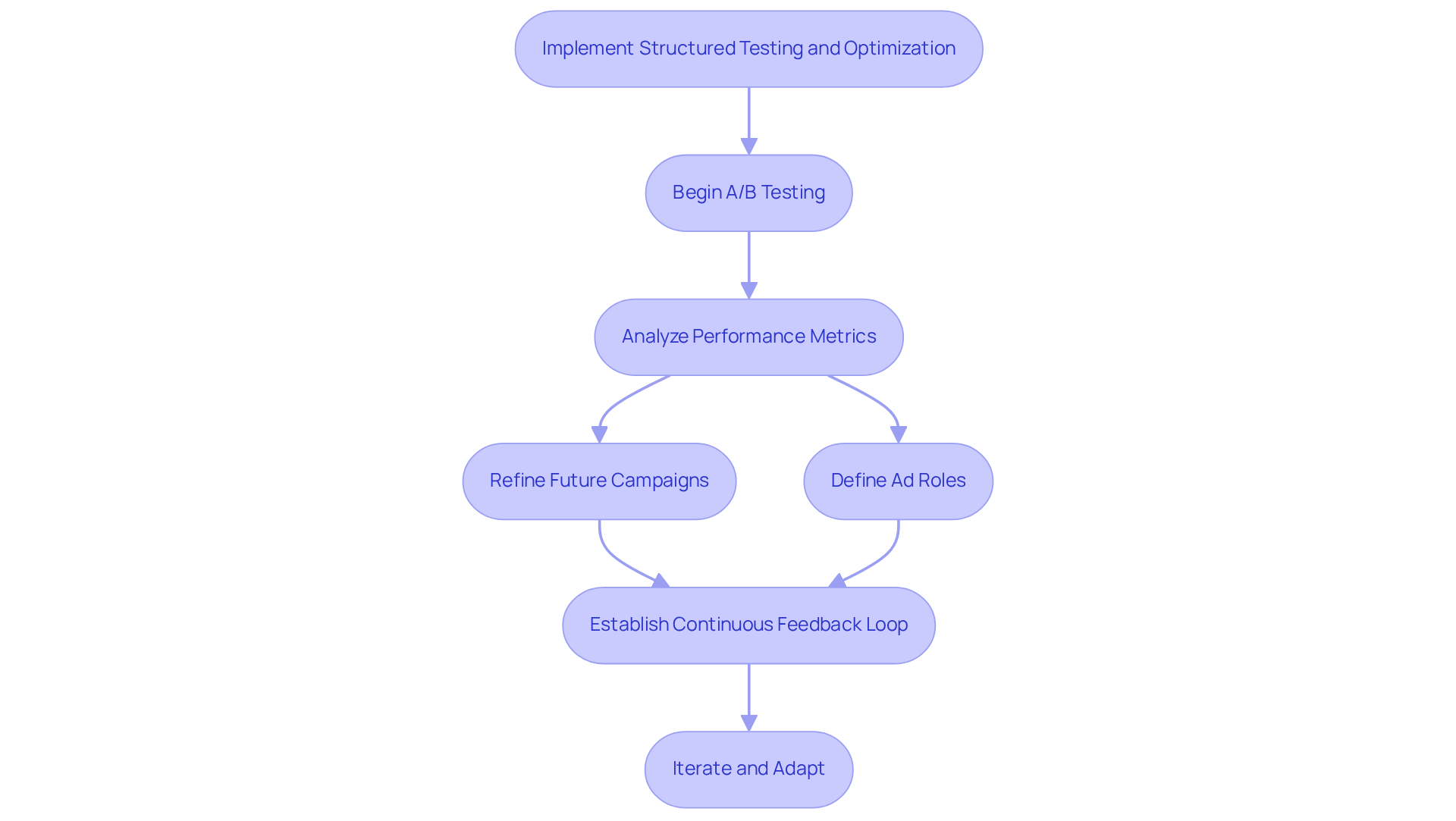
To maximize the effectiveness of your advertising campaigns, establishing a robust testing and optimization framework is essential. Begin with A/B testing to compare different versions of your ads, such as varying headlines, images, or calls to action. This method allows you to analyze performance metrics and identify which version resonates best with your audience. For instance, if one ad with a compelling call to action outperforms another, leverage that insight to refine future campaigns.
Furthermore, defining the role each ad plays in the buying process is crucial, as it influences how advertising impacts consumer behavior. Establishing a continuous feedback loop is crucial. Insights from ongoing campaigns should inform future strategies, ensuring performance data is integrated into each iteration. This iterative approach enhances ad performance and keeps your marketing efforts agile and responsive to consumer preferences.
However, many advertisers struggle with uneven traffic distribution and distorted results due to attribution windows. In 2026, successful advertisers will prioritize structured testing, fostering a culture of rapid iteration and adaptation. This structured approach not only enhances conversion rates but also minimizes acquisition costs. Notably, with only 20.95% of the top 100,000 sites engaging in A/B testing, the time to adopt these practices is now to maintain a competitive edge.
Foster Creativity and Innovation in Ad Concepts
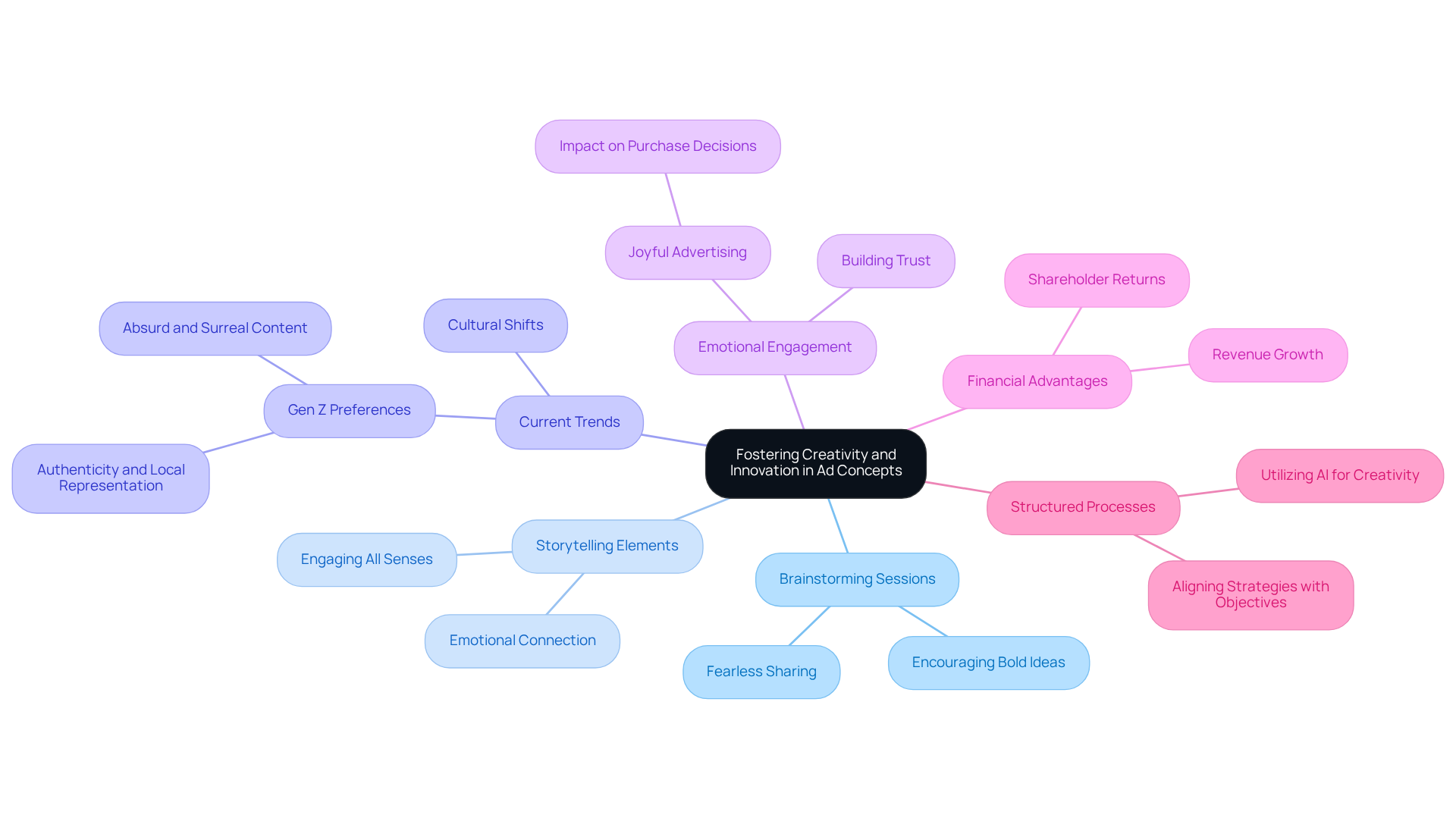
To truly resonate with consumers, your marketing team must break free from conventional thinking and embrace creativity. Encourage brainstorming sessions. Here, team members can share bold ideas without fear of judgment. Techniques like mind mapping and collaborative workshops effectively stimulate creative thinking.
For instance, integrating storytelling elements into your ads can forge a deeper emotional connection with your audience, making your message more impactful. Are you keeping up with current trends and cultural shifts? They play a crucial role in consumer behavior. Embracing creativity and innovation can help your ads stand out and leave a lasting impression on potential customers.
Significantly, almost 50% of consumers are more inclined to buy from companies that evoke joy, highlighting the influence of emotional engagement in advertising. Moreover, companies acknowledged for their inventive excellence have experienced above-average shareholder returns, emphasizing the financial advantages of innovative marketing approaches. Without innovation, brands risk becoming irrelevant in a rapidly changing market.
By aligning creative strategies with media objectives and utilizing structured processes, brands can enhance performance and achieve measurable growth.
Conclusion
In a world where consumer attention is fleeting, understanding your audience is not just beneficial - it's essential. Effective marketing agency ads rely on two key pillars: understanding and creativity. Identifying and analyzing the target audience allows marketers to tailor their messages. This approach resonates with specific demographics, enhancing engagement and driving conversions. The alignment of ad design with brand identity fosters trust and recognition among consumers, leading to increased loyalty and revenue growth.
Key strategies such as structured testing and optimization play a pivotal role in refining campaigns. Implementing A/B testing allows marketers to discern which elements of their ads are most effective. This creates a continuous feedback loop that informs future strategies. Additionally, fostering creativity within marketing teams is essential; innovative concepts not only capture attention but also create emotional connections that can significantly influence consumer behavior.
Agencies that fail to embrace these best practices risk being overshadowed in a competitive marketplace. By prioritizing audience understanding, brand consistency, and creative innovation, marketers can craft campaigns that exceed expectations. This approach ensures long-term success and relevance in the industry. Marketers who adapt and innovate will not only survive but thrive, setting the standard for excellence in the industry.
Frequently Asked Questions
Why is understanding your target audience important for marketing campaigns?
Understanding your target audience is crucial because it allows marketers to tailor their messaging and strategies to resonate with specific groups, ultimately boosting engagement and conversion rates.
What tools can help in identifying and understanding the target audience?
Tools such as surveys, social media analytics, and market research reports can provide insights into demographics, interests, and buying behaviors. Google Analytics (GA4) is particularly useful for understanding user interactions.
How can audience segmentation improve marketing efforts?
Segmenting the audience into distinct groups based on insights allows for more personalized messaging, which aligns closely with the values and needs of each group, leading to increased engagement and conversion rates.
What should marketers do if they find a significant portion of their audience has specific interests?
Marketers should tailor their ad content to emphasize aspects that resonate with those interests. For example, if the audience consists of young professionals interested in sustainability, the messaging should focus on eco-friendly practices and products.
How can social media analytics contribute to marketing strategies?
Social media analytics can reveal content gaps and unfulfilled viewer needs, enabling companies to enhance their strategies effectively and ensure their campaigns align with audience expectations.
What is the consequence of neglecting audience segmentation in marketing?
Neglecting to segment the audience can result in missed opportunities for growth, as marketers may fail to connect with potential customers whose needs and values are not addressed.
List of Sources
- Identify and Understand Your Target Audience
- leadfeeder.com (https://leadfeeder.com/blog/marketing-strategy/key-marketing-trends)
- How to Find Your Brand’s Audience in 2026: A Guide (https://medium.com/creative-black-pug-studio/how-to-find-your-brands-audience-in-2026-a-guide-eafd55c2f1a1)
- Social media demographics to inform your 2026 strategy (https://sproutsocial.com/insights/new-social-media-demographics)
- 2026 Marketing Statistics, Trends, & Data (https://hubspot.com/marketing-statistics)
- Align Ad Design with Brand Identity
- taboola.com (https://taboola.com/marketing-hub/best-creative-practices)
- Branding statistics you need to know in 2026 (https://dash.app/blog/branding-statistics)
- elevateitnow.com (https://elevateitnow.com/2026-branding-trends)
- influenceflow.io (https://influenceflow.io/resources/brand-alignment-your-2026-guide-to-building-a-cohesive-resonant-and-future-ready-brand)
- Implement Structured Testing and Optimization
- A/B Testing & CRO Stats Every Optimizer Should Know (https://convert.com/blog/a-b-testing/ab-testing-stats)
- fiveninestrategy.com (https://fiveninestrategy.com/creative-testing-algorithmic-campaigns)
- The Rise Of 'Always-On Testing' In Marketing (https://forbes.com/councils/forbesagencycouncil/2026/02/11/the-rise-of-always-on-testing-in-marketing-from-campaign-bursts-to-continuous-growth)
- shopify.com (https://shopify.com/hk-en/retail/ab-testing-how-retailers-can-optimize-their-sales-with-experimentation)
- jacksonsun.com (https://jacksonsun.com/press-release/story/37260/strategic-messaging-trends-in-2026-how-bold-advertising-captures-attention-in-a-scroll-driven-marketplace)
- Foster Creativity and Innovation in Ad Concepts
- The four creative trends that will define marketing in 2026 | Adobe Blog (https://blog.adobe.com/en/publish/2025/12/09/four-creative-trends-define-marketing-2026)
- ana.net (https://ana.net/miccontent/show/id/aa-2024-11-creative-effectiveness)
- pitchonnet.com (https://pitchonnet.com/marketing-moments/advertising-in-2026-whats-poised-to-drive-creative-agencies-forward-38469.html)
- TOP 20 CREATIVE THINKING MARKETING STATISTICS 2025 | Amra And Elma LLC (https://amraandelma.com/creative-thinking-marketing-statistics)