
Introduction
Navigating the complex landscape of social media advertising can feel overwhelming. With a staggering investment of over $276 billion projected for 2025, the stakes are high. This guide offers a comprehensive roadmap for mastering social media advertising platforms, equipping marketers with the tools to:
- Define their target audience
- Evaluate platform options
- Set effective advertising goals
But with so many platforms and strategies available, how can one ensure their campaigns not only reach but resonate with the intended audience?
Define Your Target Audience
To effectively , follow these essential steps:
- Conduct Market Research: Leverage surveys, focus groups, and social media analytics to collect data on potential customers. Identify key demographics, interests, and behaviors that define your target group. Notably, the , underscoring the necessity of in understanding consumer behavior.
- : Develop detailed profiles of your ideal customers, outlining their age, gender, location, interests, and pain points. This visualization aids in understanding who you are targeting and tailoring your messaging accordingly. As Jodi Harris, Director of Content Strategy at CMI, emphasizes, "."
- Analyze Competitors: Examine the followers of your competitors. Utilize tools like SimilarWeb or SEMrush to gain insights into who engages with their content, which can inform your own strategies. This competitive analysis can reveal gaps in your approach and opportunities for differentiation.
- Utilize : Take advantage of analytics tools provided by platforms such as Facebook and Instagram. These tools disclose the , enabling you to enhance your target group based on genuine engagement data. Remember, 80% of online users have made a purchase after seeing an ad on a social media advertising platform, highlighting the need for precise targeting.
- Test and Iterate: Start with a broad group and implement A/B testing to refine your targeting based on engagement and conversion metrics. Continuously adjust your viewer profiles as you gather more data, ensuring they remain relevant and effective in driving results. Frequent updates to personas are essential to keep them aligned with the changing behaviors and preferences of the target group.
By following these steps and incorporating relevant statistics and expert insights, you can develop a robust strategy for identifying your target audience on social media.

Evaluate Social Media Platforms
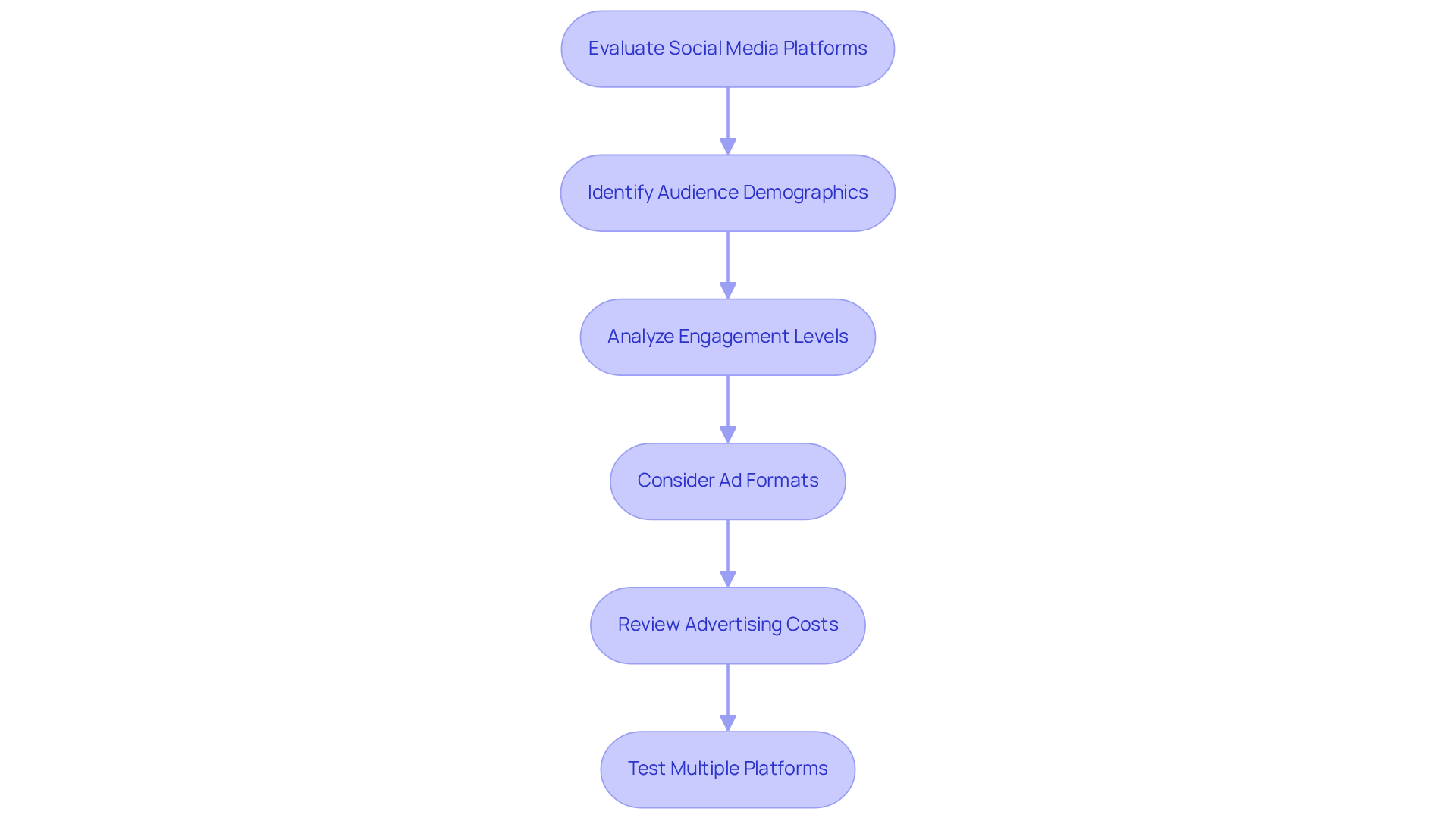
To effectively evaluate social media platforms for your advertising campaigns, follow these essential steps:
- Identify Audience Demographics: Understanding the is crucial. For instance, did you know that TikTok is primarily favored by younger viewers, especially Gen Z? In contrast, Facebook remains the most popular social media site worldwide in 2025, attracting a broader age demographic. This makes it essential for brands targeting diverse consumer segments to consider the where their audience spends time.
- Analyze Engagement Levels: Engagement levels vary significantly among platforms. As of 2025, Instagram boasts the highest at 3.5%, closely followed by LinkedIn at 3.4%. While TikTok's stands at 1.5%, it still garners substantial user interaction, particularly among younger demographics. Notably, Instagram recorded a remarkable engagement rate of 2.69% for photo posts, underscoring the effectiveness of visually engaging formats.
- Consider : each service offers distinct ad formats that can elevate your creative strategy. Instagram and TikTok shine with visually captivating formats like stories and reels, which are particularly effective for grabbing attention and driving engagement. Are you leveraging these formats to their full potential?
- : Familiarize yourself with the pricing structures of each service. For example, when using a like TikTok, understanding the CPC (cost per click) and CPM (cost per thousand impressions) rates is vital for effective budgeting, as its advertising costs can be competitive. Are you prepared to allocate your budget wisely?
- : Implement a testing phase with a modest budget across various platforms to identify where your ads perform best. With 69.2% of Millennials using social media in 2025, this demographic represents a during testing phases. Utilize analytics tools to monitor performance metrics, allowing you to refine your strategy based on real-time data and insights. What insights will you uncover during your testing?
Set Advertising Goals and Budget
To set and budget, follow these essential steps:
- : Start by ensuring your goals are Specific, Measurable, Achievable, Relevant, and Time-bound. For instance, aim to increase website traffic by 20% within three months. This clarity not only guides your efforts but also sets a benchmark for success.
- : It’s crucial that your promotional goals support broader business objectives, such as increasing sales or enhancing brand awareness. This alignment ensures that every marketing dollar spent contributes to your overall mission.
- : Analyze your overall marketing budget and allocate a portion specifically for the social media advertising platform. Consider factors like platform costs and expected ROI. A well-planned budget is the backbone of any successful campaign.
- : If available, review to inform your budget decisions. Understanding what has worked and what hasn’t can significantly enhance your strategy moving forward.
- : Regularly review your spending and performance against your goals. Be prepared to adjust your budget based on what is yielding the best results. This flexibility can be the difference between a successful campaign and one that falls flat.

Test and Optimize Your Campaigns
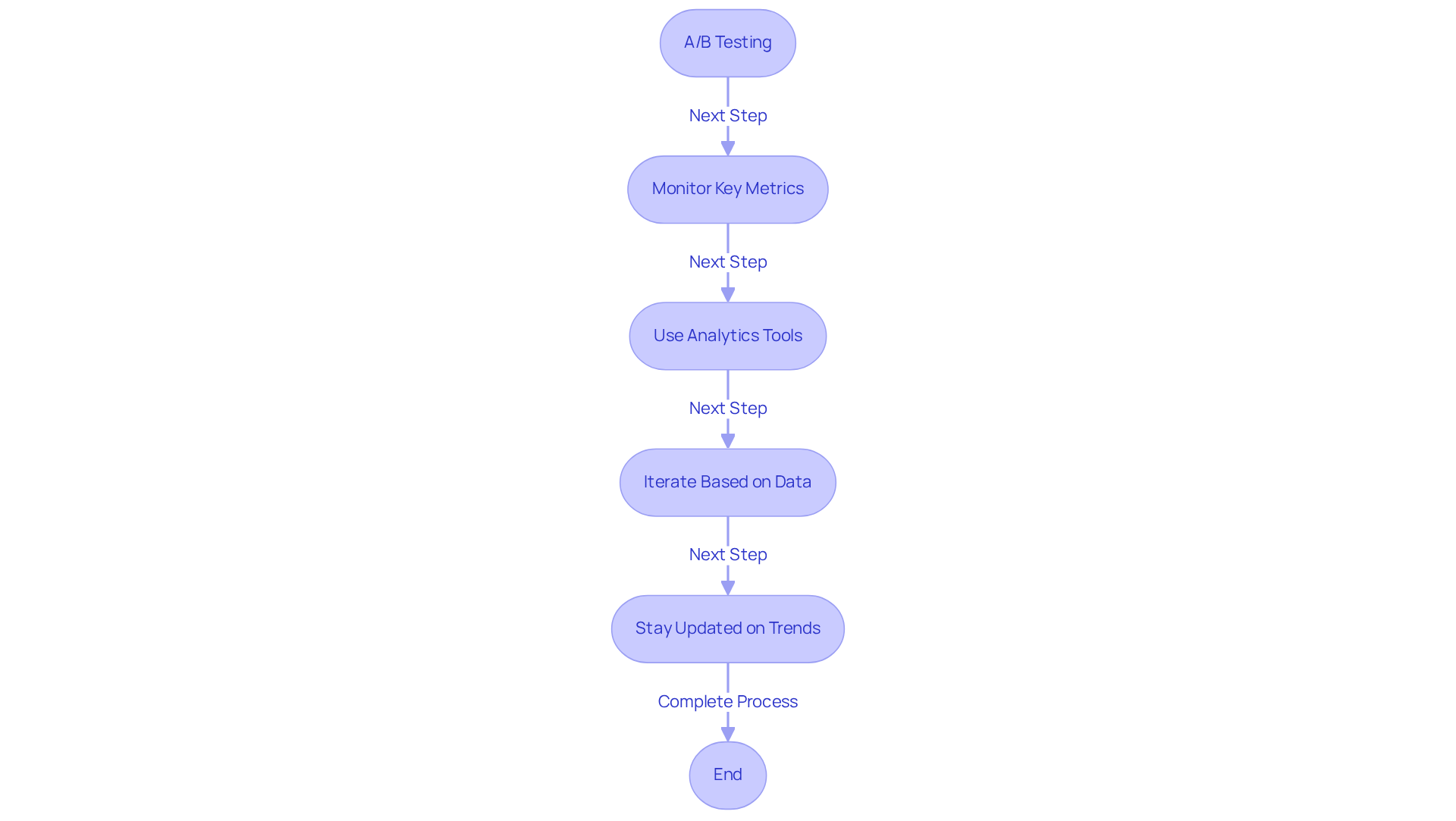
To effectively test and optimize your advertising campaigns, consider implementing these strategies:
- : Create variations of your ads—different headlines, images, or calls to action—and test them against each other to determine which performs better. Remember, requires a sample size of at least 25,000 visitors to achieve statistical significance, ensuring reliable results.
- : Track essential metrics like click-through rates (CTR), conversion percentages, and engagement levels to gauge campaign performance. In 2025, focus on the top three KPIs: website traffic, , and . These metrics are crucial for understanding the effectiveness of your campaigns on the social media advertising platform.
- : Leverage platform-specific to gain insights into audience behavior and ad performance. Tools like Google Analytics provide comprehensive data that can help refine your strategies. Companies utilizing these tools often see significant improvements in their campaign outcomes.
- Iterate Based on Data: Use the data collected from your tests to make informed decisions about which elements to keep, modify, or discard in your campaigns. Continuous iteration based on performance data can enhance and increase conversion rates, with better UX design potentially boosting conversions by up to 400%.
- : Keep an eye on emerging trends and changes in that may affect your campaigns. For instance, seasonal events can significantly alter marketing metrics such as CPC and CR, especially in Q4 for retail due to increased competition. Additionally, AI-powered targeting is transforming how advertisers reach audiences, allowing for more precise ad placements and improved . By adapting your strategies to these trends, you can maintain a competitive edge on the social media advertising platform within the digital advertising landscape.
Conclusion
Mastering social media advertising platforms is essential for businesses that want to excel in today’s competitive digital landscape. Understanding your target audience, evaluating the right platforms, setting clear advertising goals, and continuously optimizing campaigns can significantly boost marketing effectiveness and return on investment.
This article presents a comprehensive approach to social media advertising, highlighting the critical role of market research, audience personas, and competitive analysis in defining your target audience. It underscores the necessity of evaluating various platforms based on demographics, engagement levels, ad formats, and costs, ensuring that your advertising efforts align with business objectives. Additionally, setting SMART goals and leveraging historical data can guide budget decisions, while ongoing testing and optimization lead to improved campaign performance.
In a rapidly evolving advertising environment, staying informed about current trends and utilizing analytics tools empowers businesses to adapt and refine their strategies effectively. By prioritizing these best practices, brands can navigate the complexities of social media advertising and achieve their marketing goals, ensuring they remain relevant and impactful in 2025 and beyond. Are you ready to take your social media advertising to the next level?
Frequently Asked Questions
What are the essential steps to define my target audience?
The essential steps to define your target audience include conducting market research, creating audience personas, analyzing competitors, utilizing social media insights, and testing and iterating your approach.
How can I conduct effective market research?
You can conduct effective market research by leveraging surveys, focus groups, and social media analytics to collect data on potential customers, identifying key demographics, interests, and behaviors.
What are audience personas and why are they important?
Audience personas are detailed profiles of your ideal customers that outline their age, gender, location, interests, and pain points. They are important because they help tailor your messaging and make your B2B content and marketing more effective.
How can analyzing competitors help in defining my target audience?
Analyzing competitors helps by examining their followers and using tools like SimilarWeb or SEMrush to gain insights into who engages with their content, revealing gaps in your approach and opportunities for differentiation.
What role do social media insights play in understanding my audience?
Social media insights provide analytics on the demographics of your current followers, allowing you to enhance your target group based on genuine engagement data, which is crucial for precise targeting.
How can I test and refine my target audience?
You can test and refine your target audience by starting with a broad group and implementing A/B testing based on engagement and conversion metrics, continuously adjusting your viewer profiles as you gather more data.
Why is it important to keep updating audience personas?
It is important to keep updating audience personas to ensure they remain relevant and effective in driving results as consumer behaviors and preferences change over time.
List of Sources
- Define Your Target Audience
- qualtrics.com (https://qualtrics.com/ebooks-guides/market-research-trends)
- contentmarketinginstitute.com (https://contentmarketinginstitute.com/audience-building/build-b2b-marketing-personas)
- delve.ai (https://delve.ai/blog/social-media-personas)
- Social media demographics to inform your 2026 strategy (https://sproutsocial.com/insights/new-social-media-demographics)
- inbeat.agency (https://inbeat.agency/blog/social-media-statistics)
- Evaluate Social Media Platforms
- clearvoice.com (https://clearvoice.com/resources/social-media-statistics)
- blog.hootsuite.com (https://blog.hootsuite.com/average-engagement-rate)
- Social media demographics to inform your 2026 strategy (https://sproutsocial.com/insights/new-social-media-demographics)
- Set Advertising Goals and Budget
- ironmarkusa.com (https://ironmarkusa.com/setting-smart-goals-2025)
- ama.org (https://ama.org/marketing-news/the-ultimate-guide-to-advertising-types-strategies-and-best-practices-for-2025)
- strategyleaders.com (https://strategyleaders.com/how-to-set-effective-marketing-goals-for-your-small-business-in-2025)
- How To Align Marketing With Real Business Objectives (https://forbes.com/councils/forbesbusinesscouncil/2025/06/10/how-to-align-marketing-with-real-business-objectives-not-just-vanity-metrics)
- 120+ Must-know social media marketing statistics for 2026 (https://sproutsocial.com/insights/social-media-statistics)
- Test and Optimize Your Campaigns
- setupad.com (https://setupad.com/blog/marketing-kpis)
- A/B testing: A step-by-step guide for 2025 (with examples) (https://unbounce.com/landing-page-articles/what-is-ab-testing)
- 99firms.com (https://99firms.com/research/ab-testing-statistics)
- nuvoretail.com (https://nuvoretail.com/a-b-testing-ads-strategies-boost-roi)
- learn.g2.com (https://learn.g2.com/advertising-metrics)