
Introduction
In a landscape where consumers are increasingly wary of traditional advertising, how can brands leverage user-generated content to foster trust and authenticity? By tapping into the creativity and experiences of their customers, companies can enhance engagement and build a loyal community around their brand. Yet, many brands find it challenging to implement a UGC strategy that truly resonates with their audience while maintaining brand integrity. Navigating this delicate balance is crucial for brands aiming to cultivate genuine connections with their audience.
Define User-Generated Content and Its Importance
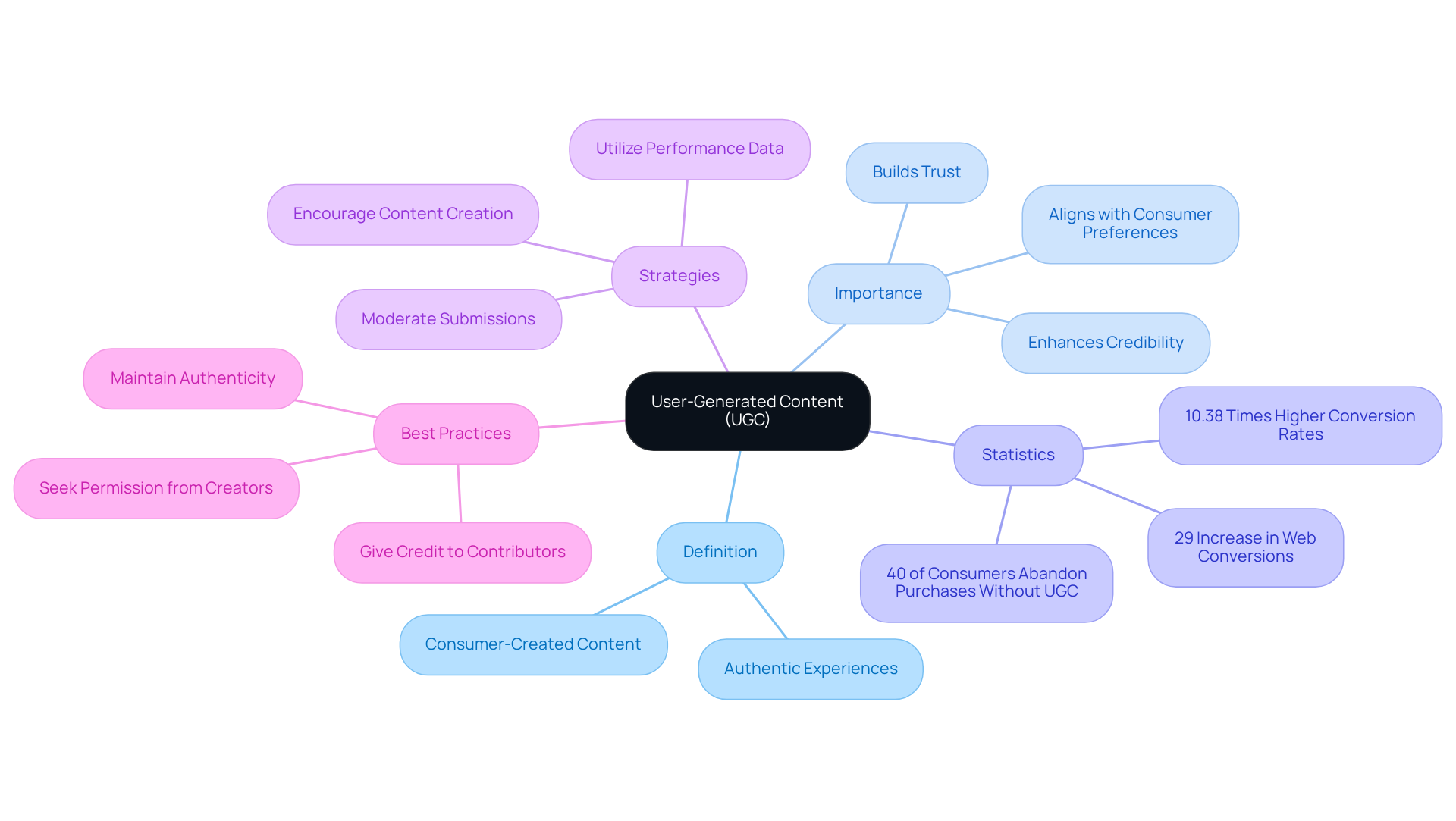
In a world where consumers are increasingly skeptical of traditional advertising, how can brands effectively build trust? The UGC strategy encompasses any material, such as images, videos, reviews, or social media posts, created by consumers rather than companies. This type of content has emerged as a crucial promotional asset within our UGC strategy, reflecting authentic consumer experiences and opinions. The UGC strategy serves as social proof, enhancing brand credibility and fostering trust among potential customers. Significantly, 40% of consumers will forgo a purchase if there is no user-generated content available, highlighting its importance in promotional strategies.
Brands that successfully implement a UGC strategy in their marketing can cultivate a more genuine connection with their audience, leading to heightened engagement and loyalty. For instance, social media posts featuring UGC drive conversion rates that are 10.38 times higher than those of brand-created posts, while UGC ads generate 28% higher engagement than non-UGC ads. Furthermore, websites that incorporate UGC experience a 29% increase in web conversions.
To make the most of their media goals, companies need to embrace a UGC strategy that includes creative approaches. By utilizing performance data and performing hypothesis-driven testing, companies can enhance their UGC campaigns for improved outcomes. As the UGC strategy continues to solidify its role in digital marketing, understanding its definition and significance is essential for companies striving to excel in competitive markets. However, companies must also seek permission before sharing user-generated material and moderate submissions to maintain their reputation. By leveraging UGC, companies not only enhance their reputation but also align themselves with consumer preferences, ultimately driving better business outcomes.
Explore Different Types of User-Generated Content
Are you leveraging user-generated content (UGC) to its full potential through your UGC strategy? UGC encompasses various types, each offering distinct advantages for brands aiming to enhance engagement and authenticity. The most common types include:
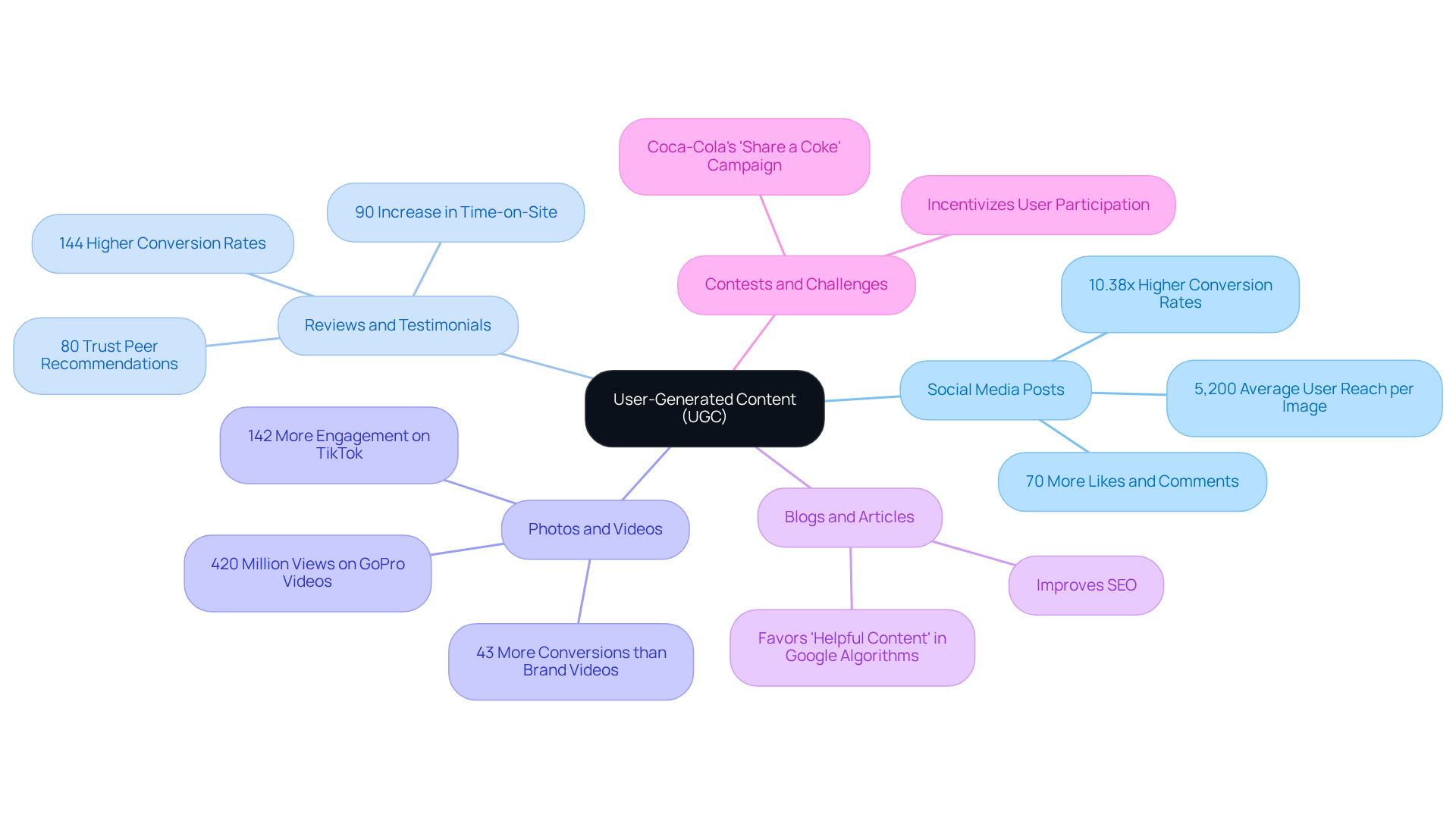
- Social Media Posts: Content shared by users on platforms like Instagram, Facebook, and TikTok, often showcasing products or services in real-life scenarios. In 2026, social media posts showcasing UGC are expected to generate 10.38 times greater conversion rates compared to brand-created material, emphasizing their impact on influencing purchase decisions.
- Reviews and Testimonials: Written feedback from customers that can be prominently displayed on websites or social media. Did you know that about 80% of consumers trust peer recommendations more than traditional ads? This makes these testimonials crucial for building credibility and trust.
- Photos and Videos: Visual material created by users that can be repurposed in marketing campaigns. UGC videos on platforms like TikTok generate 142% more engagement and 43% more conversions than brand-created videos, showcasing the power of authentic visual storytelling.
- Blogs and Articles: Longer-form material created by users that offers in-depth insights and experiences related to a brand. This kind of material can improve SEO and attract organic traffic, as Google's algorithms increasingly favor 'helpful material' and 'first-hand experience.'
- Contests and Challenges: Campaigns that motivate users to generate material around a specific theme or product, often incentivized by prizes. Successful examples include Coca-Cola's 'Share a Coke' campaign, which generated millions of organic posts and significantly enhanced engagement with the product.
Failing to embrace UGC could mean missing out on a powerful tool for engagement and loyalty in today's market. By strategically utilizing a mix of these UGC types, companies can create a diverse strategy that resonates with different audience segments, ultimately improving engagement and fostering loyalty.
Highlight Benefits of a UGC Strategy for Brands
Are you aware that implementing a UGC strategy can transform your brand's marketing approach? It offers a wealth of advantages, including:
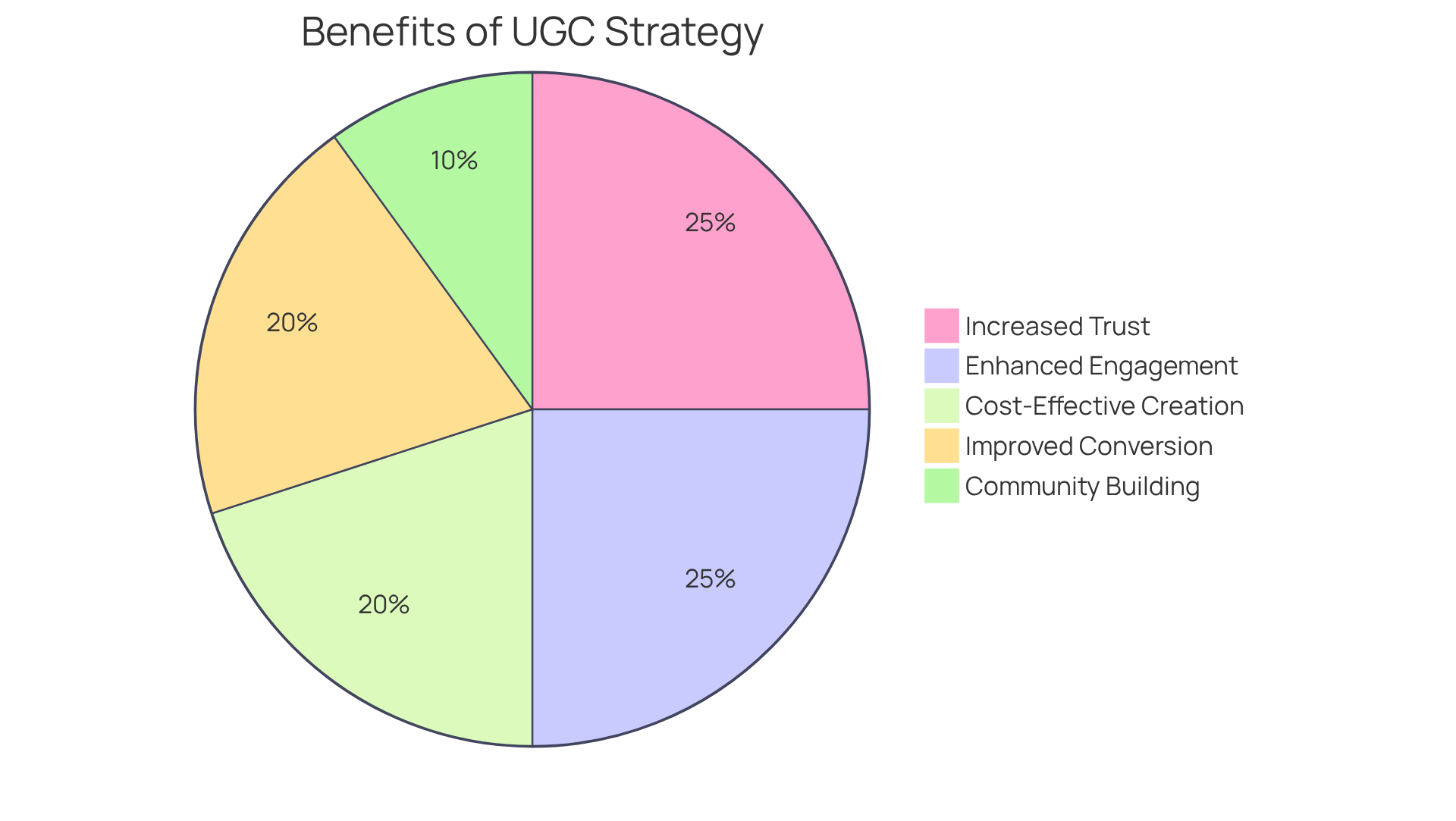
- Increased Trust and Authenticity: Many people find UGC more trustworthy than traditional ads, reflecting genuine customer experiences. In fact, 72% of consumers trust peer reviews and testimonials more than company messaging, making UGC a powerful tool for building trust.
- Enhanced Engagement: Brands that incorporate UGC often experience significantly higher engagement rates. For example, social posts showcasing UGC attain 10.38 times greater conversion rates than brand-created materials, as consumers are more likely to engage with relatable and genuine content.
- Cost-Effective Content Creation: UGC helps companies cut down on content production costs by using content created by their customers. Creating UGC costs around one-fourth of professional video production, making it a financially wise option for companies aiming to maximize their marketing budgets.
- Improved Conversion Rates: UGC has been shown to drive higher conversion rates. Campaigns utilizing UGC deliver 29% higher conversion rates, with visitors interacting with UGC converting at a rate 102.4% higher than average. This influence stems from the positive experiences shared by real customers, which resonate more with potential buyers. Notably, UGC drives 6.73 times higher conversions overall, underscoring its effectiveness in boosting sales.
- Stronger Community Building: Encouraging UGC fosters a sense of community among customers, transforming them into advocates for the company. This communal aspect not only enhances loyalty but also encourages customers to share their experiences, further amplifying visibility and engagement.
How can your company leverage these advantages of the UGC strategy to enhance your marketing efforts? By adopting a UGC strategy, brands can not only save costs but also enhance their revenue potential. Companies utilizing UGC have reported a 20% increase in ROI and a 154% increase in revenue per visitor, demonstrating the financial impact of integrating UGC into marketing strategies.
Implement Best Practices for Managing User-Generated Content
Are you truly harnessing the power of user-generated content to elevate your brand? To effectively manage user-generated content, brands should adopt the following best practices:
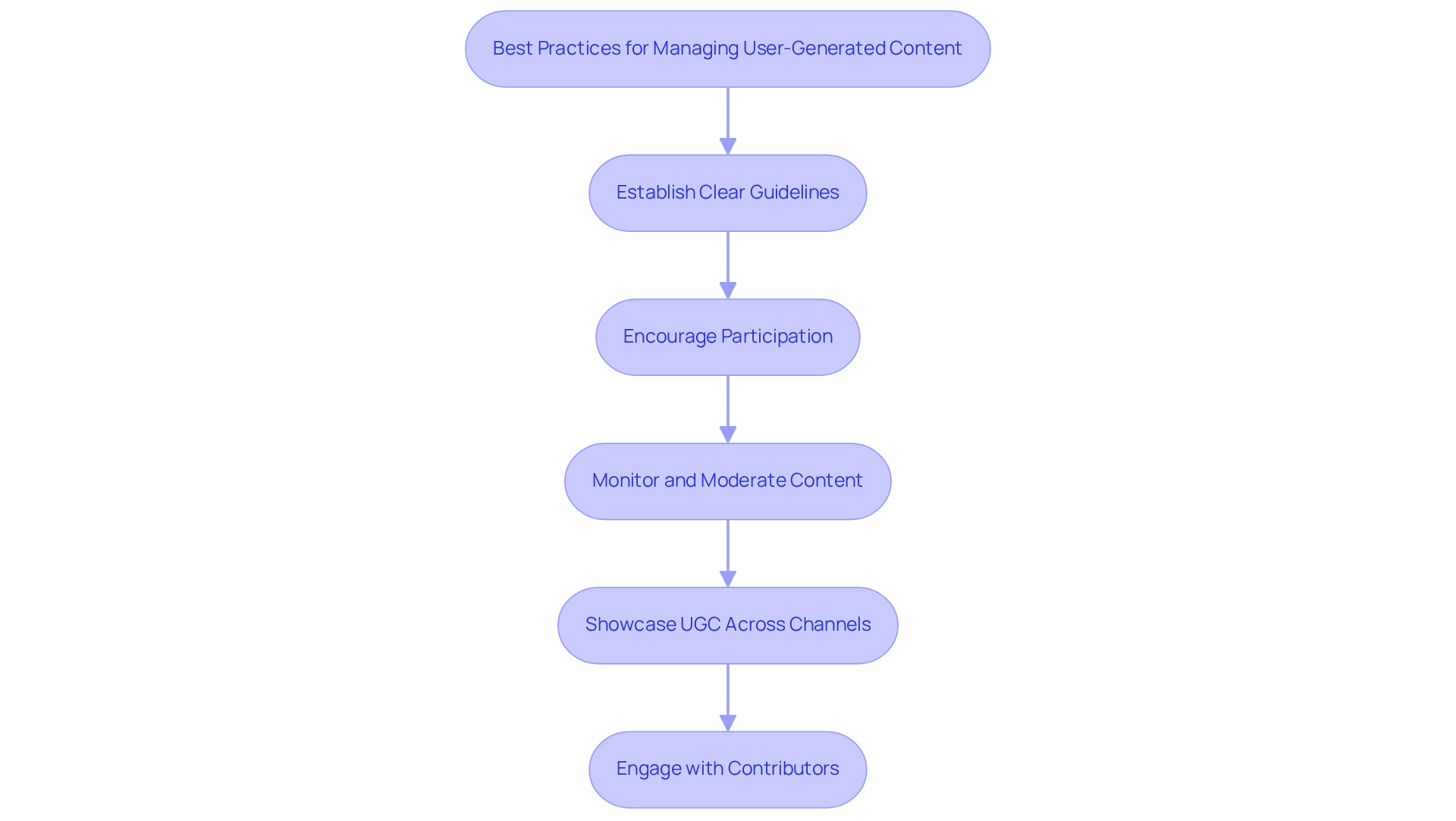
- Establish Clear Guidelines: Create specific guidelines detailing acceptable types of UGC to ensure consistency with company values and messaging. This clarity helps users understand what is expected and encourages quality submissions.
- Encourage Participation: Actively invite customers to share their experiences through campaigns, contests, or social media prompts. For instance, hosting monthly giveaways can incentivize users to create and share content. One company saw a 27% rise in sales from a UGC contest, proving this strategy's effectiveness.
- Monitor and Moderate Content: Regularly review UGC to maintain quality and ensure it aligns with messaging. Implement moderation tools to filter out inappropriate material, which is crucial for maintaining brand integrity and trust.
- Showcase UGC Across Channels: Utilize UGC in different promotional channels, including social media, websites, and email campaigns. Brands that showcase UGC on product pages can witness conversion rates rise by as much as 29%, underscoring the significance of incorporating genuine content into promotional strategies.
- Engage with Contributors: Acknowledge and thank users for their contributions, fostering a sense of community. Engaging with contributors not only encourages further participation but also builds loyalty and trust among customers. Research shows that 79% of users trust UGC more than traditional ads, reinforcing the value of these interactions.
Many brands find it challenging to harness the full potential of user-generated content. By applying these optimal methods, companies can truly tap into the potential of their UGC strategy, improving their promotional strategies and fostering stronger relationships with their audience. Successful brands like Coca-Cola, which saw a surge in social media posts through their personalized bottle campaign, and Gymshark, which effectively utilized UGC in their marketing, have demonstrated that a structured UGC strategy can lead to significant increases in engagement and sales. Neglecting a structured approach to UGC could mean missing out on valuable customer connections and sales.
Conclusion
In an era where consumer skepticism is at an all-time high, brands must rethink their marketing strategies. User-generated content (UGC) has emerged as a vital component of modern marketing, enabling brands to forge authentic connections with their audiences. By shifting focus from traditional advertising to consumer voices, companies can build trust and credibility in today’s skeptical marketplace. Embracing a UGC strategy not only enhances engagement but also positions brands to thrive in competitive environments.
Throughout this article, we’ve explored various aspects of UGC, including its definition, types, and undeniable benefits. From social media posts and reviews to contests and testimonials, UGC offers a diverse toolkit for brands aiming to enhance authenticity and drive consumer engagement. The discussion highlighted how UGC can lead to significantly higher conversion rates, improve brand loyalty, and create cost-effective marketing solutions. Best practices for managing UGC, such as establishing clear guidelines and actively engaging with contributors, further emphasize the importance of a structured approach to leveraging this powerful content.
For brands wanting to truly resonate with their audiences, incorporating UGC isn’t just a trend; it’s essential. By harnessing the collective creativity and experiences of consumers, brands can create a vibrant community that boosts visibility and fosters long-term loyalty. To remain competitive, brands must not only adopt UGC but also integrate it deeply into their marketing DNA.
Frequently Asked Questions
What is user-generated content (UGC)?
User-generated content (UGC) refers to any material, such as images, videos, reviews, or social media posts, created by consumers rather than companies.
Why is UGC important for brands?
UGC is important because it reflects authentic consumer experiences and opinions, serving as social proof that enhances brand credibility and fosters trust among potential customers. Notably, 40% of consumers will forgo a purchase if there is no UGC available.
How does UGC impact consumer engagement and loyalty?
Brands that implement a UGC strategy can cultivate a more genuine connection with their audience, leading to heightened engagement and loyalty. UGC social media posts drive conversion rates that are 10.38 times higher than brand-created posts.
What are the benefits of UGC ads compared to non-UGC ads?
UGC ads generate 28% higher engagement than non-UGC ads, making them more effective in capturing consumer attention.
How does incorporating UGC on websites affect conversions?
Websites that incorporate UGC experience a 29% increase in web conversions, demonstrating its effectiveness in enhancing online sales.
What should companies consider when implementing a UGC strategy?
Companies need to seek permission before sharing user-generated material and moderate submissions to maintain their reputation. They should also utilize performance data and conduct hypothesis-driven testing to improve their UGC campaigns.
How does UGC align with consumer preferences?
By leveraging UGC, companies enhance their reputation and align themselves with consumer preferences, ultimately driving better business outcomes.
List of Sources
- Define User-Generated Content and Its Importance
- 36 User-Generated Content Statistics That You Can’t Ignore | EveryoneSocial (https://everyonesocial.com/blog/user-generated-content-statistics)
- 10 User-Generated Content Statistics for 2026 (https://buzzinly.com/post/user-generated-content-statistic-2026)
- How User-Generated Content Helps You Build Trust and Credibility (https://entrepreneur.com/growing-a-business/how-user-generated-content-helps-you-build-trust-and/487866)
- User-Generated Content(UGC) Stats And Facts - 2026 (https://taggbox.com/blog/user-generated-content-facts-and-stats)
- Will User-generated Content be even more important in 2026? (https://linkbuildinghq.com/knowledge-center/will-user-generated-content-be-even-more-important-in-2026)
- Explore Different Types of User-Generated Content
- UGC Content Examples: 12 Brands Doing It Right in 2026 (https://youscan.io/blog/ugc-content-examples)
- 10 User-Generated Content Statistics for 2026 (https://buzzinly.com/post/user-generated-content-statistic-2026)
- User Generated Content Statistics: UGC Stats Compilation - Flowbox (https://getflowbox.com/blog/user-generated-content-statistics)
- 55+ UGC Statistics (2026): Consumer Trust, Conversions, and Market Data - Billo (https://billo.app/blog/ugc-statistics)
- 36 User-Generated Content Statistics That You Can’t Ignore | EveryoneSocial (https://everyonesocial.com/blog/user-generated-content-statistics)
- Highlight Benefits of a UGC Strategy for Brands
- User-Generated Content(UGC) Stats And Facts - 2026 (https://taggbox.com/blog/user-generated-content-facts-and-stats)
- UGC Marketing: Your Ultimate Guide for 2026 (https://socalnewsgroup.com/2025/12/05/user-generated-content-guide)
- UGC: How Brands Can Use User-Generated Content in 2026 (https://tactus.ee/ugc-2026-brand-content)
- 55+ UGC Statistics (2026): Consumer Trust, Conversions, and Market Data - Billo (https://billo.app/blog/ugc-statistics)
- 36 User-Generated Content Statistics That You Can’t Ignore | EveryoneSocial (https://everyonesocial.com/blog/user-generated-content-statistics)
- Implement Best Practices for Managing User-Generated Content
- UGC Best Practices, Expert Tips & Trends to Grow in 2026 (https://embedsocial.com/blog/ugc-best-practices-and-future-trends)
- adikarahtech.com (https://adikarahtech.com/ugc-strategy-2026)
- 36 User-Generated Content Statistics That You Can’t Ignore | EveryoneSocial (https://everyonesocial.com/blog/user-generated-content-statistics)
- UGC: How Brands Can Use User-Generated Content in 2026 (https://tactus.ee/ugc-2026-brand-content)
- UGC Best Practices in 2026 | Moburst (https://moburst.com/ugc-best-practices-in-2026-what-the-data-actually-says-about-content-that-converts)
Need Better Performing Social Content?
MediaNug helps brands scale through creator partnerships, performance creative, and platform-native content strategies built for modern social platforms.
Continue Reading
Influencer & Creator Marketing
- The Complete Guide to Influencer Marketing Strategy & Operations
- The Complete Guide to UGC Content Strategy for Brands
- Master UGC Creator Tools: Best Practices for Brand Success
Paid Social & Performance Creative
- The Complete Guide to Paid Social Creative Strategy
- Why Your Brand Needs a Performance Creative Agency for Growth
- What is an Ad Creative Agency and Why It Matters for Brands
Platform & Trend Insights
- UGC Creators for Paid Social Ads: How to Find, Vet, and Scale Winning Creative
- 4 Best Practices for Effective TikTok Creatives That Drive Engagement
- 10 Key Insights on Instagram Demographics for Brand Strategies
- The Role Of Visual Storytelling In Social Media
Strategy & Growth
- Understanding Creative Strategy: Key Concepts and Examples
- 6 Steps to Create an Effective Creative Strategy Sample
- Understanding eCommerce Brand Strategy: Importance and Key Components