Introduction
In the ever-evolving world of digital marketing, maximizing return on investment (ROI) stands as a critical priority for brands. Internet advertising consultants are essential in navigating this complex landscape, providing strategies that drive measurable growth. Yet, businesses often grapple with significant challenges:
- How can they set clear objectives?
- How do they choose the right consultants?
- How can they foster effective communication?
This article explores best practices that not only enhance collaboration but also empower brands to achieve their advertising goals with precision and efficiency.
Define Clear Objectives and Expectations
To maximize ROI in internet advertising consultants, defining clear goals using the SMART framework - Specific, Measurable, Achievable, Relevant, and Time-bound - is essential. For example, rather than stating an ambiguous aim like 'increase brand awareness,' a more precise target would be 'boost website traffic by 30% over the next quarter.' This clarity not only aligns the team's efforts but also enhances the ability to track progress and make informed, data-driven decisions.
Clear communication of these goals to all stakeholders is crucial, as it fosters accountability and focus throughout the initiative. Research indicates that teams employing SMART objectives achieve 42% greater productivity in their digital initiatives, underscoring the significance of organized target setting. Furthermore, campaigns with well-defined objectives can see up to a 40% increase in ROI, showcasing the tangible benefits of precise target articulation.
By integrating these practices, brands can navigate the complexities of digital advertising more effectively with the guidance of internet advertising consultants and drive measurable growth. As highlighted by the European Marketing Confederation, unclear objectives can lead to a 25% reduction in engagement, emphasizing the necessity for clarity in target setting. Additionally, consider the case of an expat consultancy that aimed to boost inquiries from international students in The Hague by 20% through bilingual content; this illustrates the practical application of these principles.
By ensuring that digital marketing goals align with the overall marketing strategy, brands can enhance their effectiveness and contribute to broader business objectives.

Assess Consultant Expertise and Experience
When selecting internet advertising consultants, it is essential to thoroughly evaluate their expertise and experience. Did you know that 85% of US B2C marketing executives plan to review their media agencies in 2026? This statistic underscores the importance of making the right choice. Prioritize internet advertising consultants who have a proven track record in your industry and are familiar with the specific platforms you intend to use, such as TikTok and Instagram.
Request detailed case studies or examples of past projects they have managed, focusing on key performance metrics like ROI, engagement rates, and conversion rates. Furthermore, their understanding of the latest trends and tools in digital marketing - especially the growing emphasis on AI integration and social-first strategies - can significantly impact the effectiveness of your initiatives. A consultant who comprehends the nuances of your target audience and market dynamics will be better positioned to deliver impactful results.
As Robin Forbes, CEO of R/GA, pointed out, more brand work is driven by the search for growth. This makes it crucial to select a consultant who can adeptly navigate these evolving demands. Are you ready to find the right partner to elevate your digital marketing efforts?

Foster Open Communication and Collaboration
To achieve optimal results, it's crucial to foster a culture of open communication and collaboration with your internet advertising consultants. Regular check-ins should be scheduled to discuss project progress, challenges, and insights. Furthermore, utilizing collaborative tools that allow for real-time updates and feedback ensures that both parties can contribute ideas and adjustments as needed. By encouraging transparency through the sharing of performance data and analytics, you can identify areas for improvement effectively. This collaborative approach not only strengthens the partnership but also enhances its adaptability to changing market conditions.

Implement Continuous Monitoring and Optimization
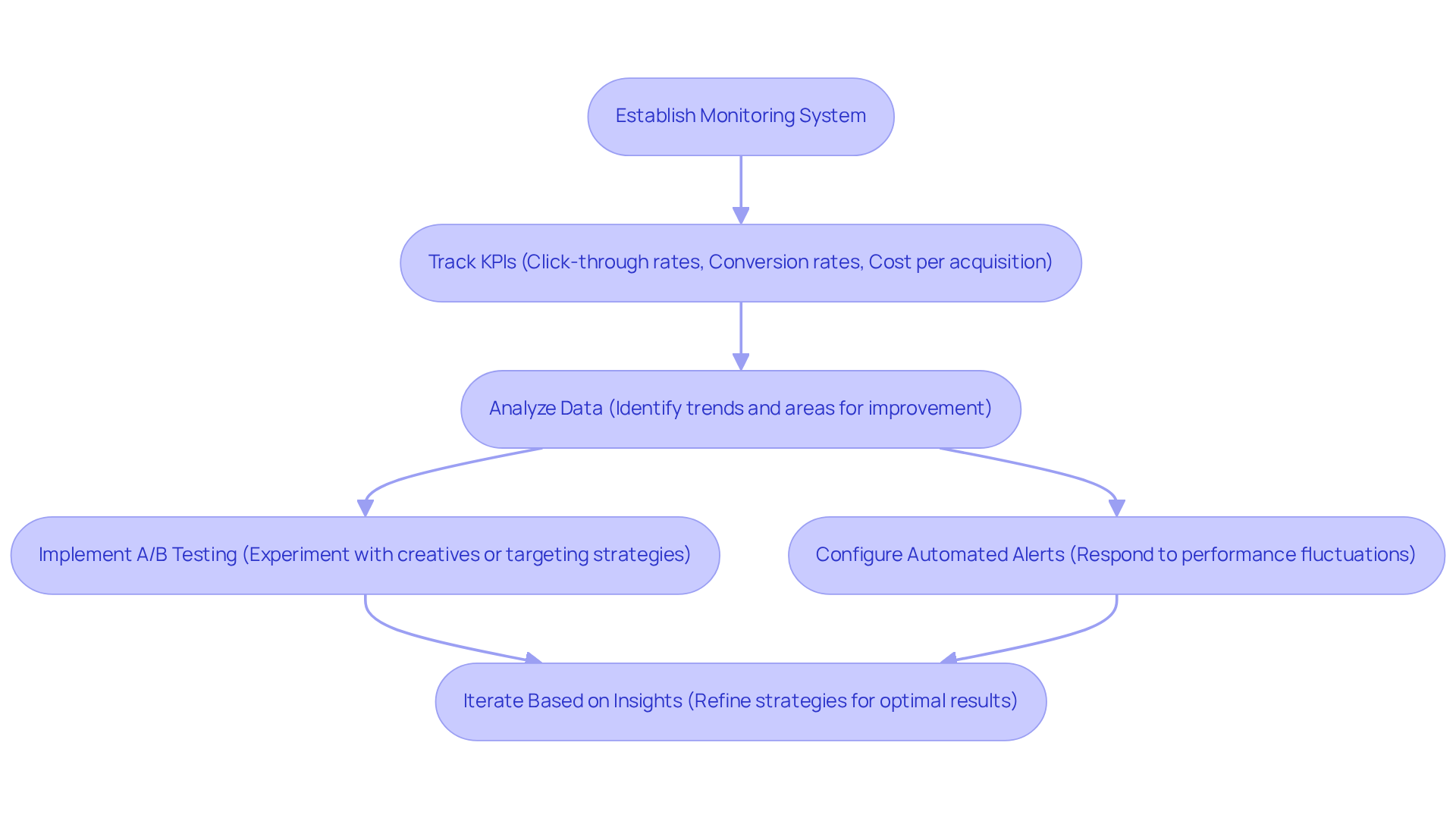
To maximize your ROI, it's crucial to establish a robust system for ongoing monitoring and enhancement of your advertising efforts. Did you know that leveraging analytics tools like Google Analytics, HubSpot, or Adobe Analytics can significantly impact your performance? By tracking essential performance indicators (KPIs) such as:
- Click-through rates
- Conversion rates
- Cost per acquisition
you can gain valuable insights into your campaigns. Regularly analyzing this data allows you to uncover trends and identify areas for improvement. For instance, studies show that initiatives utilizing A/B testing can achieve a remarkable 20% to 30% increase in conversion rates. If a specific ad format isn't meeting expectations, why not implement A/B testing to experiment with different creatives or targeting strategies?
Furthermore, configuring automated alerts for significant fluctuations in performance metrics enables you to respond promptly, capitalizing on positive trends or addressing negative shifts. This proactive methodology ensures your campaigns remain finely tuned for optimal results. However, be mindful of common pitfalls, such as neglecting to set clear goals or failing to iterate based on data insights, as these can hinder your optimization efforts. Are you ready to take your advertising strategy to the next level?
Conclusion
Maximizing return on investment (ROI) in internet advertising is not just a goal; it’s a necessity. Implementing best practices that enhance clarity, collaboration, and continuous improvement is crucial. By establishing specific, measurable objectives and ensuring alignment among all stakeholders, brands can significantly boost productivity and engagement. The SMART framework stands out as a powerful tool for setting these clear goals, ultimately leading to better performance and higher ROI.
Key strategies outlined throughout this article highlight the importance of:
- Selecting experienced consultants
- Fostering open communication
- Implementing ongoing monitoring and optimization of campaigns
Evaluating a consultant's expertise and maintaining a transparent partnership can lead to more effective advertising strategies. Furthermore, leveraging analytics tools for continuous assessment allows brands to adapt and refine their approaches, ensuring they remain competitive in a dynamic landscape.
The significance of these practices cannot be overstated. As digital marketing evolves, organizations must prioritize clarity in objectives, collaboration with experts, and a commitment to data-driven optimization. Embracing these strategies not only enhances the efficacy of advertising efforts but also positions brands for sustainable growth in an increasingly complex digital marketplace. Taking action now to refine these elements could be the key to unlocking unprecedented levels of success in internet advertising initiatives.
Frequently Asked Questions
What is the SMART framework for setting objectives in internet advertising?
The SMART framework stands for Specific, Measurable, Achievable, Relevant, and Time-bound. It is used to define clear goals that enhance focus and accountability in advertising initiatives.
Why is it important to define clear objectives in internet advertising?
Defining clear objectives helps align the team's efforts, enhances the ability to track progress, and supports data-driven decision-making. It can lead to increased productivity and return on investment (ROI).
How does using SMART objectives impact productivity and ROI?
Teams that employ SMART objectives achieve 42% greater productivity in their digital initiatives and can see up to a 40% increase in ROI from campaigns with well-defined objectives.
What are the consequences of unclear objectives in advertising?
Unclear objectives can lead to a 25% reduction in engagement, highlighting the importance of clarity in target setting for effective advertising campaigns.
Can you provide an example of applying SMART objectives in a campaign?
An example is an expat consultancy that aimed to boost inquiries from international students in The Hague by 20% through bilingual content, demonstrating the practical application of SMART principles.
How can aligning digital marketing goals with overall marketing strategy benefit brands?
Ensuring that digital marketing goals align with the overall marketing strategy enhances effectiveness and contributes to broader business objectives, driving measurable growth.
List of Sources
- Define Clear Objectives and Expectations
- marketmymarket.com (https://marketmymarket.com/dental-marketing/mastering-setting-smart-goals-for-your-digital-marketing-efforts)
- Key Steps for Setting Successful Marketing Goals in 2026 - Outsource Digital Marketing With Tempesta Media (https://tempestamedia.com/2026/01/30/key-steps-for-setting-successful-marketing-goals-in-2026)
- alligo.nl (https://alligo.nl/blog/setting-smart-goals-for-your-digital-marketing-campaigns)
- medianug.com (https://medianug.com/blog/master-new-marketing-techniques-for-2026-best-practices-unveiled)
- Assess Consultant Expertise and Experience
- iab.com (https://iab.com/insights/2026-outlook)
- What separates agencies winning 2026 reviews—and how specialization is leading them to success (https://adage.com/agencies/aa-2026-new-business-specialties)
- 100 ad leaders predict 2026 marketing trends—what’s next for AI, agencies, creativity, media and more (https://tritondigital.com/news-item/January-05-2026/100-ad-leaders-predict-2026-marketing-trends-what-s-next-for-ai-agencies-creativity-media-and-more)
- mediaocean.com (https://mediaocean.com/news/2026/01/21/2026-advertising-outlook-report-release)
- Marketing Agencies In 2026: Reshaping Strategies For A New Era (https://forbes.com/sites/forrester/2025/10/24/marketing-agencies-in-2026-reshaping-strategies-for-a-new-era)
- Foster Open Communication and Collaboration
- 5 of the Best Ways Agencies Collaborate with Clients & Other Agencies (https://instapage.com/blog/agency-collaboration)
- Advertising Week (https://advertisingweek.com/how-advertising-agencies-can-enhance-communication-strategies-to-cultivate-strong-client-relationships)
- byfinessegroup.com (https://byfinessegroup.com/blog/4-best-practices-for-working-with-public-relations-advertising-agencies)
- overskies.com (https://overskies.com/blog/4-best-practices-for-collaborating-with-your-ad-company)
- 17 Strategies To Develop Truly Effective Agency-Client Partnerships (https://forbes.com/councils/forbescommunicationscouncil/2026/03/04/17-strategies-to-develop-truly-effective-agency-client-partnerships)
- Implement Continuous Monitoring and Optimization
- emarketer.com (https://emarketer.com/content/digital-advertising-trends-watch-2026)
- salesforce.com (https://salesforce.com/marketing/analytics/tools)
- The Most Important Digital Marketing Trends You Need to Know in 2026 | Digital Marketing Institute (https://digitalmarketinginstitute.com/blog/digital-marketing-trends-2026)
- AI in advertising: How to use it the right way in 2026 (https://stackadapt.com/resources/blog/ai-advertising)
- Digital Marketing Strategies to Grow Your Business in 2026 (https://oursglobal.com/blog/digital-marketing-strategies-that-actually-work-in-2026)