Introduction
In today's fiercely competitive marketplace, harnessing performance-based marketing strategies is not just beneficial - it's essential for brands aiming for measurable success. By aligning their marketing goals with the unique strengths of performance marketing firms, companies can discover innovative approaches that significantly enhance their promotional outcomes. However, the real challenge lies in effectively integrating data-driven insights and continuous optimization into these strategies. How can organizations navigate this complex landscape to ensure their marketing efforts yield tangible results?
Furthermore, understanding the nuances of performance marketing can empower brands to make informed decisions that drive growth. By leveraging analytics and real-time data, businesses can refine their strategies, ensuring they remain agile and responsive to market changes. In addition, successful case studies illustrate how brands have transformed their marketing efforts through strategic partnerships with performance marketing experts.
Ultimately, the path to success involves not just adopting these strategies but actively engaging with them. Are you ready to elevate your marketing game and achieve the results you've been striving for?
Align Marketing Goals with Performance Partners
To enhance the effectiveness of , companies must establish clear and measurable that align with their collaboration partners. This collaborative approach requires both parties to discuss and agree on that reflect desired outcomes. For example, if a company's goal is to improve , the collaborator should implement strategies aimed at increasing traffic and conversions. Regular check-ins and updates on progress toward these goals are essential for maintaining alignment and adjusting strategies as necessary. Clear protocols, continuous communication, and integrated processes are critical for sustaining prospect engagement.
A significant case study from a leading e-commerce brand illustrates this point: aligning their with their agency's efforts resulted in an impressive 30% increase in within just three months. Furthermore, B2B organizations with strong experience 24% faster and 27% faster profit growth. This underscores the vital role of KPIs in driving performance. As Steve Harlow, Head of Sales, asserts, " is no longer optional. It’s a structural growth driver that directly impacts pipeline, conversion, and revenue predictability." This statement highlights the importance of not only setting goals but also ensuring that both teams work cohesively to achieve them.

Leverage Unique Capabilities of Performance Marketing Firms
have unique skills that can significantly enhance a company's . These skills include:
With a staggering 85% of advertisers currently investing in AI and machine learning for promotional purposes, it’s crucial for companies to grasp these capabilities and integrate them into their strategies.
For example, consider a company that partnered with a . This collaboration enabled them to identify high-value customer segments, leading to a that boosted ROI by an impressive 50%. As brands increasingly shift their ad budgets toward channels that yield measurable outcomes, play a crucial role in leveraging these distinctive strengths to develop more effective and efficient .
However, it’s vital to remain aware of the made by leading platforms. A balanced approach to is necessary to navigate this landscape effectively. Are you ready to elevate your promotional efforts by embracing these innovative capabilities?

Utilize Data-Driven Insights for Strategic Collaboration
form the bedrock of . Brands must invest in that deliver on , , and market trends. By sharing these insights with collaborators, both parties can enhance their approaches and improve results.
For example, a fintech company that harnessed to monitor adjusted its messaging and targeting in real time, leading to an impressive 40% increase in user sign-ups. This collaborative approach ensures that both the brand and the promotional firm are aligned in their strategies and can swiftly adapt based on .
Organizations that leverage are better positioned to gain a and achieve superior results. Many leaders report that while campaign metrics may seem successful, they often fail to translate into actual revenue outcomes.

Implement Continuous Testing and Optimization Strategies
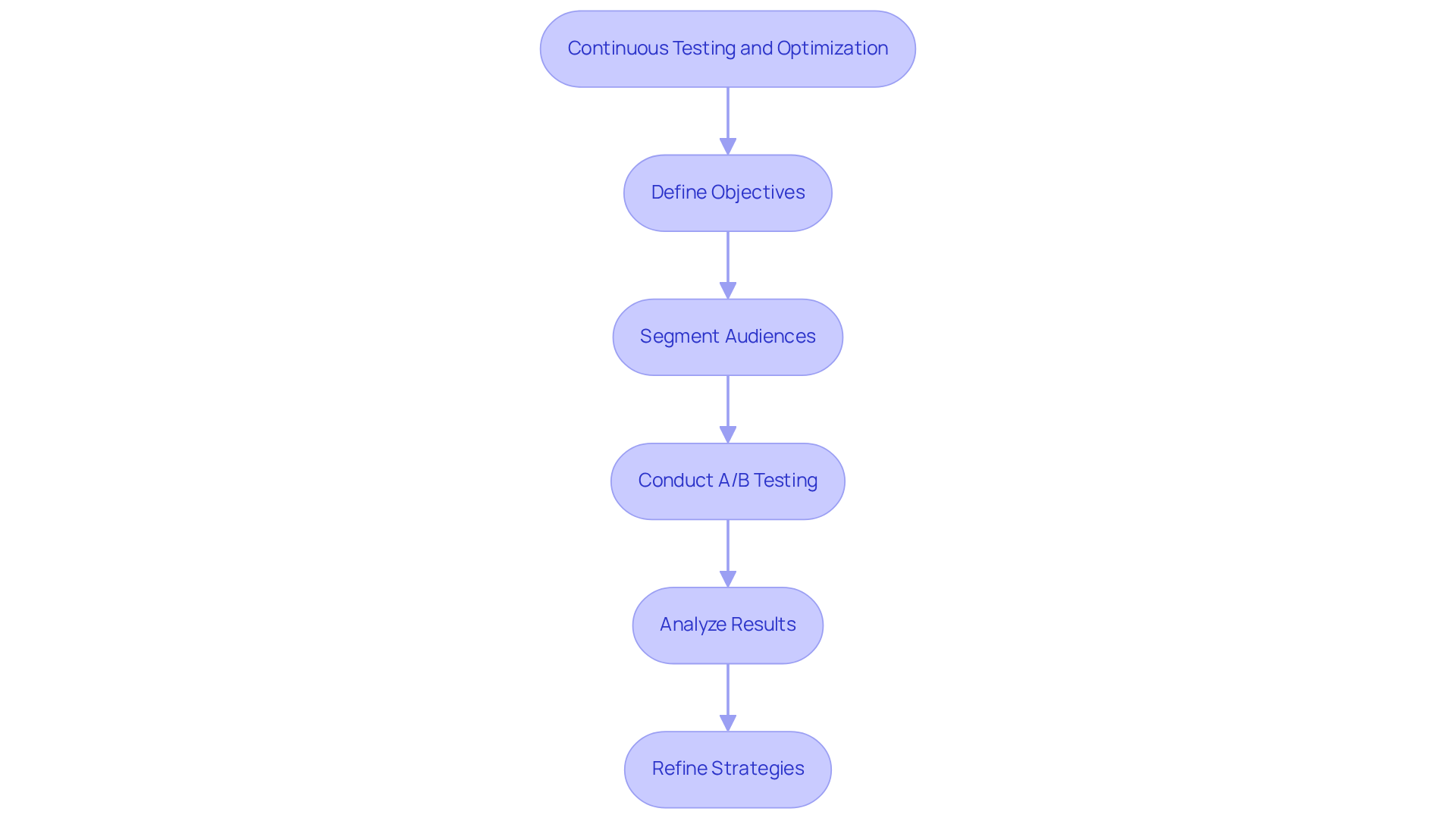
Ongoing testing and are not just beneficial; they are essential for a . Brands must embrace an , regularly testing and refining campaigns based on performance data. This could mean different ad creatives, adjusting targeting parameters, or experimenting with various messaging strategies. For instance, a lifestyle company that committed to continuous testing discovered that by consistently optimizing their ad creatives, they boosted their click-through rates by an impressive 25% over six months. This finding resonates with insights from the case study "The Shift to Always-On Testing," which underscores in adapting messaging and offers in real-time.
By , brands can not only stay ahead of the competition but also . include:
- Clearly defining objectives
- Segmenting audiences for targeted insights
- Analyzing results to inform future strategies
Alarmingly, 76% of organizations create content without being informed by verified buyer signals or performance analytics, highlighting the necessity of in . As Becky Johnson aptly stated, "In 2026, speed to learning beats 'best ad' thinking every time." Brands that prioritize and agile testing will undoubtedly be better positioned for success.
Conclusion
Maximizing success through performance-based marketing is fundamentally about aligning goals between companies and their marketing partners. Clear and measurable objectives, along with continuous communication and collaboration, are essential for driving effective strategies that yield significant results. This partnership approach not only enhances accountability but also fosters innovation, enabling both parties to adapt and thrive in a competitive marketplace.
Key insights emphasize the importance of leveraging the unique capabilities of performance marketing firms. These capabilities include:
- Advanced data analytics
- Proprietary technology
- Creative content development
By utilizing data-driven insights and implementing continuous testing and optimization strategies, brands can significantly enhance their promotional efforts and achieve superior outcomes. The case studies provided illustrate the tangible benefits of these approaches, showcasing how strategic collaboration can lead to remarkable improvements in metrics such as conversion rates and user engagement.
In an evolving digital landscape, embracing performance-based marketing strategies is not just advantageous; it is essential for sustained growth and success. Companies are encouraged to invest in analytics, foster open communication with partners, and cultivate a culture of continuous improvement. By doing so, they position themselves to not only meet but exceed their marketing objectives, ensuring they remain competitive and relevant in their industries. Taking these steps will pave the way for a more effective and results-driven marketing approach that can adapt to changing consumer behaviors and market dynamics.
Frequently Asked Questions
What is the importance of aligning marketing goals with performance partners?
Aligning marketing goals with performance partners enhances the effectiveness of advertising strategies by ensuring both parties agree on key performance indicators (KPIs) that reflect desired outcomes.
How should companies approach the establishment of marketing objectives with their partners?
Companies should discuss and agree on clear and measurable marketing objectives with their collaboration partners to ensure alignment on strategies aimed at achieving those goals.
What are key performance indicators (KPIs) and why are they important?
KPIs are metrics that reflect desired outcomes, and they are important because they drive performance and help both teams maintain focus on achieving their aligned marketing goals.
Can you provide an example of the benefits of aligning marketing objectives with performance partners?
A leading e-commerce brand aligned their promotional objectives with their agency's efforts, resulting in a 30% increase in conversion rates within just three months.
What are the benefits of strong sales and promotional alignment for B2B organizations?
B2B organizations with strong sales and promotional alignment experience 24% faster revenue growth and 27% faster profit growth.
What role does continuous communication play in maintaining alignment between marketing teams?
Continuous communication is critical for sustaining prospect engagement and allows teams to regularly check in on progress towards goals and adjust strategies as necessary.
What does Steve Harlow suggest about sales and promotion alignment?
Steve Harlow asserts that sales and promotion alignment is a structural growth driver that directly impacts pipeline, conversion, and revenue predictability, making it essential for success.
List of Sources
- Align Marketing Goals with Performance Partners
- ocnjdaily.com (https://ocnjdaily.com/news/2026/feb/16/performance-marketing-complete-guide-to-data-driven-growth-in-2026)
- 10Fold: Majority of B2B Marketers Plan to Increase Spend in 2026 - Demand Gen Report (https://demandgenreport.com/industry-news/news-brief/10fold-majority-of-b2b-marketers-plan-to-increase-spend-in-2026/51310)
- 52 sales and marketing alignment statistics for 2026 (https://sopro.io/resources/blog/sales-marketing-alignment-statistics)
- Experts on Aligning Strategy With Business Goals in 2026 Market Shifts (https://news.designrush.com/marketing-alignment-revenue-growth-2026)
- Leverage Unique Capabilities of Performance Marketing Firms
- Why 2026 Is the Year Performance Marketing Finally Stops Guessing (https://advertisingweek.com/why-2026-is-the-year-performance-marketing-finally-stops-guessing)
- March 2026 Marketing News: Key Trends & Insights Revealed (https://seafoammedia.com/march-2026-marketing-news-trends-insights)
- adweek.com (https://adweek.com/category/performance-marketing)
- emarketer.com (https://emarketer.com/content/performance-marketing-growing-amid-economic-uncertainty--says-madison-logic)
- Key Performance Marketing Trends for 2026 Shaped by The Biggest Shifts of 2025 | M+C Saatchi Performance (https://mcsaatchiperformance.com/news/performance-marketing-trends-2026)
- Utilize Data-Driven Insights for Strategic Collaboration
- thistle.media (https://thistle.media/the-role-of-real-time-analytics-in-performance-marketing-success)
- How AI-Driven Data Analytics Can Enhance Digital Marketing (https://forbes.com/councils/forbescommunicationscouncil/2024/11/20/how-ai-driven-data-analytics-can-enhance-business-decisions-in-digital-marketing)
- demandscience.com (https://demandscience.com/press-releases/state-of-performance-marketing-2026-benchmark-report)
- How to Leverage Data Analytics for Smarter Marketing Decisions (https://park.edu/blog/how-to-leverage-data-analytics-for-smarter-marketing-decisions)
- oklahoman.com (https://oklahoman.com/press-release/story/148836/growing-demand-for-data-driven-digital-marketing-as-businesses-shift-toward-measurable-growth-strategies)
- Implement Continuous Testing and Optimization Strategies
- Why 2026 Is the Year Performance Marketing Finally Stops Guessing (https://advertisingweek.com/why-2026-is-the-year-performance-marketing-finally-stops-guessing)
- zapminds.com (https://zapminds.com/winning-strategies-2026-performance-marketing)
- demandscience.com (https://demandscience.com/press-releases/state-of-performance-marketing-2026-benchmark-report)
- amsive.com (https://amsive.com/insights/strategy/how-audience-insight-will-shape-performance-marketing-in-2026)
- The Rise Of 'Always-On Testing' In Marketing (https://forbes.com/councils/forbesagencycouncil/2026/02/11/the-rise-of-always-on-testing-in-marketing-from-campaign-bursts-to-continuous-growth)