Introduction
The marketing funnel is an essential framework that outlines the consumer journey from initial awareness to final purchase and beyond. It illuminates the path brands must navigate to effectively capture and retain customers. By grasping its key stages - awareness, interest, consideration, intent, conversion, and loyalty - marketers can tailor their strategies to engage potential clients at every step. However, as consumer behavior evolves and competition intensifies, brands must ask: how can they optimize their approach to not only attract attention but also cultivate lasting loyalty?
Understanding the marketing funnel is crucial for any brand aiming to thrive in today’s competitive landscape. Each stage presents unique opportunities and challenges, and recognizing these can significantly enhance a brand's effectiveness. For instance, during the awareness phase, brands can leverage compelling statistics or insights to capture attention. In the interest stage, detailed explanations of services can build curiosity and engagement.
Furthermore, showcasing successful case studies can create desire, illustrating how brands have effectively navigated the funnel to achieve remarkable results. Finally, clear calls to action prompt potential clients to engage with MediaNug, guiding them toward the next steps in their journey.
In conclusion, the marketing funnel not only maps the consumer journey but also serves as a strategic tool for brands. By understanding and optimizing each stage, brands can foster deeper connections with their audience, ensuring they not only attract attention but also build lasting loyalty.
Define the Marketing Funnel: A Comprehensive Overview
The serves as a vital structure that outlines the client's journey from initial brand recognition to the final and beyond. Traditionally depicted as a cone, it features a wide opening at the top, illustrating the , which narrows down to a slim base representing those who become paying clients. The phases of the include several key steps:
- Awareness
- Interest
- Consideration
- Intent
- Evaluation
- Purchase
In 2026, understanding this model is crucial for marketers. It enables them to effectively guide prospects through their journey by implementing a , optimizing strategies at each stage to boost conversion rates and enhance . Notably, 68% of businesses prioritize , recognizing their critical role in building and capturing a broader audience. Furthermore, 93% of buyers consider online reviews before making a purchase decision, underscoring the significance of in establishing trust at the initial stage.
As marketers adapt to the evolving landscape, leveraging insights from each phase of the process will be essential for achieving success in an increasingly competitive environment. Chris Kelly emphasizes the necessity for marketers to navigate the altered ecosystem and discern between reality and exaggeration regarding AI-driven solutions, highlighting the evolving strategies within the marketing process.

Explain the Importance of the Marketing Funnel for Brand Success
The is essential for brand success, providing a structured approach to understanding and decision-making processes. By outlining the client experience through the phases of the - , , and - brands can identify key touchpoints and tailor their marketing efforts accordingly. This strategic alignment not only boosts but also .
For instance, companies that effectively leverage this process can create that resonate with consumers at every stage, ultimately leading to increased sales and . Furthermore, with 63% of consumers preferring to seek information about companies and products on , optimizing for mobile is not just beneficial; it's essential. This channel also allows for performance monitoring, enabling companies to refine their strategies based on data-informed insights, which ultimately converts traffic into loyal clients.

Outline the Stages of the Marketing Funnel: From Awareness to Conversion
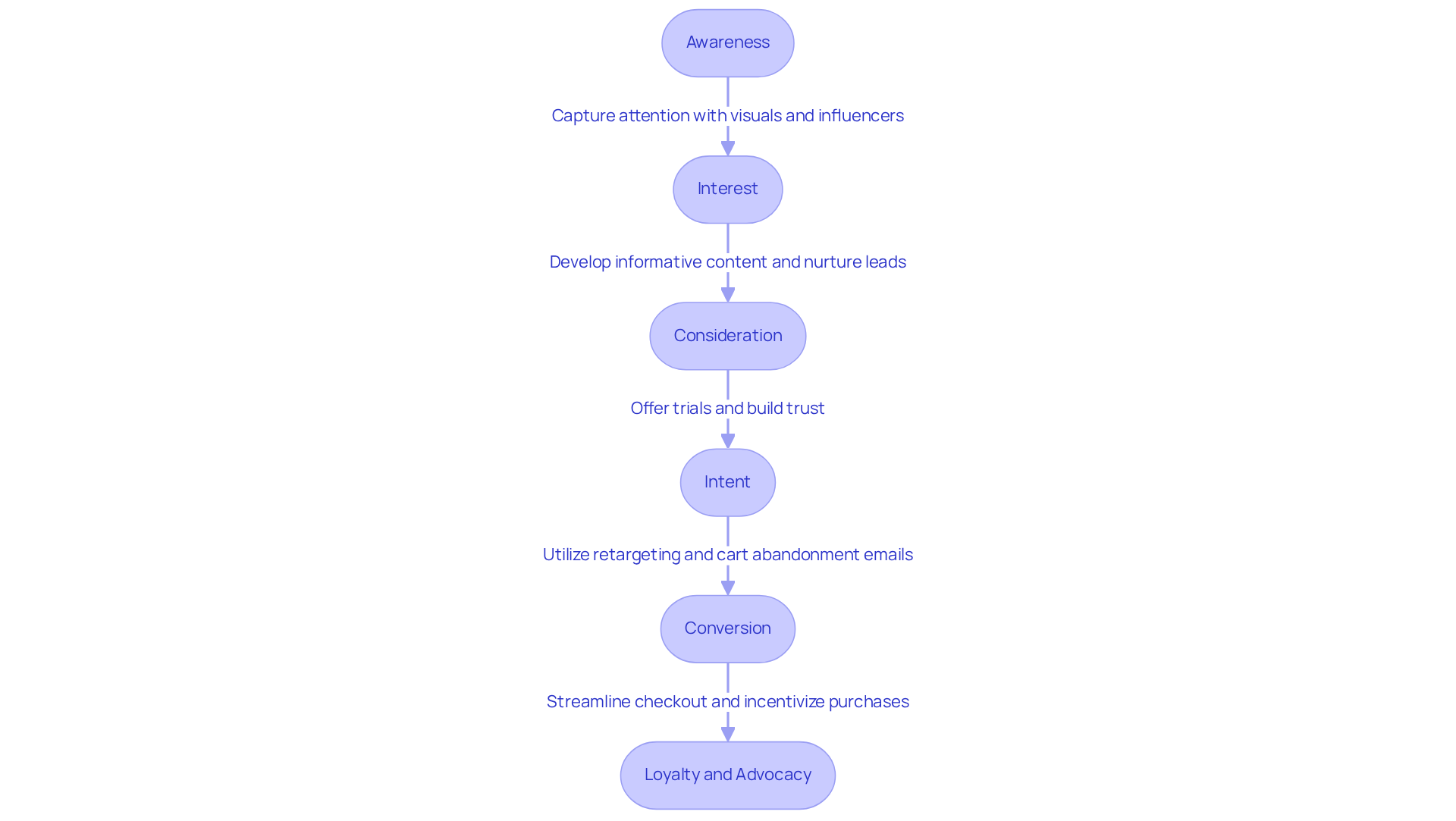
The marketing funnel consists of several crucial stages that guide potential customers from initial awareness to conversion:
- Awareness: At this top stage, potential customers first encounter a label or product. include , , and engaging to capture attention and create product recognition. Furthermore, DOOH advertising serves as a top-of-funnel strategy, effectively reaching specific target markets and increasing visibility.
- Interest: Once aware, consumers demonstrate interest by seeking additional information. Brands can engage them through informative content, webinars, and that provide value and deepen their understanding of the offerings.
- Consideration: In this phase, prospects assess their options. Brands should facilitate informed decision-making by offering comparisons, testimonials, and compelling case studies that highlight the benefits and effectiveness of their products or services. It's important to recognize that 49% of content marketers find it challenging to determine which assets effectively engage prospects, underscoring the difficulties brands face at this point.
- Intent: Customers show intent to purchase through actions such as adding items to their cart or signing up for a trial. at this point include and personalized offers that resonate with the consumer's needs and preferences, emphasizing the importance of tailored approaches.
- Conversion: This final stage marks the transition from prospect to client. Ensuring a seamless checkout process and providing incentives, such as discounts or free shipping, can significantly enhance conversion rates.
- Loyalty and Advocacy: Following acquisition, companies should focus on retaining clients through and promoting advocacy through referrals and favorable feedback. This ongoing engagement is crucial for fostering long-term relationships and driving repeat business. Notably, 82% of consumers make buying choices based on , highlighting the significance of establishing confidence with clients.
Each phase of the marketing process necessitates customized tactics within a simple marketing funnel to effectively guide individuals through their experience, ultimately resulting in higher conversions and loyalty to the brand.

Implement Effective Strategies for Each Stage of the Marketing Funnel
To optimize the marketing funnel, brands must implement :
- Awareness: and . Collaborating with influencers can significantly broaden your audience reach.
- Interest: Develop informative blog posts, videos, and infographics that address potential clients' pain points and interests. Targeted email campaigns can effectively nurture leads and keep them engaged.
- Consideration: Offer to let prospects experience the product firsthand. Detailed product comparisons and are essential for building trust.
- Intent: Utilize of their interest. Implement cart abandonment emails to encourage the completion of purchases, ensuring no opportunity is missed.
- Conversion: , provide multiple payment options, and introduce limited-time discounts to incentivize purchases.
- Loyalty and Advocacy: Establish . Encourage satisfied clients to leave reviews and share their experiences on social media. By employing these strategies, brands can effectively guide customers through the simple marketing funnel, thereby enhancing overall marketing performance.
Conclusion
The simple marketing funnel is an essential framework that empowers brands to navigate the intricate journey of consumer engagement, from initial awareness to final purchase and beyond. By grasping and applying this model, marketers can fine-tune their strategies at each stage, ultimately boosting conversion rates and nurturing long-term customer loyalty.
Key stages of the marketing funnel include:
- Awareness
- Interest
- Consideration
- Intent
- Conversion
- Loyalty
Each stage demands tailored strategies to effectively engage potential customers. For instance, leveraging social media can enhance awareness, providing valuable content can spark interest, and streamlining the purchase process is crucial for conversion. Moreover, the significance of utilizing customer feedback and adapting to evolving consumer behaviors is paramount for brand success.
In today’s competitive marketplace, mastering the simple marketing funnel is not merely advantageous; it is imperative. Brands that adeptly implement targeted strategies at each stage can anticipate improved engagement, elevated conversion rates, and fortified customer loyalty. As the landscape continues to shift, embracing these insights and practices will ensure that brands remain relevant and thrive in their marketing endeavors.
Frequently Asked Questions
What is the marketing funnel?
The marketing funnel is a structure that outlines the client's journey from initial brand recognition to the final buying choice and beyond. It is traditionally depicted as a cone, with a wide opening at the top representing potential clients and a narrow base for those who become paying clients.
What are the key phases of the marketing funnel?
The key phases of the marketing funnel include Awareness, Interest, Consideration, Intent, Evaluation, and Purchase.
Why is understanding the marketing funnel important for marketers in 2026?
Understanding the marketing funnel is crucial for marketers in 2026 as it helps them effectively guide prospects through their journey, optimize strategies at each stage to boost conversion rates, and enhance client retention.
What percentage of businesses prioritize top-of-funnel activities?
68% of businesses prioritize top-of-funnel activities, recognizing their critical role in building brand awareness and capturing a broader audience.
How do online reviews impact buyer decisions?
93% of buyers consider online reviews before making a purchase decision, highlighting the importance of customer feedback in establishing trust during the initial stage of the marketing funnel.
What does Chris Kelly emphasize regarding marketing strategies?
Chris Kelly emphasizes the necessity for marketers to navigate the altered ecosystem and discern between reality and exaggeration concerning AI-driven solutions, indicating the need for evolving strategies within the marketing process.
List of Sources
- Define the Marketing Funnel: A Comprehensive Overview
- venturz.co (https://venturz.co/blog/sales-funnel-statistics)
- salesgenie.com (https://salesgenie.com/blog/top-of-funnel-marketing-statistics)
- Unpacking the marketing industry trends forecast for 2026 (https://marketingdive.com/news/marketing-trends-outlook-2026/810740)
- 2026 Marketing Statistics, Trends, & Data (https://hubspot.com/marketing-statistics)
- linkedin.com (https://linkedin.com/pulse/digital-advertising-2026-funnel-dead-long-live-flow-todd-handy-ddtnc)
- Explain the Importance of the Marketing Funnel for Brand Success
- analyticsbeyond.com (https://analyticsbeyond.com/from-click-to-customer-building-a-high-performing-digital-marketing-funnel-in-2026)
- salesgenie.com (https://salesgenie.com/blog/top-of-funnel-marketing-statistics)
- 2026 Marketing Statistics, Trends, & Data (https://hubspot.com/marketing-statistics)
- Marketing Funnel: Stages, Strategies & How to Optimize in 2026 (https://contentsquare.com/guides/marketing-funnel)
- pentoz.com (https://pentoz.com/the-marketing-funnel-is-dead-experts-predict-major-shift-by-2026)
- Outline the Stages of the Marketing Funnel: From Awareness to Conversion
- Salesgenie® | Business & Consumer Data to Reach Your Audience (https://salesgenie.com/blog/brand-awareness-statistics)
- v12marketing.com (https://v12marketing.com/marketing/the-marketing-funnel-in-2026-why-a-classic-framework-still-works)
- adroll.com (https://adroll.com/blog/dooh-advertising-full-funnel-strategy)
- Marketing Funnel: Stages, Strategies & How to Optimize in 2026 (https://contentsquare.com/guides/marketing-funnel)
- highspot.com (https://highspot.com/blog/13-stats-that-reveal-which-marketing-strategies-really-work)
- Implement Effective Strategies for Each Stage of the Marketing Funnel
- Salesgenie® | Business & Consumer Data to Reach Your Audience (https://salesgenie.com/blog/brand-awareness-statistics)
- online.hbs.edu (https://online.hbs.edu/blog/post/how-to-measure-marketing-effectiveness)
- Advertising Trends & Best Practices for 2026 — Optimum Media (https://optimum.media/blog/advertising-trends-and-best-practices-for-2026)
- highspot.com (https://highspot.com/blog/13-stats-that-reveal-which-marketing-strategies-really-work)
- The Future of Demand Generation: Full-Funnel Success • BlueWhale Research (https://bluewhaleresearch.com/blog/future-of-demand-generation-full-funnel-success)