
Introduction
Understanding the complexities of a target audience is essential for any business striving to excel in a competitive market. By diving deep into audience insights, companies can craft marketing strategies that resonate with specific groups, significantly boosting engagement and conversion rates. But as consumer preferences shift rapidly, how can businesses stay ahead of these changes and ensure their promotional efforts remain effective? This article delves into the core concept of target audience insights, emphasizing the importance of grasping audience preferences and outlining strategies that can lead to successful marketing outcomes.
Define Target Audience: Understanding the Core Concept
A represents a specific group of consumers that a business aims to engage through its . This group is defined by shared demographics, interests, and behaviors that increase the likelihood of interaction with a company's products or services. Understanding what's your is essential for crafting impactful and strategies. It allows companies to tailor their content to meet the needs and preferences of potential clients.
For instance, consider a company that offers luxury skincare products. They may target affluent women aged 30-50 who have a keen interest in beauty and wellness. By focusing their on this demographic, they ensure that their marketing resonates with those most likely to become loyal customers.
Furthermore, recognizing the nuances within a can lead to more . By analyzing data and consumer behavior, businesses can better understand , refine their messaging and approach, ultimately driving .
In conclusion, a well-defined not only enhances promotional effectiveness but also fosters a deeper connection with consumers. Companies should continually assess and adapt their strategies to align with the evolving preferences of their audience.

Explore the Importance of Knowing Your Target Audience
Understanding is essential for impactful promotion. It allows companies to craft tailored content that resonates with in relation to their specific needs and desires. By gaining insights into what’s your audience looking at, businesses can allocate resources more effectively, ensuring that focus on those most likely to engage and convert.
For instance, a study by HBS Online reveals that firms customizing their see significantly higher . As Danielle Kugler, a Content Specialist, aptly puts it, "." This strategy not only boosts immediate performance but also equips companies to anticipate market trends and shifts in consumer behavior, enabling proactive adjustments to their strategies.
As we move into 2026, and search visibility. Therefore, it’s crucial for companies to prioritize to enhance and overall marketing effectiveness. Are you ready to take the necessary steps to deepen your and drive your promotional success?

Identify Types of Target Audiences and Their Characteristics
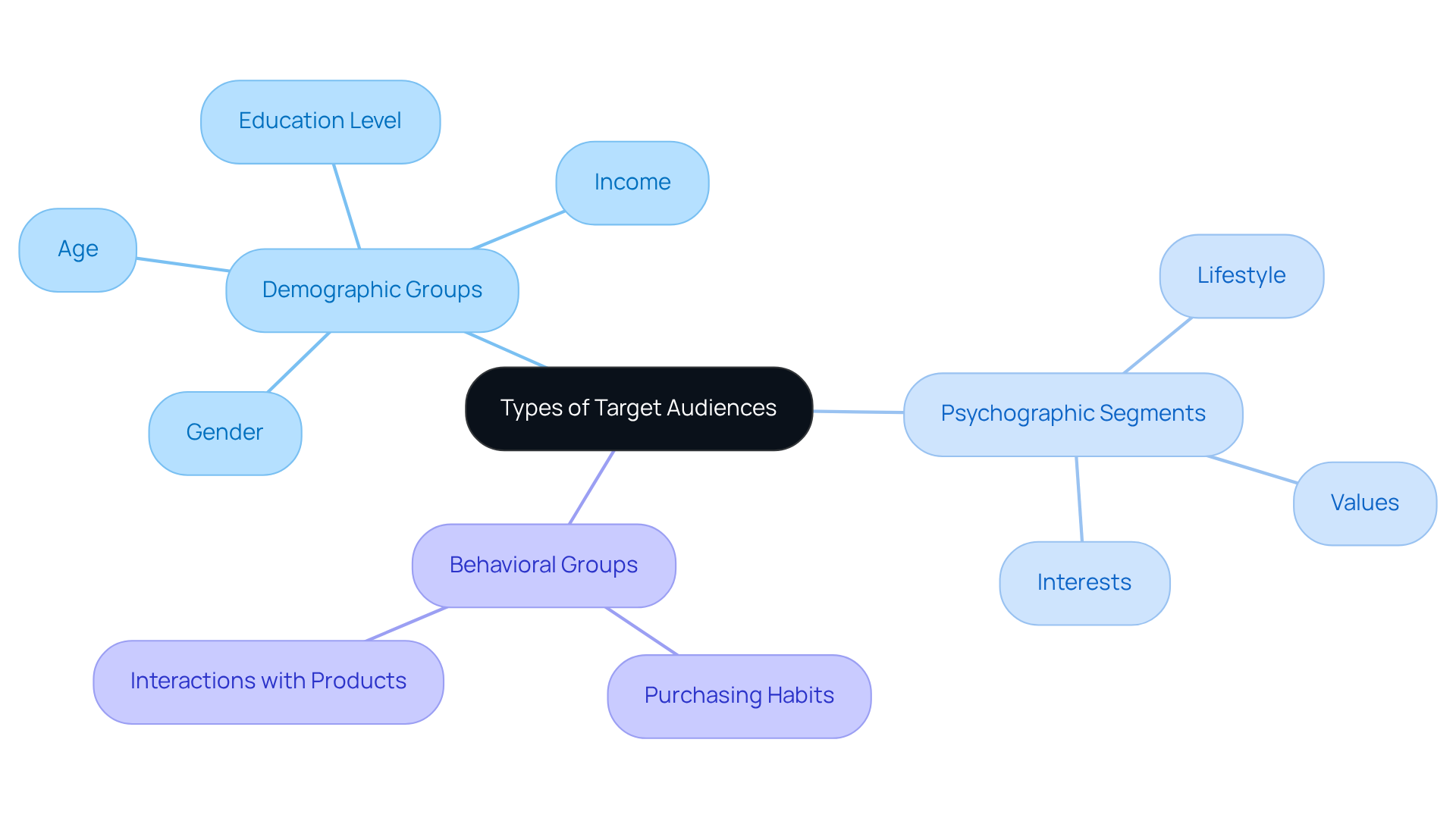
Target groups can be categorized into several distinct types based on various characteristics. These include:
- , defined by age, gender, income, and education level.
- Psychographic segments, which focus on lifestyle, values, and interests.
- Behavioral groups, which consider purchasing habits and interactions with products.
For instance, a brand may emphasize like sustainability and social awareness. Conversely, a brand offering tech gadgets might concentrate on a demographic group of young professionals aged 25-35. Understanding these distinctions empowers marketers to and campaigns effectively, focusing on what your audience is looking at to ensure they resonate with each specific segment.
Analyze Current Trends in Audience Preferences
Current trends in audience preferences are profoundly influenced by technological advancements and cultural shifts. The emergence of and Instagram has revolutionized how audiences engage with brands, particularly among younger demographics who favor over traditional advertising. Did you know that a striking ? This demand for is indicative of a larger consumer trend, with 84% of individuals expressing a preference for brands that showcase in their advertisements.
Furthermore, . Brands that successfully harness not only bolster their credibility but also experience significant engagement benefits. For instance, posts generate 28% higher engagement than branded content and drive four times the click-through rates compared to conventional advertising. By staying attuned to these shifting preferences, brands can adapt their strategies to remain relevant and consider what's your audience looking at to cultivate deeper connections in an ever-evolving market.

Conclusion
Understanding the complexities of target audience insights is vital for businesses looking to enhance their marketing strategies. By defining and analyzing their target demographic, companies can craft promotional messages that truly resonate with the specific needs and interests of potential clients. This focused approach not only boosts engagement but also cultivates a deeper connection with consumers, ultimately leading to higher conversion rates.
Key arguments throughout this article emphasize the necessity of knowing what your audience is focused on, from demographic and psychographic characteristics to the impact of current trends like user-generated content. By leveraging data and insights, businesses can refine their strategies, ensuring they stay relevant in a rapidly evolving market landscape. The emphasis on adapting to audience preferences highlights the need for continuous assessment and innovation in marketing efforts.
As companies gear up for the future, prioritizing audience insights will be crucial in navigating the shifting preferences of consumers. Embracing these insights not only boosts marketing effectiveness but also positions businesses to anticipate changes in consumer behavior, ensuring sustained growth and relevance. Taking the necessary steps to deepen understanding of target audiences today can pave the way for successful promotional strategies tomorrow.
Frequently Asked Questions
What is a target demographic?
A target demographic is a specific group of consumers that a business aims to engage through its promotional efforts, defined by shared demographics, interests, and behaviors.
Why is understanding the target audience important?
Understanding the target audience is essential for crafting impactful promotional messages and strategies, allowing companies to tailor their content to meet the needs and preferences of potential clients.
Can you provide an example of a target demographic?
An example of a target demographic is a company that offers luxury skincare products targeting affluent women aged 30-50 who have a keen interest in beauty and wellness.
How can recognizing nuances within a target demographic improve engagement?
Recognizing nuances within a target demographic allows businesses to analyze data and consumer behavior, refine their messaging and approach, and ultimately drive higher conversion rates.
What is the benefit of having a well-defined target demographic?
A well-defined target demographic enhances promotional effectiveness and fosters a deeper connection with consumers, leading to improved marketing outcomes.
Should companies adapt their strategies over time?
Yes, companies should continually assess and adapt their strategies to align with the evolving preferences of their audience.
List of Sources
- Define Target Audience: Understanding the Core Concept
- Target Market Analysis in 2026 (How to Identify Customers) (https://bigcommerce.com/articles/ecommerce/target-market-analysis)
- 180+ Powerful Digital Marketing Statistics for 2026 - WordStream (https://wordstream.com/blog/ws/2022/04/19/digital-marketing-statistics)
- Knowing your audience is key: 20 marketing expert quotes (https://veracontent.com/mix/knowing-your-audience-great-marketing)
- azquotes.com (https://azquotes.com/quotes/topics/target-audience.html)
- 2026 Marketing Statistics, Trends, & Data (https://hubspot.com/marketing-statistics)
- Explore the Importance of Knowing Your Target Audience
- azquotes.com (https://azquotes.com/quotes/topics/target-audience.html)
- Knowing your audience is key: 20 marketing expert quotes (https://veracontent.com/mix/knowing-your-audience-great-marketing)
- brafton.com (https://brafton.com/blog/content-marketing/10-inspiring-digital-marketing-quotes-to-kick-off-2019-with-a-bang)
- Audience Analysis Drives Marketing Strategy - FINN Partners (https://finnpartners.com/uk/news-insights/the-power-of-audience-analysis)
- amsive.com (https://amsive.com/insights/strategy/how-audience-insight-will-shape-performance-marketing-in-2026)
- Analyze Current Trends in Audience Preferences
- bazaarvoice.com (https://bazaarvoice.com/blog/user-generated-content-statistics-to-know)
- 36 User-Generated Content Statistics That You Can’t Ignore (https://everyonesocial.com/blog/user-generated-content-statistics)
- 25 User-Generated Content (UGC) Engagement Statistics: Essential Data for Modern Brands in 2026 (https://archive.com/blog/user-generated-content)
- 41 User-Generated Content Statistics For Better UGC Marketing in 2026 (https://embedsocial.com/blog/ugc-statistics)
- crowdriff.com (https://crowdriff.com/resources/ugc-stats)