
Introduction
Mastering the art of dark posts on Facebook is not just a strategy; it’s a game-changer for brands aiming to elevate their advertising efforts. These hidden gems of digital marketing offer precise targeting capabilities, ensuring that audiences receive tailored content while keeping their feeds clutter-free. However, navigating the complexities of various ad types and optimizing them for maximum impact presents a significant challenge.
So, how can brands effectively harness the power of dark posts to boost engagement and drive conversions? By understanding the nuances of these ads and avoiding common pitfalls, brands can unlock their full potential. The journey begins with a clear strategy and a willingness to adapt. Are you ready to explore the transformative possibilities of dark posts?
Define Dark Posts and Their Importance
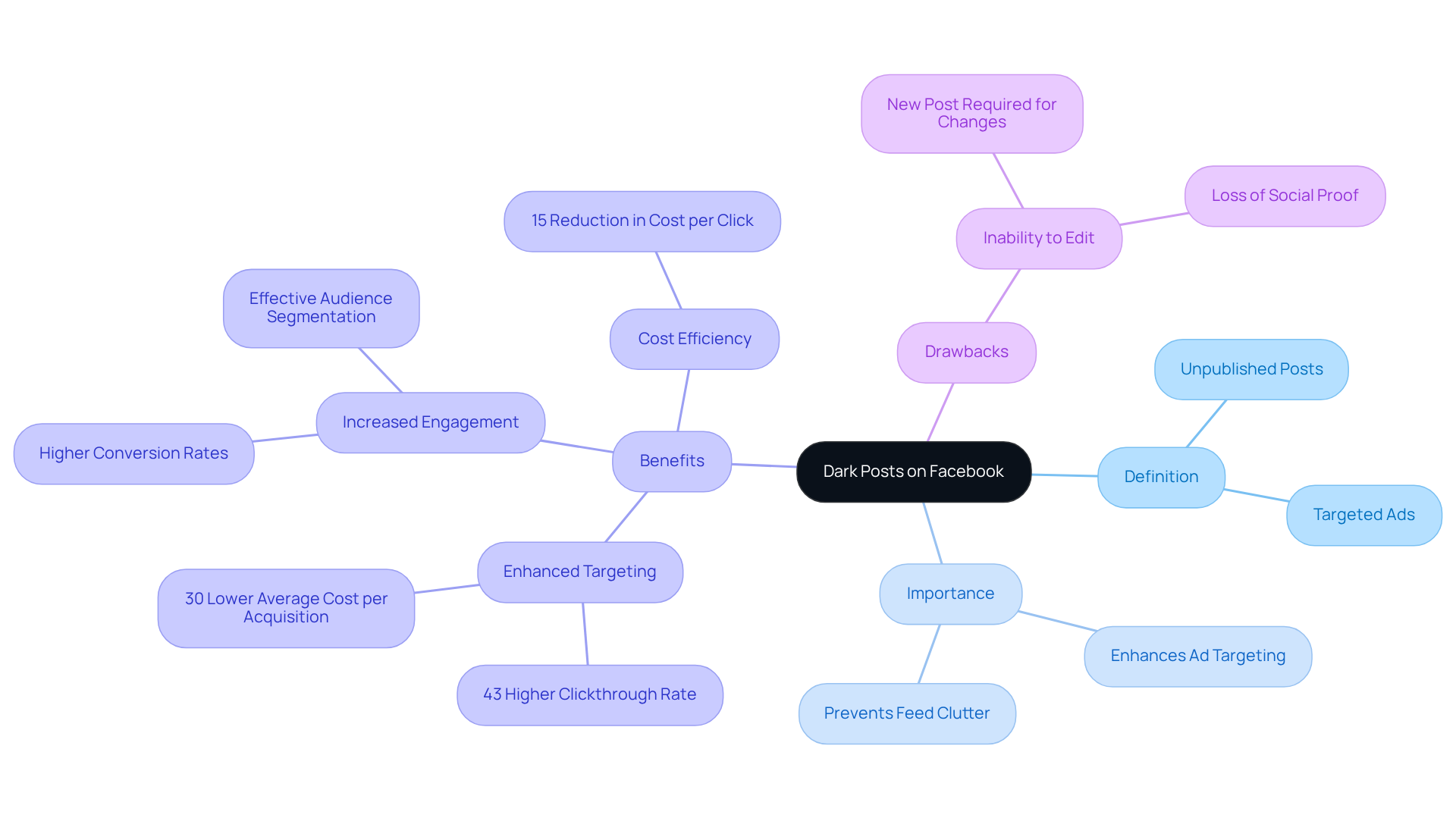
A , also known as an unpublished post, represents a powerful tool in advertising. These targeted advertisements operate as a , meaning they do not appear on the advertiser's timeline or in the feeds of their followers. Instead, a is shown only to specific audience segments based on targeting criteria set by the advertiser. This approach allows companies to effectively, avoiding the clutter of promotional content in their main feed.
The significance of a lies in its ability to enhance ad targeting, , and . By utilizing a , companies can experiment with various creatives and messages, identifying what resonates best with their intended audience. This targeted strategy not only but also utilizes a to ensure a clean and relevant feed for followers. In fact, efficient targeting through a can lead to a remarkable and a 30% reduction in average cost per acquisition, showcasing the tangible benefits of incorporating such hidden content into a brand's marketing strategy.
Brands like Nike have successfully leveraged a to refine their ad targeting and interaction, illustrating the adaptability and efficiency of this advertising technique. However, it’s crucial to acknowledge a significant drawback: once promoted, a cannot be edited, which can create challenges for advertisers. As , pointed out, "The biggest complaint about hidden advertisements is that you cannot modify them." Despite this limitation, utilizing a empowers companies to connect with specific audiences more effectively, ultimately leading to improved performance metrics and a more streamlined advertising experience.
Explore Different Types of Dark Posts on Facebook
Brands can leverage , with each type tailored to specific marketing goals.
- Photo Ads: These straightforward ads feature a single image, making them ideal for product showcases and driving immediate interest, with an average CTR of about 0.5-0.6%.
- Video Ads: Dynamic and engaging, video ads capture attention quickly and are perfect for storytelling, boasting an (CTR) of around 0.65%.
- : Allowing companies to showcase multiple images or videos in one ad, enable users to swipe through various offerings, enhancing user interaction, with an average CTR of approximately 0.49%.
- Collection Ads: Particularly beneficial for e-commerce, these ads let users browse a curated collection of products directly from the ad, streamlining the shopping experience.
- : Designed to gather user information directly within Facebook, these ads are effective for building email lists and nurturing leads.
- : Automatically showcasing relevant products to users who have demonstrated interest on a company's website or app, improve personalization and conversion potential.
Understanding these formats enables companies to select the most appropriate dark post on Facebook as a hidden advertisement type to achieve their specific marketing goals, ultimately improving engagement and driving conversions. Furthermore, with Facebook's total potential ad reach of 2.28 billion users worldwide, utilizing these concealed content formats can significantly enhance a company's visibility. It is also vital to track performance in , concentrating on metrics such as reach, engagement, CTR, and conversions to enhance undisclosed campaigns effectively. Recent updates in December 2025 regarding further emphasize the need for companies to stay informed and adapt their strategies accordingly.

Establish Clear Objectives and Target Audience
Before diving into concealed advertisements, companies must establish clear goals and pinpoint their target audience. Here’s how to effectively navigate this process:
- : What do you aim to achieve with your dark posts? Common objectives include increasing product awareness, generating leads, driving website traffic, or . Clearly defined goals set the stage for success.
- : Leverage Facebook's targeting tools to define your ideal customer. Consider demographics such as age, gender, and location, along with interests, behaviors, and previous interactions with your brand. This ensures your message reaches the right people.
- : Segment your audience based on various criteria to tailor your messaging effectively. For instance, you might create distinct segments for new customers, returning customers, and those who have previously engaged with your content. This segmentation allows for more personalized communication.
- : Establish KPIs () that align with your objectives, such as click-through rates, conversion rates, or engagement levels. These metrics will help you evaluate the impact of your dark post on Facebook advertisements and refine your strategy as needed.

Optimize Dark Posts Through Testing and Metrics
To optimize a effectively, brands must adopt a systematic approach to , utilizing the unique advantages of a for precise targeting and customization.
- Conduct : Start by creating multiple versions of your hidden advertisements, incorporating slight variations-like different headlines, images, or calls to action-to identify which performs best. Running these tests simultaneously allows for quick data collection.
- : It's crucial to monitor key metrics such as reach, engagement, click-through rates, and conversion rates. Utilize Facebook's Ads Manager to analyze performance data. Notably, in 2025, Facebook ads averaged a of 5.3x, underscoring the effectiveness of well-optimized campaigns.
- : After conducting your tests, take the time to analyze the results. Identify trends and insights that reveal which elements contributed to higher performance and which did not. Regular testing is essential; as Matt emphasizes, "The key to success is testing regularly, giving tests enough time and budget to produce reliable results."
- Iterate and Improve: Leverage the insights gained from your analysis to refine your . Adjust your targeting, creative, and messaging based on what resonates with your audience. With 82% of advertisers utilizing Meta’s , brands can significantly enhance their campaigns, achieving a remarkable 27% increase in ROAS.
- : Continuously monitor the effectiveness of your and make data-driven decisions to optimize future campaigns. Regular evaluations will help you remain agile and responsive to audience preferences. Additionally, tracking audience sizes is vital; 42.9% of marketers report their best results come from audiences exceeding 50,000.
By implementing these strategies, brands can maximize the impact of their advertising through a , ensuring measurable results and enhancing overall effectiveness.

Conclusion
Incorporating dark posts on Facebook offers brands a significant strategic advantage in refining their advertising efforts. These unpublished posts not only enhance targeting capabilities but also enable tailored messaging that resonates with specific audience segments. By leveraging dark posts, companies can effectively cut through the clutter of social media feeds, ensuring their promotional content reaches the right people without overwhelming their followers.
The exploration of dark posts reveals their multifaceted nature, including definitions, importance, various types, and optimization strategies. Key insights underscore the effectiveness of tailored advertising formats such as:
- Photo ads
- Video ads
- Lead generation ads
Establishing clear objectives and identifying target audiences are essential to maximizing engagement and conversions. Furthermore, testing and tracking metrics are critical components in refining dark post strategies, demonstrating how brands can adapt and thrive in a competitive landscape.
Utilizing dark posts in a marketing strategy transcends mere visibility; it fosters meaningful connections with audiences. By embracing the unique advantages of dark posts, brands can enhance their advertising effectiveness, drive conversions, and ultimately achieve their marketing goals. As the digital advertising landscape evolves, staying informed and agile in utilizing these tools will be paramount for brands aiming to succeed on platforms like Facebook. Are you ready to elevate your advertising strategy with dark posts?
Frequently Asked Questions
What is a dark post on Facebook?
A dark post on Facebook, also known as an unpublished post, is a targeted advertisement that does not appear on the advertiser's timeline or in the feeds of their followers. It is shown only to specific audience segments based on the targeting criteria set by the advertiser.
Why are dark posts important for advertising?
Dark posts enhance ad targeting, boost engagement, and drive conversions. They allow companies to tailor their messaging effectively and test various creatives to identify what resonates best with their audience.
How do dark posts improve advertising effectiveness?
By utilizing dark posts, companies can achieve a 43% increase in clickthrough rates and a 30% reduction in average cost per acquisition, making their advertising campaigns more effective and relevant.
Can dark posts be edited after they are promoted?
No, once a dark post is promoted, it cannot be edited. This limitation can create challenges for advertisers.
Can you provide an example of a brand that successfully used dark posts?
Nike is an example of a brand that has successfully leveraged dark posts on Facebook to refine their ad targeting and improve interaction with their audience.
What is a significant drawback of using dark posts on Facebook?
A significant drawback is that dark posts cannot be modified once they are promoted, which can lead to issues for advertisers if changes are needed.
List of Sources
- Define Dark Posts and Their Importance
- doctorlogic.com (https://doctorlogic.com/blog/why-your-facebook-posts-need-to-go-dark)
- talkwalker.com (https://talkwalker.com/blog/what-is-a-dark-post-on-social-media)
- klientboost.com (https://klientboost.com/facebook/facebook-dark-posts)
- estesmedia.com (https://estesmedia.com/why-dark-post-on-facebook)
- Explore Different Types of Dark Posts on Facebook
- estesmedia.com (https://estesmedia.com/why-dark-post-on-facebook)
- strikesocial.com (https://strikesocial.com/blog/facebook-ad-formats-to-effectively-showcase-your-ads)
- sproutsocial.com (https://sproutsocial.com/insights/facebook-dark-posts)
- klientboost.com (https://klientboost.com/facebook/facebook-dark-posts)
- 100 Facebook Ads Statistics for Marketers (2026 Edition) (https://uproas.io/blog/facebook-ads-statistics)
- Establish Clear Objectives and Target Audience
- bigcommerce.com (https://bigcommerce.com/articles/omnichannel-retail/facebook-advertising-guide)
- business.com (https://business.com/articles/best-facebook-marketing-strategies)
- wordstream.com (https://wordstream.com/blog/facebook-ad-targeting)
- wordstream.com (https://wordstream.com/blog/facebook-ad-objectives)
- 24 Facebook Ads Statistics You Need To Know (https://klientboost.com/facebook/facebook-ads-statistics)
- Optimize Dark Posts Through Testing and Metrics
- sproutsocial.com (https://sproutsocial.com/insights/facebook-dark-posts)
- destination-digital.co.uk (https://destination-digital.co.uk/news-blogs-case-studies/dark-vs-boosted-ads-which-is-right-for-your-budget)
- sqmagazine.co.uk (https://sqmagazine.co.uk/facebook-ad-statistics)
- brandwatch.com (https://brandwatch.com/blog/what-are-dark-posts-on-social-media)
- socialrails.com (https://socialrails.com/blog/facebook-ad-ab-testing-guide)
Turn Your Paid Social Into a Scalable Creative Engine
Running ads is easy. Scaling creative is not.
If your performance depends on a few winning ads,
it’s time to build a system.
Explore our complete guide to paid social creative strategy.