
Introduction
In a digital landscape where attention spans are fleeting and competition is fierce, businesses must harness the power of social video marketing to captivate their audiences. This isn't just a trend; it's a necessity. By implementing essential practices that define objectives, understand viewers, and create high-quality content, brands can significantly enhance their visibility and engagement.
However, the challenge remains: how can companies effectively navigate the complexities of video marketing to not only reach but resonate with their target audience? Exploring these strategies reveals the key to transforming video content into a compelling marketing powerhouse.
Define Objectives and Understand Your Audience
To create impactful campaigns in , begin by defining clear objectives. Employ the - Specific, Measurable, Achievable, Relevant, and Time-bound - to that align with your overall business strategy. For example, if your aim is to increase , specify the and you wish to achieve.
Understanding your is equally crucial. Conduct a thorough analysis of your viewers to identify their . Tools like surveys, social media insights, and analytics can provide valuable data. If your target group is primarily Gen Z, focus on platforms such as and Instagram, where they are most engaged. Customizing your content for to align with the preferences of your will significantly enhance .

Develop a Comprehensive Video Marketing Strategy
A well-structured encompasses several key components that can significantly enhance your brand's visibility and engagement:
- Schedule: A well-planned schedule is essential for organizing releases around important dates and occasions that resonate with your viewers. This strategic approach to ensures while enhancing viewer engagement and maximizing impact. Moreover, utilizing to update high-performing content every 12-18 months can sustain viewer interest and relevance, keeping your audience coming back for more.
- : Choosing the right platforms is critical. Prioritize TikTok for short, engaging clips that drive discovery, while leveraging YouTube for longer, informative content that enhances to build authority and trust. This dual approach in addresses the diverse preferences and consumption habits of different audience segments, ensuring your message reaches the right people.
- : Varying format types is vital for sustaining viewer engagement. Incorporate a blend of tutorials, behind-the-scenes material, and to enhance your and create a dynamic viewing experience. This variety not only keeps your audience engaged but also encourages interaction and sharing. Notably, brands that employ with shoppable footage report a remarkable 26.5% rise in sales of highlighted items, underscoring the effectiveness of integrating such material into your strategy.
- : Establishing (KPIs) is essential for assessing the success of your content. Focus on metrics such as views, shares, and conversion rates. Regularly assessing these metrics enables ongoing improvement of your social , ensuring that future materials align with audience expectations and drive desired outcomes. Avoid common pitfalls by consistently reviewing performance data to enhance your marketing efforts. As Joey Pedras observes, grasping the strategic intent behind each element is vital for success.

Create High-Quality Video Content
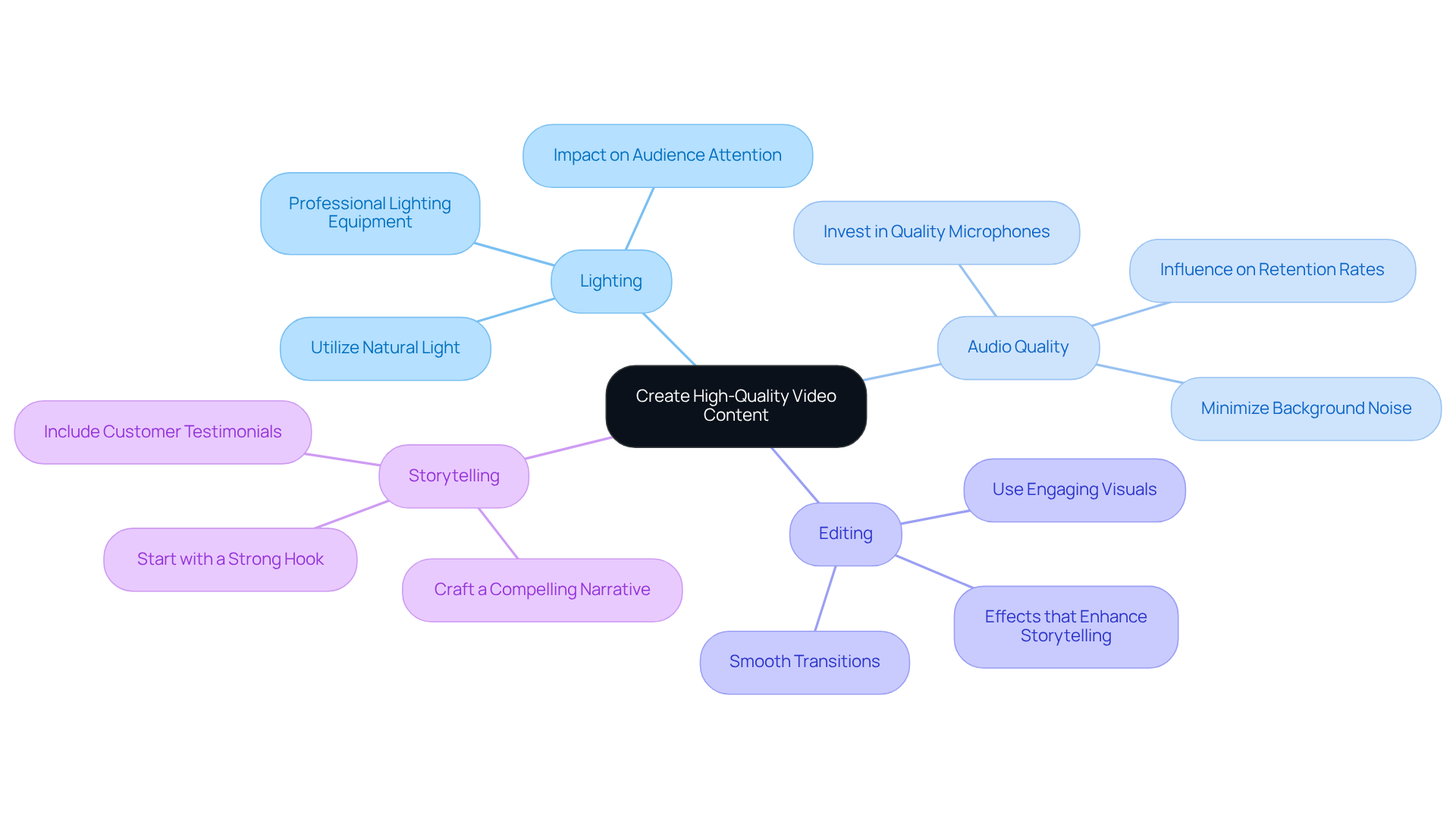
is essential in today’s competitive landscape. To ensure your videos stand out, consider these key practices:
- Lighting: . Utilizing natural light or professional lighting equipment can significantly improve visual appeal. Did you know that recordings with optimal lighting maintain audience attention more effectively? Inadequate lighting can obscure your message and diminish engagement. As Jordan Lukes points out, "The silent majority: Your audience could be viewing clips on mute, making captions essential," which highlights the significance of clear visuals alongside sound.
- Audio Quality: is vital. not only enhances the audience experience but also plays a significant role in retention rates. Research indicates that recordings with high audio clarity are more likely to keep viewers engaged. In fact, 65% of consumers say influences them, underscoring the importance of quality in content creation.
- Editing: Utilizing editing software to produce refined recordings is essential. Incorporate engaging visuals, smooth transitions, and effects that enhance storytelling without overwhelming the audience. can boost viewer retention and promote sharing. The trend towards short-form video material in 2026 indicates that concise, well-edited videos will be crucial for capturing viewers' attention.
- Storytelling: Crafting a is key to resonating with your audience. Start with a strong hook to capture attention, followed by a clear message and a persuasive call to action. For instance, displaying can effectively build trust and credibility, making the material more relatable and impactful. Recent trends show that 'edu-tainment' - brief, practical clips that instruct on something beneficial while remaining engaging - will be a key strategy moving forward.
Incorporate Branding Elements Effectively
Branding must be intricately woven into every aspect of your footage. Consider these essential elements:
- : Consistent use of colors, fonts, and logos that align with your brand guidelines is crucial. This uniformity not only promotes but also boosts . In fact, studies show that 92% of internet users watch weekly, actively seeking brand content. Looking ahead to 2026, will be increasingly important, allowing brands to convey specific moods and adapt their to stay relevant.
- Tone and Voice: A consistent tone that reflects your brand's personality-whether playful, professional, or informative-ensures that your messaging resonates with your audience. By 2026, brands are expected to prioritize , making it vital to align your voice with your . As Marion Andrivet points out, simply being visible is no longer enough; brands must create meaningful connections.
- Call to Action: Clear and compelling are essential for guiding the audience on their next steps, whether it's visiting your website, subscribing to your channel, or following your social media accounts. For instance, a clip might end with a suggestion to explore a related product or service, enriching the audience's experience and . With 90% of companies utilizing and build loyalty in 2026, effective will be crucial in maximizing engagement.
Integrating these branding elements effectively not only enhances your but also significantly influences viewer recognition and engagement in the competitive realm of marketing.

Publish and Promote Your Video Content
Once your video is ready, it’s crucial to effectively publish and promote it using .
- : Start by using relevant keywords in your . This strategy significantly improves on platforms like YouTube for your , ensuring your content reaches a wider audience.
- Cross-Promotion: Don’t limit your reach to just one platform. , including social media, email newsletters, and your website. This approach not only increases visibility but also drives traffic to your efforts.
- : Actively encourage viewers to like, comment, and share your videos. Engaging with your audience through comments in fosters a sense of community and builds loyalty.
- : Consider leveraging paid advertising on social media platforms to enhance visibility. By , you can ensure your reaches the right audience. For instance, on Instagram can effectively connect with potential customers interested in your products.

Conclusion
Effective social video marketing relies on a well-defined strategy that aligns with clear objectives and a profound understanding of the target audience. Establishing goals that are specific, measurable, achievable, relevant, and time-bound empowers brands to create impactful content that truly resonates with viewers. A comprehensive approach goes beyond crafting high-quality videos; it integrates branding elements and employs effective promotion strategies to maximize reach and engagement.
Key practices such as:
- Developing a structured video marketing strategy
- Producing high-quality content
- Seamlessly incorporating branding elements
are essential for success. The significance of audience analysis cannot be overstated. Understanding viewers' preferences and behaviors allows for tailored content that drives engagement. Furthermore, optimizing video content for search engines and promoting it across multiple platforms enhances visibility and fosters community interaction.
Ultimately, the landscape of social video marketing is dynamic, requiring brands to adapt to emerging trends. By embracing these best practices, businesses can enhance their visibility and engagement while forging meaningful connections with their audiences. As the demand for innovative video content continues to rise, taking proactive steps to refine strategies will be crucial for staying ahead in the competitive marketing arena.
Frequently Asked Questions
What are the key objectives to define in social video marketing?
Key objectives should be defined using the S.M.A.R.T. criteria, which stands for Specific, Measurable, Achievable, Relevant, and Time-bound. This ensures that goals align with your overall business strategy, such as increasing brand awareness with specific target reach and engagement metrics.
Why is understanding your audience important in social video marketing?
Understanding your audience is crucial because it allows you to tailor your content to their demographics, interests, and viewing habits. This customization enhances engagement and effectiveness, particularly if you focus on platforms where your target audience, such as Gen Z, is most active.
What components should be included in a comprehensive video marketing strategy?
A comprehensive video marketing strategy should include a well-planned schedule for content releases, the selection of appropriate platforms (like TikTok for short clips and YouTube for longer content), a variety of content types (such as tutorials and user-generated clips), and the establishment of performance metrics to assess success.
How can a content schedule enhance viewer engagement?
A well-planned content schedule organizes releases around important dates and occasions, ensuring timely and relevant material delivery. This strategic approach enhances viewer engagement and maximizes impact by keeping the content aligned with audience interests.
What platforms are recommended for different types of video content?
TikTok is recommended for short, engaging clips that drive discovery, while YouTube is better suited for longer, informative content that builds authority and trust. This dual approach addresses the diverse preferences of different audience segments.
What types of content should be varied to sustain viewer engagement?
To sustain viewer engagement, it is vital to incorporate a blend of content types, including tutorials, behind-the-scenes material, and user-generated clips. This variety keeps the audience engaged and encourages interaction and sharing.
What are key performance indicators (KPIs) in social video marketing?
Key performance indicators (KPIs) include metrics such as views, shares, and conversion rates. Regularly assessing these metrics allows for ongoing improvement of the social video marketing strategy, ensuring future content aligns with audience expectations.
How can brands benefit from integrating shoppable footage into their video marketing?
Brands that integrate shoppable footage into their social video marketing report a significant increase in sales, with a noted 26.5% rise in sales of highlighted items, demonstrating the effectiveness of this strategy.
List of Sources
- Define Objectives and Understand Your Audience
- burnwe.com (https://burnwe.com/blog/20-video-marketing-quotes)
- gudsho.com (https://gudsho.com/blog/social-media-statistics)
- 60+ social media statistics marketers need to know in 2026 (https://blog.hootsuite.com/social-media-statistics)
- wix.com (https://wix.com/blog/social-media-statistics-and-facts)
- themotionagency.com (https://themotionagency.com/social-media-stats-to-know-in-2026)
- Develop a Comprehensive Video Marketing Strategy
- truefuturemedia.com (https://truefuturemedia.com/articles/video-marketing-strategy-2026?srsltid=AfmBOoq-w0wX1XU6NoJ1Ptr2pwUAhem4E6QO2pzBY3VAa1z2Uq241IbA)
- Video Marketing Trends for 2026: New Tech + Real Results (https://awakenedfilms.com/video-marketing-trends-for-2026)
- Best Practices for Video Marketing Success in 2026 | Emplifi (https://emplifi.io/resources/blog/video-marketing-success)
- leadsquared.com (https://leadsquared.com/learn/marketing/video-marketing-strategy)
- YouTube CEO Reveals Your Video Marketing Strategy For 2026 (https://searchenginejournal.com/youtube-ceo-reveals-your-video-marketing-strategy-for-2026/565783)
- Create High-Quality Video Content
- forbes.com (https://forbes.com/councils/forbescommunicationscouncil/2026/01/13/14-ways-companies-can-produce-high-quality-video-content-at-scale)
- Best Practices for Video Marketing Success in 2026 | Emplifi (https://emplifi.io/resources/blog/video-marketing-success)
- videoboosters.club (https://videoboosters.club/2026/01/19/youtube-statistics)
- Video Statistics, Habits, and Trends You Need To Know [New Research] (https://techsmith.com/blog/2026-video-statistics)
- Incorporate Branding Elements Effectively
- Top Branding & Design Trends For 2026 - The Branding Journal (https://thebrandingjournal.com/2026/01/top-branding-design-trends-2026)
- Top 2026 Video Marketing Trends You Can't Skip | WordStream (https://wordstream.com/blog/2026-video-marketing-trends)
- marketingdive.com (https://marketingdive.com/news/youtube-revamps-visual-identity-as-entertainment-landscape-shifts/809983)
- navigatevideo.com (https://navigatevideo.com/news/video-marketing-for-brands)
- Brand identity trends 2026: 8 shifts defining the future of brands (https://threerooms.com/blog/8-design-trends-shaping-brand-identity-in-2026)
- Publish and Promote Your Video Content
- socialjackmedia.com (https://socialjackmedia.com/blog-posts/video-marketing-trends-for-2026-what-brands-need-to-know)
- dotcominfoway.com (https://dotcominfoway.com/blog/20-seo-experts-share-their-strategies-and-insights-for-2026)
- How Businesses Should Rethink Video Strategy for 2026 (https://entrepreneur.com/growing-a-business/how-businesses-should-rethink-video-strategy-for-2026/500810)