
Introduction
The rapid evolution of influencer marketing has dramatically reshaped how brands engage with their audiences. With the market projected to reach an astounding $32.5 billion by 2025, the importance of selecting the right tools has never been more critical. This surge presents businesses with a unique opportunity to refine their promotional strategies through effective influencer marketing tools. However, with countless options at their disposal, how can brands navigate the complexities of these tools to maximize their return on investment and cultivate authentic connections with their target demographics?
Furthermore, understanding the landscape of influencer marketing tools is essential for brands aiming to thrive in this competitive environment. By leveraging the right resources, companies can not only enhance their visibility but also foster deeper relationships with their audiences. This article will explore the key factors to consider when choosing influencer marketing tools, backed by data and successful case studies, to empower brands in their decision-making process.
Understanding Influencer Marketing Tools
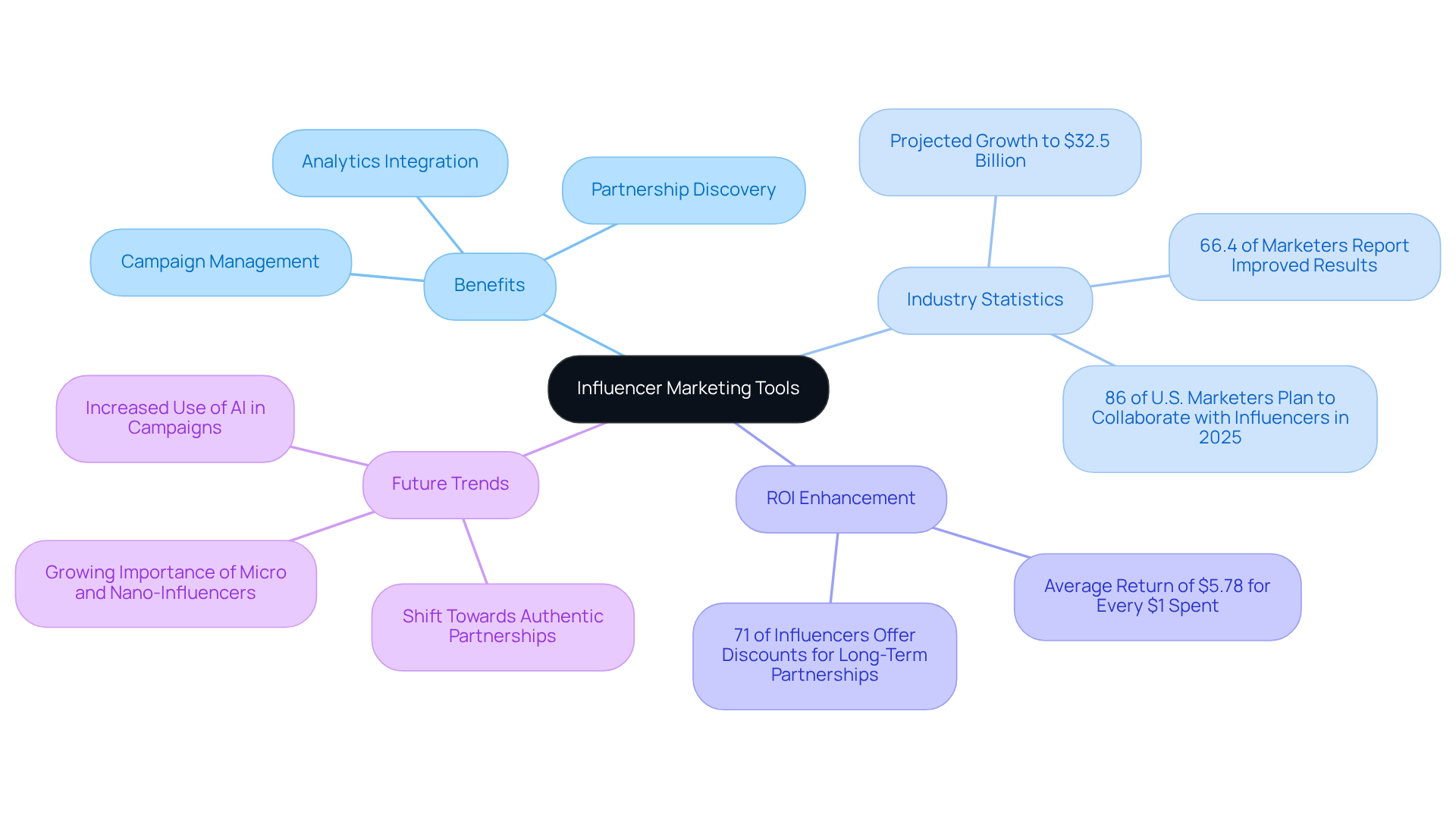
Promotion resources are vital digital platforms that streamline the discovery, management, and analysis of partnership collaborations. The empower companies to connect with influencers who resonate with their target audience, facilitating effective and precise evaluation of promotional success. By leveraging these resources, businesses can fine-tune their , significantly enhancing their (ROI).
In fact, the , underscoring the critical role that the play in driving success. More and more successful companies are adopting the to cultivate long-term relationships with influencers, which not only enhances credibility but also fosters sustained engagement and loyalty among consumers. Notably, 71% of influencers offer discounts for longer-term collaborations, highlighting the cost-saving potential for businesses.
As industry experts point out, the integration of advanced analytics and AI features in the has transformed how companies evaluate . A striking 66.4% of marketers report improved results following implementation. Furthermore, 86% of U.S. marketers plan to collaborate with advocates in 2025, reflecting the growing acceptance of that involve personalities.
This shift towards and authentic collaborations emphasizes the necessity for companies to utilize to remain competitive and effectively engage with their audiences. Are you ready to harness the power of these tools and elevate your marketing efforts?
Overview of Top Influencer Marketing Tools
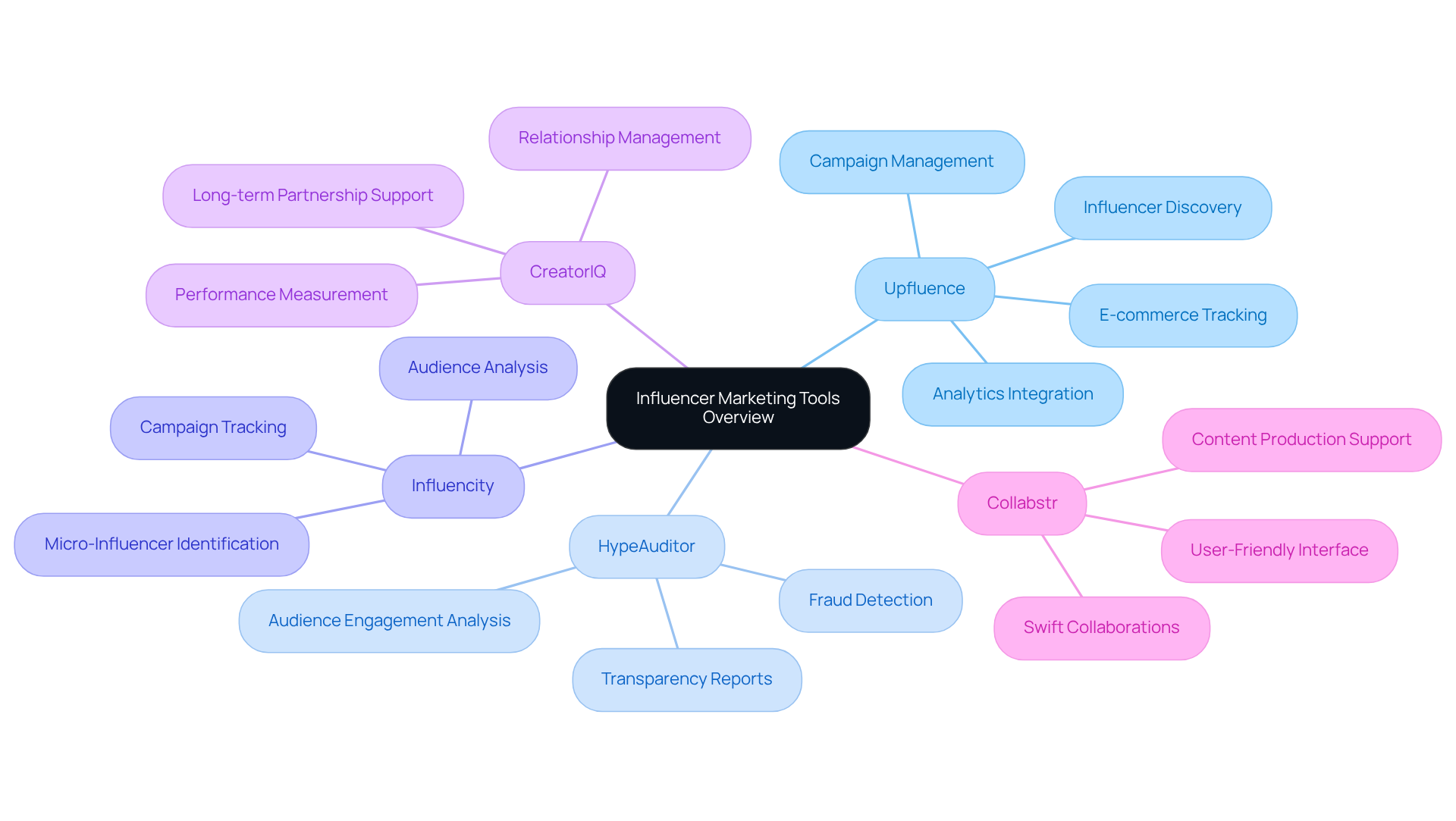
In 2025, promotional resources are set to distinguish themselves by offering unique characteristics tailored to diverse company needs. The sector is projected to reach approximately $32 billion, underscoring the importance of these tools in a growing market. Key platforms include:
- Upfluence: This all-encompassing platform excels in , making it perfect for brands looking to execute large-scale influencer campaigns effectively. Its integration with e-commerce platforms allows , enhancing ROI measurement. Brands typically earn an impressive $5.78 for every $1 spent on marketing through social media personalities, showcasing the .
- HypeAuditor: With a focus on analytics, HypeAuditor empowers companies to assess the authenticity of promoters and audience engagement, addressing the concerns about fraudulent endorsements that 67% of marketers express. Its , ensuring partnerships with genuine influencers who can deliver tangible results.
- Influencity: This tool offers extensive audience analysis and campaign tracking, making it ideal for companies that prioritize data-driven decision-making. Its capabilities enable marketers to refine their strategies based on detailed insights into influencer performance and audience demographics. The trend of shifting from macro-influencer deals to partnerships with , as Influencity aids in identifying effective micro-influencers.
- CreatorIQ: Known for its advanced relationship management features, CreatorIQ helps companies maintain long-term partnerships with influencers. Its emphasis on performance measurement allows businesses to dynamically optimize their marketing expenditures, fostering sustained growth. The is crucial for building trust with audiences, and CreatorIQ facilitates this through its robust features.
- Collabstr: A user-friendly platform, Collabstr connects companies with creators for swift collaborations and content production. Its streamlined interface simplifies the promotion process, making it accessible for businesses of all sizes. As 63% of companies plan to increase their promotional budgets, platforms like Collabstr are becoming increasingly significant.
These tools , from discovery to analytics, enabling companies to select options that align with their specific needs and promotional goals. Integrating insights from marketers about their experiences with these resources could further validate their effectiveness.
Criteria for Evaluating Influencer Marketing Tools
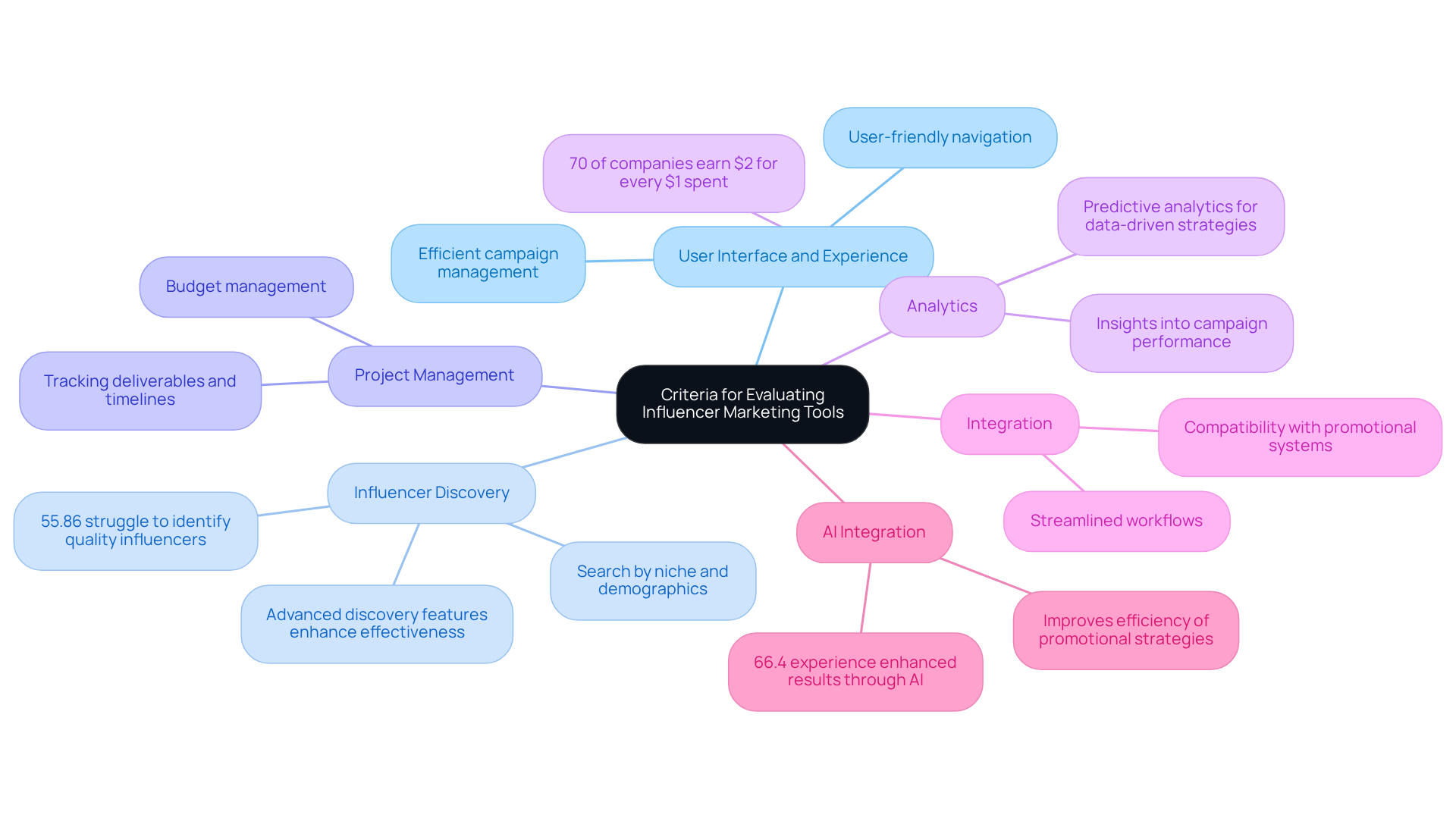
When evaluating , brands should focus on several essential criteria:
- User Interface and Experience: A user-friendly interface is vital for seamless navigation and effective campaign management. This ensures that teams can operate efficiently without unnecessary complications.
- : The ability to search for the based on specific criteria such as niche, , and engagement rates is essential for focused promotion. In 2025, platforms with advanced discovery features are expected to significantly enhance . Notably, 55.86% of marketers struggle to identify quality influencers, highlighting the necessity for strong discovery resources.
- Robust , which are among the , are necessary for tracking deliverables, timelines, and budgets. This ensures that campaigns remain organized and on schedule, maximizing resource utilization.
- Comprehensive that provide insights into campaign performance, audience engagement, and ROI are critical for measuring success when using the . Tools that integrate predictive analytics can help marketers craft data-driven strategies and anticipate audience behaviors, enhancing overall . Significantly, 70% of companies generate a minimum of $2 for every $1 invested in promotion through key individuals, emphasizing the possible returns from successful campaigns.
- Integration with Other Platforms: Compatibility with current promotional systems and platforms can streamline workflows and enable data sharing, making it easier for brands to oversee their collaborator outreach efforts.
- : The incorporation of AI in promotional instruments is becoming increasingly significant. Reports indicate that 66.4% of advertisers experience enhanced campaign results through AI, improving the efficiency of promotional strategies.
These standards allow brands to evaluate which resources will best satisfy their requirements and aid in effective promotion campaigns by utilizing the , ultimately fostering quantifiable growth. Furthermore, with promotion by social media personalities expected to achieve a by the conclusion of 2025, investing in the appropriate resources is more essential than ever. More than 81% of advertisers still consider collaborations with prominent figures as a highly effective approach, reinforcing the significance of these resources in achieving promotional goals.
Comparative Analysis of Influencer Marketing Tools
| Tool | Key Features | Pros | Cons |
|---|---|---|---|
| Upfluence | , | Comprehensive analytics, large influencer database | Can be complex for beginners |
| HypeAuditor | , engagement metrics | Strong focus on authenticity, detailed reports | Limited influencer database |
| Influencity | , audience insights | Excellent data-driven features | Higher pricing tier |
| CreatorIQ | Relationship management, | Great for long-term partnerships | May lack some discovery features |
| Collabstr | Quick , easy collaboration | User-friendly, fast setup | Limited advanced analytics |
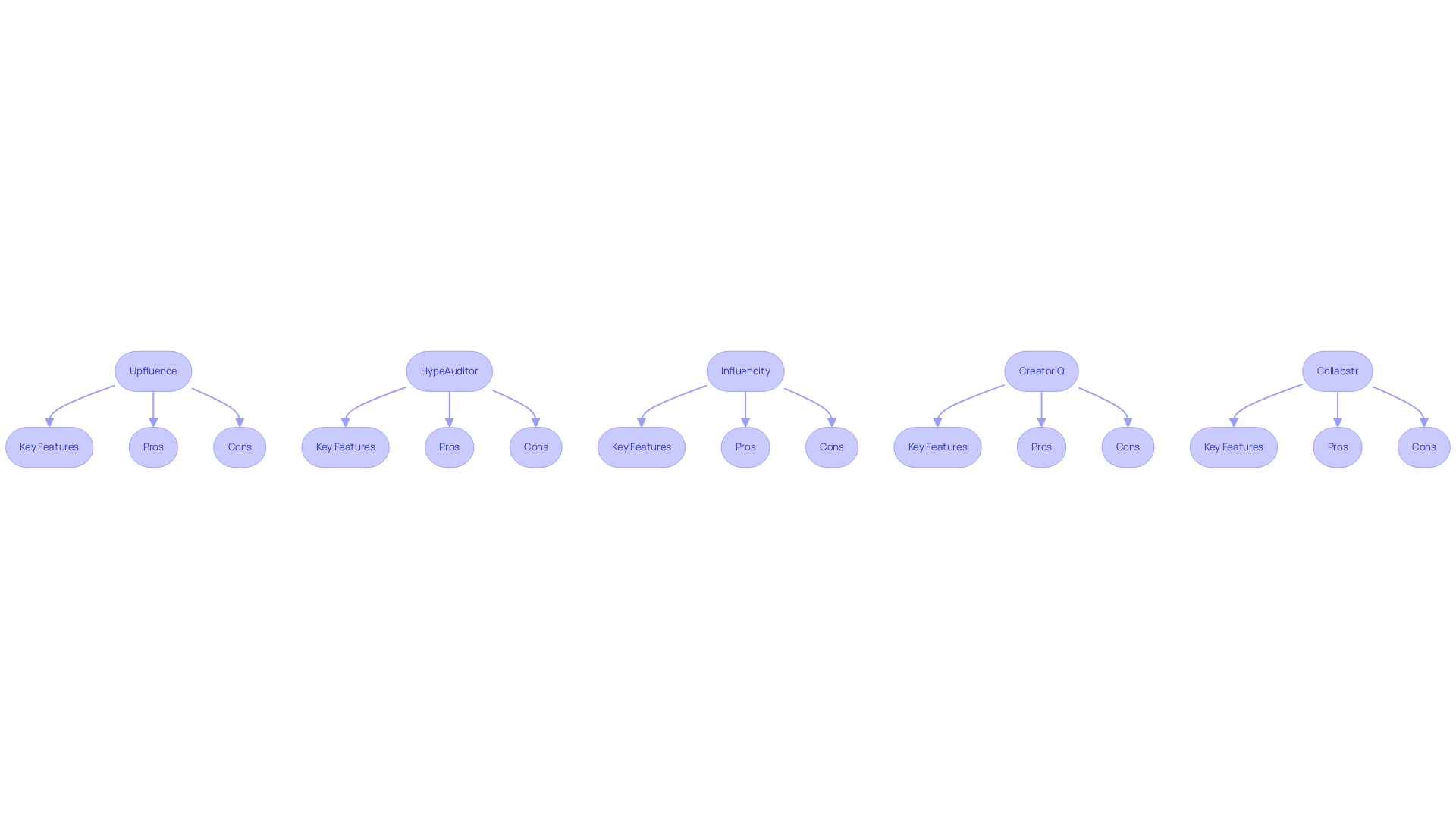
This comparative analysis serves as a , highlighting the strengths and weaknesses of each tool. By understanding these aspects, brands can make informed decisions tailored to their specific marketing objectives and operational needs.
Conclusion
The landscape of influencer marketing tools is evolving, presenting brands with essential resources to enhance their marketing strategies. By effectively utilizing these tools, businesses can establish meaningful connections with influencers, optimize campaign management, and accurately assess promotional success. As the influencer marketing industry continues to grow, the importance of selecting the right tools cannot be overstated.
This article has explored various influencer marketing tools, highlighting their unique features, advantages, and potential drawbacks. From Upfluence’s comprehensive analytics to HypeAuditor’s focus on authenticity, brands can find tools that align with their specific marketing needs. The criteria for evaluating these tools - including user experience, influencer discovery capabilities, and integration with other platforms - serve as a guide for brands aiming to maximize their marketing efforts.
As the influencer marketing sector is poised to reach significant financial milestones, brands are encouraged to invest thoughtfully in these tools. Embracing data-driven strategies and authentic collaborations will not only enhance promotional effectiveness but also foster long-term relationships with audiences. The time to leverage the power of influencer marketing tools is now. Taking action will ensure that brands remain competitive and relevant in an ever-evolving marketplace.
Frequently Asked Questions
What are influencer marketing tools?
Influencer marketing tools are digital platforms that help businesses discover, manage, and analyze collaborations with influencers, facilitating effective campaign management and evaluation of promotional success.
How do influencer marketing tools benefit businesses?
These tools empower companies to connect with influencers who resonate with their target audience, fine-tune promotional strategies, and enhance return on investment (ROI).
What is the projected growth of the influencer marketing industry?
The influencer marketing landscape is projected to reach $32.5 billion by 2025.
What advantages do long-term collaborations with influencers provide?
Long-term collaborations enhance credibility, foster sustained engagement and loyalty among consumers, and 71% of influencers offer discounts for such collaborations, providing cost-saving potential for businesses.
How have advanced analytics and AI features impacted influencer marketing tools?
The integration of advanced analytics and AI features has transformed how companies evaluate campaign performance, with 66.4% of marketers reporting improved results after implementation.
What trend is expected among U.S. marketers regarding influencer collaborations in 2025?
86% of U.S. marketers plan to collaborate with advocates in 2025, indicating a growing acceptance of promotional strategies that involve personalities.
Why is it important for companies to use influencer marketing tools?
Utilizing these tools is essential for companies to remain competitive, engage effectively with their audiences, and adopt data-driven strategies and authentic collaborations.
List of Sources
- Understanding Influencer Marketing Tools
- goviralglobal.com (https://goviralglobal.com/post/influencer-marketing-facts-and-statistics-updated-september-2025)
- 2026 Influencer Marketing Statistics: ROI, Trends & Platform Data (https://sociallyin.com/influencer-marketing-statistics)
- 32 influencer marketing statistics to guide your brand’s strategy in 2026 (https://sproutsocial.com/insights/influencer-marketing-statistics)
- stackinfluence.com (https://stackinfluence.com/influencer-marketing-stats-2025-key-numbers)
- viralnation.com (https://viralnation.com/resources/blog/influencer-marketing-trends-2025-what-marketers-need-to-know)
- Overview of Top Influencer Marketing Tools
- goviralglobal.com (https://goviralglobal.com/post/influencer-marketing-facts-and-statistics-updated-september-2025)
- brentonway.com (https://brentonway.com/top-influencer-marketing-statistics)
- linqia.com (https://linqia.com/insights/the-top-10-influencer-marketing-platforms-in-2025-an-objective-review)
- Influencer Marketing in 2026: Key Stats That Matter (https://thunderbit.com/blog/influencer-marketing-stats)
- Top 10 Influencer Marketing Platforms for 2026 (Compared) (https://meltwater.com/en/blog/best-influencer-marketing-platforms)
- Criteria for Evaluating Influencer Marketing Tools
- goviralglobal.com (https://goviralglobal.com/post/united-states-influencer-marketing-kol-statistics-for-2025)
- influencermarketinghub.com (https://influencermarketinghub.com/influencer-marketing-benchmark-report)
- 14 Influencer Marketing Growth Statistics for 2026 (https://archive.com/blog/influencer-marketing-growth-statistics)
- linqia.com (https://linqia.com/insights/the-top-10-influencer-marketing-platforms-in-2025-an-objective-review)
- 2026 Influencer Marketing Statistics: ROI, Trends & Platform Data (https://sociallyin.com/influencer-marketing-statistics)
- Comparative Analysis of Influencer Marketing Tools
- influencermarketinghub.com (https://influencermarketinghub.com/influencer-marketing-benchmark-report)
- 2026 Influencer Marketing Statistics: ROI, Trends & Platform Data (https://sociallyin.com/influencer-marketing-statistics)
- stackinfluence.com (https://stackinfluence.com/influencer-marketing-stats-2025-key-numbers)
- linqia.com (https://linqia.com/insights/the-top-10-influencer-marketing-platforms-in-2025-an-objective-review)
- 14 Influencer Marketing Growth Statistics for 2026 (https://archive.com/blog/influencer-marketing-growth-statistics)