
Introduction
User-generated content (UGC) is revolutionizing the marketing landscape, enabling brands to harness authentic consumer experiences that foster deeper engagement and trust. As companies increasingly acknowledge the immense power of UGC, the choice of platform becomes crucial for achieving success.
What features should brands prioritize?
How do leading platforms stack up in terms of effectiveness and user experience?
This article explores the essential elements of UGC platforms, providing a comparative analysis that empowers brands to navigate this dynamic market and select the optimal solution for their needs.
Understanding User-Generated Content Platforms
systems are essential digital assets that empower companies to source, manage, and utilize content created by their users or customers. By facilitating the collection of -such as reviews, photos, and videos-these services enable companies to harness across various marketing channels. UGC is increasingly recognized for its ability to enhance trust and engagement; studies reveal that 92% of consumers have more confidence in UGC compared to traditional advertising, positioning it as a vital component of .
As businesses aim to connect with consumers in a genuine manner, the will play a crucial role in shaping marketing initiatives. They serve as a bridge between companies and their audiences, fostering more relatable and impactful interactions. For example, companies like Aerie have effectively utilized UGC through campaigns that highlight real customer experiences, breaking away from conventional marketing stereotypes. This approach not only cultivates community but also significantly boosts engagement, with UGC posts achieving than traditional content.
Experts underscore the , emphasizing its resonance with consumers. As one marketing specialist aptly stated, "Authenticity in user-generated content is essential for establishing trust in the company." This perspective is reinforced by the fact that 70% of millennials and Gen Z consumers view UGC as a crucial factor in their purchasing decisions. By integrating UGC into their marketing strategies on the , companies can bolster their credibility and forge deeper connections with their audience, ultimately driving and conversion rates.
In this landscape, sets itself apart by offering creators the opportunity to collaborate with reputable companies that value their craft. By ensuring fair compensation for every project, empowers creators to effectively monetize their passion.

Key Features to Evaluate in UGC Platforms
When evaluating UGC platforms, several key features are essential to ensure they align with your brand's objectives:
- : A thorough evaluation procedure for creators is crucial. It ensures high-quality material and reduces potential safety issues. Research shows that 93% of marketers believe surpasses traditional branded media, highlighting the importance of quality in driving results. Moreover, , underscoring the need for authentic material.
- : The ability to gather various types of content - videos, images, and reviews - enables companies to engage audiences through multiple formats. This diversity is vital, as .
- Analytics and Reporting: Comprehensive are indispensable for measuring UGC campaign performance. They provide insights into engagement and conversion rates, allowing brands to track the effectiveness of their strategies. Notably, 41% of marketers cite content engagement as the top KPI for assessing UGC impact, emphasizing the role of analytics in enhancing UGC effectiveness.
- Ease of Use: A user-friendly interface simplifies and collaboration with creators, enhancing overall efficiency. Platforms that prioritize usability can significantly improve the user experience, leading to better campaign outcomes.
- Integration Capabilities: The platform should seamlessly integrate with existing marketing tools and social media channels, streamlining workflows and enhancing operational efficiency. This capability is increasingly important as companies seek to optimize their marketing ecosystems.
- : Clear guidelines on ownership and usage rights are essential for protecting both businesses and creators. Ensuring compliance with legal standards fosters trust and encourages more creators to participate.
These features collectively enhance the efficiency of the best UGC platform, making it indispensable for brands aiming to effectively .

Comparative Analysis of Leading UGC Platforms
In this section, we compare several leading UGC services to determine which is the based on key criteria such as features, pricing, and user experience. The platforms analyzed include Cohley, Billo, Insense, and Trend.
- Cohley: Known for its thorough creator evaluation process and robust analytics tools, to companies. Its competitive pricing model makes it suitable for mid-sized brands looking to scale their UGC efforts. In 2025, a remarkable 93% of marketers utilizing UGC reported that it surpassed traditional branded materials, underscoring the importance of platforms like Cohley. Furthermore, , highlighting the effectiveness of UGC in driving engagement.
- Billo: Billo takes a unique approach by focusing on . It offers a streamlined process for companies to request and receive video content from creators. However, its analytics capabilities are less robust compared to Cohley, which may limit insights into campaign performance. Nevertheless, can greatly benefit from Billo's efficient service.
- Insense: This platform stands out for its user-friendly interface and . Insense is ideal for companies that prioritize ease of use and rapid deployment of UGC campaigns, although it may lack some advanced analytics features.
- Trend: Trend connects companies with a diverse pool of creators, emphasizing authenticity and engagement. Its flexible pricing accommodates both small and large companies. Trend.io allows unlimited project requests and grants complete licensing and distribution rights on material, making it an appealing choice for businesses. However, some users report challenges with the vetting process.
In general, each system has its advantages and drawbacks, the . As and is anticipated to reach $27 billion by 2029, choosing the appropriate medium can significantly influence a company's success in leveraging .

Pros and Cons of Implementing UGC Platforms
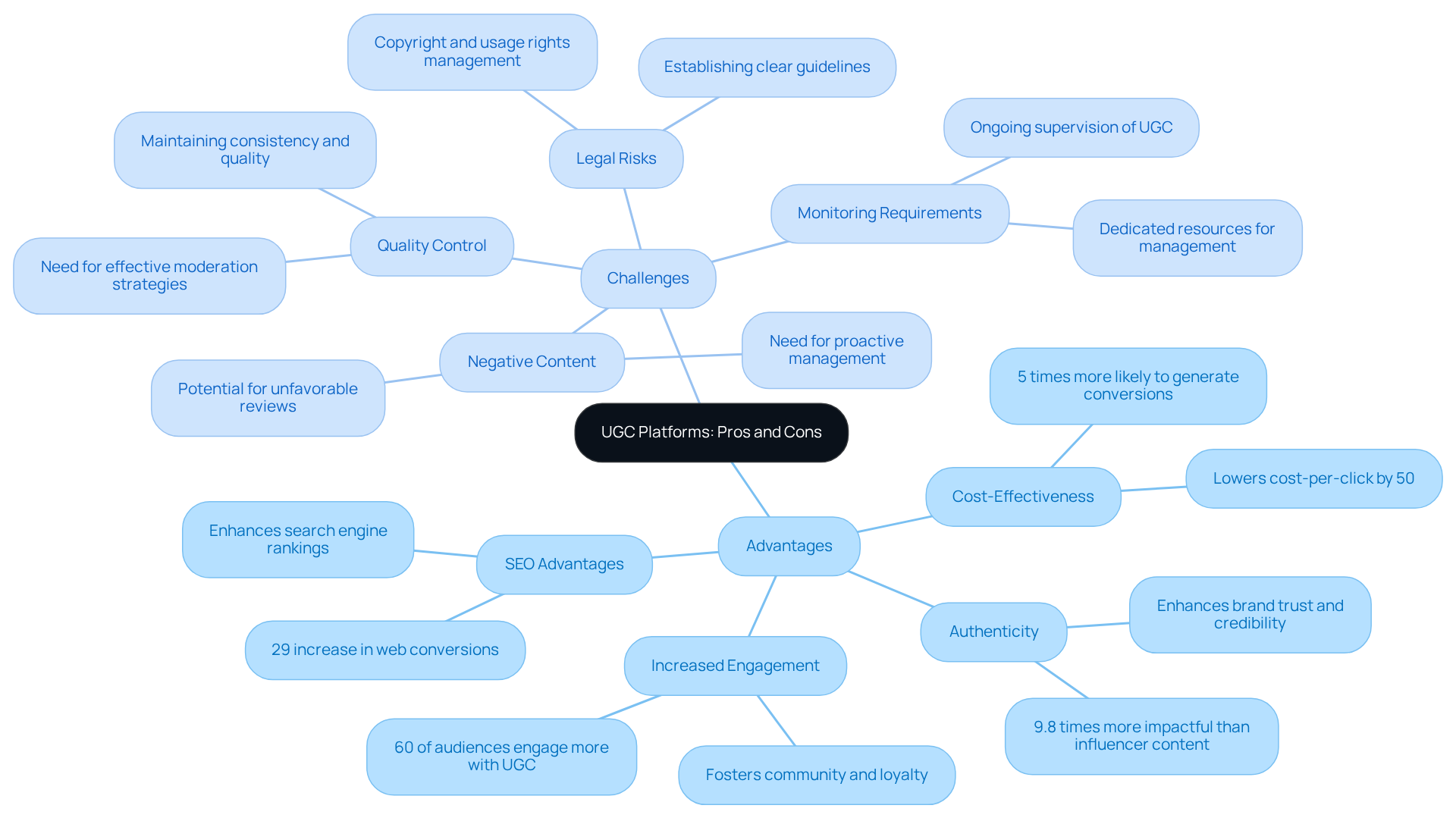
Brands should carefully consider the advantages and challenges of implementing the .
- Authenticity is a key benefit. UGC provides a genuine portrayal of customer experiences, significantly enhancing . In fact, research shows that , making it 9.8 times more impactful than influencer material. This highlights the profound effect UGC has on consumer trust.
- Cost-Effectiveness is another compelling reason to embrace UGC. By utilizing , companies can significantly cut down on creation expenses, avoiding the hefty costs associated with professional production. Statistics reveal that incorporating UGC can lower by 50% in social media ads, and it is five times more likely to generate conversions compared to professional content. Clearly, this makes UGC a financially savvy choice for businesses.
- is a notable outcome of UGC. Marketers report that . This connection is crucial for fostering community and building customer loyalty.
- SEO Advantages also come into play. Fresh and dynamic UGC can enhance search engine rankings, driving organic traffic to company websites. In fact, websites featuring UGC can experience a , underscoring its effectiveness in boosting online visibility.
However, brands must navigate several challenges:
- is paramount. Maintaining quality and consistency in UGC can be challenging, as content is generated by various users with differing standards. Brands need to implement effective moderation strategies to ensure that only high-quality material is showcased. A case study on content moderation in UGC campaigns illustrates how brands can effectively manage this challenge.
- are another concern. Potential legal implications regarding copyright and usage rights necessitate careful management of permissions. Establishing clear guidelines can help mitigate these risks.
- Negative Content is an unavoidable aspect of UGC. It may include unfavorable reviews or feedback, which can tarnish a company's reputation if not managed properly. Brands should be prepared to address and respond to negative material proactively.
- Monitoring Requirements are essential. Ongoing supervision of UGC is crucial to ensure adherence to guidelines and to swiftly address any emerging issues. This requires dedicated resources and strategies to manage effectively.
In summary, while the presents substantial benefits, brands must be equipped to tackle the associated challenges to maximize their potential. Are you ready to leverage UGC for your brand's success?
Conclusion
User-Generated Content (UGC) platforms have become essential for brands aiming to build authentic connections with their audiences. By harnessing genuine user experiences, these platforms not only foster trust but also significantly enhance engagement and conversion rates. Integrating UGC into marketing strategies is no longer optional; it is a vital element for success in today’s digital landscape.
This article has explored key features of effective UGC platforms, such as:
- Creator vetting
- Content diversity
- Robust analytics capabilities
Each platform analyzed, from Cohley to Trend, presents unique advantages tailored to different brand needs. Understanding these features and the comparative strengths of each platform empowers brands to make informed decisions that align with their marketing objectives.
As the UGC market continues to grow, embracing these platforms offers brands a significant opportunity to enhance their credibility and forge deeper connections with consumers. Companies must recognize the advantages of UGC while being prepared to navigate the challenges it presents. By effectively managing quality control, legal considerations, and monitoring requirements, brands can maximize the potential of UGC to drive engagement and achieve greater success. Taking the leap into user-generated content could very well be the key to unlocking a brand's full potential in the marketplace.
Frequently Asked Questions
What is User-Generated Content (UGC)?
User-Generated Content (UGC) refers to content created by users or customers, such as reviews, photos, and videos, that companies can source, manage, and utilize in their marketing efforts.
Why is UGC important for companies?
UGC is important because it enhances trust and engagement; studies show that 92% of consumers have more confidence in UGC compared to traditional advertising, making it a vital component of effective marketing strategies.
How does UGC impact consumer engagement?
UGC fosters more relatable and impactful interactions between companies and their audiences, resulting in significantly higher engagement, with UGC posts achieving click-through rates four times higher than traditional content.
What role does authenticity play in UGC?
Authenticity is crucial in UGC as it resonates with consumers and helps establish trust in the company. A significant percentage, 70%, of millennials and Gen Z consumers consider UGC a key factor in their purchasing decisions.
How can companies effectively integrate UGC into their marketing strategies?
Companies can integrate UGC by utilizing the best UGC platforms to collect and showcase authentic user experiences, thereby bolstering their credibility and forging deeper connections with their audience.
What distinguishes NugVerse from other UGC platforms?
NugVerse distinguishes itself by offering creators the opportunity to collaborate with reputable companies and ensuring fair compensation for every project, empowering creators to monetize their passion effectively.
List of Sources
- Understanding User-Generated Content Platforms
- The Top 15 UGC Platforms in 2026: Strengths & Features - Flowbox (https://getflowbox.com/blog/ugc-platforms)
- inbeat.agency (https://inbeat.agency/blog/ugc-statistics)
- 37 Latest User-Generated Content Statistics (New Report) (https://wiserreview.com/blog/user-generated-content-statistics)
- 6 Predictions That Will Shape Social Media Strategies In 2026 (https://forbes.com/councils/forbescommunicationscouncil/2026/01/02/the-next-social-wave-the-top-6-predictions-that-will-shape-social-media-strategies-in-2026)
- socialpilot.co (https://socialpilot.co/blog/user-generated-content-ugc)
- Key Features to Evaluate in UGC Platforms
- The Top 15 UGC Platforms in 2026: Strengths & Features - Flowbox (https://getflowbox.com/blog/ugc-platforms)
- 70+ UGC Statistics to Shape Your 2026 Marketing Strategy (https://showca.se/post/ugc-statistics)
- 24 Key User-Generated Content (UGC) Statistics for 2026 (https://backlinko.com/ugc-statistics)
- The future of influencer marketing: 4 trends for 2026 and beyond (https://marketingtechnews.net/news/the-future-of-influencer-marketing-4-trends-for-2026-and-beyond)
- Comparative Analysis of Leading UGC Platforms
- 100+ UGC statistics for 2026 (https://whop.com/blog/ugc-statistics)
- The Top 15 UGC Platforms in 2026: Strengths & Features - Flowbox (https://getflowbox.com/blog/ugc-platforms)
- 70+ UGC Statistics to Shape Your 2026 Marketing Strategy (https://showca.se/post/ugc-statistics)
- 24 Key User-Generated Content (UGC) Statistics for 2026 (https://backlinko.com/ugc-statistics)
- 37 Latest User-Generated Content Statistics (New Report) (https://wiserreview.com/blog/user-generated-content-statistics)
- Pros and Cons of Implementing UGC Platforms
- socialpilot.co (https://socialpilot.co/blog/user-generated-content-ugc)
- The Importance of User-Generated Content (UGC) and Listening to the Customer (https://blog.modernmt.com/the-importance-of-user-generated-content-ugc-and-listening-to-the-customer)
- User Generated Content Statistics: UGC Stats Compilation - Flowbox (https://getflowbox.com/blog/user-generated-content-statistics)
- 36 User-Generated Content Statistics That You Can’t Ignore | EveryoneSocial (https://everyonesocial.com/blog/user-generated-content-statistics)
- forbes.com (https://forbes.com/councils/forbescommunicationscouncil/2021/10/19/12-clever-ways-for-brands-to-leverage-user-generated-content)