
Introduction
Understanding the financial landscape of influencer marketing is essential for brands aiming to maximize their return on investment. With the influencer marketing sector projected to reach a staggering $56 billion by 2029, grasping the various compensation models and factors that influence payment rates is crucial. However, as brands navigate this complex terrain, they often face the challenge of determining how much influencers should be paid per post.
What are the key elements that dictate these rates? How can brands negotiate effectively to ensure fair compensation while fostering successful partnerships? These questions are vital for brands looking to thrive in this dynamic environment. By delving into the intricacies of influencer compensation, brands can not only secure better deals but also build lasting relationships with influencers that drive results.
In addition, understanding these factors can empower brands to make informed decisions, ultimately leading to more effective marketing strategies. As the influencer marketing landscape continues to evolve, staying ahead of the curve is imperative. Engage with MediaNug to explore how we can assist you in navigating this complex field.
Understand Influencer Payment Structures
Influencer compensation structures vary significantly based on factors like audience size, engagement rates, and content type. Understanding these differences is crucial for brands aiming to leverage effectively. Here are the primary payment models:
- Flat Fee: This widely used model compensates content creators with a fixed amount per post or campaign, raising the question of . When considering , rates can range from $100 for nano-influencers (1,000 to 10,000 followers) to over $10,000 for mega-influencers (1 million+ followers). For example, Instagram personalities typically charge around $1,000 per 100,000 followers, which highlights , while YouTube creators may command $20,000 or more for dedicated content.
- Performance-Based: In this model, influencers earn compensation linked to the performance of their posts, such as sales generated or engagement metrics. This approach aligns the promoter's incentives with the brand's objectives, making it a compelling choice for brands seeking measurable results. Research shows that creator-generated ads achieve a 1.08 compared to 0.89 for traditional ads, underscoring the effectiveness of . Furthermore, 60% of marketers believe that the ROI is better with than with other channels.
- : Combining flat fees with performance incentives, provide content creators with a base remuneration along with bonuses for meeting specific performance metrics. This structure is favored by 80% of creators, as it offers income stability while motivating them to produce high-quality content. Choosing the right compensation model is essential for successful collaborations with content creators.
- : Some content creators opt for products or services as payment, particularly when they align with their personal brand. While 93% of creators are open to receiving free products, many established influencers increasingly expect for professional collaborations.
The global marketing sector involving key personalities is valued at approximately $25 billion as of 2025, with projections to expand to $56 billion by 2029. Grasping these financial structures is vital for crafting a successful that aligns with your brand's goals and budget.

Identify Key Factors Affecting Payment
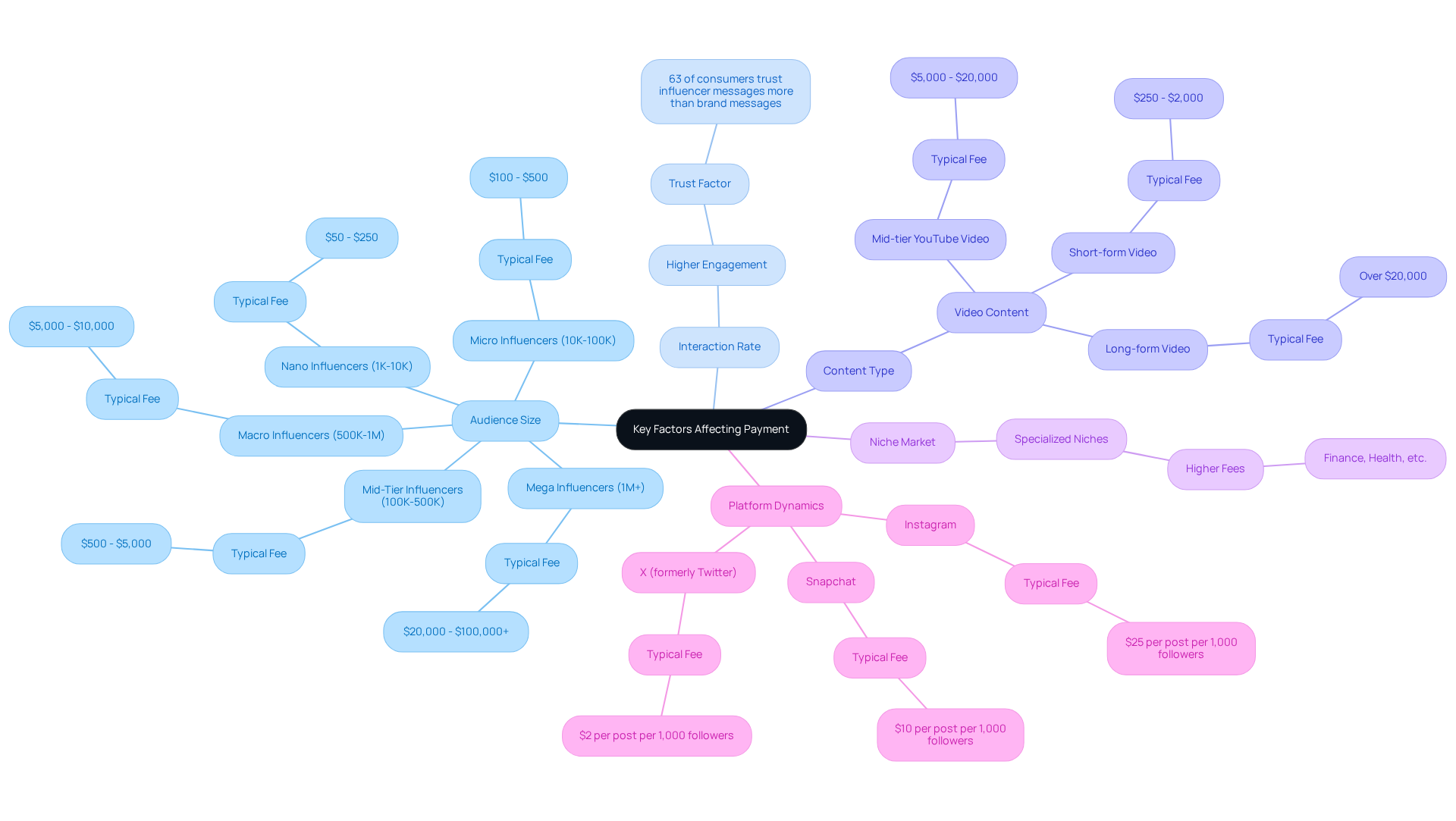
Several key factors significantly influence how much influencers get paid per post:
- Audience Size: The correlation between audience size and payment is substantial. Influencers fall into tiers based on their follower count: nano (1K-10K), micro (10K-100K), mid-tier (100K-500K), macro (500K-1M), and mega (1M+). For instance, when discussing , nano-influencers typically charge between $50 and $250, while mega-influencers can command fees ranging from $20,000 to over $100,000.
- Interaction Rate: -measured through likes, comments, and shares-can demand elevated fees. A more engaged audience indicates a stronger connection and influence, making their endorsements more valuable. When assessing potential partnerships, brands often prioritize over sheer follower count to understand . Notably, 63% of consumers trust influencer messages more than brand messages, underscoring the importance of engagement in .
- Content Type: The type of content produced also affects pricing. , generally incurs higher fees due to its production complexity and the time required for editing. For example, costs can range from $250 to $2,000, while mid-tier YouTube video production costs range from $5,000 to $20,000, and long-form videos may exceed $20,000 depending on quality and reach.
- : Influencers operating within specialized niches, such as finance or health, often charge more due to the targeted nature of their audience and the higher perceived value of their endorsements. Brands in these sectors may find that investing in niche advocates yields better returns on their marketing spend.
- : Payment rates vary significantly across different social media platforms. For example, social media personalities on Instagram may charge approximately $25 per post for every 1,000 followers, while those on Snapchat generally charge about $10 per post per 1,000 followers. Additionally, influencers on X (formerly Twitter) average $2 per post for every 1,000 followers. For brands budgeting for partnership collaborations, it is crucial to understand along with the platform-specific dynamics.
By thoroughly grasping these factors, brands can make informed choices regarding the worth of possible partnership opportunities, ensuring that their marketing investments align with their strategic objectives.
Calculate Influencer Fees Using a Formula
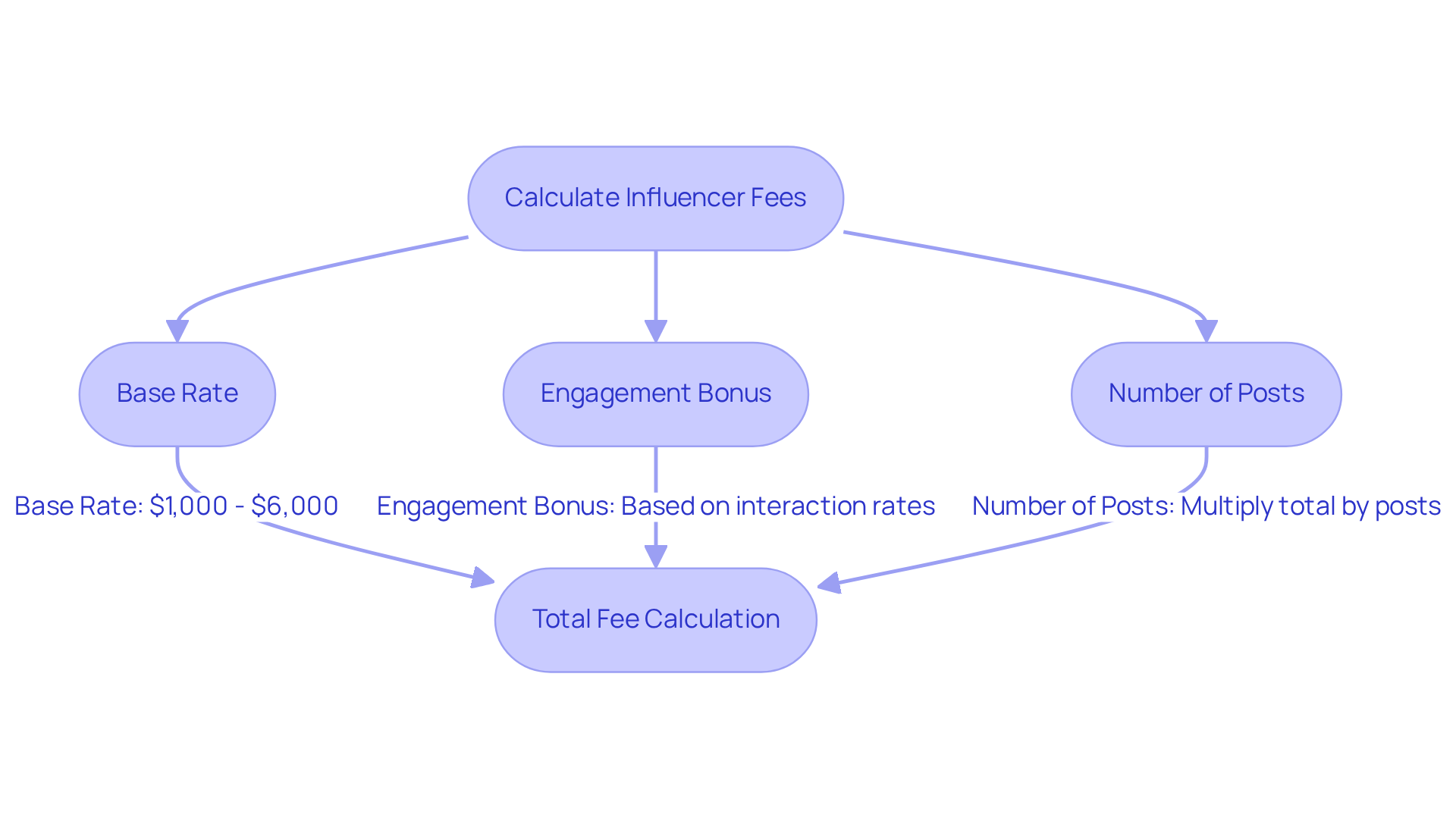
To accurately calculate , consider this essential formula:
Influencer Fee = ( + ) x
- : This is the standard fee for the content creator based on their tier. For instance, in 2025, a micro-influencer typically commands a ranging from $1,000 to $6,000 per post, which illustrates based on their interaction and audience size. Notably, is typically between $2,000 and $8,000 for micro-influencers on Instagram.
- : This is calculated as a fraction of the influencer's average interaction rate. For example, if an influencer has an interaction rate of 5% and your target participation is 10%, consider adding an extra 10% to the to incentivize performance. Brands often provide a fixed fee along with a 10-20% commission on sales through social platforms, which can also shape how performance bonuses are structured.
- : Multiply the total by the you plan to commission.
Example Calculation: Suppose you want to hire a micro-influencer with a of $2,000, an of 10%, and you desire 3 posts:
- : $2,000
- : $2,000 x 10% = $200
- Total Fee: ($2,000 + $200) x 3 = $6,600
This formula ensures that influencers receive fair compensation based on their potential impact, aligning with industry standards where despite having smaller followings. Furthermore, considering the can further justify the investment in promotional fees. By grasping these calculations, brands can effectively optimize their marketing budgets.
Navigate Challenges in Payment Negotiation
Negotiating payments for can be challenging. However, employing effective strategies can streamline the process significantly. Here are key approaches to consider:
- : Start by researching industry standards for personality fees within your niche. In 2025, to understand , nano-influencers typically charge between $50 and $250, while micro-influencers charge between $250 and $1,000. The question of is illustrated by mid-tier content creators commanding $1,000 to $7,500, while macro content creators can charge $7,500 to $20,000. Understanding these benchmarks establishes a .
- Be Transparent: Clearly communicate your budget and expectations to the influencer. Transparency fosters trust and can lead to more productive discussions, allowing both parties to align on goals and compensation. Notably, over 45% of marketers observed that individuals with a following are less willing to become affiliates due to income unpredictability, making transparency even more crucial.
- : Enhance your offer by including additional perks such as exclusive product access, long-term collaborations, or . These incentives can make your proposal more appealing without relying solely on monetary compensation, especially as many creators increasingly value non-monetary benefits. In fact, .
- Flexibility: Be open to different compensation structures. Many content creators prefer a hybrid model that combines flat fees with performance-based incentives, aligning their interests with your campaign objectives. In 2025, over 61% of marketers employed , emphasizing the trend towards adaptable remuneration arrangements. This approach not only motivates creators but also allows for better tracking of ROI.
- : Ensure that all agreements are clearly documented in a contract. This safeguards both sides and clarifies expectations concerning deliverables, compensation terms, and usage rights, which is vital in sustaining a professional relationship. As Luiggi Pera states, "Negotiation isn’t just about knocking the price down-it’s about structuring a deal that protects your ROI."
By implementing these strategies, brands can effectively navigate the complexities of influencer payment negotiations, fostering successful partnerships that drive measurable results.

Conclusion
Understanding the financial dynamics of influencer marketing is crucial for brands aiming to optimize their collaborations. By recognizing the various compensation models influencers utilize - ranging from flat fees to performance-based payments - brands can align their strategies effectively.
How much do influencers get paid per post? What factors influence these rates? Grasping these elements allows brands to make informed decisions that enhance their marketing efforts.
Key insights reveal that:
- Audience size
- Engagement rates
- Content types
- Niche markets
- Platform dynamics
All significantly impact influencer fees. Additionally, the article provides a practical formula for calculating influencer compensation, ensuring brands can budget effectively for their campaigns. It also addresses the challenges of payment negotiations, offering strategies for transparency, flexibility, and value beyond mere monetary compensation.
Ultimately, the evolving landscape of influencer marketing highlights the importance of understanding payment structures and negotiation tactics. Brands that invest time in researching and adapting to these trends will not only foster successful partnerships but also maximize their return on investment. Embracing these insights can lead to more effective collaborations and a stronger presence in the competitive digital marketplace.
Frequently Asked Questions
What are the main influencer payment structures?
The primary influencer payment structures include flat fee, performance-based, hybrid models, and product compensation.
How does the flat fee payment model work?
The flat fee model compensates influencers with a fixed amount per post or campaign. Rates can range from $100 for nano-influencers to over $10,000 for mega-influencers.
What is the typical payment range for influencers based on their audience size?
Influencers can earn around $1,000 per 100,000 followers on platforms like Instagram, while YouTube creators may command $20,000 or more for dedicated content.
What is the performance-based payment model?
In the performance-based model, influencers earn compensation based on the performance of their posts, such as sales generated or engagement metrics, aligning their incentives with the brand's objectives.
How effective are performance-based compensation models compared to traditional ads?
Creator-generated ads achieve a 1.08 return on ad spend (ROAS) compared to 0.89 for traditional ads, indicating better effectiveness for influencer marketing.
What are hybrid models in influencer compensation?
Hybrid models combine flat fees with performance incentives, providing a base remuneration along with bonuses for meeting specific performance metrics.
Why do many creators prefer hybrid models?
Hybrid models are favored by 80% of creators because they offer income stability while motivating them to produce high-quality content.
What is product compensation in influencer marketing?
Product compensation involves influencers receiving products or services as payment, especially when they align with their personal brand. However, many established influencers increasingly expect monetary compensation for professional collaborations.
What is the projected value of the global influencer marketing sector?
The global influencer marketing sector is valued at approximately $25 billion as of 2025, with projections to expand to $56 billion by 2029.
Why is understanding influencer payment structures important for brands?
Grasping these financial structures is vital for crafting a successful influencer marketing strategy that aligns with a brand's goals and budget.
List of Sources
- Understand Influencer Payment Structures
- impact.com (https://impact.com/influencer/content-creator-compensation)
- tipalti.com (https://tipalti.com/resources/learn/influencer-payments)
- boston25news.com (https://boston25news.com/news/2025-influencer-marketing-costs-youtube-instagram-tiktok/4JLUBE46ORPODMQEYG2CAT7W5Y)
- iqfluence.io (https://iqfluence.io/public/blog/influencer-payments)
- 2026 Influencer Marketing Statistics: ROI, Trends & Platform Data (https://sociallyin.com/influencer-marketing-statistics)
- Identify Key Factors Affecting Payment
- Influencer Price List! What Brands Pay Per Post in 2026? (https://clickanalytic.com/influencer-price-list)
- billo.app (https://billo.app/blog/influencer-payments)
- prnewswire.com (https://prnewswire.com/news-releases/influencer-marketing-in-2025-new-data-reveals-what-works-what-costs-and-whats-next-302490369.html)
- influencity.com (https://influencity.com/blog/en/mastering-influencer-rate-negotiation-how-much-do-influencers-make)
- Calculate Influencer Fees Using a Formula
- Cost of Influencer Marketing in 2026 (https://metricool.com/how-much-an-influencer-charges)
- Influencer Price List! What Brands Pay Per Post in 2026? (https://clickanalytic.com/influencer-price-list)
- impact.com (https://impact.com/influencer/how-much-do-influencers-charge-per-post)
- boston25news.com (https://boston25news.com/news/2025-influencer-marketing-costs-youtube-instagram-tiktok/4JLUBE46ORPODMQEYG2CAT7W5Y)
- prnewswire.com (https://prnewswire.com/news-releases/influencer-marketing-in-2025-new-data-reveals-what-works-what-costs-and-whats-next-302490369.html)
- Navigate Challenges in Payment Negotiation
- readytojump.co (https://readytojump.co/blog/negotiating-with-influencers-in-2025-whats-changed-and-how-to-win)
- prnewswire.com (https://prnewswire.com/news-releases/influencer-marketing-in-2025-new-data-reveals-what-works-what-costs-and-whats-next-302490369.html)
- modash.io (https://modash.io/it/blog/survey-influencer-trends-contracts-negotiation-pricing)
- aspire.io (https://aspire.io/blog/influencer-marketing-challenges-and-solutions)
- goviralglobal.com (https://goviralglobal.com/post/influencer-marketing-facts-and-statistics-updated-september-2025)