
Introduction
Creating a virtual influencer is more than just a trendy marketing move; it represents a significant investment in the future of digital engagement. With the influencer marketing industry projected to reach an astonishing $32.5 billion by 2025, understanding the costs associated with developing these digital personas is crucial for brands aiming to stay ahead. However, with a myriad of expenses ranging from character design to ongoing maintenance, how can businesses effectively budget for this innovative strategy while maximizing their return on investment?
Furthermore, as brands navigate this evolving landscape, they must consider not only the initial costs but also the long-term implications of their investments. By strategically planning their budgets, companies can ensure they are not only keeping pace with industry trends but also setting themselves up for future success. This proactive approach will allow them to harness the full potential of virtual influencers, ultimately driving engagement and growth.
Understand Virtual Influencers and Their Market Impact
represent a groundbreaking evolution in , expertly crafted to engage audiences across social media platforms. With the , the role of is becoming increasingly pivotal, especially in appealing to younger audiences like Gen Z.
These digital personas offer companies unique advantages:
- Controlled messaging
- Constant availability
- The ability to produce
Notably, 47% of companies are focusing on nurturing to foster loyalty, which in turn enhances engagement.
Furthermore, adopting a can significantly amplify marketing efforts, maximizing the impact of these digital personalities. Campaigns that leverage have reported than those that do not utilize such marketing strategies.
As businesses navigate this evolving landscape, is crucial for those looking to invest in this innovative marketing channel. Are you ready to explore how can transform your marketing approach?

Identify Key Cost Components for Virtual Influencer Creation
Creating a involves several key cost components that brands must consider:
- : The initial typically ranges from $5,000 to $15,000, influenced by the complexity and realism of the design, whether it is 2D or 3D. Did you know that professional creation often achieves compared to amateur DIY attempts? This makes the investment in crucial for maximizing audience interaction.
- Development Costs: This encompasses software and technology expenses, which can vary significantly based on the tools utilized for animation and interaction. Investing in advanced technology can lead to superior long-term financial efficiency, as highlighted by industry experts. Are you ready to elevate your 's capabilities?
- : Regular content creation, including video shoots and editing, can incur expenses between $1,000 and $5,000 per month, depending on the frequency and type of content produced. s generate an average of than human influencers, underscoring the importance of quality . How can you ensure your content stands out?
- : Allocating a budget for advertising the online persona across social media platforms is crucial, with expenses varying depending on the chosen platforms and marketing strategies utilized. can significantly improve the ROI of online personality campaigns. What strategies will you implement to maximize your reach?
- : Monthly operational expenses for AI agents and updates can vary from $1,000 to $3,000, ensuring the content creator remains relevant and engaging over time. Continuous optimization and engagement are necessary for maintaining audience interest and driving sales. Are you prepared to invest in ongoing success?
Comprehending these elements allows companies to precisely assess the overall expenditure needed for developing and sustaining a digital persona. This ensures a strategic method to budgeting that aligns with wider marketing goals. As Maria Jensen observes, professional services offer practical budget estimates and continuous support, facilitating navigation through this evolving landscape.
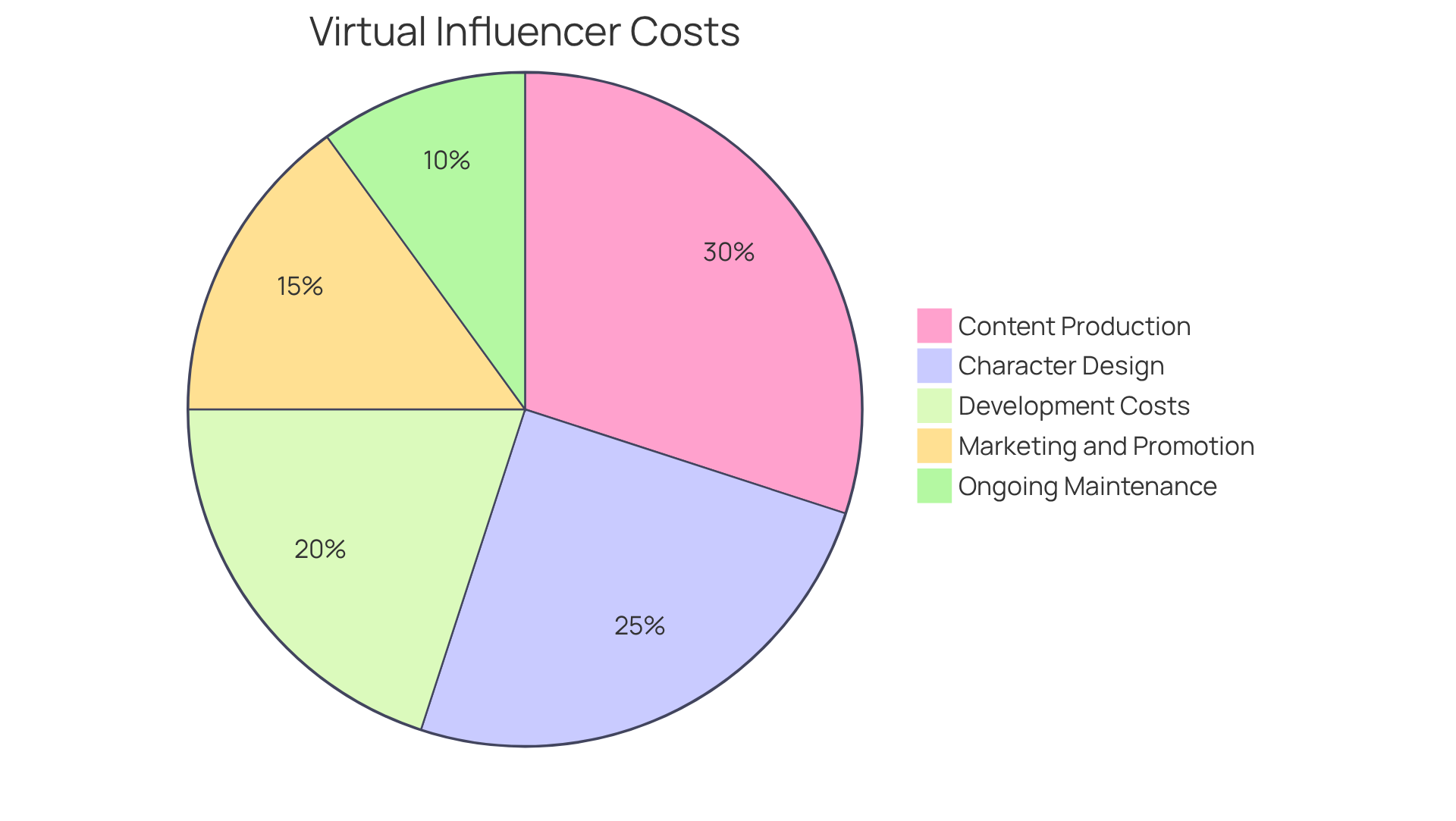
Calculate Total Costs: A Step-by-Step Approach
For any brand looking to establish a strong online presence, understanding is essential. Here’s how to approach it:
- Define Your Goals: What’s the purpose of your online persona? Whether it’s , engagement, or , having clear objectives is crucial.
- Estimate : Depending on complexity, you should allocate between $5,000 and $15,000 for the initial design. With the from USD 6.06 billion in 2024 to USD 8.30 billion in 2025, investing in character design is not just relevant; it’s imperative.
- Assess Development Requirements: Identify the technology and software you’ll need. Estimate expenses based on your chosen tools to ensure you’re fully equipped.
- Plan : How often will you create content? Estimate monthly expenses, which can range from $1,000 to $5,000. Remember, professional virtual influencers typically achieve , making consistent vital.
- Include : Don’t forget to allocate a budget for promoting your . Companies can earn up to $20 for every $1 spent on promotional campaigns, underscoring the importance of .
- Consider Maintenance: Assess ongoing operational expenses, usually between $1,000 and $3,000 each month. As Maria Jensen points out, while professional online persona creation requires a greater initial investment, it offers better long-term financial efficiency.
- Total Your Estimates: Finally, add all estimated costs to arrive at a comprehensive budget for your online influencer project.
By following this structured approach, companies can better understand while ensuring their budget aligns with marketing objectives. Incorporating these insights and statistics ensures effective resource allocation and maximizes return on investment.

Evaluate ROI and Performance Metrics for Virtual Influencers
To effectively evaluate the and performance of , brands must focus on several that drive success:
- Engagement Rates: Assessing likes, shares, comments, and overall interactions with the creator's content is crucial. achieve an impressive , significantly outperforming human creators, who average 1.72%. Higher engagement rates indicate a successful connection with the audience, leading to increased brand affinity.
- Conversion Rates: -after engaging with the content creator's material is essential. This metric directly correlates with , as campaigns that effectively convert viewers into customers demonstrate tangible success. Notably, for virtual influencer campaigns averages 13.7%, compared to 12.3% for human influencer campaigns, highlighting the financial benefits of .
- : Calculate the cost of each engagement by dividing total campaign costs by the number of engagements. This metric aids in evaluating the efficiency of the investment, enabling companies to optimize their spending strategies. Furthermore, companies are increasingly reallocating budgets towards micro and nano creators, who often provide better .
- Product Awareness Metrics: Utilizing surveys or social listening tools can help gauge changes in perception and awareness before and after the campaign. often observe a direct effect on sales and customer loyalty. In fact, 67% of B2B firms utilizing promotion through key figures prioritize visibility as their top goal.
- : Consider the individual's impact on over time. can foster ongoing relationships with audiences, leading to and enhanced . The trend towards hybrid compensation models, which combine guaranteed fees with performance-based payouts, further supports this long-term relationship building.
By systematically assessing these metrics, brands can gain valuable insights into the effectiveness of their virtual ambassador campaigns. This enables informed adjustments to optimize future efforts. As the landscape evolves, focusing on measurable outcomes will be essential for maximizing the impact of influencer marketing strategies.

Conclusion
Creating a virtual influencer is not merely a trend; it signifies a profound shift in how brands engage with their audiences. With the influencer marketing industry projected to soar to approximately $32.5 billion by 2025, understanding the multifaceted costs and strategic benefits of virtual influencers is essential for companies eager to connect with younger demographics. This innovative marketing approach is no longer optional; it’s a necessity for brands aiming to resonate deeply with their target markets.
The article highlights critical components of virtual influencer creation, such as:
- Character design
- Development costs
- Content production
- Marketing
- Ongoing maintenance
Each element is crucial for a successful virtual influencer strategy, as demonstrated by the enhanced engagement rates and ROI that virtual influencers can achieve compared to traditional human influencers. Companies that allocate their budgets wisely and prioritize quality in every aspect of creation are more likely to see a significant return on their investment.
In conclusion, as the digital marketing landscape evolves, embracing virtual influencers presents brands with a unique opportunity to differentiate themselves. By strategically budgeting and focusing on measurable performance metrics, businesses can not only boost their engagement and conversion rates but also cultivate lasting relationships with their audiences. The future of marketing is digital, and now is the time to invest in virtual influencers to maintain a competitive edge.
Frequently Asked Questions
What are virtual influencers?
Virtual influencers are digital personas created to engage audiences on social media platforms, representing a new evolution in digital marketing.
What is the projected growth of the influencer marketing industry?
The influencer marketing industry is projected to reach approximately $32.5 billion by 2025.
Why are virtual influencers particularly appealing to companies?
Virtual influencers offer companies controlled messaging, constant availability, and the ability to produce tailored content that aligns with brand values.
How many companies are focusing on long-term relationships with influencers?
47% of companies are focusing on nurturing long-term relationships with influencers to foster loyalty and enhance engagement.
What is a dual-platform strategy in marketing?
A dual-platform strategy involves utilizing multiple social media platforms to amplify marketing efforts and maximize the impact of digital personalities, such as virtual influencers.
How do engagement rates for campaigns using virtual influencers compare to those that do not?
Campaigns that leverage virtual influencers have reported engagement rates that can be up to ten times higher than those that do not use such marketing strategies.
Why is it important for businesses to understand the dynamics of digital influencers?
Understanding the dynamics of digital influencers is crucial for businesses looking to invest in this innovative marketing channel and effectively navigate the evolving landscape.
List of Sources
- Understand Virtual Influencers and Their Market Impact
- medium.com (https://medium.com/@ara_ohanian/99-inspiring-influencer-marketing-quotes-54db4b924341)
- 20 Surprising Influencer Marketing Statistics | Digital Marketing Institute (https://digitalmarketinginstitute.com/blog/20-influencer-marketing-statistics-that-will-surprise-you)
- loudcrowd.com (https://loudcrowd.com/blog/top-trends-influencer-marketing-what-you-need-to-know-in-2025)
- Influencer Marketing Trends 2026 (https://creatoriq.com/blog/influencer-marketing-trends-2026)
- Identify Key Cost Components for Virtual Influencer Creation
- unscript.ai (https://unscript.ai/blog/how-much-does-it-cost-to-create-a-virtual-influencer)
- creatoriq.com (https://creatoriq.com/blog/22-quotes-from-creatoriq-connect-that-define-the-age-of-creator-led-growth)
- thinkpeak.ai (https://thinkpeak.ai/virtual-influencer-sponsorship-rates-2026)
- Calculate Total Costs: A Step-by-Step Approach
- unscript.ai (https://unscript.ai/blog/how-much-does-it-cost-to-create-a-virtual-influencer)
- dmtrendz.medium.com (https://dmtrendz.medium.com/top-inspiring-influencer-marketing-quotes-in-2021-63aa2d367857)
- toprankmarketing.com (https://toprankmarketing.com/blog/15-wise-b2b-influencer-marketing-quotes)
- Evaluate ROI and Performance Metrics for Virtual Influencers
- togetheragency.co.uk (https://togetheragency.co.uk/news/influencer-marketing-trends-for-2026)
- meltwater.com (https://meltwater.com/en/blog/influencer-marketing-statistics)
- Influencer Marketing Trends 2026: Performance Insights (https://impact.com/influencer/influencer-marketing-trends-performance)
- archive.com (https://archive.com/blog/virtual-influencer-earnings-statistics)
- 2026 State of Influencer Marketing – Linqia (https://linqia.com/2026-state-of-influencer-marketing)