
Introduction
In a crowded marketplace, how can brands ensure their advertising cuts through the noise? The effectiveness of advertising hinges on precise creative testing strategies. By mastering the art of ad creative testing, brands can significantly enhance their outreach and engagement, ensuring their messages resonate with the right audience.
Brands often struggle to pinpoint their ideal consumers amidst a crowded marketplace. This article delves into essential strategies that not only clarify audience segmentation but also optimize ad performance through structured testing and analysis. By embracing these strategies, brands can not only enhance their outreach but also secure a competitive edge in their industry.
Define Your Target Audience for Effective Testing
Are your advertisements truly reaching the right audience? To achieve the best outcomes in ad creative testing, brands must first identify their target group through effective segmentation based on demographics, interests, behaviors, and purchasing patterns. Here are essential steps to successfully define your target audience:
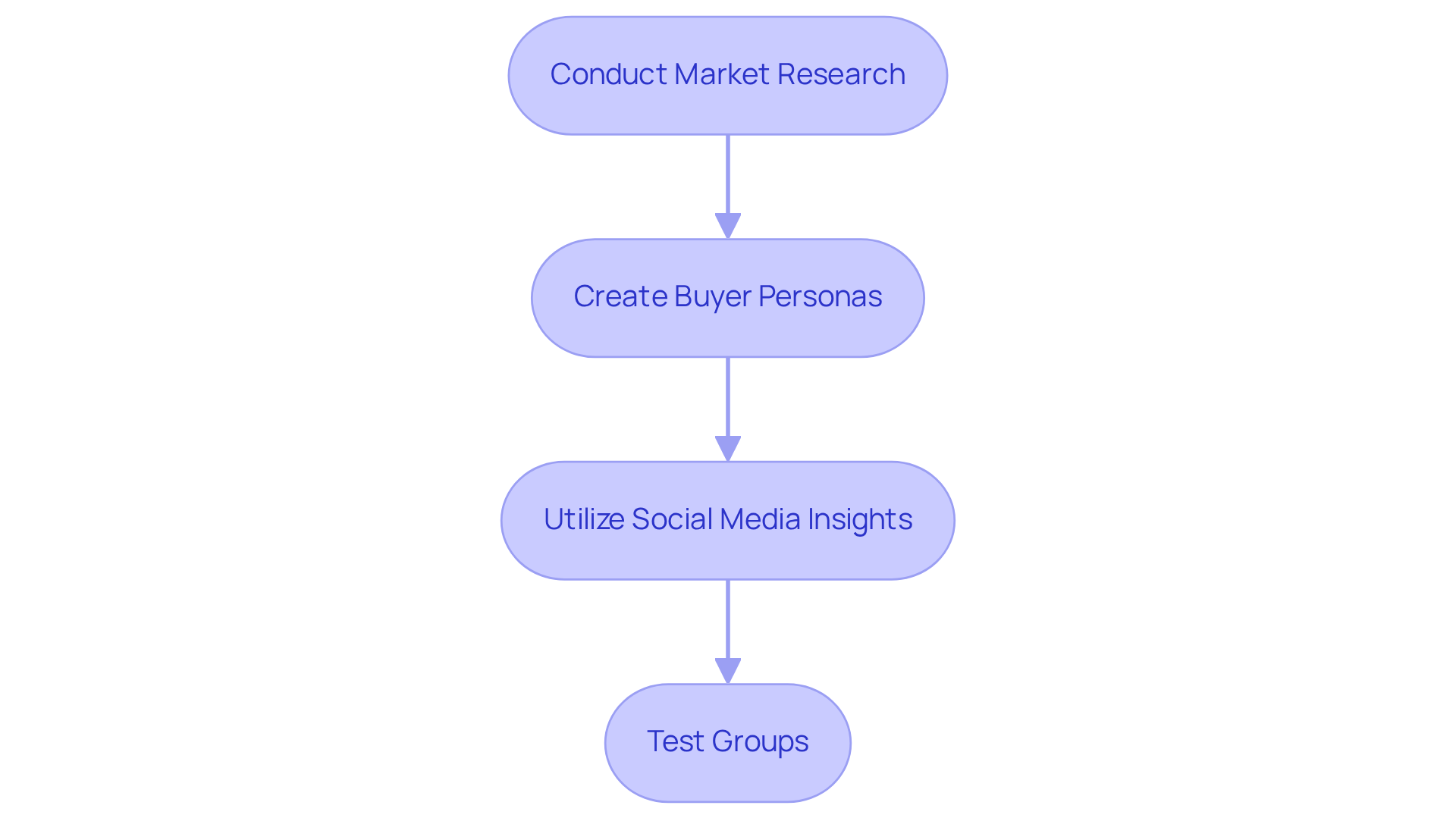
- Conduct Market Research: Utilize surveys, focus groups, and analytics tools to gather data about potential customers. Understanding their preferences and pain points informs your creative direction and enhances relevance.
- Create Buyer Personas: Develop detailed profiles of your ideal customers, including age, gender, income level, and interests. This helps craft messages that resonate deeply with them, increasing engagement.
- Utilize Social Media Insights: Platforms such as Facebook and Instagram provide valuable analytics on user engagement. Use these insights to enhance your targeting strategies and ensure consistency with expectations.
- Test Groups: Implement A/B trials to assess how different segments respond to various design assets. This method assists in recognizing which segments produce the best outcomes, enabling more efficient advertising efforts.
Without a clear understanding of your audience, your advertising efforts may fall flat, wasting valuable resources and opportunities.
Set Clear Goals and Hypotheses for Your Tests
Are your ad campaigns falling short of expectations? Establishing clear goals and hypotheses is the key to unlocking their full potential. Here’s how to effectively set these elements:
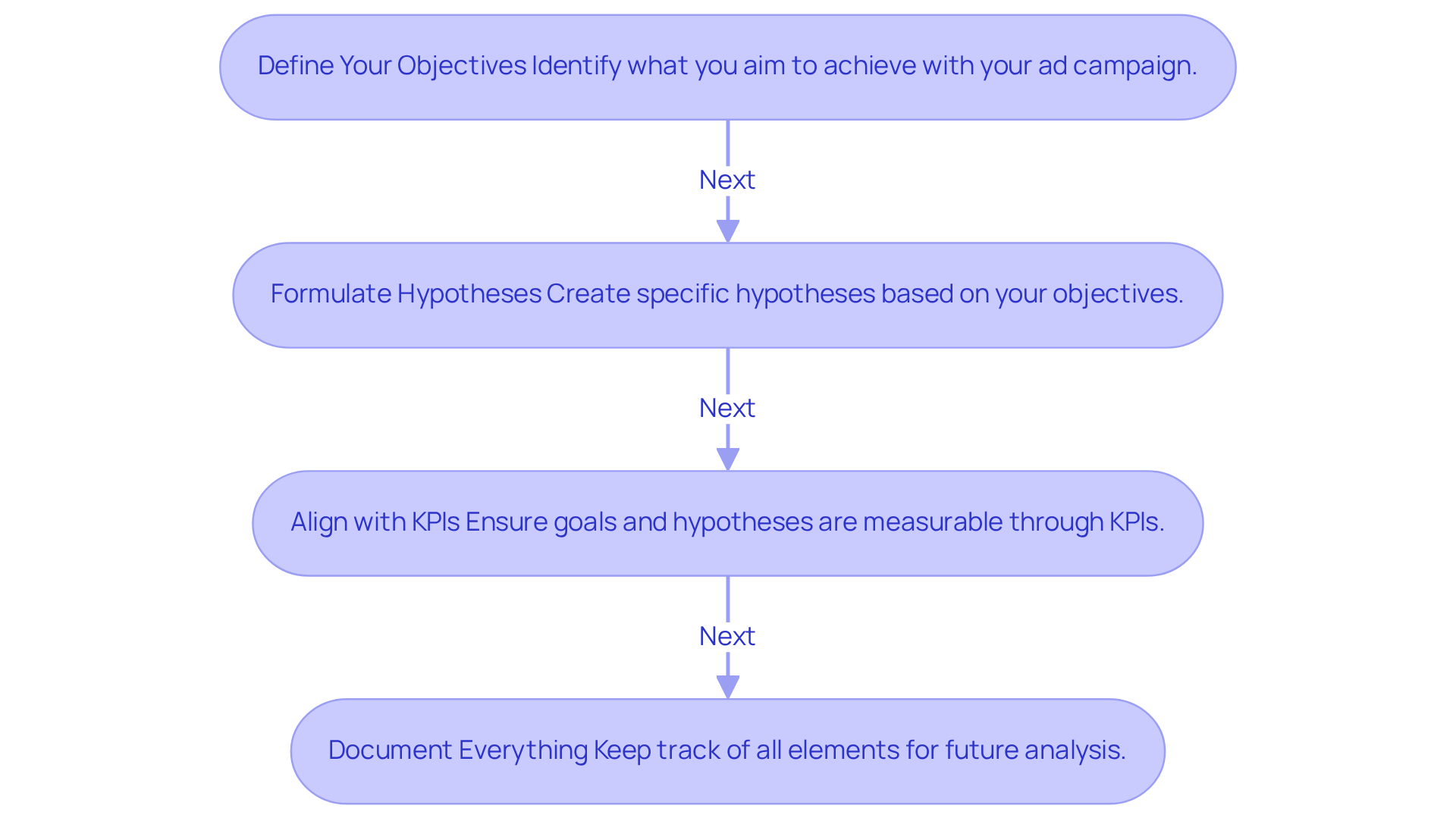
- Define Your Objectives: Identify what you aim to achieve with your ad campaign. Whether it's raising brand awareness, improving click-through rates, or enhancing conversion rates, clearly defined objectives will guide your evaluation efforts.
- Formulate Hypotheses: Create specific hypotheses based on your objectives. For instance, you might hypothesize, "If we implement a video format instead of an image, we will achieve a 20% increase in engagement." This hypothesis will direct your evaluation and serve as a benchmark for success.
- Align with KPIs: Ensure that your goals and hypotheses are measurable through key performance indicators (KPIs). Metrics such as click-through rates, conversion rates, and return on ad spend are critical for assessing performance.
- Document Everything: Keeping track of everything is crucial for analyzing results and refining your evaluation strategies down the line.
By establishing clear goals and hypotheses, you create a structured method for ad creative testing that significantly enhances the likelihood of achieving desired outcomes. This structured approach not only enhances evaluation but also drives down costs significantly. For instance, brands that invest in organized innovative evaluations have been shown to achieve 30-50% lower acquisition costs, demonstrating the impact of well-defined objectives on advertisement performance metrics. Furthermore, systematic evaluation frameworks enable continuous enhancement, as demonstrated in case studies where brands effectively aligned their campaign goals with measurable business results, fostering significant advancement.
Explore Diverse Testing Methodologies for Optimal Results
Are you maximizing the potential of your ad campaigns, or are you leaving success on the table? To truly enhance your ad creative testing, exploring a variety of methodologies is essential. Here are some effective approaches:
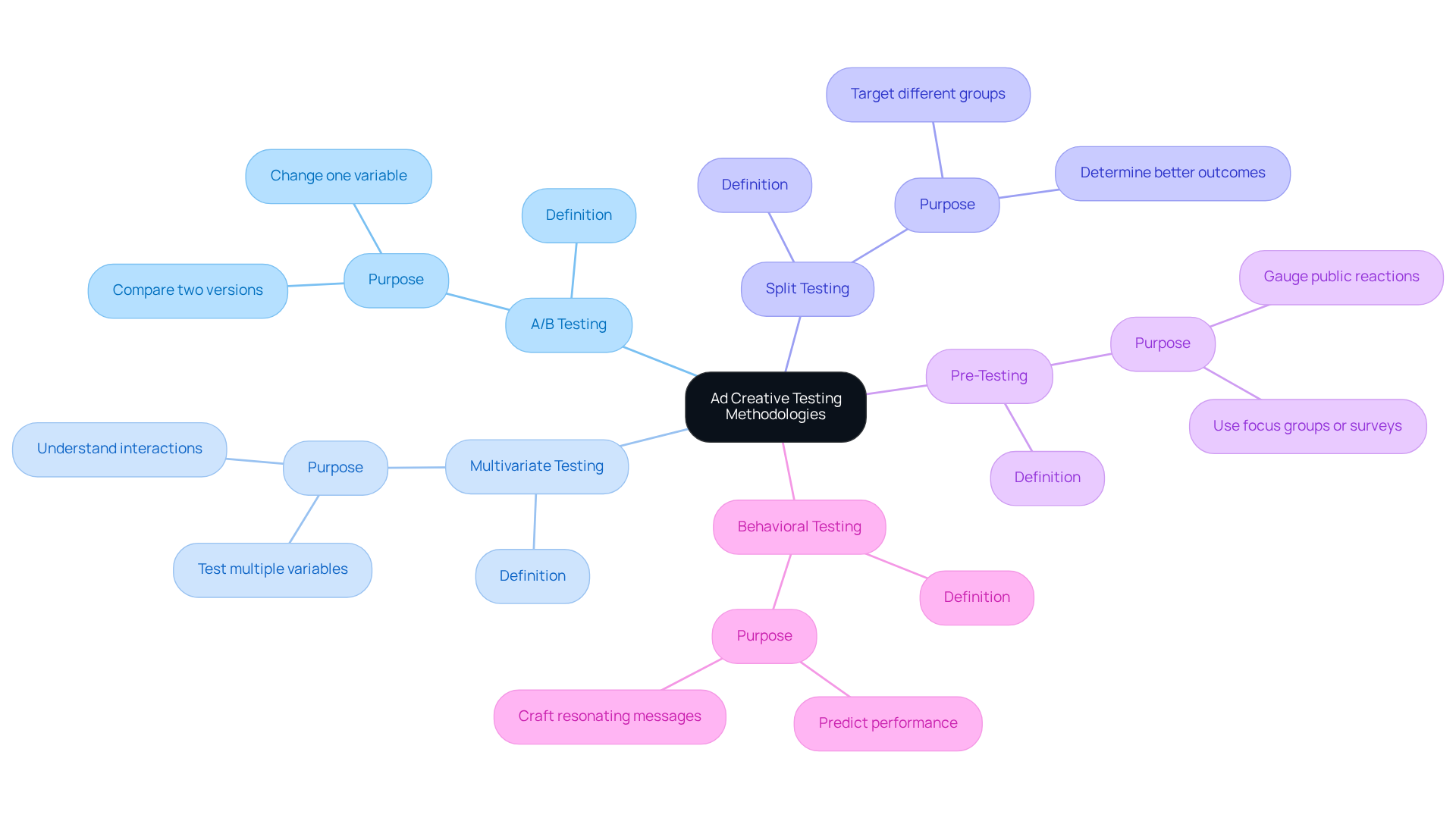
- A/B Testing: This classic method compares two versions of an ad to determine which performs better. It's crucial to change only one variable at a time to accurately assess its impact on performance.
- Multivariate Testing: This method allows for testing multiple variables simultaneously, providing deeper insights into how different elements interact. It can reveal complex relationships between various components of your ads.
- Split Testing: By executing two distinct initiatives aimed at different groups or placements, brands can determine which combination produces better outcomes, improving overall effectiveness.
- Pre-Testing: Conducting tests before launching a full campaign helps gauge public reactions. This can involve focus groups or surveys to gather feedback on innovative concepts, ensuring alignment with viewer preferences.
- Behavioral Testing: Utilizing behavioral science methods can predict ad performance based on audience behavior patterns. This approach aids in crafting messages that resonate more effectively with target demographics.
By embracing ad creative testing methodologies, you can uncover valuable insights that will guide your strategies and enhance your campaign performance.
Analyze Results and Adapt Strategies for Continuous Improvement
Are your advertisement design tests truly driving improvement, or are they just a routine exercise? Examining the outcomes of your ad creative testing is essential for continuous improvement. Here’s a structured approach to effectively analyze and adapt your strategies:
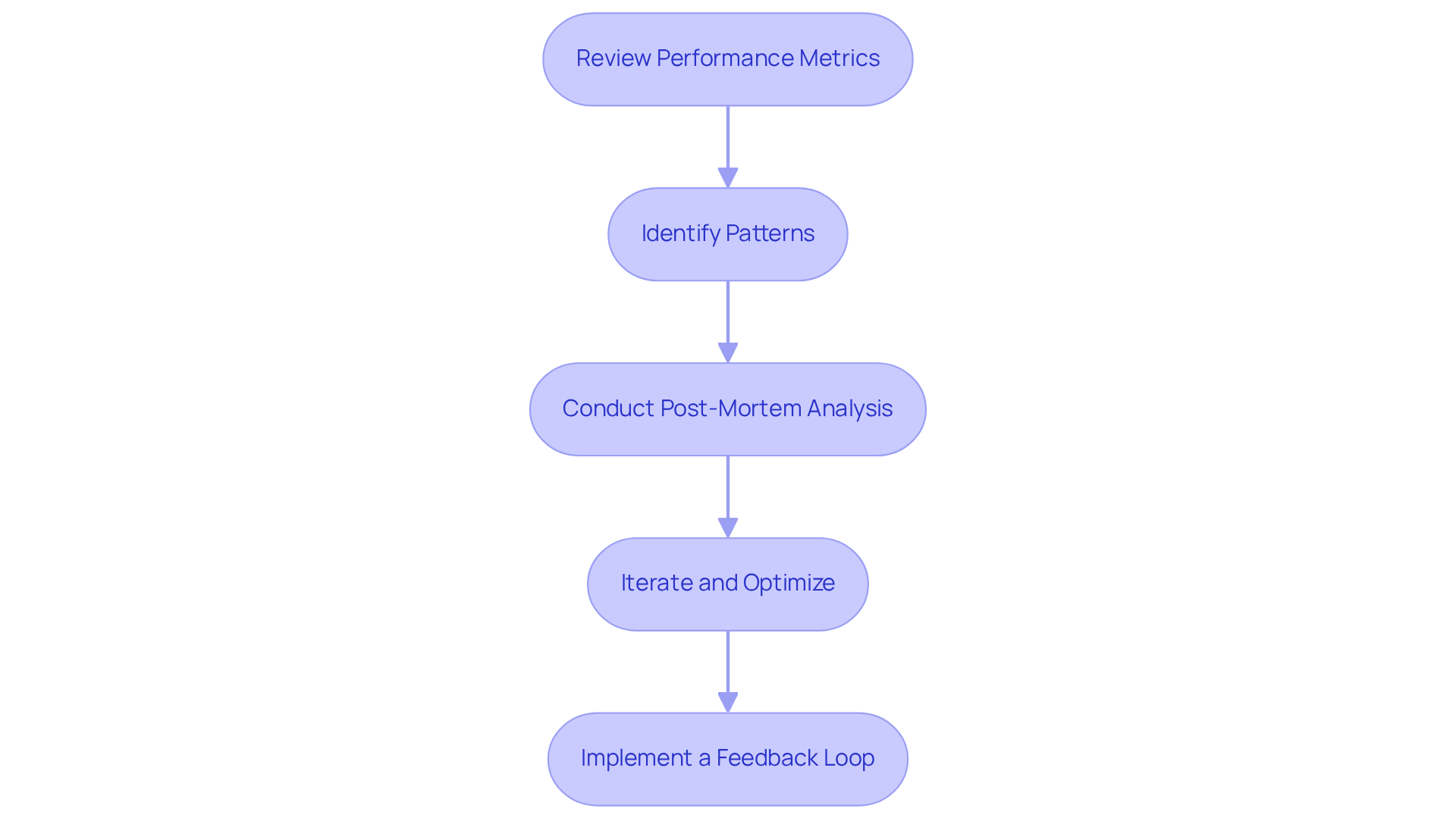
- Review Performance Metrics: Begin by examining the key performance indicators (KPIs) established during the goal-setting phase. Focus on trends in engagement, conversion rates, and overall return on investment (ROI) to identify which creatives yielded the best results.
- Identify Patterns: Delve into the data to uncover patterns in audience behavior. For example, assess whether specific demographics showed a stronger response to certain creative formats. Recognizing these patterns can significantly inform your future campaigns and enhance targeting precision by utilizing ad creative testing.
- Conduct Post-Mortem Analysis: After each evaluation phase, perform a comprehensive review of what succeeded and what fell short. Incorporate insights from every team member involved in the testing process to drive collective improvement.
- Iterate and optimize your strategies through ad creative testing by leveraging the insights gained from your analysis. This may involve adjusting existing creatives or developing new concepts that align more closely with audience preferences, ultimately driving better engagement.
- Implement a Feedback Loop: Establish a continuous feedback mechanism between artistic and media teams. This ensures that insights from evaluations are consistently integrated into future campaigns, promoting a culture of ongoing improvement.
When you analyze results and adapt your strategies, you set the stage for ongoing success. Embrace the power of analysis, and watch your ad strategies evolve into powerful tools for engagement.
Conclusion
In a landscape where advertising effectiveness is paramount, mastering ad creative testing is not just beneficial - it's essential. By understanding the importance of defining a target audience and setting clear goals, brands can significantly enhance their ad performance and engagement levels. Exploring diverse testing methodologies and analyzing results further empowers brands to refine their strategies.
Throughout this article, we outlined key strategies, including the necessity of conducting market research and creating buyer personas. These elements are vital for effectively identifying target audiences. Additionally, establishing measurable objectives and formulating specific hypotheses provide a structured approach to testing. Various methodologies, such as:
- A/B testing
- Multivariate testing
- Behavioral testing
each offer unique insights that can drive campaign effectiveness.
In the competitive landscape of advertising, many brands find it challenging to navigate the complexities of ad creative testing. Embracing these strategies not only empowers brands to refine their creative approaches but also fosters a culture of data-driven decision-making. Failing to embrace these strategies can lead to wasted resources and missed opportunities. By prioritizing ad creative testing and committing to ongoing evaluation, brands can unlock their full potential, ensuring that their marketing efforts resonate with audiences and drive meaningful results.
Ultimately, brands that adapt and innovate in their ad testing will not only survive but thrive in an ever-evolving market.
Frequently Asked Questions
Why is it important to define your target audience for ad testing?
Defining your target audience is crucial for effective ad creative testing because it ensures that advertisements reach the right people, maximizing outcomes and preventing wasted resources.
What methods can be used to conduct market research?
Market research can be conducted using surveys, focus groups, and analytics tools to gather data about potential customers, including their preferences and pain points.
What are buyer personas and why are they important?
Buyer personas are detailed profiles of ideal customers that include demographics such as age, gender, income level, and interests. They are important because they help craft messages that resonate with the target audience, increasing engagement.
How can social media insights aid in defining the target audience?
Social media platforms like Facebook and Instagram provide valuable analytics on user engagement, which can enhance targeting strategies and ensure that advertising aligns with audience expectations.
What is the purpose of A/B testing in audience segmentation?
A/B testing allows brands to assess how different audience segments respond to various design assets, helping to identify which segments yield the best outcomes for more efficient advertising efforts.
List of Sources
- Define Your Target Audience for Effective Testing
- Salesgenie® | Business & Consumer Data to Reach Your Audience (https://salesgenie.com/blog/customer-segmentation-statistics)
- leadenforce.com (https://leadenforce.com/blog/the-future-of-creative-testing-trends-to-watch)
- zappi.io (https://zappi.io/web/blog/future-of-consumer-segmentation-audience-strategy)
- linkedin.com (https://linkedin.com/pulse/creative-new-targeting-heres-how-top-marketers-win-today-tarasiuk-ixv9f)
- Set Clear Goals and Hypotheses for Your Tests
- Setting Realistic Marketing Goals for 2026 (https://theblugroup.com/blog/how-to-set-realistic-marketing-goals-for-2026)
- New Year, New Goals for your Demand Generation Marketing Plan in 2026 (https://adsmanager.paramount.com/insights/2026-digital-media-planning-strategy-setting-goals-CTV-advertising)
- Display Advertising 2026: How It Works, Types & Winning Strategies (https://improvado.io/blog/display-ads-best-practices)
- Ad Creative Testing Guide: Framework & Strategy | CreativeOS (https://creativeos.com/blog/guides/ad-creative-testing-guide)
- adlibrary.com (https://adlibrary.com/posts/building-data-driven-creative-testing-hypotheses-from-competitor-ad-research)
- Explore Diverse Testing Methodologies for Optimal Results
- revelinteractive.com (https://revelinteractive.com/blogposts/creative-testing-in-2026-adapting-to-metas-ai-driven-advertising-platform)
- The Meta Reset: How to Win Paid Social in 2026 (https://anchour.com/articles/meta-ads-2026-playbook)
- fiveninestrategy.com (https://fiveninestrategy.com/creative-testing-algorithmic-campaigns)
- Meta Creative Testing in 2026 - The Andromeda Era (https://evolutagency.com/meta-creative-testing-in-2026-the-andromeda-era)
- Meta Ads Creative Testing Best Practices 2026 (https://extuitive.com/articles/meta-ads-creative-testing-practices)
- Analyze Results and Adapt Strategies for Continuous Improvement
- prnewswire.com (https://prnewswire.com/news-releases/creative-quality-emerges-as-key-factor-in-ooh-campaign-performance-new-analysis-finds-302765852.html)
- Measurement Matters: Using KPIs and Dashboards to Evaluate Campaign Success (https://hsjmc.umn.edu/news/2026-03-16/using-kpis-dashboards-evaluate-campaign-success)
- bidscube.com (https://bidscube.com/blog/measuring-ad-performance-key-metrics-and-analytics)
- appsflyer.com (https://appsflyer.com/blog/measurement-analytics/understanding-ad-metrics)
- How to analyze your paid ad performance across multiple channels (https://supermetrics.com/blog/analyzing-paid-ad-performance)
Need Better Performing Social Content?
MediaNug helps brands scale through creator partnerships, performance creative, and platform-native content strategies built for modern social platforms.
Continue Reading
Influencer & Creator Marketing
- The Complete Guide to Influencer Marketing Strategy & Operations
- The Complete Guide to UGC Content Strategy for Brands
- Master UGC Creator Tools: Best Practices for Brand Success
Paid Social & Performance Creative
- The Complete Guide to Paid Social Creative Strategy
- Why Your Brand Needs a Performance Creative Agency for Growth
- What is an Ad Creative Agency and Why It Matters for Brands
Platform & Trend Insights
- UGC Creators for Paid Social Ads: How to Find, Vet, and Scale Winning Creative
- 4 Best Practices for Effective TikTok Creatives That Drive Engagement
- 10 Key Insights on Instagram Demographics for Brand Strategies
- The Role Of Visual Storytelling In Social Media
Strategy & Growth
- Understanding Creative Strategy: Key Concepts and Examples
- 6 Steps to Create an Effective Creative Strategy Sample
- Understanding eCommerce Brand Strategy: Importance and Key Components