Introduction
A paid media audit is not just a routine task; it’s a crucial compass for brand managers navigating the intricate world of advertising. By thoroughly evaluating advertising efforts across various platforms, managers can identify inefficiencies, optimize performance, and align their strategies with broader business objectives. Yet, the real challenge is knowing where to begin and how to analyze the diverse data sources effectively.
What strategies can brand managers implement to elevate their paid media audits from simple checklists into powerful instruments for maximizing return on investment? This question is not just a prompt; it’s an invitation to rethink how audits can drive success.
Understand the Purpose of a Paid Media Audit
An essential evaluation of your advertising efforts across various platforms is a , designed to assess effectiveness and optimize spending. Why is this important? Because understanding where your ad dollars are going can make all the difference in your campaign's success.
- is the first step. This means pinpointing areas where ad spend fails to convert into meaningful results, allowing for that can significantly enhance performance.
- Next, consider . By leveraging insights from the audit, brand managers can refine their , ultimately boosting . In fact, brands that perform a regularly often experience a remarkable improvement in . A recent report reveals that 93% of marketers view PPC as an effective or highly effective marketing channel, highlighting the critical role of audits in maximizing .
- Finally, it’s vital to focus on . Ensuring that your resonate with broader marketing and business objectives is crucial. This alignment not only maximizes impact but also fosters a cohesive approach that drives overall growth. As marketing experts aptly put it, "Without a plan, content is merely material, and the world has plenty of material." This foundational understanding of the audit's purpose will guide brand managers through the subsequent steps in the audit process, empowering them to make informed decisions that enhance their advertising effectiveness.

Identify All Active Paid Media Sources
To conduct a successful , begin by compiling a comprehensive list of all active . This should encompass:
- : Identify key platforms such as Facebook, which boasts , Instagram with over 2 billion, TikTok with a , and Snapchat, essential for reaching diverse audiences. These platforms provide significant ad reach and engagement potential, with TikTok users spending an average of 95 minutes per day on the app.
- : Include major like Google Ads and Bing Ads in your audit, as they are crucial for capturing intent-driven traffic.
- Display Networks: Consider display advertising through networks like the Google Display Network or programmatic platforms, which can enhance visibility across various websites.
- : Document any partnerships involving , as collaborations with influencers can yield and significantly boost engagement.
Once you have identified these sources, categorize them based on their specific objectives-such as brand awareness, lead generation, or direct sales. This organized inventory will provide a solid foundation for further analysis, enabling you to effectively refine your strategies based on the paid media audit. Furthermore, remember that the landscape of is constantly evolving, and experimentation is vital for adjusting your strategies based on performance data. As 41% of marketers prioritize enhancing the use of analytics in 2024, leveraging this information will empower you to make informed decisions.

Centralize and Normalize Data for Analysis
Consolidating and standardizing information is essential for creating a cohesive dataset from various paid channels. To enhance your advertising analysis, consider these critical steps:
- Choose a to conduct a by leveraging tools like Google Data Studio, Tableau, or custom dashboards to gather information from all your channels. As highlighted by Matrix Solutions, having normalized information empowers organizations to analyze trends, forecast performance, and confidently identify opportunities.
- : Establish key metrics - such as impressions, clicks, conversions, and costs - uniformly across all platforms to ensure consistency in reporting. This standardization is vital for effective information management; poorly maintained databases can complicate .
- : Eliminate duplicates and rectify inconsistencies to maintain accuracy, which is crucial for reliable analysis. Remember, the quality of your information directly influences your ability to make informed decisions.
- Integration: Connect your to the for real-time updates and comprehensive analysis. This integration enables marketers to trust their insights and refine their strategies effectively.
By centralizing and normalizing your information, you establish a robust foundation for a , allowing for and informed, evidence-based choices. Numerous case studies emphasize that effective can significantly enhance marketing strategies and outcomes.

Evaluate Campaign Structures and Strategies
To effectively evaluate your campaign structures and strategies, focus on these key areas:
- : Establish clear, measurable objectives for each campaign that align with your overall marketing goals. This clarity ensures that all efforts are directed towards achieving specific outcomes, enhancing accountability and performance tracking. Research shows that companies with . This statistic underscores the critical importance of having .
- : Organize ad groups logically, targeting specific audiences or products. A well-structured ad group can significantly improve relevance and engagement, leading to higher conversion rates. As we look ahead to 2026, , making effective essential.
- : Evaluate the accuracy and significance of your targeting strategies. Ensure that your initiatives are tailored to the intended audience by considering demographics, interests, and behaviors. With the rise of , which is voluntarily shared by customers, marketers can create more personalized and effective targeting strategies.
- Budget Allocation: Examine how budgets are distributed among initiatives and ad groups. Optimal resource allocation is crucial for maximizing , allowing you to invest more in high-performing areas while minimizing waste. Companies that effectively align their marketing efforts enjoy 36% higher customer retention rates, highlighting the need for .
By thoroughly assessing these factors in a , you can identify areas for enhancement and refine your strategies for improved performance. This proactive approach will ultimately lead to better outcomes in your and advertising efforts.

Review Ad Performance and Audience Engagement
To effectively review and , consider these essential steps:
- Analyze : Begin by examining critical metrics like click-through rates (CTR), , and engagement rates. These figures are vital for gauging the effectiveness of your ads.
- : Leverage analytics tools to gain a deeper understanding of your audience's demographics, interests, and behaviors. Which segments engage most with your ads? Identifying these groups is crucial for targeted marketing.
- : Take a close look at the results from any A/B tests you've conducted on ad creatives, targeting, or placements. This analysis will help you determine what strategies yield the best results.
- : Pay attention to and comments on social platforms. These qualitative insights can reveal how your ads are perceived and where improvements can be made.
This comprehensive process will empower you to pinpoint and identify areas that require optimization.

Analyze Attribution and Incremental Impact
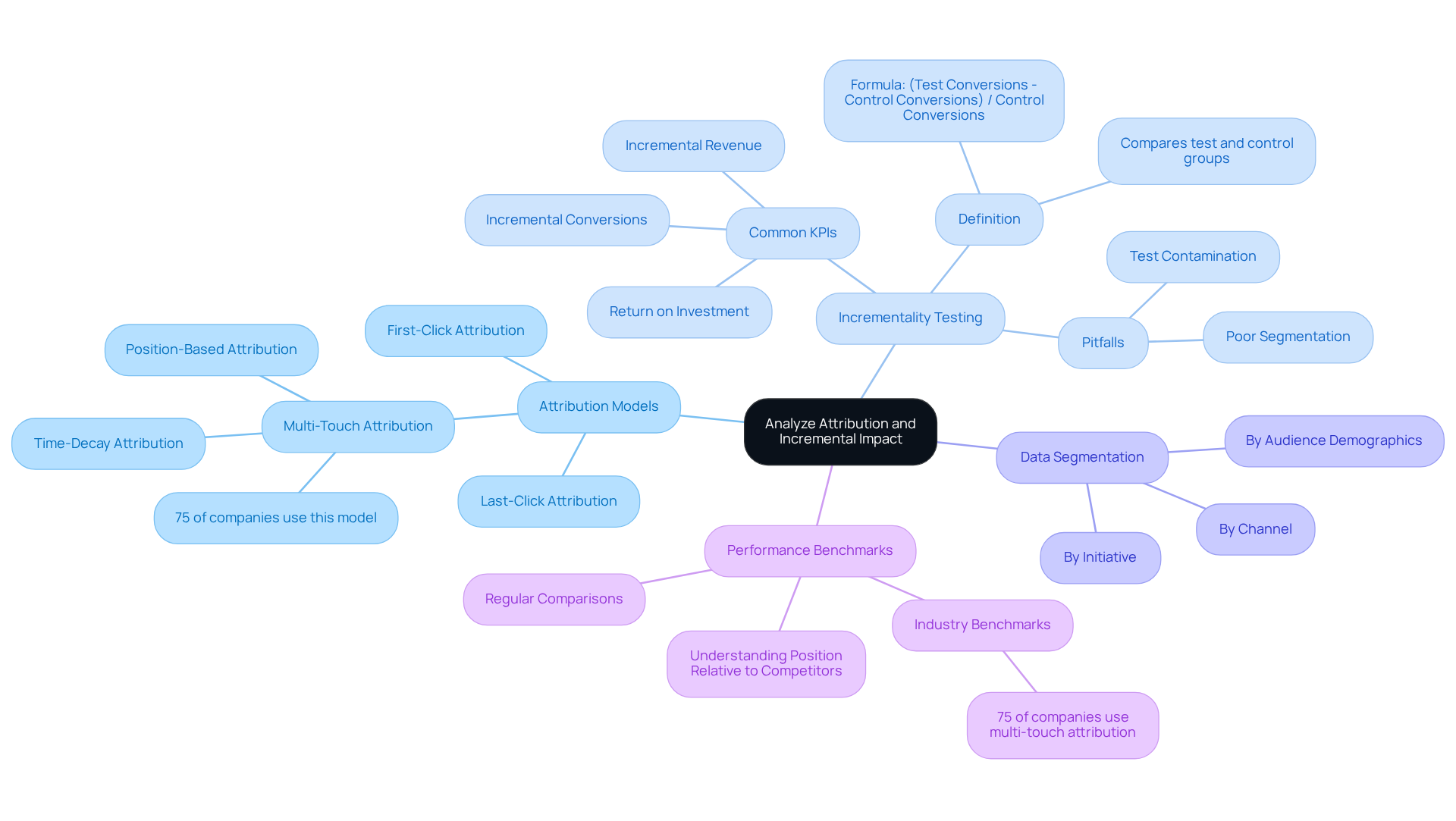
To effectively analyze attribution and incremental impact in your , consider these strategies:
- : Employ a variety of - first-click, last-click, and multi-touch - to gain insights into how different channels contribute to conversions. This comprehensive approach allows for a deeper understanding of .
- : Conduct to assess the . As Sehar Fatima notes, " is a powerful way to figure out the true impact of your marketing efforts." By comparing groups exposed to your ads with those who are not, you can isolate the effects of your marketing initiatives. For instance, if a treatment group achieves a 5% conversion rate while the control group sees 4%, this indicates a 25% incremental increase, showcasing the initiative's effectiveness. However, be wary of potential pitfalls like test contamination; ensure clean segmentation to avoid overlapping audiences.
- Data Segmentation: Segment your data by channel, initiative, and audience demographics to pinpoint which strategies yield the . This refines your approach and optimizes resource allocation.
- : Regularly compare your results against industry benchmarks to evaluate your campaigns' effectiveness. Research indicates that 75% of companies utilize a multi-touch attribution model to measure marketing performance. Understanding your position relative to competitors can inform and enhance overall performance.
By implementing these techniques, you'll gain a clearer understanding from your paid media audit, empowering you to make informed decisions regarding future investments and strategies.
Evaluate the Impact of Creative Content
To effectively evaluate the impact of , consider these essential steps:
- : Start by analyzing key metrics such as specific to each creative. These figures provide a solid foundation for understanding performance.
- : Next, gather . This includes insights on visuals, messaging, and overall appeal, which are crucial for refining your approach.
- : Furthermore, review results from A/B tests on different creative variations. This process helps determine which elements resonate best with your target audience, allowing for .
- : Lastly, ensure that your creative aligns with your brand messaging and values. Consistency in branding not only enhances recognition but also builds trust with your audience.
By thoroughly evaluating , you can pinpoint for even better results. What strategies have you found ?

Adjust Bidding Strategies and Budgets
To effectively adjust and budgets, consider these key steps:
- : Begin by assessing the effectiveness of each initiative and advertisement cluster. Which ones are falling short? Which are exceeding expectations? This evaluation is crucial for informed decision-making.
- : Explore various , such as manual versus automated bidding. Modify your approach based on your objectives and the performance data at hand. This adaptability can significantly impact your results.
- : It's essential to redistribute budgets from low-performing initiatives to those that are yielding better outcomes. This ensures that your resources are being utilized optimally, maximizing your investment.
- Monitor and Adjust: Continuously observe and be prepared to make modifications to bids and budgets as necessary. The market is always changing, and your strategies should be too.
By implementing these adjustments, you can significantly enhance the effectiveness of your campaigns through a and maximize your . Are you ready to take your strategies to the next level?

Conclusion
A paid media audit is an essential tool for brand managers who want to elevate their advertising effectiveness. By systematically evaluating advertising efforts across various platforms, managers can pinpoint inefficiencies, optimize performance, and ensure alignment with broader business goals. This process not only maximizes return on ad spend but also cultivates a cohesive marketing strategy that drives growth.
In this article, we’ve outlined key steps for conducting a successful paid media audit. These include:
- Identifying active paid media sources
- Centralizing and normalizing data
- Evaluating campaign structures
- Reviewing ad performance
- Analyzing attribution
- Assessing the impact of creative content
Each step contributes to a comprehensive understanding of current advertising efforts and reveals areas ripe for improvement. The necessity of continuously adjusting bidding strategies and budgets based on performance data cannot be overstated, as it directly influences campaign success.
Ultimately, conducting a paid media audit is not just a best practice; it’s crucial for brands aiming to thrive in a competitive landscape. By adopting these strategies, brand managers can make informed decisions that enhance their advertising efforts while aligning with broader business objectives. The insights gained from a thorough audit can lead to significant improvements in campaign performance, ensuring that every dollar spent on advertising effectively contributes to achieving desired outcomes.
Frequently Asked Questions
What is the purpose of a paid media audit?
A paid media audit evaluates advertising efforts across various platforms to assess effectiveness and optimize spending, helping to understand where ad dollars are going and enhancing campaign success.
What are the key steps involved in conducting a paid media audit?
The key steps include identifying inefficiencies in ad spend, optimizing performance based on audit insights, and aligning advertising initiatives with broader business goals.
How can identifying inefficiencies improve advertising performance?
By pinpointing areas where ad spend fails to convert into meaningful results, targeted adjustments can be made to enhance overall performance.
What is the significance of optimizing performance in a paid media audit?
Optimizing performance allows brand managers to refine their campaign strategies, which can lead to a boost in return on ad spend (ROAS) and improved advertising efficiency.
Why is it important to align advertising initiatives with business goals?
Aligning advertising initiatives with broader marketing and business objectives maximizes impact and fosters a cohesive approach that drives overall growth.
What should be included in the list of active paid media sources for an audit?
The list should include social media platforms (like Facebook, Instagram, TikTok, and Snapchat), search engines (such as Google Ads and Bing Ads), display networks, and affiliate and influencer marketing partnerships.
How can social media platforms contribute to a paid media audit?
Social media platforms provide significant ad reach and engagement potential, with platforms like TikTok offering a large audience and high user engagement.
What is the role of analytics in refining paid media strategies?
Utilizing analytics allows marketers to make informed decisions and adjust strategies based on performance data, which is increasingly prioritized by marketers.
Why is it essential to categorize paid media sources based on specific objectives?
Categorizing sources by objectives, such as brand awareness or lead generation, provides a solid foundation for analysis and helps refine strategies effectively.
List of Sources
- Understand the Purpose of a Paid Media Audit
- TOP 10 PAID SOCIAL ROI STATISTICS 2026 THAT REVEAL EXPLOSIVE AD PROFIT SURGES (https://amraandelma.com/paid-social-roi-statistics)
- backlinko.com (https://backlinko.com/ppc-statistics)
- 87 Digital Marketing Quotes to Inspire You (2024 Update) (https://activecampaign.com/blog/digital-marketing-quotes)
- Social media ROI statistics marketers need to know in 2026 (https://sproutsocial.com/insights/social-media-marketing-roi-statistics)
- Identify All Active Paid Media Sources
- 40 Marketing Quotes To Inspire You and Your Team (https://salesforce.com/blog/marketing-quotes)
- thunderbit.com (https://thunderbit.com/blog/social-media-marketing-stats)
- nealschaffer.com (https://nealschaffer.com/top-25-social-media-for-business-quotes)
- 87 Digital Marketing Quotes to Inspire You (2024 Update) (https://activecampaign.com/blog/digital-marketing-quotes)
- inbeat.agency (https://inbeat.agency/blog/social-media-statistics)
- Centralize and Normalize Data for Analysis
- pipeline.zoominfo.com (https://pipeline.zoominfo.com/operations/what-is-data-normalization)
- 23 Must-Read Quotes About Data [& What They Really Mean] (https://careerfoundry.com/en/blog/data-analytics/inspirational-data-quotes)
- greenlanemarketing.com (https://greenlanemarketing.com/resources/articles/paid-media-ppc-trends-predictions-for-2026)
- blog.matrixformedia.com (https://blog.matrixformedia.com/data-normalization)
- Evaluate Campaign Structures and Strategies
- forbes.com (https://forbes.com/councils/forbesagencycouncil/2025/12/12/the-2026-media-and-marketplace-trends-brands-cant-ignore)
- exposureninja.com (https://exposureninja.com/blog/paid-media-strategies)
- greenlanemarketing.com (https://greenlanemarketing.com/resources/articles/paid-media-ppc-trends-predictions-for-2026)
- invoca.com (https://invoca.com/blog/10-stats-that-will-drive-your-sales-marketing-alignment)
- protocol80.com (https://protocol80.com/blog/sales-marketing-alignment-stats)
- Review Ad Performance and Audience Engagement
- ruleranalytics.com (https://ruleranalytics.com/blog/insight/conversion-rate-by-industry)
- wordstream.com (https://wordstream.com/blog/2025-google-ads-benchmarks)
- The power of video in news media: how increased audience engagement drives success | The Associated Press (https://ap.org/insights/the-power-of-video-in-news-media-how-increased-audience-engagement-drives-success)
- storegrowers.com (https://storegrowers.com/google-ads-benchmarks)
- 2026 Marketing Statistics, Trends, & Data (https://hubspot.com/marketing-statistics)
- Analyze Attribution and Incremental Impact
- inbeat.agency (https://inbeat.agency/blog/incrementality-testing)
- moosend.com (https://moosend.com/blog/marketing-quotes)
- ruleranalytics.com (https://ruleranalytics.com/blog/insight/marketing-attribution-stats)
- keomarketing.com (https://keomarketing.com/marketing-analytics-attribution-guide-150191-3)
- amplitude.com (https://amplitude.com/explore/experiment/incrementality-testing)
- Evaluate the Impact of Creative Content
- optinmonster.com (https://optinmonster.com/content-marketing-statistics)
- billo.app (https://billo.app/blog/creative-analytics)
- chad-wyatt.com (https://chad-wyatt.com/seo-and-content/content-marketing-statistics)
- 105 Hand-Picked Content Marketing Statistics for 2026 Planning (https://ahrefs.com/blog/content-marketing-statistics)
- 80+ Content Marketing Statistics & Facts | Marketing Stats (https://sixthcitymarketing.com/content-marketing-stats)
- Adjust Bidding Strategies and Budgets
- 2pointagency.com (https://2pointagency.com/glossary/budget-allocation-across-campaigns-a-guide-to-optimizing-your-marketing-strategy)
- finance.yahoo.com (https://finance.yahoo.com/news/big-pivot-digital-ad-budgets-150000230.html)
- adbeacon.com (https://adbeacon.com/how-to-reallocate-budget-without-tanking-revenue-in-q1)
- cfmdigital.com (https://cfmdigital.com/google-ads/ppc-that-performs-conversion-first-ad-strategies-for-2026)
- salesduo.com (https://salesduo.com/blog/amazon-advertising-2026-ppc-strategy-campaign-optimization)