
Introduction
User-generated content (UGC) has emerged as a powerful force in digital marketing, fundamentally reshaping how brands connect with their audiences. With authentic contributions from consumers, businesses can significantly enhance engagement and build trust. In fact, statistics reveal that UGC can boost interaction rates by as much as 50%. However, the challenge lies in effectively maximizing this content to not only reflect genuine customer experiences but also to strategically elevate brand visibility and loyalty.
How can brands navigate this dynamic landscape to inspire their customers to share compelling stories and visuals that resonate? This question is crucial as it highlights the need for brands to harness the potential of UGC, transforming it into a strategic asset that fosters deeper connections with their audience.
Define User-Generated Content and Its Importance
(UGC) is any material-like images, videos, reviews, and testimonials-created by consumers rather than companies. In today's digital marketing landscape, social media is crucial because it fosters authenticity and trust. Did you know that UGC can by up to 50%? This statistic alone highlights its power to significantly enhance conversion rates. Brands that leverage social media tap into the , resonating far more with potential buyers than traditional advertising methods. This authenticity not only strengthens customer loyalty but also encourages new customers to engage with the brand.
Furthermore, consider how social media can transform your marketing strategy. By showcasing real experiences, you create a relatable narrative that draws in potential buyers. This approach not only builds trust but also cultivates a community around your brand. In addition, the is profound; it encourages interaction and fosters a sense of belonging among customers.
In conclusion, is not just a trend-it’s a strategic move that can elevate your brand's presence in the market. Are you ready to harness the power of your customers' voices? Engage with MediaNug today to explore how UGC can redefine your marketing efforts.
Explore Different Types of User-Generated Content
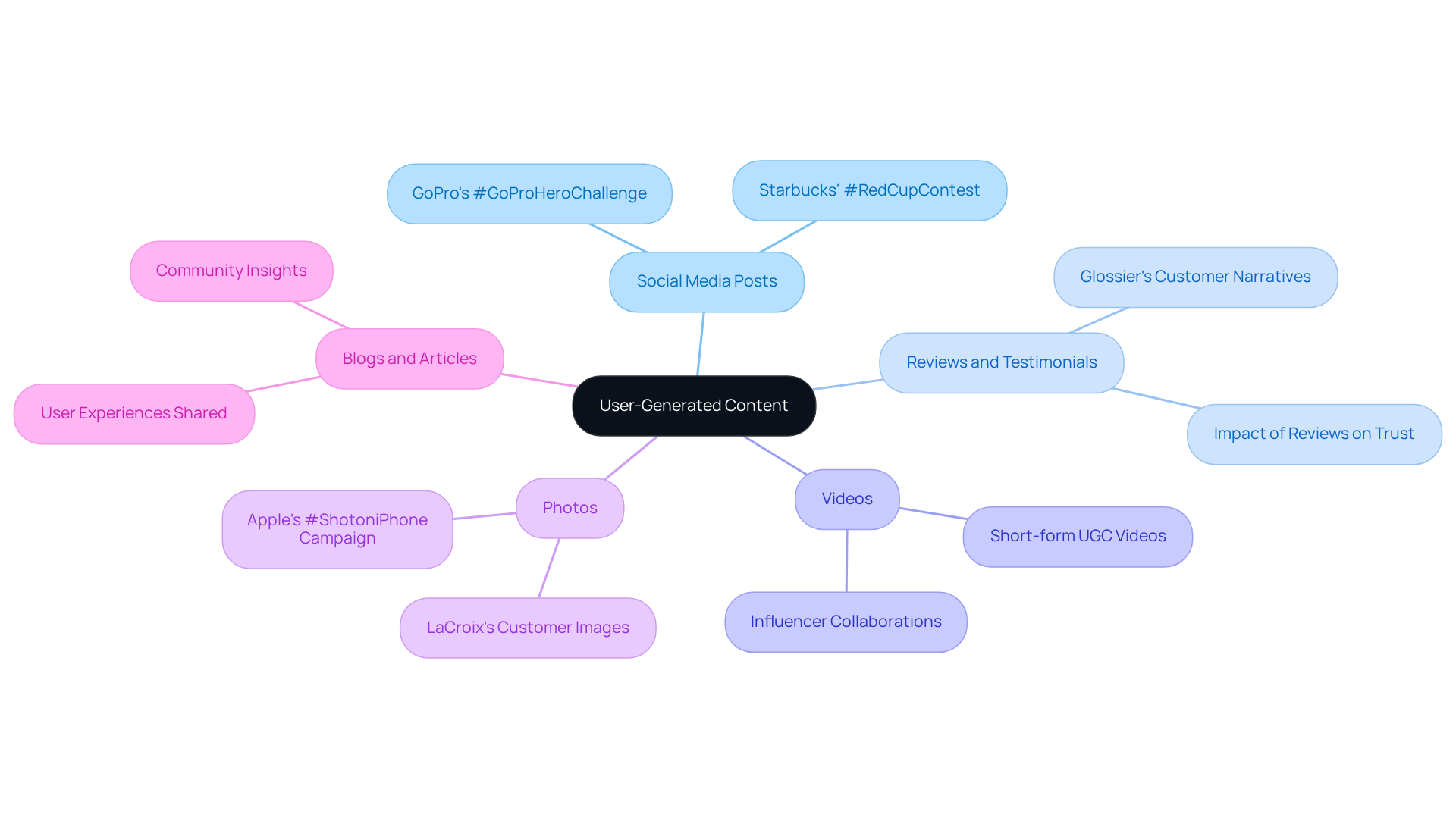
Social media (UGC) includes a variety of formats, each tailored to fulfill distinct marketing objectives. The most prevalent types include:
- Social Media Posts: showcase genuine experiences with a company, fostering community engagement. For instance, GoPro's #GoProHeroChallenge encourages participants to share their exciting adventures, significantly enhancing brand visibility and community engagement. Remarkably, GoPro enthusiasts create approximately 6,000 GoPro videos online each day, illustrating the extent of engagement.
- : Written feedback from customers serves as powerful social proof, enhancing credibility. Brands like Glossier leverage customer narratives to build trust, showcasing how their products impact users' lives. Glossier invites customers to submit stories about how their products have influenced their skincare routines and confidence, adding a personal touch to their UGC strategy.
- Videos: , effectively demonstrate product usage and benefits. Short-form social media videos have demonstrated 70% higher engagement rates than brand-produced material, making them a vital element of contemporary marketing strategies. UGC-based ads also boast 4x than traditional ads, underscoring their effectiveness in driving engagement and conversions.
- Photos: Images shared by customers, often depicting products in real-life contexts, enhance relatability and authenticity. LaCroix's strategy of showcasing customers enjoying their sparkling water has resonated well with audiences, strengthening loyalty to the brand.
- Blogs and Articles: enables customers to share their views and experiences with a company or product. This type of content can deepen connections with potential customers by providing relatable insights.
Furthermore, companies must navigate legal and ethical considerations when utilizing UGC, ensuring they obtain permission and credit creators to maintain goodwill and avoid copyright issues.
By understanding and effectively curating these diverse types of social media , companies can create compelling marketing campaigns that resonate with their target audiences and drive engagement.
Implement Strategies to Encourage User-Generated Content
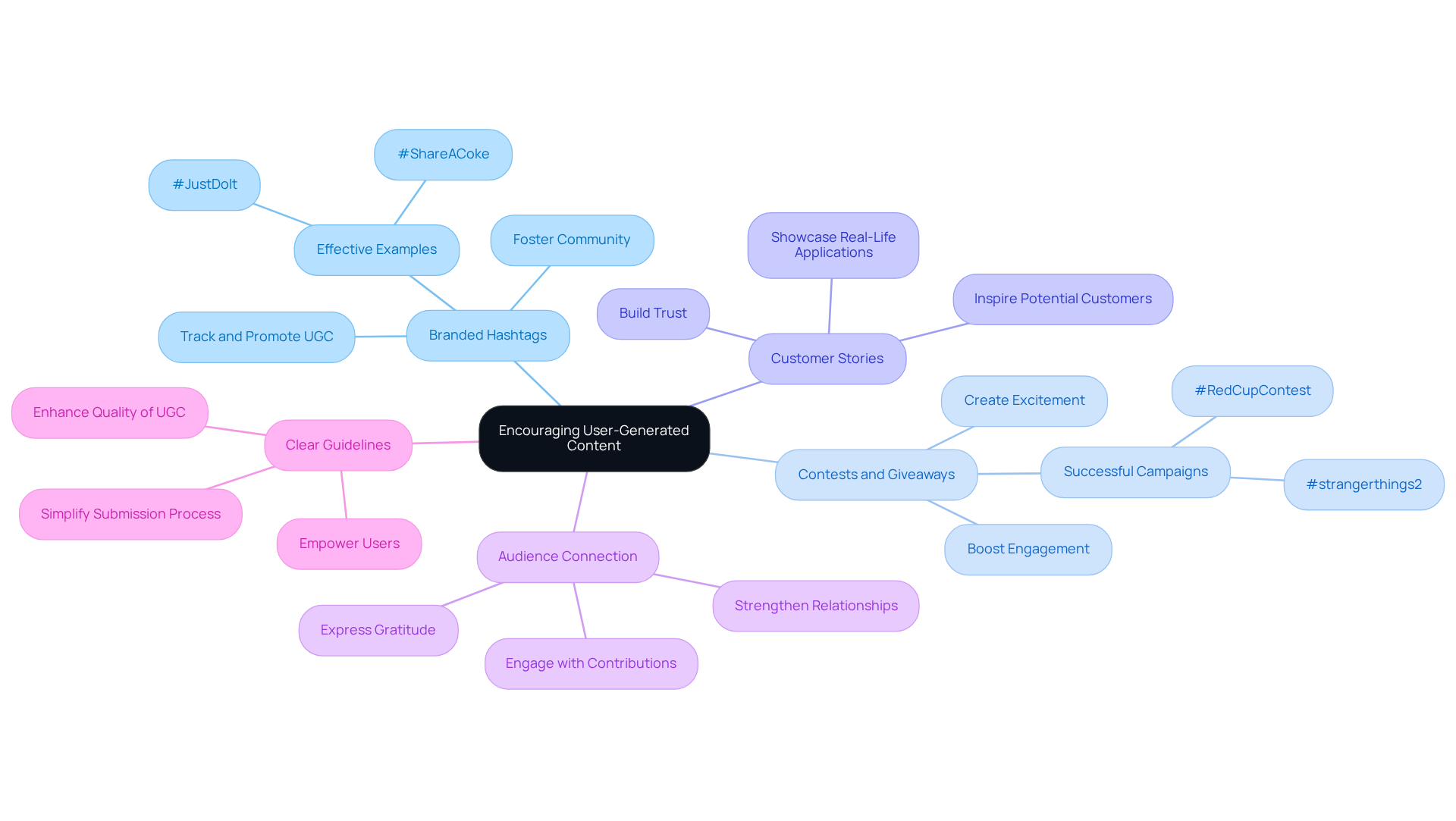
To effectively encourage user-generated content, brands can implement several powerful strategies:
- Create : By encouraging individuals to share their posts using a specific hashtag, brands can easily track and promote social media . This not only enhances visibility but also fosters a sense of community among users.
- : Organizing competitions that motivate participants to related to the brand can significantly boost engagement. Offering prizes for the top submissions creates excitement and drives participation.
- : Highlighting client experiences on social media or websites showcases real-life applications of products. This not only builds trust but also inspires potential customers by illustrating the value of the brand through .
- : Actively responding to and sharing participant contributions expresses gratitude for their input. This interaction fosters additional involvement and strengthens the relationship between the brand and its audience.
- : Offering specific instructions on how to create and submit material makes the process straightforward and accessible. Clear guidelines empower users to contribute confidently, enhancing the overall quality of UGC.
These strategies not only encourage users to produce material but also significantly improve , driving brand loyalty and engagement.
Adopt Best Practices for Managing User-Generated Content
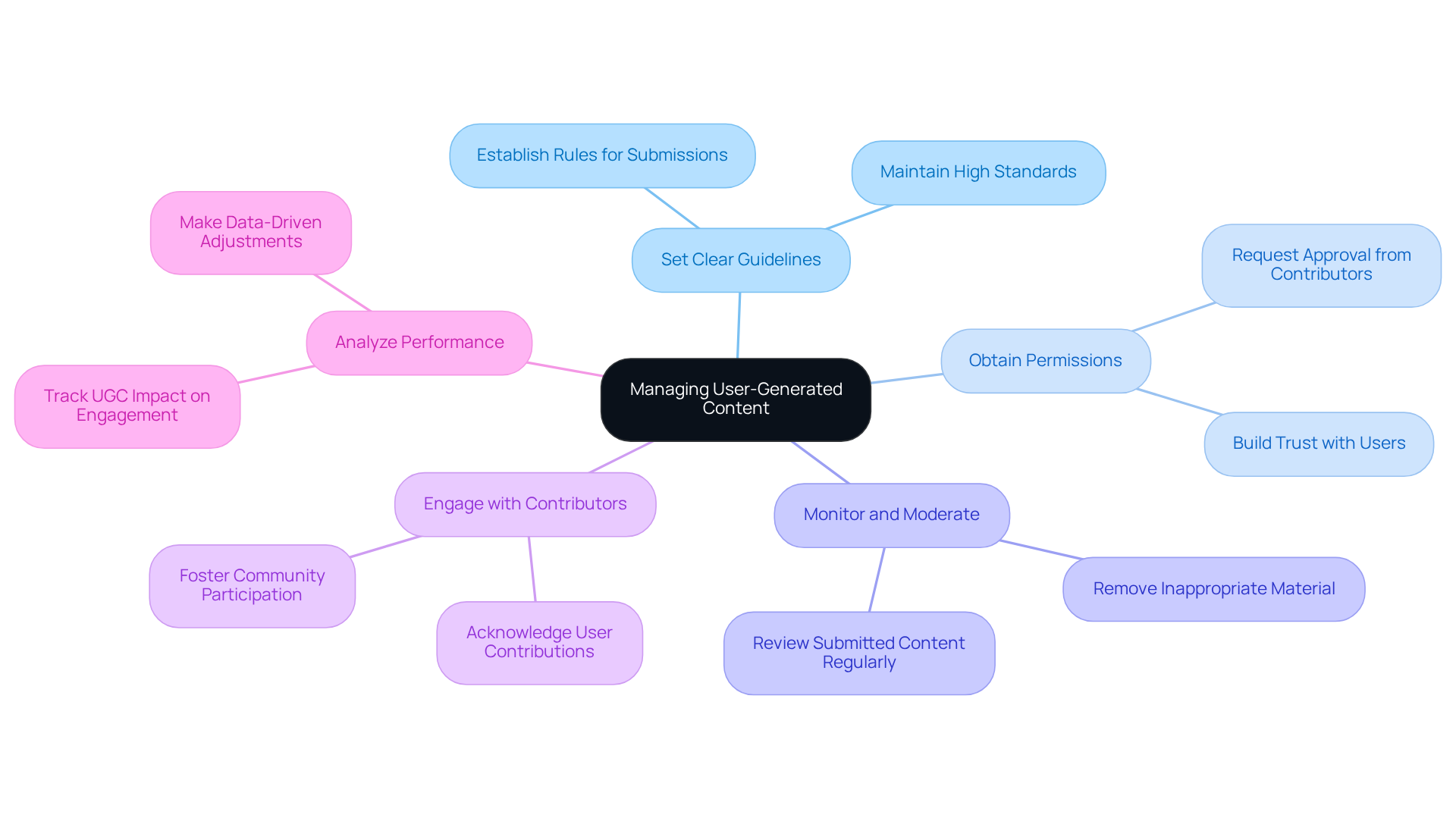
To effectively manage , brands must adopt .
- : Establishing rules for material submissions is crucial. By defining what types of material are acceptable, brands can maintain high standards and relevance in their content.
- Obtain Permissions: Always in marketing promotions. This step is vital to prevent legal complications and build trust with contributors.
- : Regularly reviewing submitted content ensures alignment with company values and messaging. Removing any inappropriate material is necessary to uphold a positive brand image.
- : Acknowledging and thanking users for their contributions . This engagement encourages further participation and strengthens brand loyalty.
- : Tracking the performance of UGC in campaigns is essential. Understanding its and conversions allows for data-driven adjustments that enhance future strategies.
By implementing these practices, brands can effectively harness the power of while also maintaining a positive brand image.
Conclusion
Embracing the power of user-generated content (UGC) is not just beneficial; it’s essential for brands aiming to elevate their marketing strategies. By integrating content created by consumers, companies can cultivate authenticity and trust, which leads to increased engagement and stronger customer loyalty. This shift towards leveraging genuine customer experiences resonates deeply with potential buyers and fosters a vibrant community around the brand.
Throughout this article, we explored various types of UGC, including social media posts, reviews, videos, and more. Each format serves a unique purpose in driving engagement and building credibility. Furthermore, effective strategies such as creating branded hashtags, running contests, and actively engaging with audiences were highlighted as key methods to encourage UGC. Implementing best practices for managing this content - like setting clear guidelines and monitoring submissions - ensures that brands maintain a positive image while maximizing the benefits of UGC.
Ultimately, the significance of user-generated content in today’s marketing landscape cannot be overstated. Brands must harness the voices of their customers, not merely as a trend but as a strategic imperative. By doing so, they can redefine their marketing efforts and forge lasting connections with their audience. Engaging with UGC is not just an option; it is a vital component of a successful marketing strategy that can lead to increased visibility and brand loyalty.
Frequently Asked Questions
What is user-generated content (UGC)?
User-generated content (UGC) refers to any material, such as images, videos, reviews, and testimonials, created by consumers rather than companies.
Why is user-generated content important in digital marketing?
UGC is important because it fosters authenticity and trust, significantly boosts engagement rates by up to 50%, and enhances conversion rates, making it a powerful tool for brands.
How does UGC affect brand engagement?
Brands that leverage UGC tap into genuine customer experiences, which resonate more with potential buyers than traditional advertising, thus strengthening customer loyalty and encouraging new customers to engage.
In what ways can UGC transform a marketing strategy?
UGC can transform a marketing strategy by showcasing real experiences, creating relatable narratives that draw in potential buyers, building trust, and cultivating a community around the brand.
What impact does UGC have on consumer behavior?
UGC encourages interaction among consumers and fosters a sense of belonging, which can profoundly influence their purchasing decisions.
Is embracing UGC a passing trend or a strategic move?
Embracing UGC is considered a strategic move that can elevate a brand's presence in the market rather than just a passing trend.
List of Sources
- Define User-Generated Content and Its Importance
- The Impact of User-Generated Content on Customer-Centric Digital Marketing (https://thriveagency.com/news/the-impact-of-user-generated-content-on-customer-centric-digital-marketing)
- User-Generated Content(UGC) Stats And Facts - 2026 (https://taggbox.com/blog/user-generated-content-facts-and-stats)
- 37 Latest User-Generated Content Statistics (New Report) (https://wiserreview.com/blog/user-generated-content-statistics)
- User-Generated Content: UGC Types, Benefits & Best Practices (https://business.com/articles/user-generated-content)
- blazemedia.co.uk (https://blazemedia.co.uk/2025/09/23/using-user-generated-in-your-marketing-strategy)
- Explore Different Types of User-Generated Content
- sevenatoms.com (https://sevenatoms.com/blog/ugc-marketing-examples)
- socialpilot.co (https://socialpilot.co/blog/user-generated-content-ugc)
- 4 Great Examples of User-Generated Content (UGC) | Digital Marketing Institute (https://digitalmarketinginstitute.com/blog/how-to-use-user-generated-content-ugc-with-4-great-examples)
- wedevs.com (https://wedevs.com/blog/141859/user-generated-content-campaigns)
- Complete guide to user-generated content (UGC) in 2025 (https://blog.hootsuite.com/user-generated-content-ugc)
- Implement Strategies to Encourage User-Generated Content
- opinionstage.com (https://opinionstage.com/blog/contest-giveaway-statistics)
- 37 Latest User-Generated Content Statistics (New Report) (https://wiserreview.com/blog/user-generated-content-statistics)
- cropink.com (https://cropink.com/instagram-hashtag-statistics)
- socialfirm.com (https://socialfirm.com/blog/how-to-encourage-user-generated-content)
- socialpilot.co (https://socialpilot.co/blog/user-generated-content-ugc)
- Adopt Best Practices for Managing User-Generated Content
- 41 User-Generated Content Statistics For Better UGC Marketing in 2026 (https://embedsocial.com/blog/ugc-statistics)
- The Complete Guide to User-Generated Content (https://thriveagency.com/news/the-complete-guide-to-user-generated-content)
- blog.tubikstudio.com (https://blog.tubikstudio.com/30-expert-quotes-on-content-strategy-for-digital-products)
- slateteams.com (https://slateteams.com/blog/user-generated-content)
- activecampaign.com (https://activecampaign.com/blog/content-marketing-quotes)