Introduction
User-generated content (UGC) has emerged as a powerful force in marketing, fundamentally reshaping how brands connect with consumers. In a landscape where authenticity and trustworthiness are paramount, UGC stands out as a vital tool that reflects genuine experiences and fosters community engagement. However, as the influence of UGC continues to grow, brands encounter the challenge of effectively managing and integrating this content into their marketing strategies.
How can companies fully harness the potential of UGC to enhance their campaigns and drive consumer loyalty?
Define User-Generated Content and Its Importance in Marketing
- be it text, images, videos, or reviews - that is produced by consumers rather than brands. This type of UGC is crucial in contemporary marketing, as it cultivates authenticity and trust. In a landscape where consumers are increasingly wary of traditional advertising, acts as social proof by showcasing genuine experiences with products or services. Remarkably, recent studies reveal that 79% of consumers place greater trust in compared to brand-generated content, underscoring its potency in shaping purchasing decisions.
Moreover, is anticipated to dominate marketing strategies by 2026, aligning seamlessly with modern consumer psychology. Brands that incorporate UGC into their paid advertisements often witness a 20-50% reduction in cost per acquisition (CPA), highlighting its effectiveness in driving measurable results. Additionally, garner 73% more favorable comments than promotional videos, enhancing community interaction and fostering loyalty. However, it is imperative for brands to ensure the authenticity and quality of to fully harness its potential.

Explore Different Types of User-Generated Content
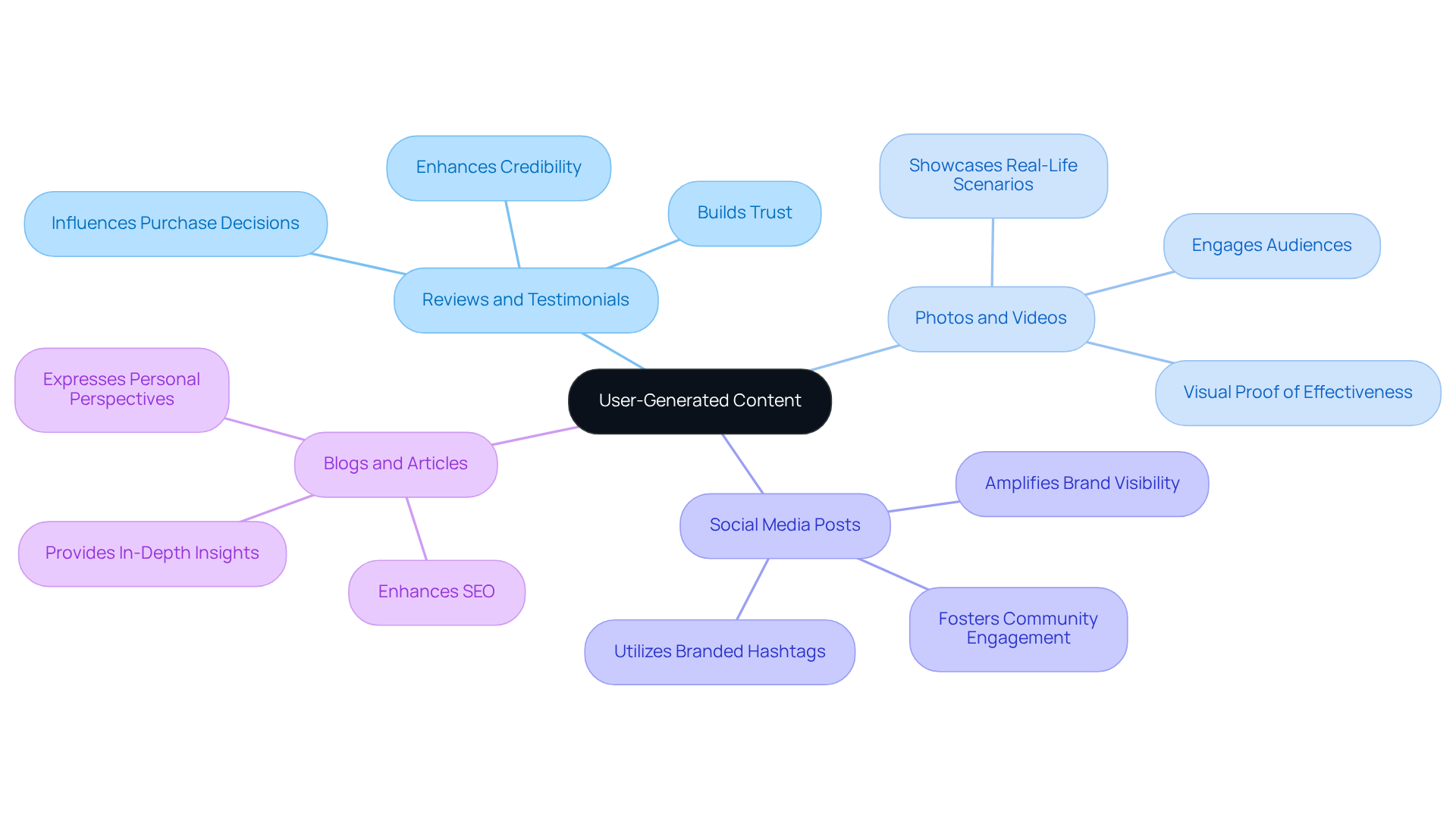
in modern marketing strategies, manifesting in various forms that serve distinct purposes. Understanding these types is crucial for brands aiming to harness UGC effectively across different channels.
- are powerful tools in . Written feedback from customers not only but also enhances credibility, making it a vital component of any marketing strategy.
- . Showcasing real-life scenarios, such as unboxing videos or customer experiences, these materials engage audiences and create a relatable context for the products.
- represent a dynamic form of UGC, . Utilizing branded hashtags, these posts amplify brand visibility and foster community engagement, making them essential for contemporary marketing efforts.
- Blogs and Articles allow individuals to express their perspectives or experiences related to a company. These extended pieces not only provide in-depth insights but also , driving organic traffic to brand websites.
By recognizing and leveraging these diverse types of UGC , brands can significantly enhance their marketing effectiveness and connect more authentically with their audience.
Highlight the Benefits of Incorporating UGC into Marketing Strategies
offers a wealth of advantages that cannot be overlooked.
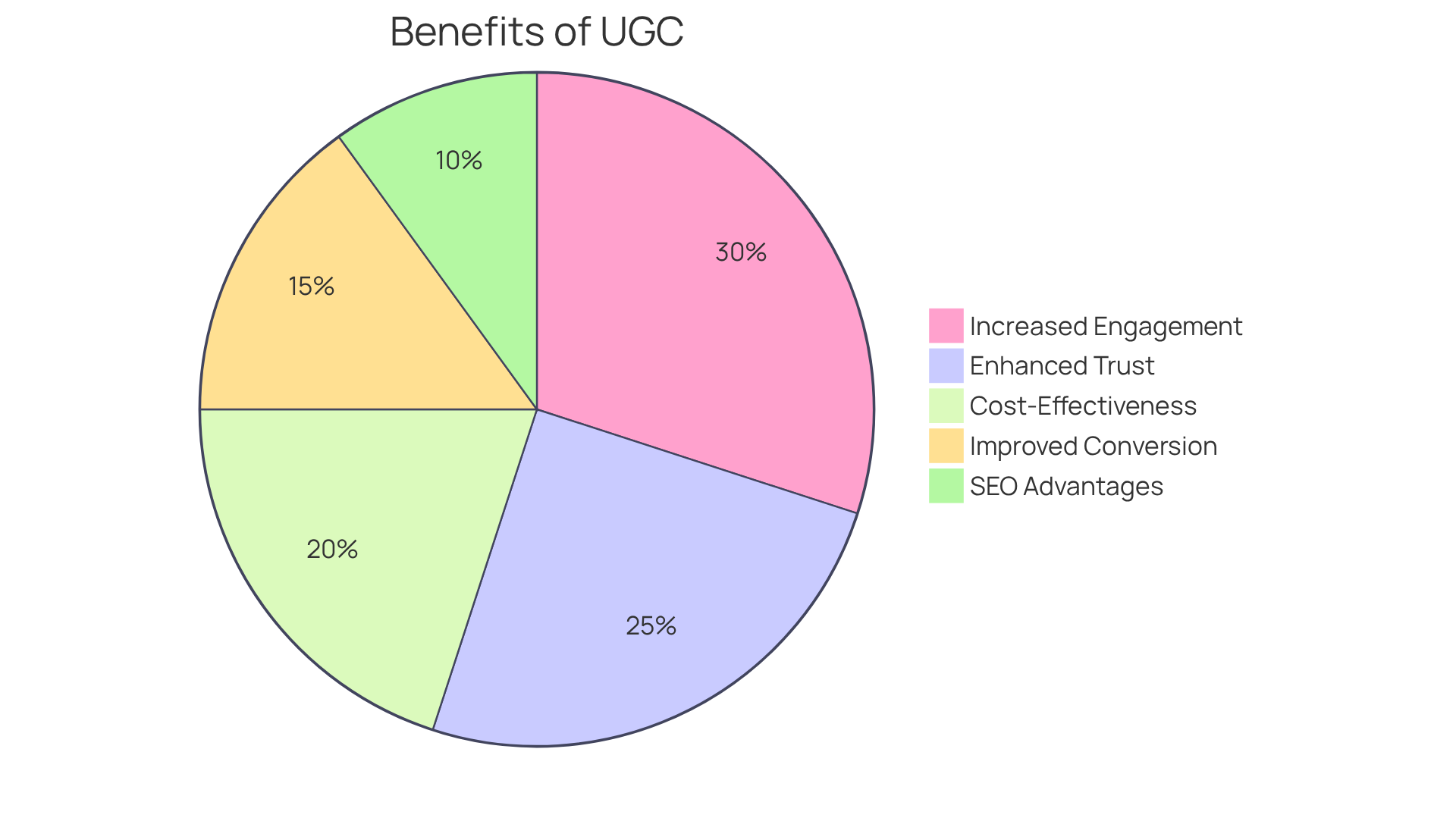
- Increased engagement is seen as consistently achieve higher engagement rates. Why? Because consumers are more inclined to interact with content created by their peers. Take, for instance, the Doritos #CrashtheSuperBowl campaign, which not only welcomed submissions from participants but also attracted millions of entries. This led to a remarkable 30% rise in ad engagement during the Super Bowl, showcasing the power of community-driven material.
- arise because UGC fosters , who often view it as more authentic than traditional advertising. A study revealed that 79% of online users trust as much as personal recommendations (Status Labs). This statistic reinforces the credibility of companies that effectively leverage UGC .
- Cost-Effectiveness: Utilizing UGC can significantly lower creation expenses. Companies can repurpose existing customer-generated material, saving resources while encouraging ongoing engagement from satisfied customers eager to share their experiences.
- Improved conversion rates: Brands that effectively leverage UGC report conversion rate increases of up to 29%. This statistic underscores UGC's and enhancing overall marketing effectiveness.
- SEO Advantages: UGC can also for search engines. This enhances a company's online visibility and attracts more prospective customers.
These compelling benefits illustrate the critical importance of . By doing so, companies can achieve optimal results and foster deeper connections with their audiences. Furthermore, the growing demand for genuine and authentic opinions in the UGC space, especially in light of AI influence, underscores the relevance of UGC in today's marketing landscape.
Implement Strategies to Collect and Encourage User-Generated Content
To effectively collect and encourage (), brands can implement several key strategies:
- Create : Developing specific hashtags for users to include when sharing their content simplifies tracking and curating while fostering a sense of belonging among participants. Research shows that campaigns utilizing can significantly boost , with some studies indicating a 28% increase in interaction rates.
- : Incentivizing participation through contests can dramatically enhance both the volume of material and . By providing rewards for top contributions, brands inspire creativity and motivate individuals to share their experiences. A prime example is GoPro's Million Dollar Challenge, which encouraged participants to submit their best footage, resulting in a wealth of genuine material that resonated with audiences. Furthermore, involving celebrity judges can enhance the contest's credibility and promote it through their networks.
- : Actively showcasing on official pages not only acknowledges contributors but also motivates others to engage. This practice fosters a community around the product, enhancing and trust. Brands like Starbucks have effectively utilized customer-generated material to amplify their reach and strengthen connections with consumers. Promoting contest winners on social channels can further engage the audience and drive traffic to the brand's site.
- : Actively responding to and interacting with individuals who share content fosters a relationship that encourages ongoing participation. Recognizing contributions establishes a positive feedback cycle, where individuals feel appreciated and are more inclined to keep sharing their experiences. Research indicates that shoppers who engage with reviews and convert at a rate 161% higher than those who don’t, underscoring the importance of in driving conversions.
By implementing these strategies, companies can cultivate a robust library of that resonates with their audience, ultimately driving and enhancing credibility.

Establish Best Practices for Managing User-Generated Content
To effectively manage (), brands must adhere to essential practices that not only protect their reputation but also in their marketing efforts.
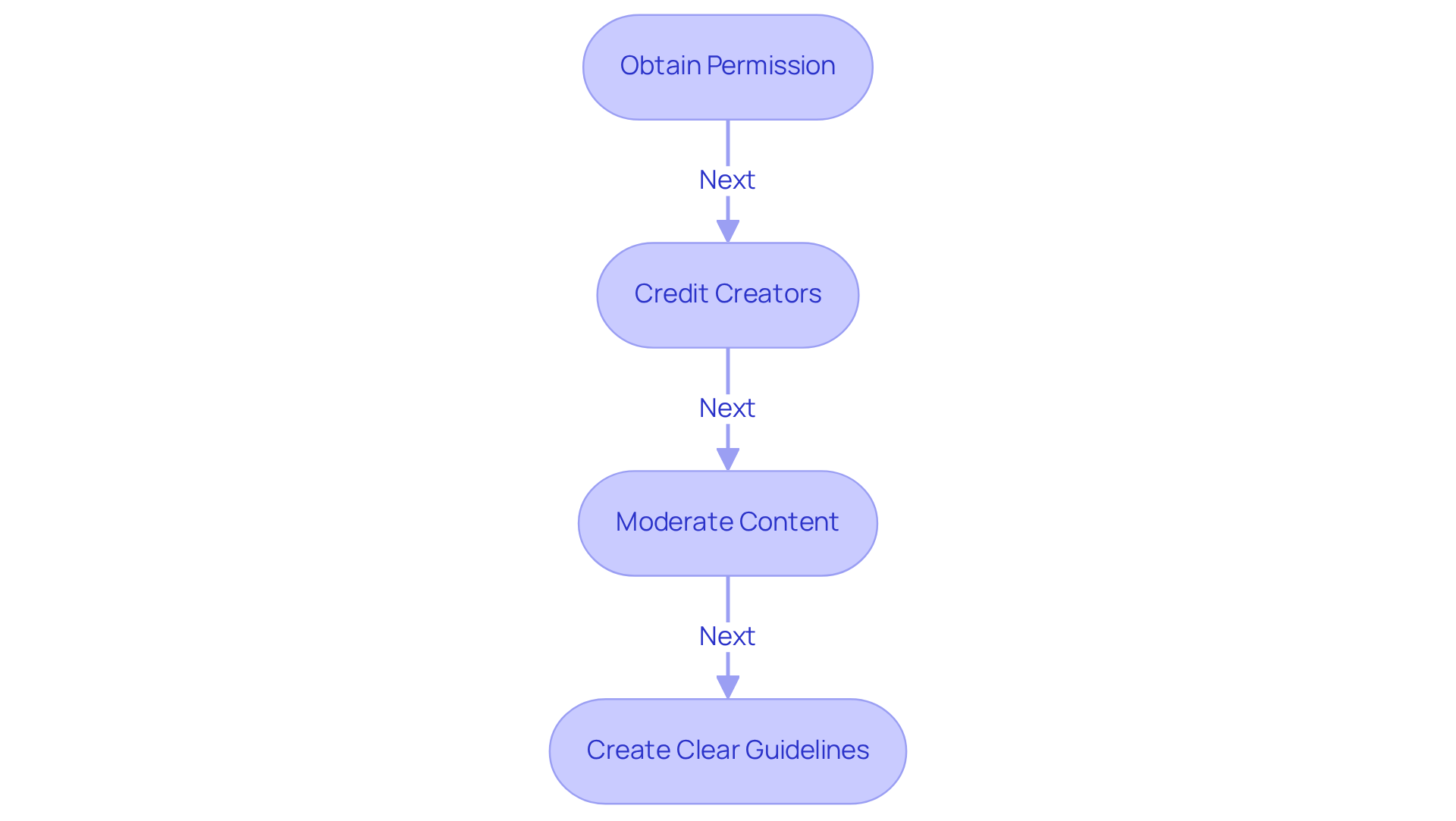
- Obtain Permission: Always seek explicit consent from users before utilizing their content. This practice ensures compliance with copyright laws and builds trust with your audience. Did you know that ? Furthermore, 62% believe that boosts authenticity. is not just ethical; it's crucial for fostering a loyal customer base.
- : Acknowledge the original creators of to foster goodwill and encourage further contributions. By providing recognition, companies can strengthen their relationships with users, leading to a more engaged community. As Mark Fairlie observes, ' can help your company engage customers and boost sales.' This acknowledgment not only enhances community spirit but also motivates creators to share more content.
- : Implement a moderation process to ensure that aligns with company values and messaging. This step is vital for filtering out unsuitable material and maintaining a positive company image. Brands that actively moderate often see a significant increase in engagement and trust. Are you ready to take control of your brand's narrative?
- : Provide users with clear instructions on the type of material desired. This clarity streamlines the submission process and improves the quality of received. Establishing guidelines can lead to a more consistent and effective strategy. Additionally, failing to obtain permission can lead to legal repercussions, underscoring the importance of this practice.
By following these practices, companies can leverage effectively while safeguarding their reputation and enhancing authenticity in their marketing efforts.
Integrate UGC into Multi-Channel Marketing Campaigns
To maximize the impact of (), brands must seamlessly integrate it into their by employing several key strategies:
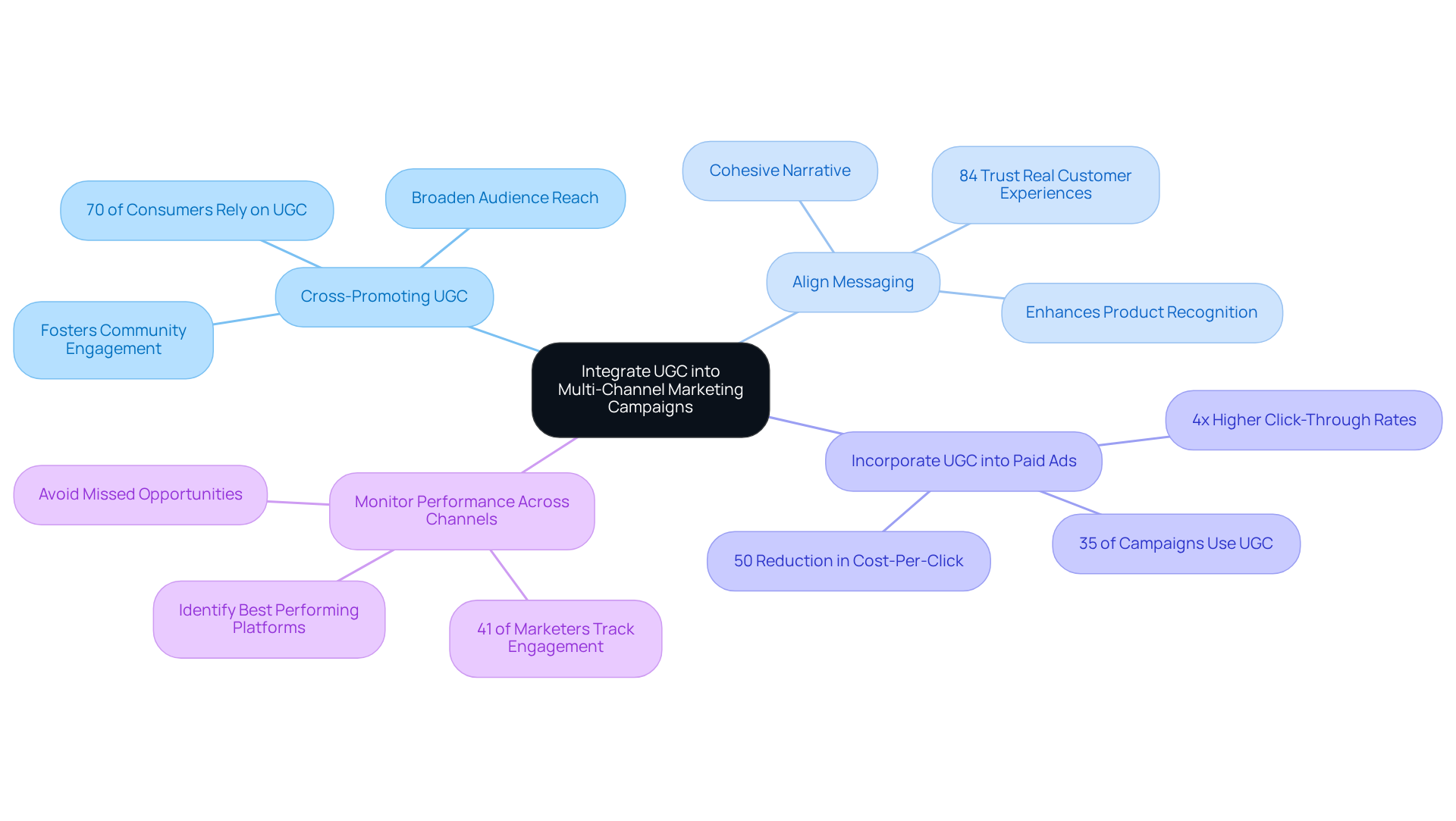
- : Sharing across diverse platforms - social media, email newsletters, and websites - broadens audience reach. This approach not only amplifies visibility but also fosters community engagement. In fact, . Notably, 70% of Gen Z and 78% of millennials assert that significantly influences their buying choices.
- Align Messaging: It's crucial to ensure that aligns with the overall campaign messaging, creating a cohesive narrative that resonates with consumers. Consistency in messaging enhances product recognition and trust; .
Incorporating into enhances authenticity and improves engagement rates. Ads featuring generate four times higher click-through rates and reduce cost-per-click by 50%, making them a cost-effective choice for driving conversions. This trend reflects the growing effectiveness of , which now constitutes , up from 15% in 2024.
- Monitor Performance Across Channels: Tracking the across different channels is essential to identify which platforms yield the best results. This data-driven approach enables companies to refine their strategies, as 41% of marketers prioritize content engagement as a key performance indicator. Additionally, companies must recognize the potential drawbacks of lacking a dedicated strategy, which can lead to missed opportunities to leverage this powerful marketing tool.
Integrating into not only enhances brand visibility but also significantly boosts consumer engagement, driving measurable growth and fostering a sense of community around the brand.
Conclusion
Maximizing user-generated content (UGC) is not just beneficial; it’s essential for brands aiming to elevate their marketing effectiveness and forge authentic connections with consumers. By harnessing the genuine experiences and creativity of customers, brands can cultivate trust, drive engagement, and significantly influence purchasing decisions.
The significance of UGC in modern marketing strategies cannot be overstated. It manifests in various forms - reviews, photos, videos, and social media posts - each playing a crucial role in fostering community engagement and enhancing brand credibility. The integration of UGC into marketing efforts brings numerous benefits, including increased engagement rates, cost-effectiveness, and improved conversion rates, all underscoring its value in achieving measurable results.
In a landscape where authenticity reigns supreme, brands must adopt best practices for managing UGC. This includes:
- Obtaining permission
- Crediting creators
- Moderating content
By implementing effective strategies to collect and encourage UGC, and seamlessly integrating it into multi-channel marketing campaigns, brands can enhance their visibility and cultivate a vibrant community around their products. Embracing UGC is not merely a trend; it’s a powerful tool that can drive brand loyalty and influence consumer behavior for years to come.
Frequently Asked Questions
What is user-generated content (UGC)?
User-generated content (UGC) includes any output produced by consumers, such as text, images, videos, or reviews, rather than by brands.
Why is UGC important in marketing?
UGC is crucial in contemporary marketing because it cultivates authenticity and trust, acts as social proof, and showcases genuine consumer experiences, making it more effective than traditional advertising.
How does UGC influence consumer trust?
Studies show that 79% of consumers trust UGC more than brand-generated content, highlighting its significant impact on purchasing decisions.
What is the expected trend for UGC in marketing by 2026?
UGC is anticipated to dominate marketing strategies by 2026, aligning with modern consumer psychology.
How does incorporating UGC into paid advertisements affect cost per acquisition (CPA)?
Brands that incorporate UGC into their paid advertisements often experience a 20-50% reduction in cost per acquisition (CPA).
How do UGC videos compare to promotional videos in terms of audience engagement?
UGC videos receive 73% more favorable comments than promotional videos, enhancing community interaction and fostering loyalty.
What types of UGC are commonly used in marketing?
Common types of UGC include reviews and testimonials, photos and videos, social media posts, and blogs and articles.
How do reviews and testimonials contribute to marketing?
Reviews and testimonials build trust and enhance credibility, making them a vital component of any marketing strategy.
What role do photos and videos play in UGC?
Photos and videos provide visual proof of product effectiveness and engage audiences by showcasing real-life scenarios.
How do social media posts function as UGC?
Social media posts, often shared with branded hashtags, amplify brand visibility and foster community engagement across platforms like Instagram and TikTok.
What benefits do blogs and articles provide in the context of UGC?
Blogs and articles allow individuals to share their perspectives or experiences, providing in-depth insights and enhancing SEO, which drives organic traffic to brand websites.
List of Sources
- Define User-Generated Content and Its Importance in Marketing
- How User-Generated Content Helps You Build Trust and Credibility (https://entrepreneur.com/growing-a-business/how-user-generated-content-helps-you-build-trust-and/487866)
- digilant.com (https://digilant.com/blog/why-user-generated-content-belongs-in-every-media-plan)
- quadcubes.com (https://quadcubes.com/why-user-generated-content-ads-dominate-marketing)
- Audiences overwhelmingly prefer user-generated content over standard ads, AI (https://emarketer.com/content/audiences-overwhelmingly-prefer-user-generated-content-over-standard-ads--ai)
- Explore Different Types of User-Generated Content
- quadcubes.com (https://quadcubes.com/why-user-generated-content-ads-dominate-marketing)
- Audiences overwhelmingly prefer user-generated content over standard ads, AI (https://emarketer.com/content/audiences-overwhelmingly-prefer-user-generated-content-over-standard-ads--ai)
- UGC Marketing: Your Ultimate Guide for 2026 (https://socalnewsgroup.com/2025/12/05/user-generated-content-guide)
- 36 User-Generated Content Statistics That You Can’t Ignore | EveryoneSocial (https://everyonesocial.com/blog/user-generated-content-statistics)
- User-Generated Content (UGC) Marketing Guide 2026 (https://spintadigital.com/blog/user-generated-content-ugc-marketing-guide-2026)
- Highlight the Benefits of Incorporating UGC into Marketing Strategies
- Will User-generated Content be even more important in 2026? (https://linkbuildinghq.com/knowledge-center/will-user-generated-content-be-even-more-important-in-2026)
- relishagency.com (https://relishagency.com/blog/benefits-user-generated-content)
- The Impact of User-Generated Content on Customer-Centric Digital Marketing (https://thriveagency.com/news/the-impact-of-user-generated-content-on-customer-centric-digital-marketing)
- advancetravelandtourism.com (https://advancetravelandtourism.com/insights/9-huge-benefits-of-user-generated-content-for-marketing-and-where-to-start)
- influencermarketinghub.com (https://influencermarketinghub.com/benefits-of-ugc-marketing)
- Implement Strategies to Collect and Encourage User-Generated Content
- neilpatel.com (https://neilpatel.com/blog/contests-user-generated-content)
- 5wpr.com (https://5wpr.com/new/how-to-encourage-customers-to-create-user-generated-content)
- invokemedia.co.uk (https://invokemedia.co.uk/running-social-media-contests-for-ugc-a-complete-guide)
- medianug.com (https://medianug.com/blog/how-to-encourage-user-generated-content-5-effective-strategies)
- User-Generated Content 2026: 9 Tips To Master Strategy (https://yotpo.com/blog/user-generated-content-strategy)
- Establish Best Practices for Managing User-Generated Content
- The Ultimate Guide to User-Generated Content (UGC) in 2026: Trends, Pricing, and Strategies - TheHypeSociety (https://thehypesociety.com.au/the-ultimate-guide-to-user-generated-content-ugc-in-2026-trends-pricing-and-strategies)
- linkedin.com (https://linkedin.com/pulse/user-generated-content-ai-creativity-best-practices-2026-svn2f)
- User-Generated Content: UGC Types, Benefits & Best Practices (https://business.com/articles/user-generated-content)
- UGC Strategy: How to Build & Scale It in 2026 (https://flockler.com/blog/ugc-strategy-guide)
- ethics.journalists.org (https://ethics.journalists.org/topics/user-generated-content)
- Integrate UGC into Multi-Channel Marketing Campaigns
- TikTok-heavy campaigns slide as UGC surges 133% YoY (https://emarketer.com/content/tiktok-heavy-campaigns-slide-ugc-surges-133--yoy)
- inbeat.agency (https://inbeat.agency/blog/ugc-statistics)
- 70+ UGC Statistics to Shape Your 2026 Marketing Strategy (https://showca.se/post/ugc-statistics)
- 55+ UGC Statistics (2026): Consumer Trust, Conversions, and Market Data - Billo (https://billo.app/blog/ugc-statistics)
👉 Get in touch to explore how we can support your UGC strategy