
Introduction
Advertising cards have been instrumental in shaping the marketing landscape, with origins tracing back to 17th century England and flourishing in the dynamic environment of 19th century America. These promotional tools not only showcased products but also evolved into beloved collectibles that nurtured brand loyalty. As we navigate a world increasingly driven by digital innovation, one must ask: how have advertising cards adapted to stay relevant in this fast-paced, technology-focused era?
This exploration delves into the rich history, key characteristics, and modern implications of advertising cards, revealing their lasting impact on consumer engagement and marketing strategies. Furthermore, understanding their evolution offers valuable insights into how traditional marketing methods can coexist with contemporary practices, ensuring that these time-honored tools continue to resonate with consumers today.
Defining Advertising Cards: A Historical Overview
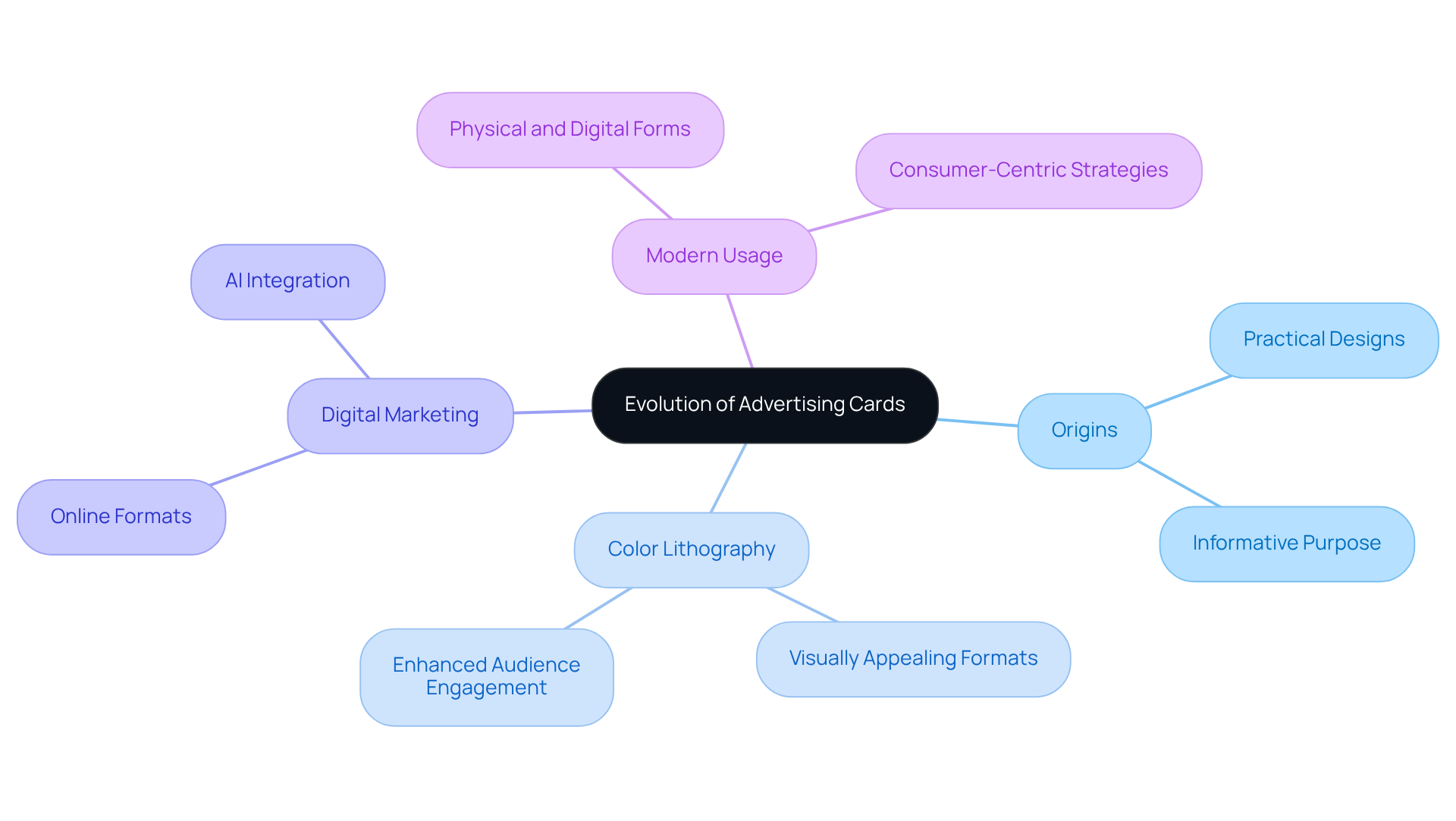
Advertising materials, often known as trade promotions, have been essential in marketing since their inception. Originating in 17th century England, these printed promotional items were initially used by businesses to showcase their products and services. Their significance grew dramatically during the 19th century, particularly in the United States, where they became a cornerstone of . The marked a notable increase in their popularity, characterized by vibrant and artistic designs that not only captured buyer attention but also fostered .
In the 1880s, trade tokens emerged as the leading , surpassing traditional periodical marketing. As Robert Jay noted, , also known as , were unique in that they were the only medium capable of reaching numerous households while being cherished by individuals. By the late 1800s, trade pieces had become one of the most prevalent promotional methods, often regarded by buyers as collectibles. This evolution highlights not only the changing landscape of promotion but also the burgeoning buyer culture of the time, as companies sought , such as , to connect with their audiences and enhance brand visibility.

The Evolution of Advertising Cards: From Origins to Modern Usage
The evolution of signifies significant shifts in and . Initially, these items were straightforward and practical, primarily aimed at informing potential clients about products. However, with advancements in printing technology, particularly the introduction of color lithography in the late 19th century, transformed into visually appealing and artistic creations. This evolution allowed brands to convey their messages more effectively, leading to increased .
Furthermore, the 20th century witnessed the rise of , introducing new formats such as online and . These modern formats, such as , retain the core purpose of traditional materials while leveraging technology to achieve . Today, advertising materials exist in both physical and digital forms, adapting to the preferences of contemporary consumers while preserving their promotional essence.
In conclusion, understanding the development of is crucial for marketers aiming to connect with their audience effectively. As we navigate this dynamic landscape, it’s essential to consider how these materials can be optimized to meet the evolving needs of consumers.
Key Characteristics of Advertising Cards: Design, Purpose, and Impact
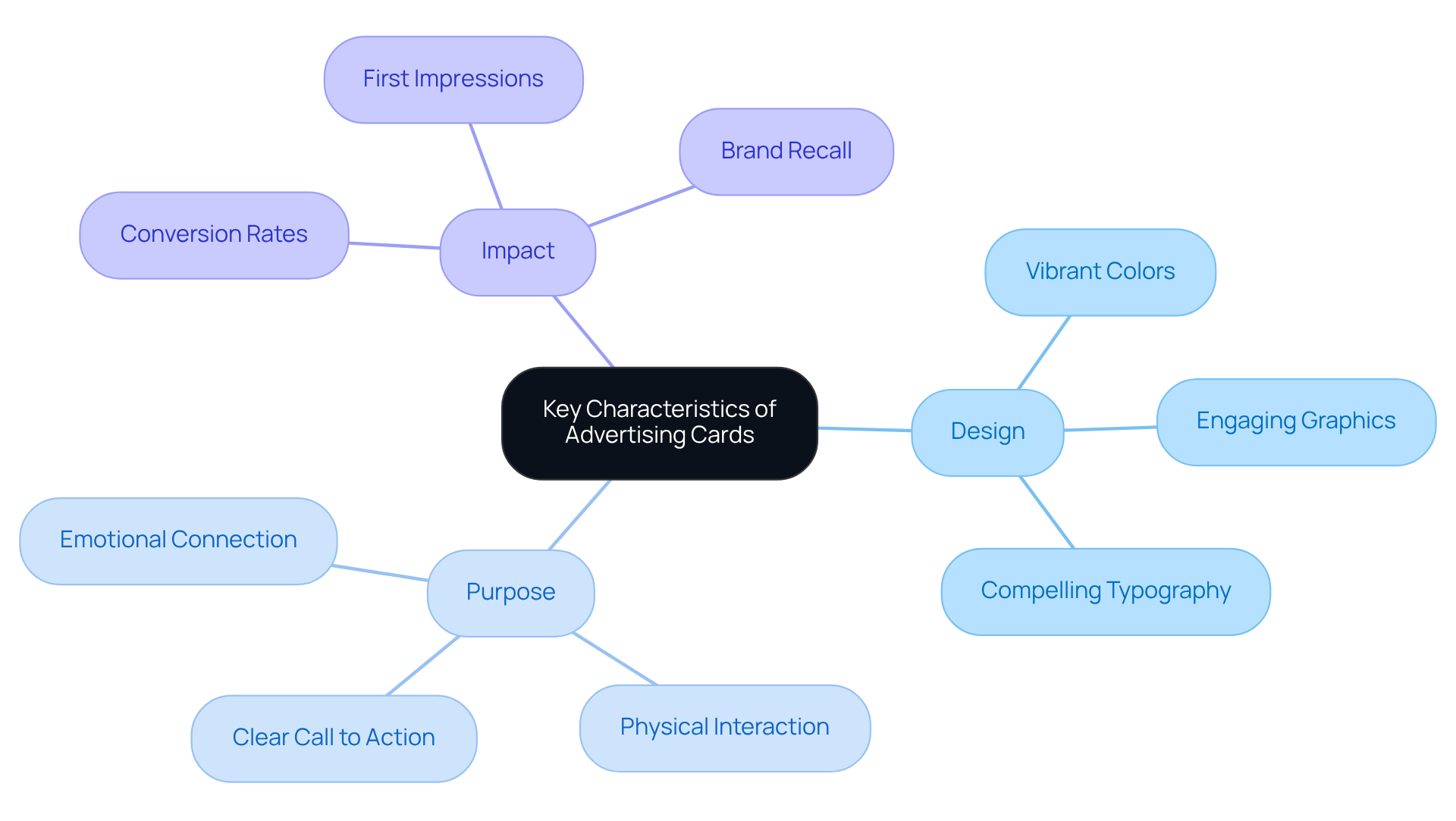
possess several . Their design typically features vibrant colors, engaging graphics, and compelling typography, all aimed at capturing attention. But they do more than just communicate information; these items inspire feelings and create lasting impressions. For instance, a well-crafted promotional flyer can achieve a 12% conversion rate, outperforming many digital platforms that often struggle to reach similar results. In fact, 72% of individuals report that , underscoring the importance of design in .
A crucial element of these items is the , which encourages individuals to engage with the brand-whether by making a purchase, visiting a website, or participating in a promotion. Case studies reveal that postcards featuring , especially when paired with personalized messaging. The tangible nature of allows consumers to physically grasp and connect with the company, fostering a relationship that digital promotions often find hard to replicate. This physical interaction not only promotes products but also builds recognition and loyalty, making an indispensable tool in any marketing strategy.
Moreover, the emotional impact generated by can lead to improved product recall. Research indicates that buyers are 90% more likely to remember a brand when they receive a well-crafted note, highlighting the importance of thoughtful design and messaging. As noted, "A well-designed postcard draws attention-but it’s the copy that drives results." In a landscape where digital promotions are frequently overlooked, emerge as a powerful means for establishing enduring client relationships.
Notable Examples of Advertising Cards: Impact on Consumer Engagement
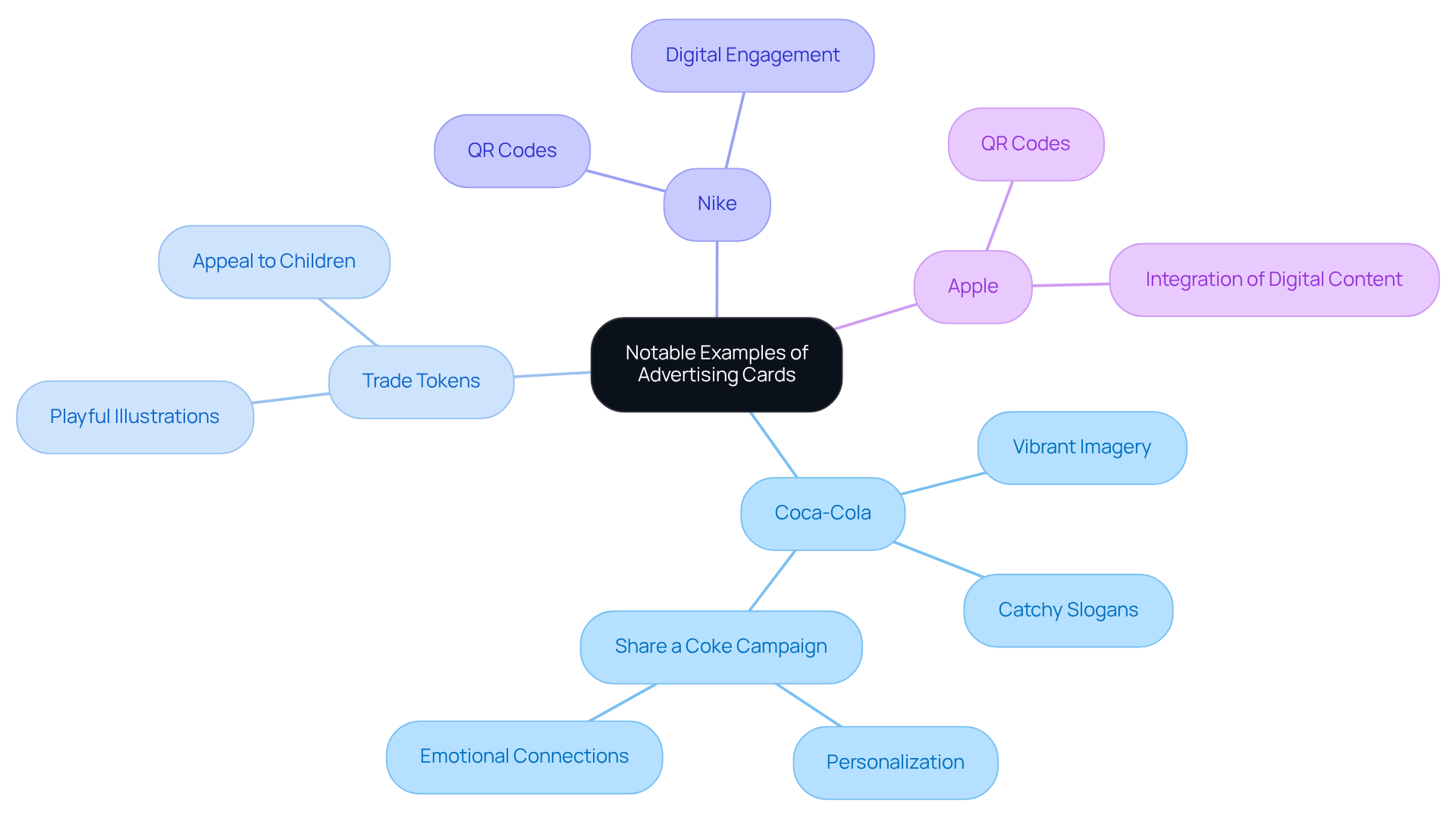
Throughout history, significant instances of have proven their effectiveness in capturing buyers' attention. For instance, featured vibrant imagery and catchy slogans that not only endorsed the beverage but also cultivated a lifestyle around it. The revival of the '' campaign in 2025, which personalizes bottles and cans with popular names, exemplifies Coca-Cola's innovative approach to contemporary marketing, aiming to foster with consumers.
Furthermore, trade tokens from the late 19th century often showcased playful illustrations that attracted children, transforming them into coveted objects valued by families. In contemporary times, brands like Nike and Apple have harnessed in their marketing campaigns, integrating QR codes that link to , thereby bridging physical and digital engagement. These examples illustrate how have evolved while maintaining their core objective of attracting consumer focus and enhancing interaction.
As Sue Lynne Cha, Vice President of Marketing at Coca-Cola North America, stated, 'The return of ‘’ takes it to the next level by creating even more meaningful connections.' This statement underscores the enduring relevance of in today's marketing landscape.
Conclusion
The journey of advertising cards, from their historical roots to their modern-day applications, underscores their integral role in marketing strategies. These promotional materials have evolved significantly, adapting to technological advancements and shifting consumer behaviors while retaining their core purpose of engaging audiences and fostering connections.
Consider this: advertising cards have transformed dramatically since their simple origins in the 17th century. The vibrant and artistic designs of the Victorian era illustrate this evolution beautifully. Furthermore, advancements in printing technology and the rise of digital marketing have significantly influenced the design and effectiveness of these materials. The emotional impact and tangible nature of advertising cards cannot be overlooked; they create lasting impressions and drive consumer engagement.
Reflecting on the significance of advertising cards reveals their enduring power in a marketer's arsenal. As brands innovate and personalize their promotional efforts, understanding the history, characteristics, and impact of advertising cards becomes crucial. Embracing these insights empowers marketers to craft compelling campaigns that resonate with consumers, fostering brand loyalty and enhancing engagement in an ever-evolving marketplace. So, how will you leverage the rich history and potential of advertising cards in your next campaign?
Frequently Asked Questions
What are advertising cards and when did they originate?
Advertising cards, also known as trade promotions, are printed promotional items used in marketing that originated in 17th century England.
How did the significance of advertising cards change over time?
Their significance grew dramatically during the 19th century, especially in the United States, where they became a cornerstone of marketing strategies.
What characterized the popularity of advertising cards during the Victorian era?
The Victorian era saw a notable increase in the popularity of advertising cards, marked by vibrant and artistic designs that captured buyer attention and fostered brand loyalty.
What promotional method surpassed traditional periodical marketing in the 1880s in America?
In the 1880s, trade tokens emerged as the leading promotional method in America, surpassing traditional periodical marketing.
What unique feature did advertising cards have according to Robert Jay?
Robert Jay noted that advertising cards were unique as they were the only medium capable of reaching numerous households while being cherished by individuals.
How were trade pieces perceived by buyers by the late 1800s?
By the late 1800s, trade pieces had become one of the most prevalent promotional methods and were often regarded by buyers as collectibles.
What does the evolution of advertising cards indicate about the marketing landscape?
The evolution of advertising cards highlights the changing landscape of promotion and the burgeoning buyer culture of the time, as companies sought innovative ways to connect with their audiences and enhance brand visibility.
List of Sources
- Defining Advertising Cards: A Historical Overview
- rmc.library.cornell.edu (https://rmc.library.cornell.edu/tradecards/exhibition/history)
- linearity.io (https://linearity.io/blog/advertising-statistics)
- spurlock.illinois.edu (https://spurlock.illinois.edu/blog/p/victorianera-card-collection/464)
- readex.com (https://readex.com/readex-report/issues/volume-6-issue-2/development-american-advertising-card)
- The Evolution of Advertising Cards: From Origins to Modern Usage
- forbes.com (https://forbes.com/councils/forbesagencycouncil/2025/01/21/2025-digital-ad-trends-and-predictions-time-to-turn-the-page)
- ama.org (https://ama.org/marketing-news/the-ultimate-guide-to-advertising-types-strategies-and-best-practices-for-2025)
- almcorp.com (https://almcorp.com/blog/digital-marketing-news-november-1-to-november-10-2025)
- emarketer.com (https://emarketer.com/content/advertising-trends-watch-2025)
- finance.yahoo.com (https://finance.yahoo.com/news/big-pivot-digital-ad-budgets-150000230.html)
- Key Characteristics of Advertising Cards: Design, Purpose, and Impact
- wavecnct.com (https://wavecnct.com/blogs/news/business-card-statistics?srsltid=AfmBOooUldvCb1TTeo3p3KiSnkbhZZfRshjQ7PoPuq7R1cGQVrnJyWmS)
- themediaant.com (https://themediaant.com/blog/characteristics-of-advertising)
- lettrlabs.com (https://lettrlabs.com/post/direct-mail-post-cards)
- gingermediagroup.com (https://gingermediagroup.com/blog/modern-advertising-key-characteristics-that-drive-success)
- mycreativeshop.com (https://mycreativeshop.com/learn/7-unique-marketing-strategies-using-cards-for-small-businesses)
- Notable Examples of Advertising Cards: Impact on Consumer Engagement
- adage.com (https://adage.com/events-awards/year-in-review/2025/aa-best-of-account-moves-coca-cola-openai-mars-bayer-mastercard)
- news.designrush.com (https://news.designrush.com/coca-cola-revives-share-a-coke-campaign-with-fresh-spin-for-genz)
- forbes.com (https://forbes.com/sites/bernardmarr/2023/12/14/coca-colas-latest-generative-ai-initiative-is-all-about-festive-customer-engagement)
- Iconic ‘Share a Coke’ is Back for a New Generation (https://coca-colacompany.com/media-center/iconic-share-a-coke-is-back-for-a-new-generation)