
Introduction
In a digital landscape overflowing with information, a well-crafted web content strategy can be the defining factor between a brand that resonates and one that fades into obscurity.
Have you ever wondered what sets industry leaders apart? By examining their distinct approaches, this article reveals strategies that not only engage audiences but also align with business objectives, driving measurable results.
However, with various methods available - from data-driven content to storytelling - how can brands determine the best path forward? This exploration delves into the strengths and weaknesses of each strategy, offering insights that could significantly enhance a brand's marketing effectiveness.
Define Web Content Strategy: Key Concepts and Importance
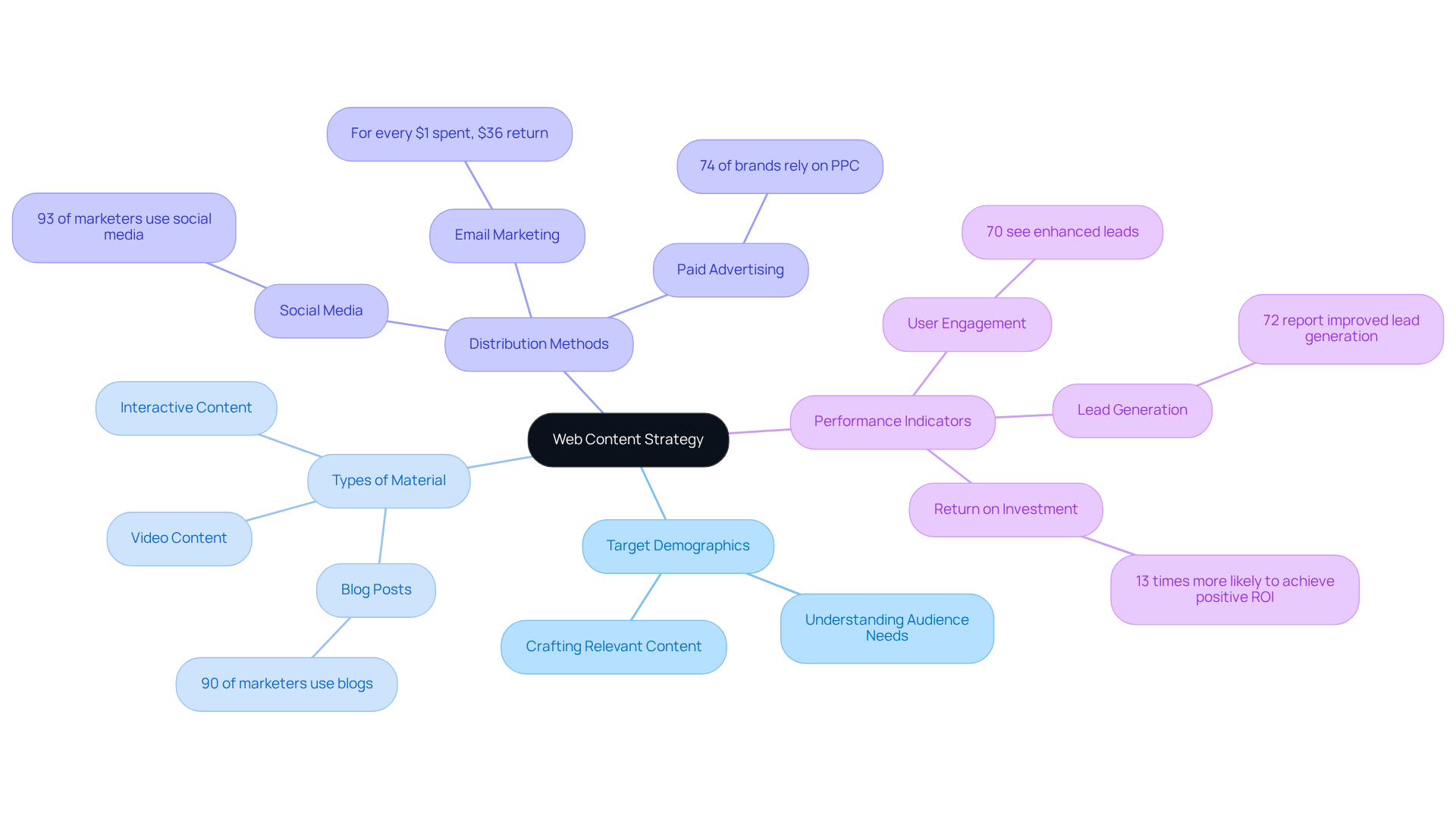
An effective serves as a crucial framework for brands, detailing how to create, manage, and distribute information across various digital platforms. This strategy encompasses such as , types of material, distribution methods, and performance indicators. A well-defined is vital for aligning information with overarching , ultimately boosting and improving conversion rates.
Consider this: companies that truly understand their can craft relevant and valuable content that resonates deeply with users. This approach not only drives traffic but also fosters brand loyalty. In fact, 70% of marketers can demonstrate how , while 72% of companies report that improves lead generation. These statistics underscore the significant impact of this approach on measurable business results.
Moreover, businesses that prioritize blogging initiatives are 13 times more likely to achieve a positive ROI. Blog posts remain the most favored format, with 90% of marketers leveraging blogs to meet their objectives. This highlights the effectiveness of a targeted approach in reaching business goals, especially considering that digital marketing is 62% cheaper than traditional marketing and generates approximately three times more leads.
In conclusion, adopting a not only aligns with business goals but also enhances overall marketing effectiveness. Are you ready to elevate your brand's ?
Compare Industry Leaders: Distinct Approaches to Web Content Strategy
Industry leaders employ distinct s, each meticulously crafted to resonate with their target audiences and align with business goals. For instance:
- Brand A focuses on , leveraging analytics to guide their topics and formats, which results in impressive engagement rates.
- Brand B prioritizes storytelling, with their audience, thereby fostering loyalty.
- Brand C harnesses to cultivate community involvement and authenticity.
- Brand D dedicates , significantly .
Each of these approaches carries its own advantages, which can be illustrated through a , shaped by the unique identity and market positioning of the respective brands.

Evaluate Pros and Cons: Strengths and Weaknesses of Each Strategy
When evaluating various methods for creating a , distinct strengths and weaknesses emerge. A , for instance, enables precise targeting and measurable results. However, it often falls short in fostering the that . Conversely, a narrative-driven strategy cultivates . Studies show that 70% of consumers who experience a are more likely to make a purchase (Nielsen). Yet, this approach can be resource-intensive and may not deliver immediate results.
(UGC) enhances authenticity and community engagement, particularly appealing to younger audiences like Gen Z and Gen Alpha, who favor raw, unedited media. However, managing UGC presents challenges in maintaining quality control, as companies must ensure that the content aligns with their values and messaging. Additionally, a focus on , but it necessitates ongoing adjustments to keep pace with algorithm changes.
Understanding these dynamics is crucial. Companies that effectively utilize storytelling can see a 40% increase in new customer acquisition (Harvard Business Review). Case studies reveal that organizations embracing authentic narratives experience measurable improvements in consumer trust and loyalty, transforming transactional relationships into communities of shared values. Furthermore, 92% of consumers prefer companies to create ads that feel like a story (Hill Holliday). This insight aids companies in selecting the most suitable web content strategy example based on their objectives and available resources.

Implementing Strategies: Practical Applications for Brand Marketing Managers
For brand marketing managers, implementing a is essential, as it serves as a critical component of . Start by conducting thorough research on your audience to pinpoint . This foundational step sets the stage for your strategy. Next, establish clear objectives that align with your overarching business goals - this clarity is crucial for .
Once your objectives are set, choose formats that resonate with your audience. Whether it’s blogs, videos, or , the right format can significantly enhance engagement. Furthermore, utilizing is essential. By analyzing user interactions, you can refine your materials to better meet audience needs.
Collaboration is key. Foster teamwork among cross-functional teams, including creative, SEO, and social media experts. This ensures a cohesive approach to content creation and distribution. By following these steps, marketing managers can implement a that drives engagement and . Are you ready to elevate your brand’s marketing strategy?

Conclusion
A robust web content strategy is crucial for brands aiming to excel in the digital landscape. By grasping the unique needs of their target audiences and aligning content with business objectives, companies can significantly enhance user engagement and drive conversions. This article illustrates how industry leaders adopt diverse approaches - ranging from data-driven content creation to storytelling and user-generated content - each tailored to resonate with their audiences and achieve specific marketing goals.
Key insights reveal that a well-structured content strategy not only boosts brand loyalty but also improves lead generation and ROI. The comparative analysis of different strategies underscores the importance of selecting the right approach based on a brand's identity and market positioning. Whether leveraging analytics for precision, crafting compelling narratives, or utilizing SEO for organic traffic, each method presents distinct advantages and challenges that must be navigated with care.
Ultimately, the significance of a solid web content strategy cannot be overstated. It serves as a foundational tool for brand marketing managers looking to implement successful campaigns. By prioritizing audience research, setting clear objectives, and fostering collaboration among teams, brands can effectively elevate their content strategies. Embracing these practices will not only enhance engagement but also position companies for long-term success in an increasingly competitive digital marketplace.
Frequently Asked Questions
What is a web content strategy?
A web content strategy is a framework that outlines how to create, manage, and distribute information across various digital platforms, focusing on aligning content with business objectives.
Why is a web content strategy important?
It is important because it boosts user engagement, improves conversion rates, and ensures that content resonates with the target audience, ultimately driving traffic and fostering brand loyalty.
What are the key components of a web content strategy?
Key components include target demographics, types of material, distribution methods, and performance indicators.
How does understanding the target audience affect content creation?
Understanding the target audience's needs and preferences allows companies to create relevant and valuable content that resonates deeply with users, enhancing engagement and loyalty.
What statistics highlight the effectiveness of content marketing?
70% of marketers can demonstrate how content marketing has enhanced leads and customer engagement, while 72% of companies report that it improves lead generation.
How does blogging contribute to a business's ROI?
Businesses that prioritize blogging are 13 times more likely to achieve a positive ROI, with blog posts being the most favored format among marketers.
What are the cost benefits of digital marketing compared to traditional marketing?
Digital marketing is 62% cheaper than traditional marketing and generates approximately three times more leads.
How does a web content strategy align with overall business goals?
A well-defined content strategy aligns content efforts with overarching business objectives, enhancing overall marketing effectiveness and driving measurable results.
List of Sources
- Define Web Content Strategy: Key Concepts and Importance
- searchengineland.com (https://searchengineland.com/mentions-citations-and-clicks-your-2026-content-strategy-465789)
- brafton.com (https://brafton.com/content-marketing-statistics)
- hygraph.com (https://hygraph.com/blog/digital-content-strategy)
- 33 Content Marketing Statistics to Boost Your Online Strategy (https://seo.com/blog/content-marketing-statistics)
- Compare Industry Leaders: Distinct Approaches to Web Content Strategy
- The Power of Storytelling in Marketing: Key Statistics You Need to Know (https://medium.com/@mybrandpost/the-power-of-storytelling-in-marketing-key-statistics-you-need-to-know-a5f6190bf263)
- Data-Driven Marketing Statistics 2026: 93+ Stats & Insights [Expert Analysis] - Marketing LTB (https://marketingltb.com/blog/statistics/data-driven-marketing-statistics)
- digitalsilk.com (https://digitalsilk.com/digital-trends/content-marketing-statistics)
- phable.io (https://phable.io/phable-labs/50-original-and-inspiring-quotes-about-content-and-content-creation-by-nick-thackray-ceo-of-phable)
- Evaluate Pros and Cons: Strengths and Weaknesses of Each Strategy
- TOP 20 EMOTIONAL MARKETING STATISTICS 2026 REVEAL SHOCKING CONSUMER DECISION PSYCHOLOGY (https://amraandelma.com/emotional-marketing-statistics)
- powdience.ai (https://powdience.ai/insights/advantages-and-challenges-of-data-driven-marketing)
- entrepreneur.com (https://entrepreneur.com/growing-a-business/why-strong-storytelling-beats-out-good-advertisements/497088)
- 5 Stats That Show How Data-Driven Organizations Outperform Their Competition (https://keboola.com/blog/5-stats-that-show-how-data-driven-organizations-outperform-their-competition)
- The Power of Storytelling in Marketing: Key Statistics You Need to Know (https://medium.com/@mybrandpost/the-power-of-storytelling-in-marketing-key-statistics-you-need-to-know-a5f6190bf263)
- Implementing Strategies: Practical Applications for Brand Marketing Managers
- 11 Digital Marketing Trends You Need to Know in 2026 - Web Ascender (https://webascender.com/blog/11-digital-marketing-trends-you-need-to-know-in-2026)
- 80+ Content Marketing Statistics & Facts | Marketing Stats (https://sixthcitymarketing.com/content-marketing-stats)
- brafton.com (https://brafton.com/content-marketing-statistics)
- 2026 Marketing Statistics, Trends, & Data (https://hubspot.com/marketing-statistics)