Introduction
In a digital landscape where authenticity reigns supreme, brands are increasingly turning to performance-based influencer marketing to forge genuine connections with consumers. This article explores ten effective strategies that not only enhance the impact of influencer collaborations but also drive measurable results in e-commerce. As businesses seek to maximize their return on investment, the question arises: how can they effectively harness the power of influencers to navigate the complexities of consumer trust and engagement? Discover the essential tactics that can elevate influencer marketing efforts and propel brands toward success in an ever-evolving marketplace.
MediaNug: Elevate E-commerce with Creator-Led Content
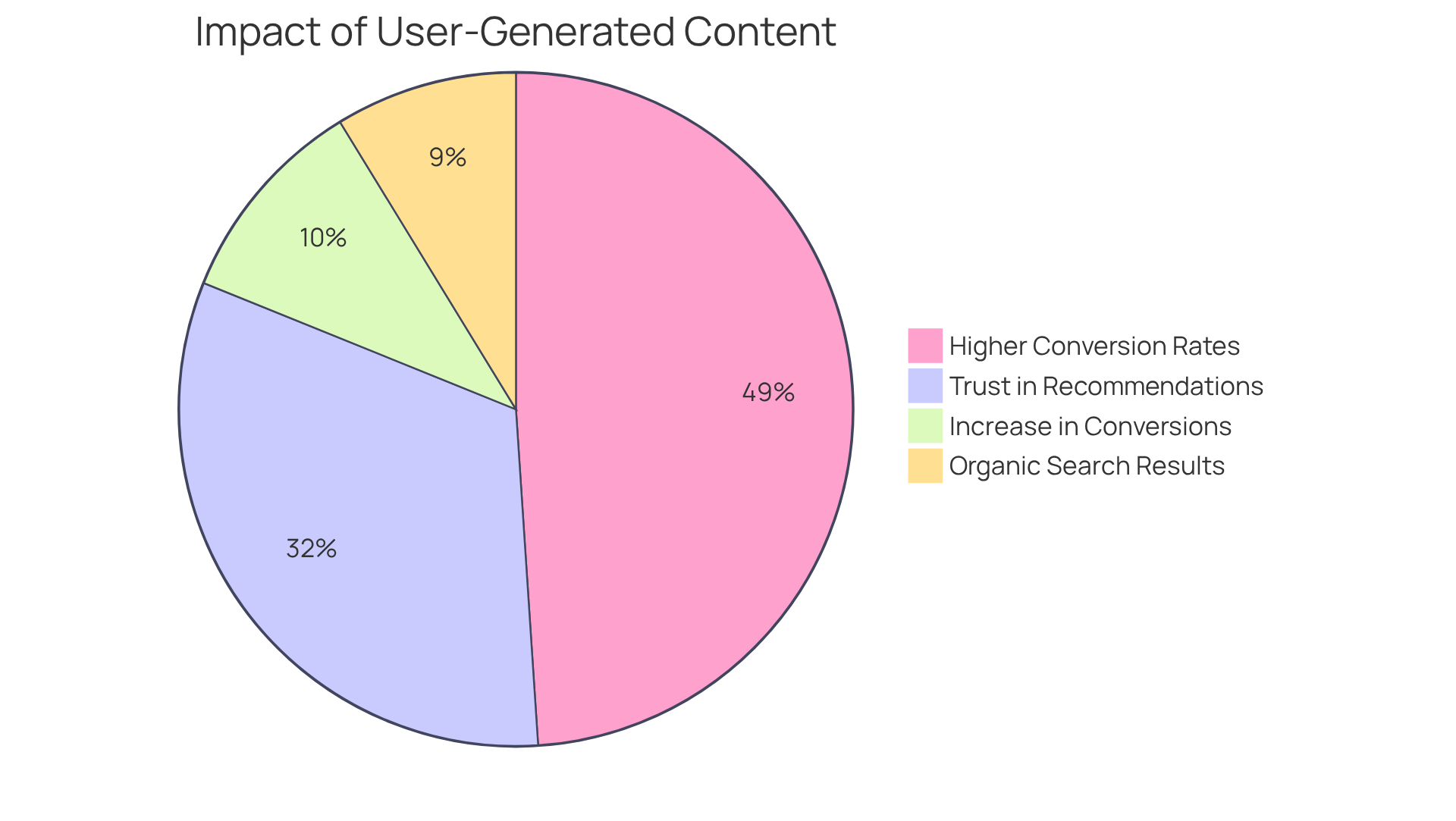
MediaNug stands out in the realm of , particularly within e-commerce. Did you know that can account for ? By leveraging UGC and collaborating with influencers, brands can weave that not only enhance customer trust but also drive conversions. In fact, , making UGC a vital component of any .
Furthermore, UGC fosters stronger relationships with audiences, leading to a remarkable . Brands that engage users with experience conversion rates that are 140% higher. This highlights the undeniable in . By integrating UGC into their marketing strategies, companies can adeptly navigate the evolving landscape of consumer expectations and preferences.
As industry specialists emphasize, 'UGC effectively addresses the authenticity issue that troubles conventional promotion.' So, how can your brand harness the power of UGC to enhance its marketing efforts? It's time to consider the impact of genuine content on your audience and take action.
Pay for Results: Maximizing ROI in E-commerce Campaigns
To optimize ROI in e-commerce initiatives, companies must adopt a strategy when promoting through social media personalities. This means utilizing to compensate influencers based on measurable results, such as sales or leads generated. By aligning payment structures with performance metrics in , brands can ensure their budgets are spent effectively, resulting in . In fact, companies earn an average of $5.78 for every dollar invested in marketing initiatives. This statistic highlights the when compensation is linked to performance.
MediaNug's by allowing them to earn fair compensation for every project, showcasing their unique styles while maintaining creative freedom. Utilizing advanced tracking tools to monitor conversions and engagement is crucial for enhancing this strategy. For instance, , underscoring the impact of these partnerships. Brands like Coca-Cola have successfully implemented performance-based influencer marketing models, rewarding influencers based on the sales they drive. This approach not only incentivizes creators but also fosters a focused on achieving shared goals.
Furthermore, as , companies can leverage these connections to develop that yield reliable outcomes. By prioritizing in compensation, companies can develop a more that maximizes ROI and drives measurable growth.

Track Meaningful Metrics: Data-Driven Insights for E-commerce
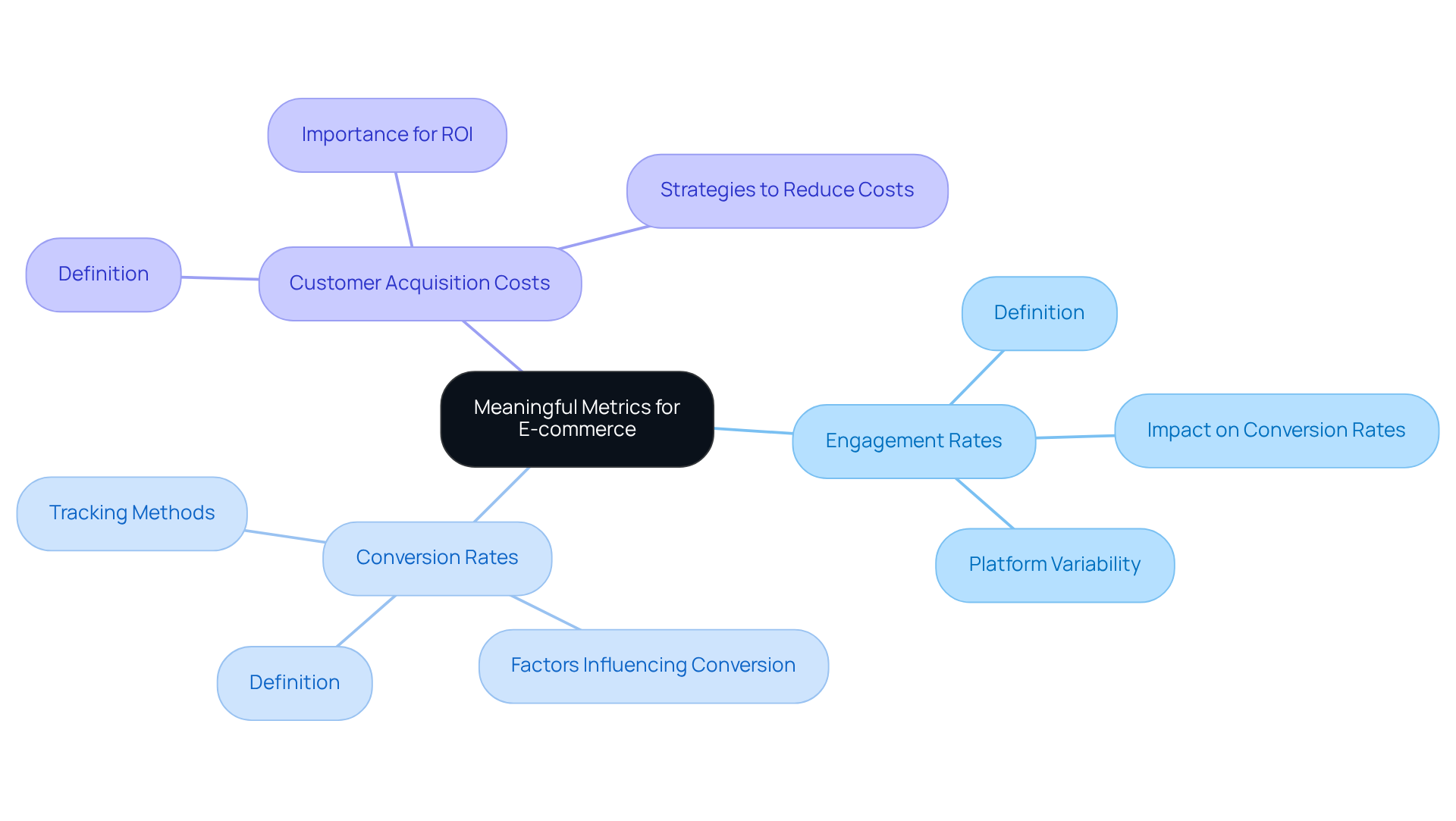
Understanding significant metrics is essential for evaluating the effectiveness of . Brands must prioritize (KPIs) like:
By thoroughly analyzing these metrics, brands can uncover insights into which strategies are effective and where adjustments are necessary. This not only facilitates but also empowers brands to make that enhance overall performance.
Furthermore, consider how these metrics can . Are you aware of how can directly impact your ? By focusing on these KPIs, you can refine your strategies and drive better results. The ongoing analysis of these metrics is not just a task; it’s a pathway to success in the competitive landscape of .
In addition, leveraging these insights allows brands to adapt swiftly to market changes, ensuring they remain relevant and effective. Take action now - start tracking these vital metrics and witness the difference it makes in your marketing strategy.
Continuous Optimization: Adapting Strategies for Better Performance
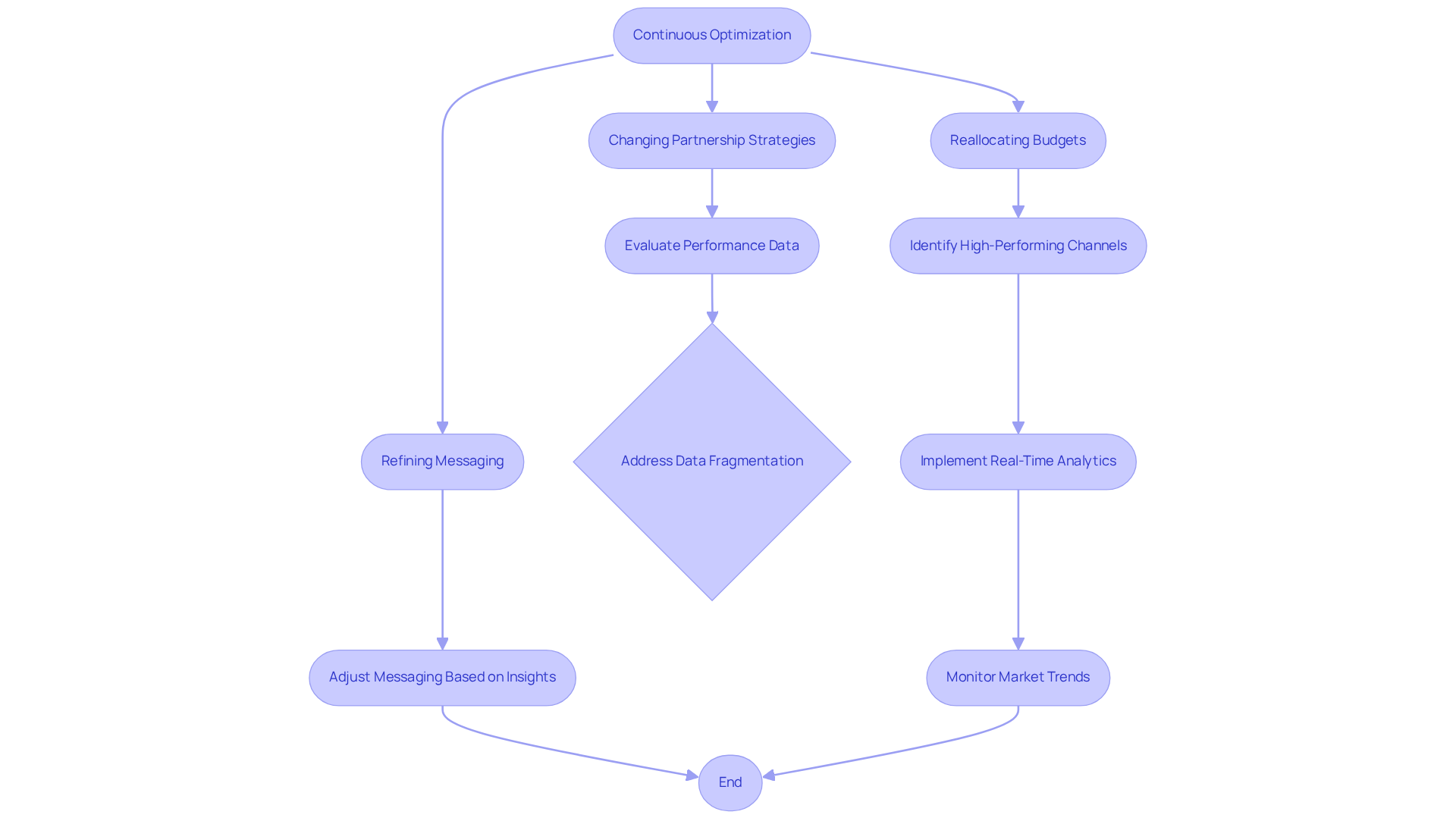
Maximizing the effectiveness of promotional campaigns by social media personalities relies on and . Brands must consistently evaluate data from to guide . This may involve:
- Refining messaging
- Changing partnership strategies
- Reallocating budgets to prioritize higher-performing channels
For instance, organizations utilizing have reported an impressive 15% average revenue growth. Moreover, 79% of these organizations noted improved business outcomes, showcasing the tangible benefits of .
By fostering a culture of experimentation and adaptability, companies can significantly boost their and achieve . As highlighted by McKinsey, organizations that integrate real-time data into their decision-making processes can enhance operational efficiency by up to 20%. This proactive strategy allows companies to swiftly , ensuring their promotional efforts align with consumer preferences and business goals.
However, challenges such as data fragmentation and attribution issues must be addressed to fully leverage the benefits of and continuous optimization. By tackling these obstacles, brands can unlock the full potential of their promotional strategies and drive sustained growth.
Leverage Micro-Influencers: Building Authentic Connections
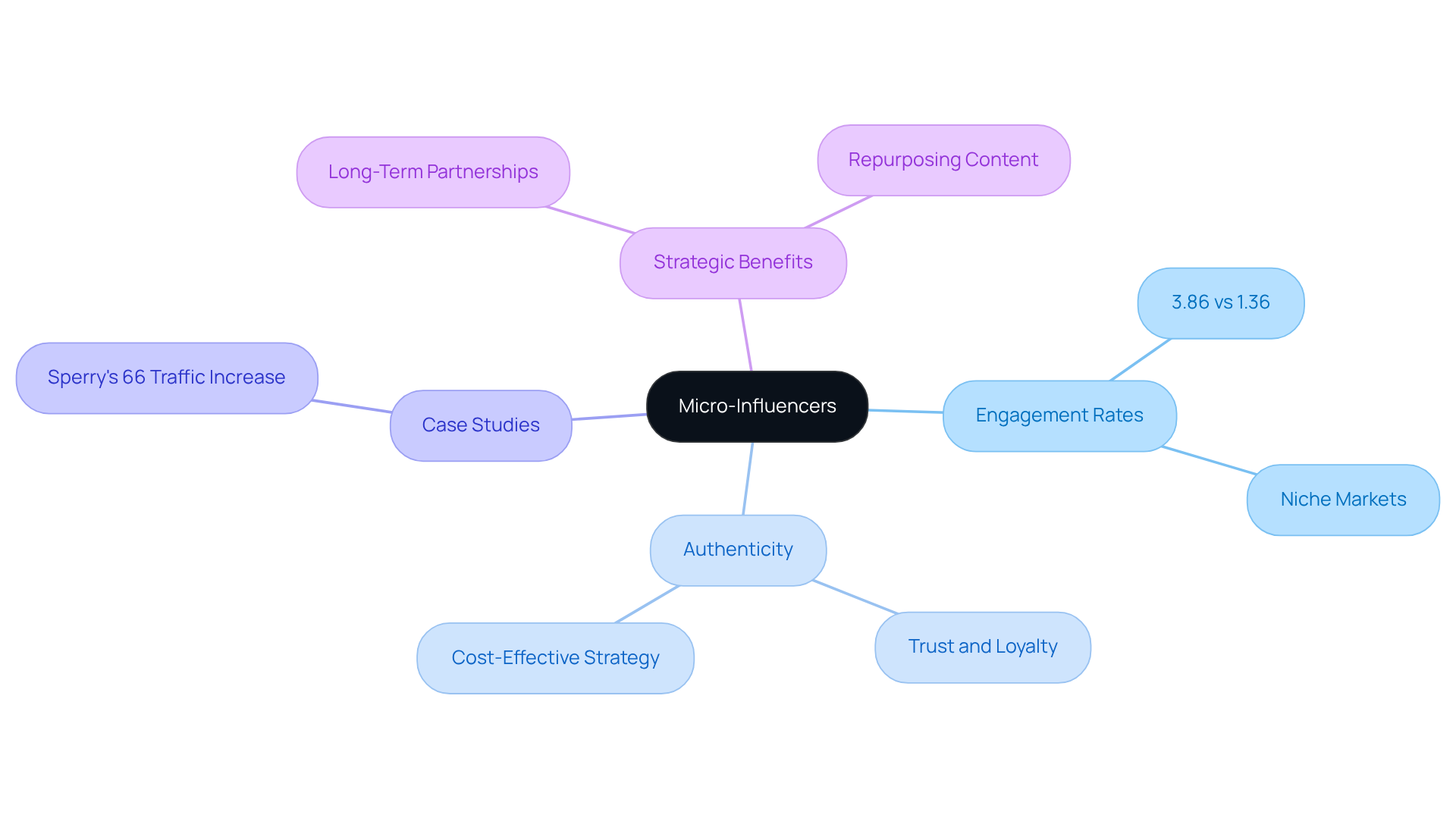
Harnessing the power of can significantly elevate a company's , especially when it comes to . These creators, with follower counts typically ranging from 1,000 to 100,000, cultivate highly engaged audiences, fostering authentic connections that resonate deeply with their followers. Brands reap the rewards of the trust and loyalty build, translating into - averaging around 3.86% compared to just 1.36% for their macro counterparts. This authenticity not only helps in reaching niche markets but also proves to be a .
Take, for instance, Sperry's collaboration with 100 , which led to a remarkable 66% increase in website traffic. This showcases the . As companies increasingly recognize the importance of , they are prioritizing that yield sustained engagement and . Furthermore, 66% of companies plan to reuse their micro-content in TikTok Spark Ads this year, indicating a developing strategy to enhance the effectiveness of these collaborations.
As highlighted by industry specialists, cultivating lasting connections with micro-promoters can lead to enduring , further improving the overall efficiency of promotional efforts. Are you ready to explore how can transform your marketing approach?
Measurable ROI: Ensuring Predictable Returns for E-commerce
To achieve quantifiable ROI in , companies must establish (KPIs) for their before launching. This involves defining success metrics, such as , enhanced website traffic, or improved brand awareness. Notably, 35.6% of brands prioritize sales as their primary objective when collaborating with promoters, underscoring the importance of focused goals. Furthermore, companies typically earn an average of $6.50 for every dollar invested in social media promotion, illustrating the .
Monitoring campaign performance in real-time is essential, and utilizing tracking tools and analytics platforms plays a crucial role. Brands can effectively measure the impact of influencer-driven content by leveraging unique discount codes, UTM parameters, and affiliate links. Tools like Aria, GRIN, and HypeAuditor are particularly effective for in collaboration with social media personalities, providing companies with actionable insights.
Moreover, 71% of influencers offer discounts for long-term collaborations, which can significantly enhance ROI by fostering . As Jessica Wynne Lockhart notes, "The gold standard for tracking and is ." By proactively monitoring and adjusting strategies based on performance data, brands not only achieve consistent returns but also lay a solid foundation for future initiatives. This iterative process is vital for optimizing influencer marketing efforts and maximizing overall effectiveness.

Transparency and Fairness: Strengthening Influencer Relationships
are crucial for building . Brands must engage in open dialogue about expectations, compensation, and project objectives. This approach not only but also ensures that influencers feel valued and respected.
empowers creators by allowing them to earn for every project, showcasing their unique styles on their terms. By fostering a collaborative environment, companies can significantly enhance the quality of the content produced and increase the overall effectiveness of their campaigns. Establishing clear guidelines and maintaining consistent communication can lead to enduring partnerships.
Notably, 93% of influencers express a preference for , highlighting the value of . Furthermore, 71% of consumers believe that openness regarding affiliations enhances trust in influencers, while 64% are concerned about the lack of disclosure of these connections. Additionally, 80% of consumers find influencers who lack genuineness or transparency to be trust killers.
Brands that prioritize and , as exemplified by MediaNug's commitment to , are more likely to achieve successful outcomes in their efforts. This is not just a strategy; it’s a necessity for brands aiming to thrive in today’s competitive landscape.

Utilize High-Quality UGC: Enhancing Brand Visibility
Harnessing high-quality is not just a strategy; it’s a powerful approach to enhancing visibility. Did you know that UGC not only showcases but also ? To motivate customers to share their stories, companies can implement , run contests, or prominently showcase UGC on their websites. For instance, Starbucks' #WhiteCupContest generated over 4,000 submissions in just three weeks, .
Furthermore, GoPro's #GoProChallenge and Lululemon’s #thesweatlife have effectively inspired users to share their experiences, further increasing visibility. Campaigns that utilize and incorporate UGC see an average of 25% higher performance, as consumers are 240% more likely to view UGC as authentic compared to traditional brand-created content. This data underscores the importance of .
By utilizing these strategies - such as employing - while ensuring appropriate moderation of content, brands can generate relatable content that resonates with audiences. This approach not only but also enhances overall success through . Are you ready to elevate your brand’s visibility through the power of UGC?

Lower Risk: Effective Budget Control in Influencer Marketing
Mitigating financial risks in is essential for brands aiming to thrive in a competitive landscape. and thorough planning are key components of this process. Brands should base their budget distributions on insights from past initiatives and data. Testing various influencers and content formats on a smaller scale allows companies to assess effectiveness before committing larger budgets, significantly reducing financial exposure. For example, Ibiza Rocks successfully gained 40,000 new followers through targeted , showcasing the value of smaller-scale testing.
Furthermore, establishing clear contracts and in ensures alignment between brands and influencers, thereby minimizing the likelihood of unsuccessful campaigns. This proactive strategy not only protects investments but also fosters a more cooperative and open relationship, ultimately leading to more . With marketing through social media personalities , effective becomes increasingly vital.
Additionally, , underscoring the importance of a robust in driving engagement. As Scott Morris, CMO of Sprout Social, notes, content from social media figures feels pertinent and genuine compared to polished brand promotions, emphasizing the necessity for authenticity in these collaborations. Moreover, 45% of marketers monitor heightened website traffic during promotions, further supporting the effectiveness of these strategies. Are you ready to refine your influencer marketing approach and maximize your returns?

Set Clear Goals: Implementing Effective Influencer Campaigns
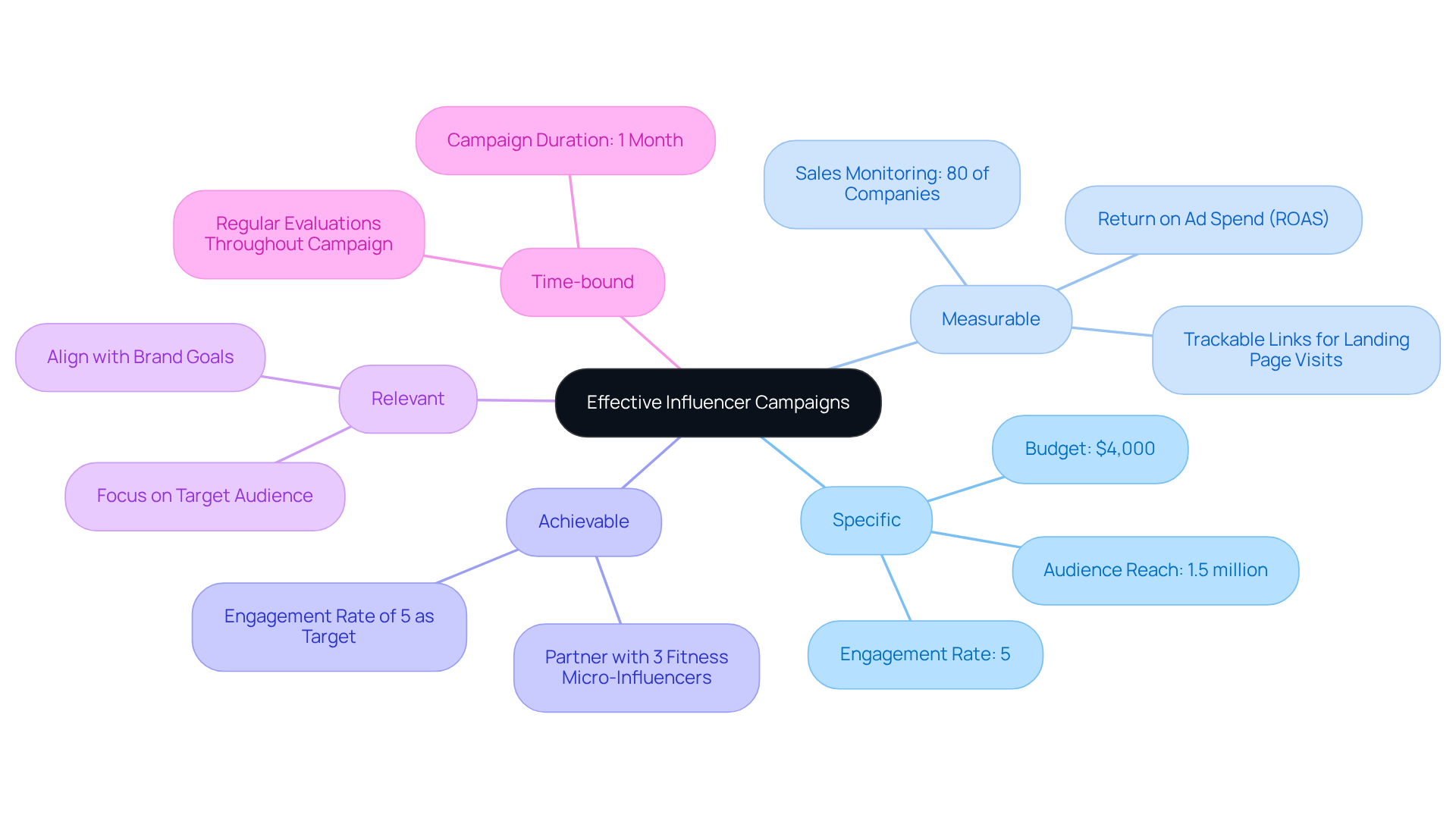
. Brands must adopt the - Specific, Measurable, Achievable, Relevant, and Time-bound - to articulate their objectives effectively. This structured approach to not only aligns influencer efforts with overarching marketing strategies but also ensures that all stakeholders understand the expected outcomes.
For instance, consider a company with a budget of $4,000 aiming to collaborate with on Instagram. Their goal? To reach an audience of 1.5 million users within a month while achieving a on promotional posts. Consistently evaluating these objectives throughout the process allows for prompt modifications and improvements, ultimately .
In fact, 80% of companies monitor sales from their social media collaborations, underscoring the significance of in achieving through . As Nic Dunn, CEO of Charle Agency, aptly notes, is crucial for maximizing brand impact and attaining desired results.
Furthermore, the from $21.1 billion in 2023 to $32.55 billion by 2025. This growth highlights the increasing importance of setting for effective campaigns. Are you ready to elevate your promotional strategies and achieve measurable success?
Conclusion
Harnessing the power of performance-based influencer marketing is not just beneficial; it’s essential for brands aiming to thrive in today’s competitive e-commerce landscape. By integrating strategies like leveraging user-generated content (UGC), collaborating with micro-influencers, and employing data-driven metrics, companies can forge authentic connections with their audiences and drive measurable growth. The emphasis on transparency and fairness in influencer relationships further solidifies trust, ensuring that both brands and creators reap the rewards of their partnerships.
Key insights from the article reveal:
- The effectiveness of UGC in enhancing brand visibility
- The substantial returns linked to performance-based compensation
- The critical importance of tracking meaningful metrics to refine marketing strategies
Moreover, the necessity of setting clear goals using the SMART framework is underscored, guiding brands toward achieving desired outcomes and ultimately leading to a more successful influencer marketing campaign.
As the influencer marketing industry continues to evolve, brands must remain proactive in adapting their strategies to meet changing consumer expectations. Embracing these ten strategies will not only maximize ROI but also foster lasting relationships with influencers and consumers alike. Companies are encouraged to take action now - implement these tactics and witness the significant impact they can have on marketing success.
Frequently Asked Questions
What is MediaNug and how does it relate to e-commerce?
MediaNug is a platform that focuses on creator-led content, particularly in the e-commerce sector. It emphasizes the importance of user-generated content (UGC) in enhancing customer trust and driving conversions.
How significant is user-generated content (UGC) for brands?
UGC can account for 25% of organic search results for major companies and is trusted by 92% of consumers over brand-created advertising, making it a crucial element of effective promotional strategies.
What impact does UGC have on web conversions?
UGC fosters stronger relationships with audiences, leading to a 29% increase in web conversions. Brands that use UGC galleries on product pages experience conversion rates that are 140% higher.
What is performance-based influencer marketing?
Performance-based influencer marketing is a strategy where brands compensate influencers based on measurable results, such as sales or leads generated, ensuring effective budget spending and higher returns on investment.
What are the average returns on investment for performance-based influencer marketing?
Companies earn an average of $5.78 for every dollar invested in marketing initiatives when using performance-based influencer marketing strategies.
How does MediaNug's NugVerse support creators?
NugVerse allows creators to earn fair compensation for their projects, showcasing their unique styles while maintaining creative freedom.
What key performance indicators (KPIs) should brands track in influencer marketing?
Brands should prioritize metrics such as engagement rates, conversion rates, and customer acquisition costs to evaluate the effectiveness of their marketing strategies.
Why is it important to analyze these metrics?
Analyzing these metrics helps brands uncover insights into effective strategies, facilitates continuous improvement, and empowers strategic decision-making that enhances overall performance.
How can tracking metrics benefit marketing strategies?
Ongoing analysis of key metrics allows brands to adapt swiftly to market changes, ensuring they remain relevant and effective in their marketing efforts.
List of Sources
- MediaNug: Elevate E-commerce with Creator-Led Content
- How User-Generated Content Can Drive eCommerce Sales (https://thriveagency.com/news/how-user-generated-content-drives-ecommerce-sales)
- How User Generated Content Drives Ecommerce Success (https://americaneagle.com/insights/blog/post/how-user-generated-content-drives-ecommerce-success)
- inbeat.agency (https://inbeat.agency/blog/ugc-statistics)
- spiralytics.com (https://spiralytics.com/blog/content-creator-statistics-2025)
- social.plus (https://social.plus/blog/84-of-people-trust-brands-more-when-they-use-user-generated-content)
- Pay for Results: Maximizing ROI in E-commerce Campaigns
- prnewswire.com (https://prnewswire.com/news-releases/influencer-marketing-in-2025-new-data-reveals-what-works-what-costs-and-whats-next-302490369.html)
- 14 Influencer Marketing Growth Statistics for 2026 (https://archive.com/blog/influencer-marketing-growth-statistics)
- emarketer.com (https://emarketer.com/content/why-performance-new-currency-influencer-marketing)
- 32 influencer marketing statistics to guide your brand’s strategy in 2026 (https://sproutsocial.com/insights/influencer-marketing-statistics)
- 2026 Influencer Marketing Statistics: ROI, Trends & Platform Data (https://sociallyin.com/influencer-marketing-statistics)
- Track Meaningful Metrics: Data-Driven Insights for E-commerce
- everything-pr.com (https://everything-pr.com/measuring-success-in-influencer-marketing-integrating-roi-into-public-relations-strategy)
- admetrics.io (https://admetrics.io/en/post/data-driven-marketing-dtc-ecommerce-94093)
- bitechnology.com (https://bitechnology.com/data-driven-decision-making-how-e-commerce-businesses-gain-competitive-edge-in-2025)
- 6 Essential KPIs for Your Influencer Marketing Campaign | Digital Marketing Institute (https://digitalmarketinginstitute.com/blog/5-essential-kpis-for-your-influencer-marketing-campaign)
- mexicobusiness.news (https://mexicobusiness.news/ecommerce/news/data-driven-campaigns-increase-engagement-connection)
- Continuous Optimization: Adapting Strategies for Better Performance
- jewelrystoremarketers.com (https://jewelrystoremarketers.com/2024/11/25/adjusting-strategy-based-on-data-optimizing-decision-making-for-better-outcomes)
- madgicx.com (https://madgicx.com/blog/ai-marketing-statistics)
- blogs.psico-smart.com (https://blogs.psico-smart.com/blog-the-impact-of-realtime-data-analytics-on-business-performance-metrics-167845)
- 10 Proven Continuous Optimization Techniques for Advertising Success - AX Insights (https://insights.audiencex.com/10-proven-continuous-optimization-techniques-for-advertising-success)
- Leverage Micro-Influencers: Building Authentic Connections
- clickanalytic.com (https://clickanalytic.com/35-inspiring-influencer-marketing-quotes)
- impulze.ai (https://impulze.ai/post/top-7-micro-influencer-statistics-every-brand-should-know)
- joinstatus.com (https://joinstatus.com/blog-for-brands/micro-influencer-marketing-benchmarks)
- sociallypowerful.com (https://sociallypowerful.com/influencer/marketing/statistics)
- usebutton.com (https://usebutton.com/post/micro-influencers-taking-the-lead-the-growing-importance-of-micro-influencers-with-highly-engaged-audiences-in-niche-markets)
- Measurable ROI: Ensuring Predictable Returns for E-commerce
- amraandelma.com (https://amraandelma.com/top-roi-of-influencer-marketing-statistics)
- sociallypowerful.com (https://sociallypowerful.com/influencer/marketing/roi)
- shopify.com (https://shopify.com/za/enterprise/blog/roi-influencer-marketing)
- prnewswire.com (https://prnewswire.com/news-releases/influencer-marketing-in-2025-new-data-reveals-what-works-what-costs-and-whats-next-302490369.html)
- Transparency and Fairness: Strengthening Influencer Relationships
- Analyzing Credibility in the Creator Economy (https://bbbprograms.org/media/insights/blog/influencer-trust-index)
- Influencer marketing statistics to know in 2026 (https://dash.app/blog/influencer-marketing-statistics)
- New Research Unveils Key Strategies for influencer authenticity - Georgia State University News - Press Releases, Robinson College of Business - (https://news.gsu.edu/2025/02/20/influencer-authenticity)
- 20 Surprising Influencer Marketing Statistics | Digital Marketing Institute (https://digitalmarketinginstitute.com/blog/20-influencer-marketing-statistics-that-will-surprise-you)
- 2026 Influencer Marketing Statistics: ROI, Trends & Platform Data (https://sociallyin.com/influencer-marketing-statistics)
- Utilize High-Quality UGC: Enhancing Brand Visibility
- How User Generated Content Drives Ecommerce Success (https://americaneagle.com/insights/blog/post/how-user-generated-content-drives-ecommerce-success)
- The Impact of User-Generated Content on Customer-Centric Digital Marketing (https://thriveagency.com/news/the-impact-of-user-generated-content-on-customer-centric-digital-marketing)
- UGC Is Redefining Social Media Marketing in 2025—Here’s How to Leverage It • The Shelf (https://theshelf.com/the-blog/ugc-is-redefining-social-media-marketing-in-2025-heres-how-to-leverage-it)
- slateteams.com (https://slateteams.com/blog/user-generated-content-marketing-in-2025)
- User-Generated Content: UGC Types, Benefits & Best Practices (https://business.com/articles/user-generated-content)
- Lower Risk: Effective Budget Control in Influencer Marketing
- 32 influencer marketing statistics to guide your brand’s strategy in 2026 (https://sproutsocial.com/insights/influencer-marketing-statistics)
- houseofmarketers.com (https://houseofmarketers.com/major-brands-spending-more-influencer-marketing-report)
- loudcrowd.com (https://loudcrowd.com/blog/top-trends-influencer-marketing-what-you-need-to-know-in-2025)
- investors.sproutsocial.com (https://investors.sproutsocial.com/news/news-details/2025/Social-Media-Wins-the-Budget-War-with-8-in-10-Marketing-Leaders-Reallocating-Funds-from-Other-Channels-to-Social-Signaling-Major-Shift-in-Business-Strategy/default.aspx)
- prnewswire.com (https://prnewswire.com/news-releases/influencer-marketing-in-2025-new-data-reveals-what-works-what-costs-and-whats-next-302490369.html)
- Set Clear Goals: Implementing Effective Influencer Campaigns
- 50+ Influencer Marketing Statistics USA (2026) | Charle (https://charleagency.com/articles/influencer-marketing-statistics)
- influencity.com (https://influencity.com/blog/en/influencer-marketing-campaign-goals)
- later.com (https://later.com/blog/setting-goals-for-influencer-marketing)
- 20 Surprising Influencer Marketing Statistics | Digital Marketing Institute (https://digitalmarketinginstitute.com/blog/20-influencer-marketing-statistics-that-will-surprise-you)
- 2026 Influencer Marketing Statistics: ROI, Trends & Platform Data (https://sociallyin.com/influencer-marketing-statistics)