Introduction
In the dynamic realm of digital marketing, crafting effective advertisements is both an art and a science. Agencies must adeptly navigate a landscape filled with shifting consumer preferences and rapid technological advancements to capture attention and drive engagement. This article explores four proven strategies that empower digital marketing agencies to optimize their advertising efforts, ensuring they not only reach their target audience but also resonate with them on a deeper level. As competition intensifies, the pressing question arises: how can agencies balance creativity with data-driven insights to achieve maximum impact?
Identify and Understand Your Target Audience
To effectively connect with your target group, begin with thorough . What insights can you uncover? Utilize tools like:
to gather crucial data on demographics, interests, and behaviors. Create that encapsulate the . This strategic approach will direct your ads for and messaging, ensuring they resonate with the needs and preferences of your audience.
For instance, if your target audience is primarily Gen Z, focus on platforms like , where they are most active. Tailor your content to their unique preferences and trends. By doing so, you not only capture their attention but also foster a deeper connection that drives engagement and loyalty.

Utilize Data-Driven Insights for Ad Optimization
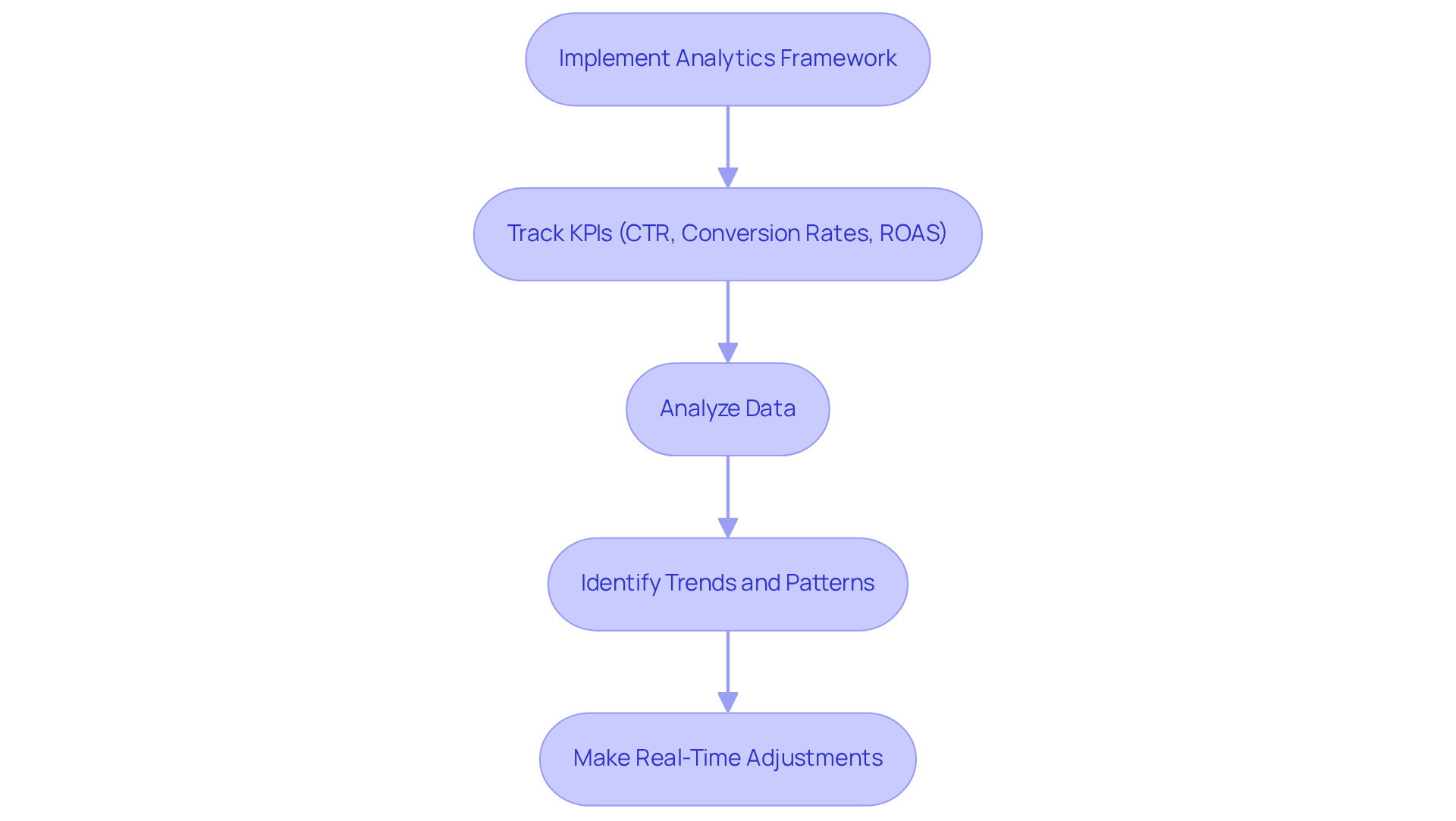
To achieve optimal advertising results, it's essential to implement a robust that tracks (KPIs) like , , and . By utilizing tools such as Google Analytics and social media insights, you can gather critical information on . Regular analysis of this data will help you identify trends and patterns, enabling real-time adjustments to your campaigns.
For instance, if a specific ad format is underperforming, consider reallocating your budget to higher-performing creatives or adjusting . This iterative approach not only enhances your but also ensures they are continuously optimized for better results. Remember, the key to successful advertising lies in .
Balance Creative Innovation with Brand Consistency
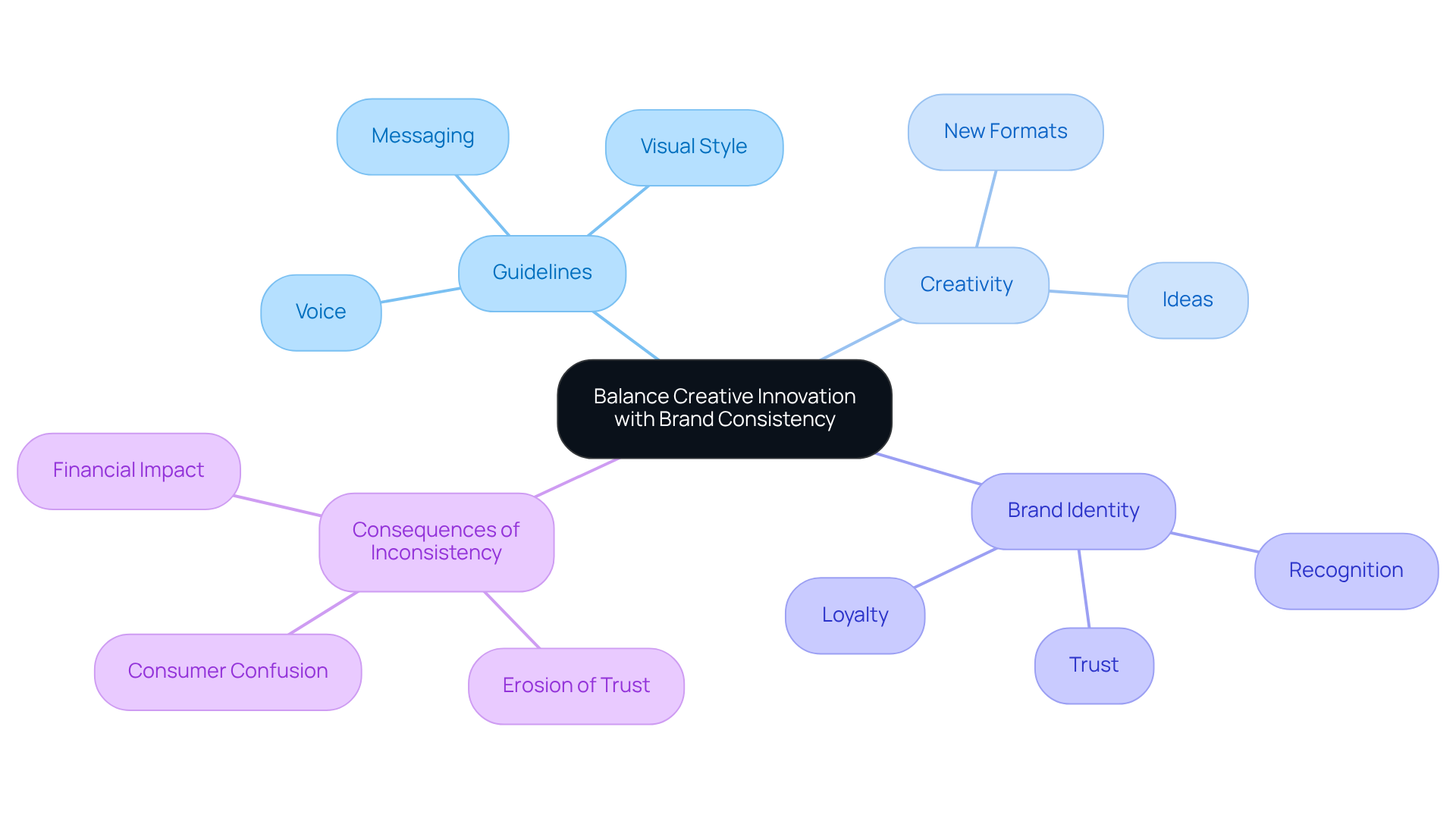
Establishing is crucial for defining your identity's voice, visual style, and messaging. These guidelines serve as a framework that fosters creativity within defined parameters, allowing your to explore new formats and ideas that resonate with your . For instance, if your identity is recognized for its playful tone, integrating humor into your ads can be effective, as long as the messaging remains consistent with your brand. Regular audits of your campaigns are essential to ensure adherence to these guidelines while still pushing . This strategy not only but also keeps your content dynamic and engaging, fostering .
In 2025, companies that successfully balance innovation with consistency are likely to see increased engagement and loyalty. Consumers are drawn to brands that are both dependable and memorable. can boost revenue by up to 23%, underscoring the . As Mae Wickham, a Social Media Account Manager, notes, ", ensuring that every interaction reflects the company's and visual identity." Conversely, , making it imperative to adhere to established guidelines.
Implement A/B Testing and Iterative Improvements
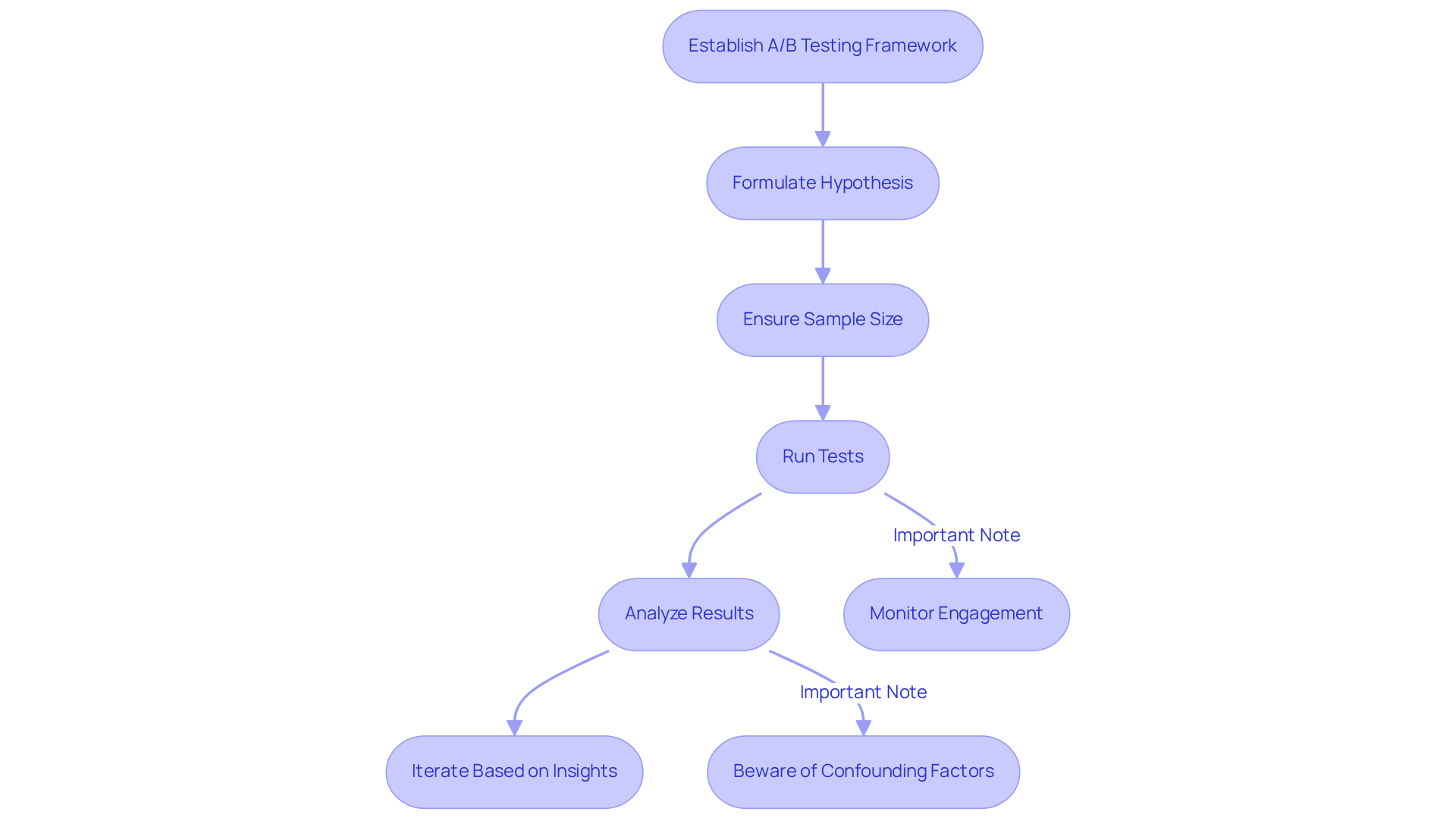
Establishing a robust is crucial for evaluating various elements of your ads, such as headlines, images, and . Start by formulating a precise hypothesis for each test, ensuring your sample size is large enough to yield . For example, when comparing two headlines, monitor which one generates higher engagement and .
It's essential to recognize that A/B testing may not provide causal conclusions due to confounding factors. Tests should run long enough to gather representative data. This clarifies which variations perform best and informs future campaigns. Ongoing iteration grounded in these insights is vital; successful companies demonstrate that structured testing can lead to substantial enhancements in key metrics. A retail brand, for instance, achieved a 25% reduction in cost-per-acquisition by focusing on emotionally driven narratives rather than feature-oriented creatives.
Additionally, be aware of the phenomenon of 'divergent delivery,' which can impact your test outcomes. By consistently refining your strategies through A/B testing, you enhance the performance of ads for and drive measurable growth. Are you ready to elevate your advertising strategy? Engage with to explore how A/B testing can transform your campaigns.
Conclusion
In today’s competitive landscape, understanding and effectively implementing proven strategies for advertising within a digital marketing agency is not just beneficial; it’s essential for success. By honing in on audience identification, leveraging data-driven insights, ensuring brand consistency, and utilizing A/B testing, agencies can craft compelling campaigns that not only capture attention but also build lasting connections with their target demographics.
This article explores four pivotal strategies that digital marketing agencies must embrace:
- Thorough research to identify and understand the target audience allows for tailored messaging that resonates deeply with specific consumer groups.
- Optimizing ads through data-driven insights ensures that campaigns are continuously refined for superior performance.
- Striking a balance between creative innovation and brand consistency helps maintain a cohesive identity that consumers can trust.
- Implementing A/B testing and making iterative improvements based on real-time feedback guarantees that advertising efforts remain effective and relevant.
In a rapidly evolving digital environment, the importance of these strategies cannot be overstated. Agencies should view these best practices not merely as tools for enhancing ad performance but as foundational approaches to cultivating meaningful relationships with their audiences. By investing in the understanding and optimization of their advertising efforts, agencies position themselves for sustained growth and success in the ever-changing world of digital marketing.
Frequently Asked Questions
How can I identify and understand my target audience?
You can identify and understand your target audience by conducting thorough market research using tools such as social media analytics, customer surveys, and competitor analysis to gather data on demographics, interests, and behaviors.
What are buyer personas and why are they important?
Buyer personas are detailed profiles that encapsulate the characteristics of your ideal customers. They are important because they help direct your digital marketing strategies, ensuring that your ads and messaging resonate with the needs and preferences of your audience.
Which platforms should I focus on if my target audience is Gen Z?
If your target audience is primarily Gen Z, you should focus on platforms like TikTok and Snapchat, as these are where they are most active.
How can I tailor my content for my target audience?
You can tailor your content for your target audience by focusing on their unique preferences and trends, which helps capture their attention and fosters a deeper connection that drives engagement and loyalty.
List of Sources
- Identify and Understand Your Target Audience
- linkedin.com (https://linkedin.com/pulse/creating-effective-buyer-personas-digital-marketing-lewandowski-pww6e)
- The Beginner’s Guide to Defining Buyer Personas | Digital Marketing Institute (https://digitalmarketinginstitute.com/blog/the-beginners-guide-to-defining-buyer-personas)
- us.bastionagency.com (https://us.bastionagency.com/news-views/7-market-research-trends-you-need-to-know)
- State of the Consumer 2026: When tech acceleration and cost pressures collide (https://mckinsey.com/industries/consumer-packaged-goods/our-insights/state-of-consumer)
- thriveagency.com (https://thriveagency.com/news/effective-buyer-personas-5-simple-steps)
- Utilize Data-Driven Insights for Ad Optimization
- fetchfunnel.com (https://fetchfunnel.com/data-driven-ad-strategies)
- almcorp.com (https://almcorp.com/blog/google-ads-2025-year-in-review-updates-explained-and-2026-predictions)
- lineup.com (https://lineup.com/harnessing-data-analytics-for-improved-ad-performance-in-2025)
- hginsights.com (https://hginsights.com/2025/03/21/data-driven-marketing)
- marketingtechnews.net (https://marketingtechnews.net/news/how-to-optimise-your-marketing-strategy-with-data-driven-insights)
- Balance Creative Innovation with Brand Consistency
- fsedigital.com (https://fsedigital.com/blog/why-brand-consistency-should-be-part-of-your-social-media-strategy-in-2025)
- bighitcreative.com (https://bighitcreative.com/the-importance-of-consistent-branding-across-physical-and-digital-spaces-in-2025)
- wafishermn.com (https://wafishermn.com/why-consistent-branding-matters-more-than-ever-in-2025-wa-fisher)
- Why brand consistency matters? - Miller Graphics (https://millergraphics.com/blog/the-importance-of-brand-consistency)
- Implement A/B Testing and Iterative Improvements
- dataslayer.ai (https://dataslayer.ai/blog/how-to-use-a-b-testing)
- socialhospitality.com (https://socialhospitality.com/2025/10/a-b-testing-strategies-for-digital-growth)
- A/B testing: A step-by-step guide for 2025 (with examples) (https://unbounce.com/landing-page-articles/what-is-ab-testing)
- ama.org (https://ama.org/2025/01/07/can-you-trust-your-ad-data-a-new-study-exposes-a-hidden-flaw-in-a-b-testing-on-digital-ad-platforms)
- directiveconsulting.com (https://directiveconsulting.com/blog/what-is-ab-testing-in-digital-marketing)