
Introduction
Navigating the complex landscape of Instagram content creation pricing can be a significant challenge for brands looking to optimize their marketing investments. With influencers ranging from nano to mega, each commanding unique fees based on their engagement and reach, grasping these dynamics is essential for effective budgeting.
How can brands ensure they are not only spending wisely but also building valuable partnerships that deliver measurable results? This guide reveals crucial steps to master Instagram content pricing, empowering businesses to make informed decisions that elevate their social media strategies.
Understand the Basics of Instagram Content Creation Pricing
To effectively navigate , it is essential to understand the various tiers of creators and their associated costs. Content creators can be categorized into several groups based on their follower count:
- : Typically charge between $10 to $100 per post, with some reaching up to $150. Their elevated engagement levels render them especially valuable for niche markets, as they cultivate genuine connections with their audiences.
- : Their prices vary from $200 to $2,500 per post. Known for their ability to engage authentically, they are often preferred for performance-focused campaigns.
- : Expect to pay between $500 and $5,000 per post. They offer a balance of reach and engagement, making them appropriate for companies aiming to enhance their visibility while preserving audience trust.
- : Pricing can vary from $10,000 to $25,000 per post, influenced by their engagement rates and the intricacy of the material. Brands often leverage their broad reach for mass-awareness campaigns.
- : These influencers command fees from $25,000 to $100,000+ per post, depending on their celebrity status and audience engagement. Their collaborations are often highly customized, reflecting the high stakes involved.
Understanding these categories helps brands set and budget accordingly for their campaigns, including considerations for . Are you ready to engage with the right influencers for your brand?

Identify Key Factors Influencing Pricing
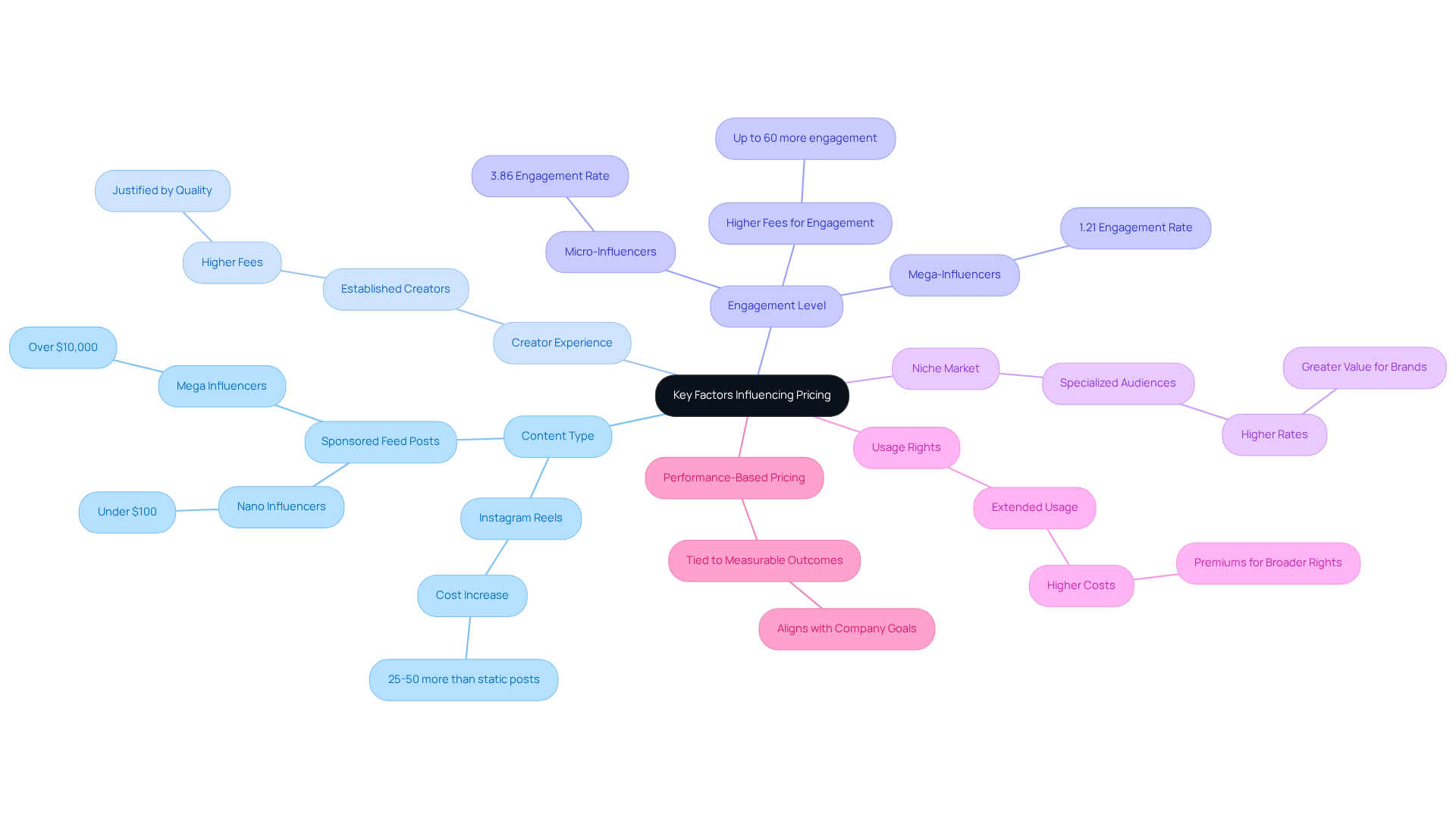
Several key factors significantly influence the pricing of Instagram content creation in 2026:
- : Different formats command varying costs. For instance, , can cost 25-50% more than static posts due to their higher engagement potential and visibility. Sponsored feed posts generally serve as the foundation for influencer fees, with costs ranging from under $100 for nano influencers (charging between $25 to $150 per post) to over $10,000 for mega influencers.
- : Established creators with a strong portfolio often demand higher fees. Their proven track record and ability to produce high-quality content justify these fees, reflecting their expertise in effectively engaging audiences.
- Engagement Level: Influencers with , as they are more likely to drive conversions. For example, micro-influencers can generate up to 60% more engagement than larger influencers, boasting an average engagement level of 3.86%, compared to mega-influencers at 1.21%. This makes them a valuable asset for brands aiming to .
- : Influencers operating within specialized niches may charge more due to the targeted nature of their audience. Brands seeking to reach specific demographics often find that these influencers provide greater value, justifying higher rates.
- Usage Rights: Brands wishing to extend the use of influencer material beyond Instagram-such as for ads or website integration-should expect to pay more. Extended usage rights can significantly increase costs, as influencers often charge premiums for broader rights.
- Performance-Based Pricing: The trend towards , where influencer pay is tied directly to measurable outcomes, enhancing the alignment between company goals and influencer compensation.
By understanding these factors, companies can more effectively assess potential creators and make informed choices regarding their budget allocations for Instagram content creation pricing. This ensures that they invest wisely in influencer partnerships.
Set a Budget for Instagram Content Creation
To set an , follow these essential steps:
- Define Your Goals: What do you want to achieve with your social media posts? Whether it’s brand awareness, lead generation, or sales, having clear objectives is crucial.
- Research average costs by utilizing the details from earlier sections to gain insight into the typical expenses associated with various types of content and creators. This knowledge is vital for informed budgeting.
- Allocate Funds: Determine how much of your overall marketing budget will be dedicated to Instagram content. A common recommendation is to to social media. Furthermore, and technologies can significantly enhance your overall strategy.
- Consider Additional Costs: Don’t forget to factor in expenses for tools, software, and any extra services, such as editing or graphic design, that may be necessary for producing high-quality content.
- Monitor and Adjust: After launching your campaign, it’s essential to . Be prepared to adjust your budget based on what’s working and what isn’t. As Matthew Santos wisely states, "Every dollar needs a clear path to revenue, and channels that can’t prove their value are getting cut."
By following these steps, brands can create a budget that not only meets their content requirements but also aligns seamlessly with their overall marketing strategy. With the to $32.55 billion in 2025, investing in social media posts is more essential than ever.

Evaluate ROI from Instagram Content Investments
To effectively evaluate the return on investment (ROI) from your , focus on these key metrics:
- : Are you monitoring likes, comments, shares, and saves? These metrics are crucial for evaluating how well your material resonates with your audience. High engagement levels can significantly influence the overall enthusiasm of your Instagram account, reflecting the degree of interaction and interest your posts generate.
- : What percentage of users are taking desired actions, like visiting your website or signing up for a newsletter, after engaging with your content? Understanding these figures is vital for of your calls to action related to . Companies can achieve up to 368% ROI through effective , underscoring the importance of tracking .
- (CPA): Have you calculated the average expense incurred to acquire a customer through your social media efforts? This is determined by dividing total costs by the number of conversions, providing insight into the efficiency of your spending. Additionally, tracking customer service interactions on Instagram can enhance ROI through improved satisfaction and retention, which relates to our .
- Lifetime Value (LTV): How much revenue can you expect a customer to generate during their relationship with your company? This metric is essential for understanding the long-term impact of your investment in materials and justifying marketing costs, particularly in terms of . The value derived from social media marketing includes and projected LTV of new customers, highlighting the significance of LTV.
- Analytics Tools: Are you utilizing Instagram Insights and other advanced analytics platforms to gather comprehensive data on your performance? Regularly assessing these metrics allows for informed adjustments to your strategy, ensuring alignment with audience behavior and campaign objectives. Leveraging is crucial for a thorough understanding of your material's effectiveness.
By systematically evaluating these metrics, brands can gain valuable insights into the effectiveness of their social media posts, enabling data-driven decisions that enhance future campaigns.

Negotiate Pricing with Content Creators
When negotiating pricing with , it's crucial to employ effective strategies that can significantly impact your outcomes:
- Do your research by familiarizing yourself with the typical fees for based on the creators' experience level and platform. In 2026, nano influencers typically charge between $50 and $300 per post, while micro influencers range from $200 to $2,500, and larger creators can command $2,500 to $25,000 or more. Understanding these rates, which vary by platform and follower size, empowers you during negotiations and helps set realistic expectations for .
- Start with a Range: Instead of proposing a fixed price, consider offering a range that reflects your budget. This approach allows for flexibility and encourages open dialogue, making it easier to reach a mutually beneficial agreement.
- Highlight Value: Emphasize the unique benefits of collaborating with your company, such as exposure to a new audience or the potential for . Creators are often more inclined to negotiate favorably when they perceive significant value in the collaboration.
- Be Transparent: Openly share your budget constraints with creators. Many appreciate honesty and may be willing to adjust their rates to accommodate your financial limitations, fostering goodwill in the .
- Consider Non-Monetary Compensation: If your budget is tight, explore alternative forms of compensation, such as product exchanges, affiliate partnerships, or promotional opportunities on your channels. This can create a win-win situation for both parties.
- Build Relationships: Focus on establishing long-term relationships rather than viewing negotiations as one-off transactions. Nurturing these connections can lead to better pricing and collaboration opportunities in the future, enhancing the overall effectiveness of your .
- Understand Motivations: Recognize the importance of . This foundational aspect of can help you craft proposals that align with the creator's goals, leading to more successful outcomes.
By utilizing these strategies, brands can negotiate effectively with creators, ensuring they maximize the value of their investment while fostering positive partnerships. As Richard Lazazzera notes, treating influencer content as a strategic asset can significantly enhance the .

Conclusion
Understanding Instagram content creation pricing is crucial for brands aiming to maximize their marketing investments. By categorizing influencers into distinct tiers - from nano to mega influencers - and recognizing the associated costs, brands can set realistic expectations and budgets that align with their goals. This structured approach not only aids in financial planning but also enhances the effectiveness of influencer partnerships.
Key factors influencing Instagram content pricing include:
- Content type
- Creator experience
- Engagement levels
- Niche markets
- Usage rights
- Performance-based pricing
Each of these elements plays a vital role in determining costs and should be carefully considered when evaluating potential creators. Furthermore, setting a well-defined budget based on clear objectives and ongoing performance monitoring ensures that brands can adapt their strategies effectively.
Ultimately, mastering Instagram content creation pricing goes beyond merely understanding costs; it’s about leveraging this knowledge to foster meaningful partnerships and achieve measurable results. By employing strategic negotiation techniques and focusing on value, brands can optimize their influencer collaborations, driving greater engagement and returns on investment. Embracing these practices positions companies to thrive in the dynamic landscape of social media marketing, making informed decisions that resonate with their target audiences.
Frequently Asked Questions
What are the different categories of Instagram content creators and their pricing?
Instagram content creators are categorized as follows: Nano-influencers (1K - 10K followers) charge $10 to $150 per post. Micro-influencers (10K - 100K followers) charge $200 to $2,500 per post. Mid-tier influencers (100K - 500K followers) charge $500 to $5,000 per post. Macro-influencers (500K - 1M followers) charge $10,000 to $25,000 per post. Mega-influencers (1M+ followers) charge $25,000 to $100,000+ per post.
What factors influence the pricing of Instagram content creation?
Key factors influencing pricing include: Content Type: Instagram Reels can cost 25-50% more than static posts due to higher engagement. Creator Experience: Established creators with a strong portfolio demand higher fees. Engagement Level: Influencers with higher engagement rates can command more significant fees. Niche Market: Influencers in specialized niches may charge more for targeted audiences. Usage Rights: Brands wanting to use influencer content beyond Instagram should expect higher costs. Performance-Based Pricing: Influencer pay may be tied to measurable outcomes, affecting pricing.
How does engagement level impact influencer pricing?
Influencers with higher engagement levels can command higher fees because they are more likely to drive conversions. For example, micro-influencers can generate up to 60% more engagement than larger influencers.
Why might brands pay more for influencers in niche markets?
Brands may pay more for influencers in niche markets because these influencers have a targeted audience, providing greater value for reaching specific demographics.
What are usage rights in the context of influencer content creation?
Usage rights refer to the permissions granted to brands to use influencer content beyond Instagram, such as for ads or website integration. Brands should expect to pay more for extended usage rights.
What is performance-based pricing in influencer marketing?
Performance-based pricing is a trend where influencer compensation is directly tied to measurable outcomes, aligning company goals with influencer pay.
List of Sources
- Understand the Basics of Instagram Content Creation Pricing
- Influencer Pricing: The Cost of Influencers in 2026 - Shopify (https://shopify.com/blog/influencer-pricing)
- Influencer Rates 2026: What to Pay and Charge by Platform & Tier (https://stan.store/blog/influencer-rates)
- Influencer Rates 2026: What to Pay & What to Charge (Nano to Mega) (https://afluencer.com/influencer-rates)
- influencermarketinghub.com (https://influencermarketinghub.com/instagram-influencer-rates)
- Identify Key Factors Influencing Pricing
- meltwater.com (https://meltwater.com/en/blog/influencer-marketing-statistics)
- Influencer Pricing: The Cost of Influencers in 2026 - Shopify (https://shopify.com/blog/influencer-pricing)
- influencermarketinghub.com (https://influencermarketinghub.com/instagram-influencer-rates)
- Influencer Rates 2026: What to Pay and Charge by Platform & Tier (https://stan.store/blog/influencer-rates)
- Influencer Rates 2026: What to Pay & What to Charge (Nano to Mega) (https://afluencer.com/influencer-rates)
- Set a Budget for Instagram Content Creation
- adstellar.ai (https://adstellar.ai/blog/instagram-ad-budget-allocation-tool)
- How Marketers are Spending Their Money in 2026 (https://neilpatel.com/blog/marketing-budget-trends-2026)
- savagebrands.com (https://savagebrands.com/2026-marketing-budget)
- 120+ Must-know social media marketing statistics for 2026 (https://sproutsocial.com/insights/social-media-statistics)
- medium.com (https://medium.com/creative-black-pug-studio/4-steps-to-market-on-instagram-in-2026-8f080917be39)
- Evaluate ROI from Instagram Content Investments
- mediamister.com (https://mediamister.com/blog/instagram-marketing-statistics)
- improvado.io (https://improvado.io/blog/instagram-analytics-dashboard)
- sproutsocial.com (https://sproutsocial.com/roi/instagram-marketing-roi)
- Negotiate Pricing with Content Creators
- procurementtactics.com (https://procurementtactics.com/negotiation-quotes)
- Influencer Pricing: The Cost of Influencers in 2026 - Shopify (https://shopify.com/blog/influencer-pricing)
- 20+ Negotiation Quotes for Inspiration and Successful Negotiation (https://scotwork.com/negotiation-insights/negotiation-quotes)
- medium.com (https://medium.com/@ara_ohanian/99-inspiring-influencer-marketing-quotes-54db4b924341)
- Influencer Rates 2026: What to Pay and Charge by Platform & Tier (https://stan.store/blog/influencer-rates)