Introduction
Finding the right Instagram influencers is not just a trend; it’s a crucial strategy for brands aiming to thrive in today’s intricate digital landscape. With influencer marketing offering the potential for significantly higher returns on investment compared to traditional advertising, companies have a unique opportunity to connect with audiences in a genuine way.
But as the influencer market becomes increasingly saturated, how can brands ensure they select advocates who truly align with their values and resonate with their target demographic?
This article explores best practices for:
- Identifying influencer partnerships
- Collaborating with influencers
- Measuring the effectiveness of influencer partnerships
Equipping brands with the insights necessary to excel in this dynamic environment.
Understand Influencer Marketing and Its Impact on Brand Growth
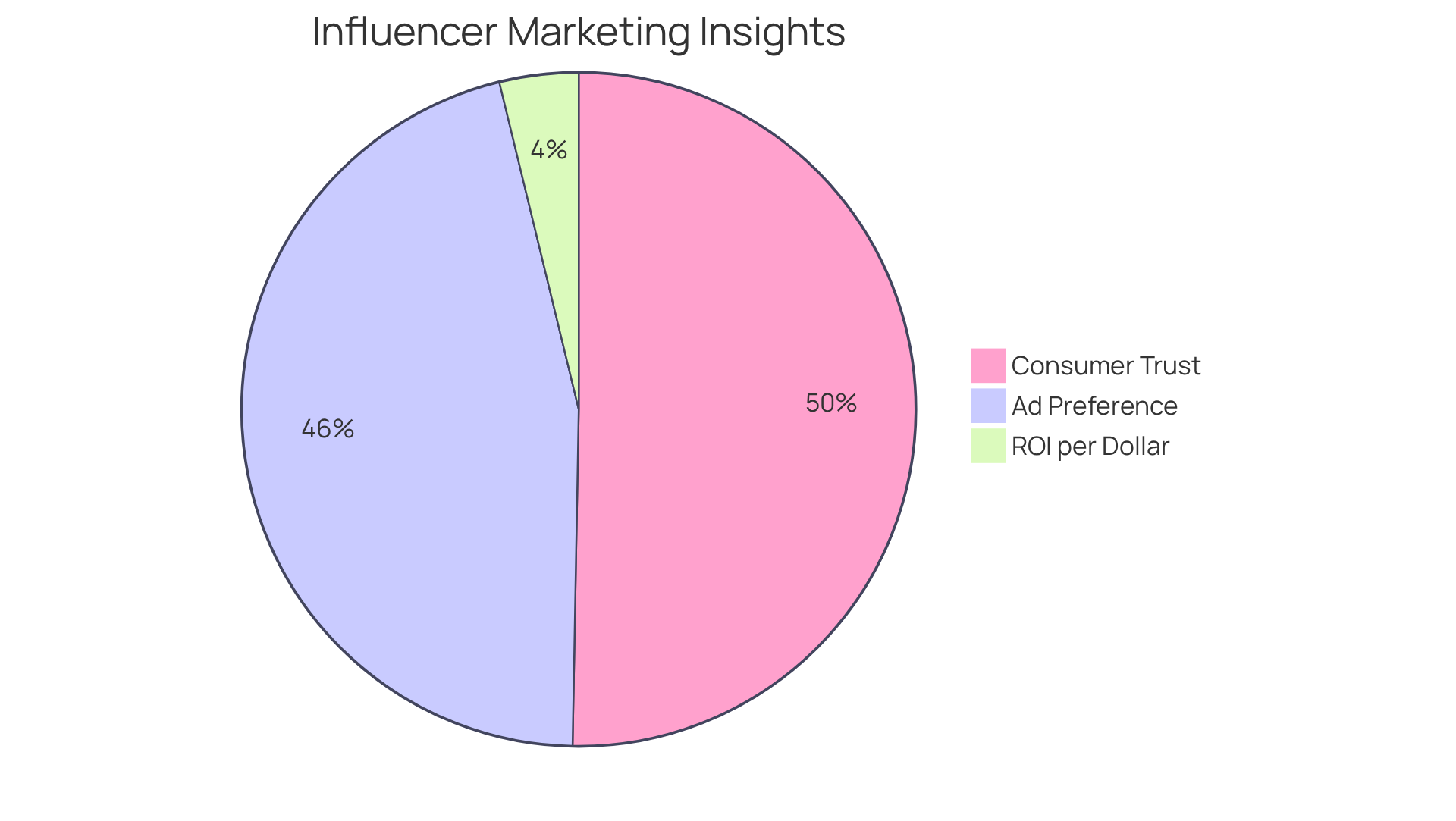
has become a formidable tool for companies aiming to enhance their visibility and engagement in a saturated digital marketplace. By partnering with individuals who have established credibility and a dedicated following, businesses can improve their strategies for to tap into new audiences and foster authentic connections. Did you know that can yield a significantly higher than traditional advertising methods? In fact, firms typically earn $5.20 for every dollar spent on influencer collaborations. Furthermore, companies leveraging marketing through key individuals experience an astonishing 11 times greater ROI compared to conventional digital ads.
This approach not only amplifies but also involves to cultivate deeper customer trust. A striking 69% of consumers turn to social media personalities for product recommendations, while 63% prefer these endorsements over traditional marketing messages. With 80% of expected to follow at least one business account, the platform remains crucial for engagement. As the landscape evolves, understanding the nuances of promotional strategies is essential for companies striving to stay competitive. Advertisers are increasingly allocating budgets toward , especially , due to their authenticity and engagement.
In conclusion, embracing is not just a trend; it's a strategic move that can significantly impact your brand's success. Are you ready to adapt and thrive in this dynamic environment?
Identify the Right Influencers for Your Brand's Values and Audience
To maximize the impact of , companies must strategically select advocates who resonate with their core values and target audience. Start by defining your brand's mission and values clearly, then identify individuals who genuinely embody these principles. Leverage tools like and audience analysis to evaluate potential influencers' engagement rates and follower demographics. Notably, 48% of marketers identify as their greatest challenge, underscoring the necessity of these tools. For example, a cosmetics brand might partner with a , ensuring their messaging remains consistent and credible.
frequently achieve significantly , averaging 3.86% on Instagram and 8.7% on TikTok, compared to just 1.21% for macro-influencers. Furthermore, 44% of , while 26% prefer , reflecting a clear trend towards smaller creators. This alignment not only boosts authenticity but also cultivates stronger connections with audiences, ultimately leading to improved campaign outcomes. Research shows that micro-advocates can deliver triple the compared to larger influencers, highlighting their effectiveness in reaching niche markets.

Establish Effective Collaboration and Communication with Influencers
Establishing a successful hinges on clear communication and mutual understanding. To effectively collaborate with influencers, consider these essential steps:
- : Start by pinpointing specific objectives for the partnership, such as enhancing visibility, , or increasing sales.
- Provide a Comprehensive Brief: Share a detailed brief with key individuals that outlines your expectations, key messages, and creative guidelines.
- : Allow the freedom to showcase their creativity while ensuring consistency with your company's aesthetic.
- : Schedule consistent check-ins to maintain alignment and address any concerns promptly.
For instance, a fashion brand might partner with an influencer to develop a series of posts that highlight their latest collection. Such collaborative efforts not only but also cultivate a partnership that can evolve into a long-term relationship. By leveraging MediaNug's , can earn fair compensation for their work, motivating them to produce authentic content. Brands that prioritize effective communication strategies with influencers are likely to see improved campaign success rates. In fact, statistics indicate that compared to traditional methods. By nurturing authentic relationships and harmonizing objectives, companies can significantly enhance the effectiveness of their promotional initiatives.

Measure and Optimize Influencer Campaign Performance for Continuous Growth
To ensure the success of marketing campaigns that involve influencers, companies must establish robust measurement frameworks centered on (KPIs) like engagement rates, reach, and conversion metrics. Setting these KPIs before launching campaigns is essential for effective tracking. By utilizing , businesses can monitor these metrics in real-time, enabling timely adjustments to their strategies. For example, if an influencer's content garners , it may signal the need to refine the call-to-action or modify the promotional offer to better resonate with the audience.
Post-campaign analyses are equally vital, offering valuable insights into which strategies were effective and identifying areas for improvement. As we look ahead to 2026, companies are increasingly prioritizing , recognizing that a smaller, highly engaged audience often leads to better conversion rates. Statistics reveal that Instagram nano-influencers, those with fewer than 10,000 followers, can achieve engagement rates of 6.23%, significantly surpassing their larger counterparts. Moreover, , underscoring the necessity for a . By adopting such methods and continuously refining their , companies can and ensure their collaborations foster sustainable growth. Additionally, with 71% of brands planning to boost their in 2025, effective measurement strategies will be crucial for navigating this expanding investment.

Conclusion
Embracing influencer marketing is not just a strategy; it’s a game-changer that can significantly boost brand growth and visibility in today’s competitive landscape. By harnessing the credibility and reach of Instagram influencers, brands can create authentic connections with their target audiences, leading to heightened engagement and trust. This approach transcends fleeting trends; it’s a crucial element of modern marketing that promises substantial returns on investment.
The article highlights several key strategies for successfully navigating the influencer marketing terrain:
- Selecting influencers who align with a brand’s values
- Establishing effective communication and collaboration practices
- Continuously measuring campaign performance to optimize results
Grasping the nuances of these elements is essential for brands aiming to maximize their impact and engagement in the digital marketplace.
As the influencer marketing landscape evolves, companies must remain proactive in adapting their strategies. Investing in the right tools and methodologies will not only enhance the effectiveness of influencer partnerships but also drive sustainable growth. By prioritizing authenticity and engagement, brands can cultivate lasting relationships with influencers that resonate with their audiences, ensuring long-term success in an ever-changing environment.
Frequently Asked Questions
What is influencer marketing?
Influencer marketing involves partnering with individuals who have established credibility and a dedicated following on social media platforms, particularly Instagram, to enhance brand visibility and engagement.
How does influencer marketing impact brand growth?
Influencer marketing can significantly improve brand growth by tapping into new audiences, fostering authentic connections, and amplifying product awareness, ultimately leading to increased customer trust.
What is the return on investment (ROI) for influencer marketing compared to traditional advertising?
Companies typically earn $5.20 for every dollar spent on influencer collaborations, and those leveraging marketing through key individuals experience an 11 times greater ROI compared to conventional digital ads.
How do consumers view endorsements from social media influencers?
A striking 69% of consumers turn to social media personalities for product recommendations, and 63% prefer these endorsements over traditional marketing messages.
Why is Instagram important for businesses?
With 80% of Instagram users expected to follow at least one business account, the platform remains crucial for engagement and reaching potential customers.
What types of influencers are businesses focusing on?
Advertisers are increasingly allocating budgets toward finding micro and nano influencers due to their authenticity and higher engagement rates.
Is influencer marketing a passing trend?
No, embracing influencer marketing is considered a strategic move that can significantly impact a brand's success in the evolving digital landscape.
List of Sources
- Understand Influencer Marketing and Its Impact on Brand Growth
- 85 vital influencer marketing statistics for your 2026 (https://iqfluence.io/public/blog/influencer-marketing-statistics)
- FAQ on influencer marketing: Why brands are betting on it in 2026 (https://emarketer.com/content/faq-on-influencer-marketing--what-how-brands-use)
- meltwater.com (https://meltwater.com/en/blog/influencer-marketing-statistics)
- How Influencer Marketing Is Changing in 2026 (https://vogue.com/article/how-influencer-marketing-is-changing-in-2026)
- 50+ Influencer Marketing Statistics USA (2026) | Charle (https://charleagency.com/articles/influencer-marketing-statistics)
- Identify the Right Influencers for Your Brand's Values and Audience
- ampfluence.com (https://ampfluence.com/how-to-identify-the-right-influencers-for-your-brand-in-5-simple-steps)
- The Building Blocks of a Credible Influencer Strategy in 2026 - rbb Communications (https://rbbcommunications.com/blog/the-building-blocks-of-a-credible-influencer-strategy-in-2026)
- archive.com (https://archive.com/blog/micro-influencer-engagement-rate-statistics)
- Influencer marketing trends in 2026 you need to know about — Verde Brand Communications (https://verdepr.com/blog/influencer-marketing-trends)
- meltwater.com (https://meltwater.com/en/blog/influencer-marketing-statistics)
- Establish Effective Collaboration and Communication with Influencers
- piercom.com (https://piercom.com/insight/influencer-marketing-2026)
- How Influencer Marketing Is Changing in 2026 (https://vogue.com/article/how-influencer-marketing-is-changing-in-2026)
- 18 Ways Brand-Creator Partnerships Could Evolve In 2026 (https://forbes.com/councils/forbescommunicationscouncil/2026/01/07/18-ways-brand-creator-partnerships-could-evolve-in-2026)
- Influencer Collaboration Strategies Guide 2026 |... (https://influenceflow.io/resources/influencer-collaboration-strategies-a-complete-2026-guide-for-brands-and-creators)
- localmedia.org (https://localmedia.org/2025/05/what-newsrooms-need-to-know-about-collaborating-with-influencers)
- Measure and Optimize Influencer Campaign Performance for Continuous Growth
- influenceflow.io (https://influenceflow.io/resources/influencer-performance-metrics-the-complete-2026-guide-to-measuring-campaign-success)
- 40+ Influencer Marketing Stats for 2026 Strategy (https://driveresearch.com/market-research-company-blog/influencer-marketing-statistics)
- 26 Fascinating Influencer Marketing Statistics for 2026 (https://backlinko.com/influencer-marketing-stats)
- togetheragency.co.uk (https://togetheragency.co.uk/news/influencer-marketing-trends-for-2026)
- Influencer Marketing Trends 2026: Performance Insights (https://impact.com/influencer/influencer-marketing-trends-performance)