
Introduction
Visual content has emerged as a cornerstone of modern marketing, boasting the potential to boost engagement rates by an astonishing 1200%. For brand managers, mastering the art of video marketing can be the key to distinguishing themselves in a saturated marketplace or fading into obscurity. As the landscape continues to evolve, a pressing question arises: how can brands effectively create and promote video content that not only captivates but also converts? This guide outlines five essential steps to assist brand managers in embarking on their video marketing journey, ensuring they harness this dynamic medium to its fullest potential.
Understand the Importance of Video Marketing
has emerged as a pivotal element in online marketing strategies. Did you know that visual material can ? This significant increase stems from the medium's unique ability to convey information quickly and effectively, enabling consumers to easily understand complex messages. Furthermore, is far more shareable on social media platforms, amplifying brand reach and visibility.
For , grasping the importance of visual promotion means recognizing its vital role in enhancing brand narratives, fostering customer loyalty, and . Brands that harness the power of can anticipate and reduced customer acquisition costs (CPAs). This ultimately leads to sustainable growth and a stronger market presence.
So, how can your brand leverage to its advantage? By integrating compelling visuals into your strategy, you can not only engage your audience but also elevate your brand's story. Don't miss out on the opportunity to transform your marketing approach - consider how can reshape your brand's future.

Define Your Objectives and Target Audience
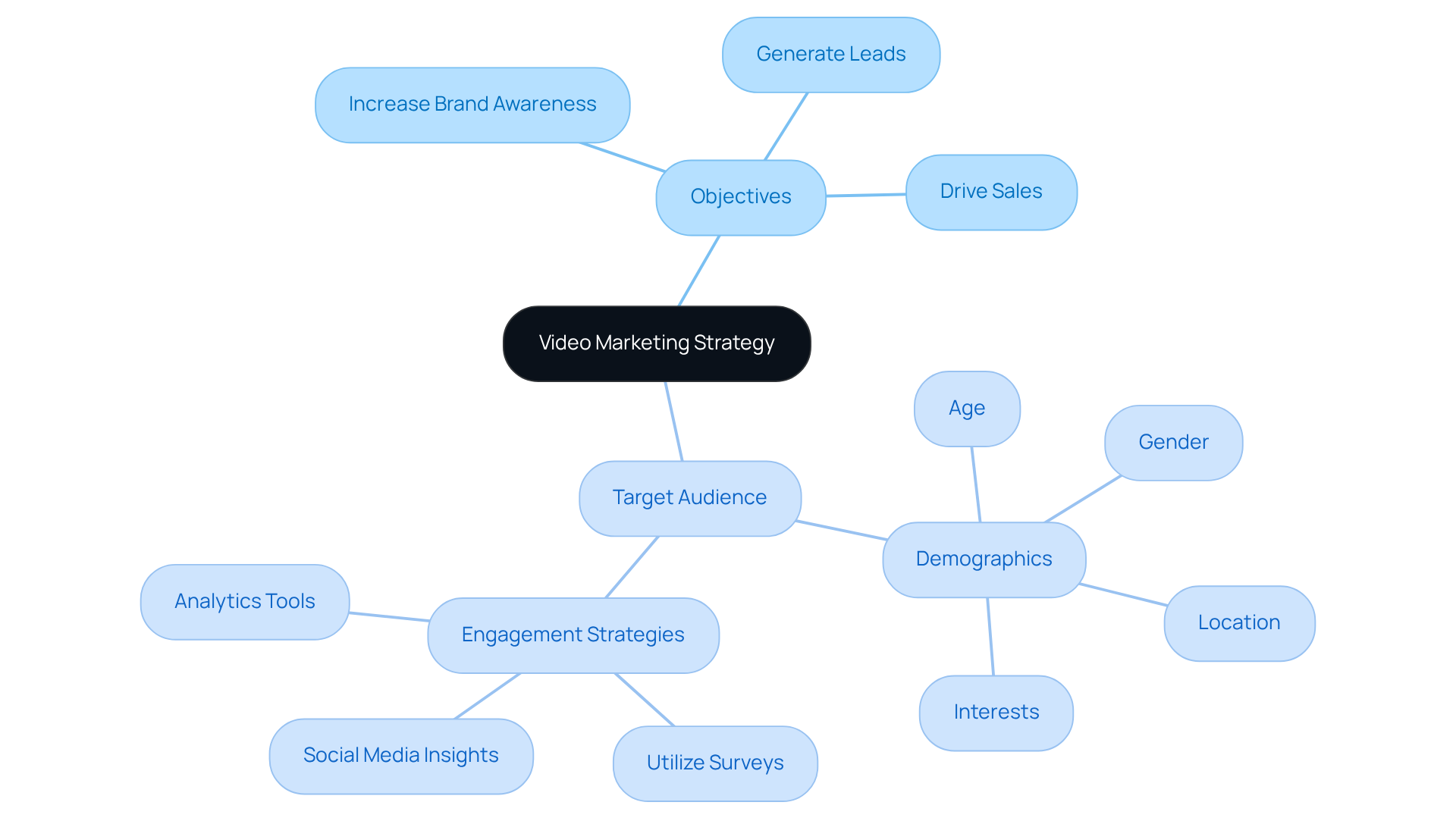
To learn , you must first define your objectives. Are you looking to , generate leads, or ? Once your goals are established, . Consider demographics such as age, gender, location, and interests. Utilize tools like surveys, social media insights, and analytics to . This information will guide your content development process, ensuring that your productions resonate with viewers and foster .
For instance, if your target audience primarily consists of Gen Z, focus on producing brief, captivating clips that align with their viewing preferences on platforms like and Instagram. By tailoring your content to meet the specific needs and interests of your audience, you can discover how to start that and drives meaningful results.
Develop a Comprehensive Video Marketing Strategy
A comprehensive strategy must encompass several :
- : What kinds of recordings should you produce? Consider explainer clips, testimonials, product demonstrations, and brand story films. Each format serves distinct purposes and resonates with different groups, enhancing engagement and driving conversions. For instance, did you know that 91% of buyers watch explanatory clips when contemplating purchases? Meanwhile, product demonstrations significantly influence purchasing choices for nearly 69% of consumers.
- : Where will you share your content? Identify platforms like YouTube, Instagram, TikTok, and your website. Each channel caters to specific audience preferences and content styles. By 2026, leveraging platforms like YouTube-evolving into a unified ecosystem integrating creators and commerce-will be vital for maximizing reach and impact.
- Budgeting: How much should you allocate for production, promotion, and distribution? Your budget should and anticipated ROI. As visual content continues to dominate online traffic, investing in high-quality production and adapting your style to meet rising consumer expectations for storytelling is essential for standing out in a crowded marketplace.
- Timeline: What’s your schedule for and release? Establishing a timeline is crucial for maintaining audience involvement, especially as attention spans diminish and content volume rises. Regularly scheduled material builds anticipation and loyalty among viewers.
- : How will you define success for your visual content initiatives? Common indicators include views, engagement rates, and conversion rates. In 2026, marketers should focus on deeper metrics, such as watch time and brand lift, to assess the true impact of their visual material. By establishing these components, you can create a structured approach that guides your marketing efforts, including how to start , and ensures alignment with your overall promotional goals.

Create and Produce Engaging Video Content
To create , follow these essential steps:
- Storyboarding: Start with . This crucial step allows you to visualize the flow and ensures clarity in your message. A well-structured storyboard not only saves time but also reduces production costs while enhancing the overall quality of the film.
- Scripting: Develop a script that captures viewers' attention within the first eight seconds. Employ a conversational tone and incorporate a to effectively guide viewer behavior.
- : Prioritize , including clear audio, high-resolution visuals, and appropriate lighting. Research shows that poor can significantly detract from viewer engagement, making it vital to invest in these elements. As Brana Webb suggests, embracing authentic, can resonate more with viewers than overly polished promotional films.
- Editing: Edit your footage to maintain a brisk pace and keep viewers engaged. Incorporate visuals, animations, and music to enhance the viewing experience, ensuring that the material resonates with your audience.
- : Before launching, to gather feedback. Use this input to make , refining your content for maximum impact. By focusing on these elements, you can create content that not only engages but also converts viewers into customers. Furthermore, consider the increasing demand for live broadcasts by 2026, as it presents new opportunities for engagement.

Promote and Distribute Your Video Content Strategically
To effectively promote and distribute your video content, consider these powerful strategies:
- Social Media Sharing: Leverage where your target audience is most active. Tailor your messaging for each platform to boost engagement and ensure your content resonates with viewers. Did you know that can significantly enhance visibility and brand awareness?
- : Incorporate clips into your email newsletters to enhance click-through rates. Research shows that , with 84% of customers stating they've been enticed to purchase a product or service after watching a brand's visual. This approach not only captures attention but also fosters a deeper connection with your audience.
- : Enhance your video titles, descriptions, and tags for search engines. Effective optimization draws in organic traffic, facilitating the discovery of your material by potential customers. Interestingly, videos over 90 seconds on platforms like Instagram Reels can outperform shorter clips when they provide clear value. Ensure your content is both informative and engaging.
- : Utilize paid ads on platforms such as Facebook, Instagram, and YouTube to expand your reach. Aim your advertisements according to demographics and interests to engage with the appropriate group. Did you know that interactive shopping clips can enhance conversion rates by as much as 30% compared to conventional recordings? Integrating purchasing options directly into the viewing experience can make a significant difference.
- Engagement Tracking: Regularly monitor engagement metrics such as views, shares, and comments. Examining this information enables you to enhance your upcoming promotional strategies, ensuring your material remains appealing to your viewers. Consistency in posting and adapting to viewer preferences is key to maintaining engagement over time.
As Rebecca Clayton aptly states, "Video isn’t going anywhere. Jump in to compete by getting started today." By applying these promotional strategies, you can discover to ensure that your visual content reaches its intended audience and effectively accomplishes your business goals. Additionally, remember that understanding plays a crucial psychological role in reducing customer uncertainty, making it an essential tool for building trust and engagement.

Conclusion
The journey into video marketing for brand managers transcends mere trend adoption; it’s about harnessing a formidable tool that can redefine brand narratives and drive substantial engagement. By grasping the immense potential of video content, brands can elevate their visibility, cultivate customer loyalty, and ultimately secure sustainable growth.
This guide outlines essential steps for crafting a successful video marketing strategy. Recognizing the significance of visual content, defining clear objectives, developing a comprehensive strategy, and producing captivating videos are all critical components that ensure marketing efforts resonate with the target audience. Furthermore, the promotion and strategic distribution of video content are crucial for maximizing reach and impact.
As the digital marketing landscape evolves, the importance of video cannot be overstated. It acts as a vital link between brands and consumers, fostering trust and engagement in an increasingly competitive marketplace. Brand managers must take action now - integrate video into their marketing strategies, leverage its unique advantages, and connect with audiences in meaningful ways. Embrace the power of video marketing and witness your brand thrive.
Frequently Asked Questions
Why is video marketing important?
Video marketing is crucial because it significantly boosts engagement rates, with visual material increasing engagement by 1200%. It effectively conveys information quickly, making complex messages easier for consumers to understand, and is more shareable on social media, enhancing brand reach and visibility.
How does visual marketing impact brand management?
Visual marketing enhances brand narratives, fosters customer loyalty, and drives conversions. Brands that utilize visual content can expect improved return on ad spend (ROAS) and reduced customer acquisition costs (CPAs), leading to sustainable growth and a stronger market presence.
What should brands consider when leveraging visual marketing?
Brands should integrate compelling visuals into their marketing strategies to engage their audience and elevate their brand's story, transforming their marketing approach and reshaping their brand's future.
What are the first steps to start video marketing effectively?
The first steps include defining your objectives, such as increasing brand awareness, generating leads, or driving sales, and identifying your target audience based on demographics like age, gender, location, and interests.
How can brands gather information about their target audience?
Brands can gather data about their target audience through tools like surveys, social media insights, and analytics to understand audience preferences and behaviors, which will guide content development.
What type of content should brands create for specific audiences, such as Gen Z?
For Gen Z, brands should focus on producing brief, captivating clips that align with their viewing preferences on platforms like TikTok and Instagram, tailoring content to meet the specific needs and interests of the audience.
List of Sources
- Understand the Importance of Video Marketing
- financial-marketer.com (https://financial-marketer.com/why-2026-is-the-year-video-becomes-indispensable)
- navigatevideo.com (https://navigatevideo.com/news/video-marketing-for-brands)
- How Businesses Should Rethink Video Strategy for 2026 (https://entrepreneur.com/growing-a-business/how-businesses-should-rethink-video-strategy-for-2026/500810)
- Video Marketing Strategy for Brands in 2026 | Fierce Creative (https://fiercecreative.agency/blog/importance-of-video-marketing-strategy)
- vidico.com (https://vidico.com/news/why-is-video-marketing-so-effective)
- Define Your Objectives and Target Audience
- krausgroupmarketing.com (https://krausgroupmarketing.com/marketing-strategy/setting-goals-for-video-marketing-2026)
- marketingdive.com (https://marketingdive.com/news/marketing-predictions-for-2026/809124)
- How Businesses Should Rethink Video Strategy for 2026 (https://entrepreneur.com/growing-a-business/how-businesses-should-rethink-video-strategy-for-2026/500810)
- YouTube CEO Reveals Your Video Marketing Strategy For 2026 (https://searchenginejournal.com/youtube-ceo-reveals-your-video-marketing-strategy-for-2026/565783)
- Video Marketing Strategy for Brands in 2026 | Fierce Creative (https://fiercecreative.agency/blog/importance-of-video-marketing-strategy)
- Develop a Comprehensive Video Marketing Strategy
- YouTube CEO Reveals Your Video Marketing Strategy For 2026 (https://searchenginejournal.com/youtube-ceo-reveals-your-video-marketing-strategy-for-2026/565783)
- Video Marketing Strategy for Brands in 2026 | Fierce Creative (https://fiercecreative.agency/blog/importance-of-video-marketing-strategy)
- How Businesses Should Rethink Video Strategy for 2026 (https://entrepreneur.com/growing-a-business/how-businesses-should-rethink-video-strategy-for-2026/500810)
- Video Marketing Trends for 2026: New Tech + Real Results (https://awakenedfilms.com/video-marketing-trends-for-2026)
- motiontheagency.com (https://motiontheagency.com/blog/essential-types-of-marketing-videos-that-drive-result)
- Create and Produce Engaging Video Content
- forbes.com (https://forbes.com/councils/forbescommunicationscouncil/2026/01/13/14-ways-companies-can-produce-high-quality-video-content-at-scale)
- thriveagency.com (https://thriveagency.com/news/creating-engaging-video-content-for-social-media)
- Top 2026 Video Marketing Trends You Can't Skip | WordStream (https://wordstream.com/blog/2026-video-marketing-trends)
- filmbaker.com (https://filmbaker.com/blog/the-importance-of-storyboarding)
- socialbook.io (https://socialbook.io/blog/how-to-create-high-impact-video-content-in-2026)
- Promote and Distribute Your Video Content Strategically
- How Businesses Should Rethink Video Strategy for 2026 (https://entrepreneur.com/growing-a-business/how-businesses-should-rethink-video-strategy-for-2026/500810)
- Top 2026 Video Marketing Trends You Can't Skip | WordStream (https://wordstream.com/blog/2026-video-marketing-trends)
- Video Marketing Strategy for Brands in 2026 | Fierce Creative (https://fiercecreative.agency/blog/importance-of-video-marketing-strategy)
- ocnjdaily.com (https://ocnjdaily.com/news/2026/feb/11/the-growing-role-of-video-content-in-local-business-marketing)
- Best Practices for Video Marketing Success in 2026 | Emplifi (https://emplifi.io/resources/blog/video-marketing-success)