
Introduction
User-generated content (UGC) has revolutionized advertising, becoming an essential asset for brands aiming to cultivate trust and authenticity in their marketing strategies. As consumers increasingly seek genuine interactions, UGC-style ads present a remarkable opportunity to leverage the creativity and voices of real customers, resulting in elevated engagement and conversion rates.
However, with growing skepticism towards traditional advertising, brands must ask: how can they effectively strike the delicate balance between authenticity and quality in their UGC campaigns? This question is pivotal as we explore the evolving landscape of marketing.
Understand the Value of User-Generated Content (UGC)
have emerged as a , leveraging the creativity and . This content manifests in various forms - images, videos, reviews, and testimonials - all of which are essential for establishing trust and credibility with potential customers. Research shows that than those relying solely on traditional advertising methods. This increased trust translates into significantly higher engagement rates, with UGC posts achieving a remarkable 28% boost in engagement compared to branded content. Furthermore, companies that effectively integrate UGC into their marketing strategies can experience an impressive , underscoring its vital role in .
As Dolly Kate Ching, a Demand Generation Content Writer, notes, ", showcasing real individuals using and appreciating a company's offerings." However, companies must exercise caution; is crucial to avoid potential negative impacts on their image. As skepticism towards polished marketing grows, stand out as an striving to connect authentically with their audiences in 2026.

Explore Different Types of UGC for Advertising
Brands can harness various types of to enhance their advertising efforts, each offering unique advantages. Did you know that just 10 customer reviews can lead to a 53% uplift in conversion rates? , significantly influencing purchasing decisions. Encouraging satisfied customers to share their experiences builds trust and credibility, making it a vital strategy for brands.
Furthermore, social media posts on platforms like Instagram, TikTok, and Facebook can be repurposed for ads. This showcases and fosters relatability. Brands that effectively utilize UGC create spaces for it and nurture ongoing conversations beyond campaign periods, ensuring a continuous connection with their audience.
In addition, , capture attention rapidly. They convey authentic narratives, making them highly effective in . Authentic UGC videos often outperform traditional studio ads, particularly in formats like TikTok Spark Ads, demonstrating the power of .
Conversely, competitions and trials can actively involve the community while generating abundant material. By encouraging users to participate in competitions, companies can motivate them to share their experiences creatively. A hashtag challenge, for instance, taps into existing emotional connections and community sentiments, driving engagement.
Finally, . Choosing influencers whose values align with the organization ensures that the material resonates with the intended audience. Micro and nano-creators frequently surpass larger influencers in UGC initiatives due to greater audience trust and authentic content.
By strategically leveraging , companies can create more relatable and engaging advertising campaigns that truly resonate with consumers. Are you ready to elevate your brand's advertising strategy with UGC?

Implement Best Practices for Effective UGC Ads
To create , brands must adhere to several :
- Set Clear Guidelines: Establish explicit expectations for material creation, including messaging, tone, and visual style. This alignment ensures that .
- Encourage Authenticity: Genuine material resonates deeply with audiences. Encourage users to share their real experiences without overly scripted instructions, fostering a relatable connection. As Marisa Jones notes, ", making it more authentic and relatable than traditional advertising."
- Utilize : While , the visuals in UGC ads should maintain . Basic editing can enhance clarity and appeal, ensuring the content is visually engaging.
- Incorporate : Clear calls-to-action are essential in UGC ads, guiding viewers on the next steps, whether it’s visiting a website or making a purchase. Research shows that 78% of marketers worldwide state that UGC is important to social media strategies, emphasizing the need for .
- Test and Iterate: Continuously experiment with different UGC formats and messages to identify what resonates best with your audience. Employ A/B testing to refine your strategy based on performance data.
- Leverage Hashtags: Create branded hashtags to encourage user participation and simplify tracking of UGC submissions. This strategy can also help foster a community around the product.
By implementing these , companies can significantly enhance the effectiveness of their UGC style ads, which leads to increased engagement and higher conversion rates. Notably, , highlighting the critical role of authenticity in advertising.

Measure and Optimize UGC Campaign Performance
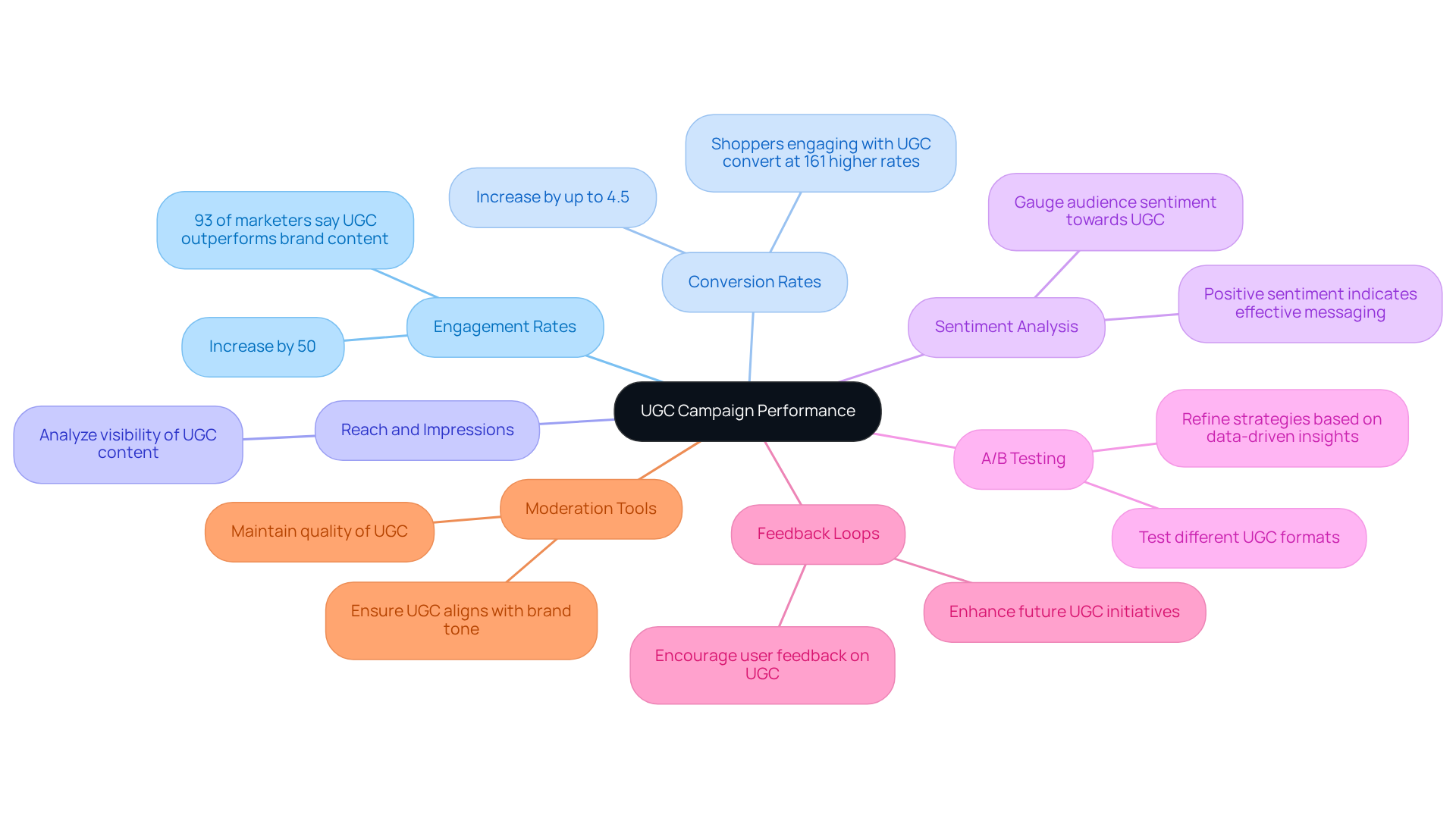
To effectively measure and optimize , brands must focus on several key metrics:
- Engagement Rates: Track likes, shares, comments, and overall engagement to assess how well the . . Moreover, 93% of marketers indicate that UGC outperforms brand material, suggesting a strong connection with consumers and fostering brand loyalty.
- Conversion Rates: Monitor how many users take action after interacting with UGC, such as making a purchase or signing up for a newsletter. Studies show that when consumers observe actual customers using products. This metric is essential for understanding the .
- Reach and Impressions: . This analysis helps comprehend the overall visibility of the initiative and its potential impact on brand awareness.
- Sentiment Analysis: Utilize tools to . Positive sentiment indicates effective messaging, while negative feedback highlights areas for improvement, ensuring companies remain responsive to consumer perceptions.
- : Regularly test different UGC formats, messaging, and visuals to identify what works best. Brands that implement can refine their strategies based on data-driven insights, enhancing future campaign effectiveness.
- : Encourage regarding the UGC they create. This feedback can provide valuable insights into how to enhance future UGC initiatives, fostering a community-driven approach that boosts authenticity.
- : Implement or AI-based filters to ensure that UGC aligns with the company's tone and maintains quality. This step is crucial to avoid potential pitfalls associated with UGC initiatives.
By focusing on these metrics and continuously optimizing campaigns, brands can ensure their UGC style ads are effective and aligned with marketing goals, ultimately driving measurable growth.
Conclusion
User-generated content (UGC) has emerged as a crucial asset for brands looking to elevate their marketing strategies. By harnessing the creativity and authenticity of consumers, UGC not only fosters trust but also significantly enhances engagement and conversion rates. As brands navigate the complexities of modern advertising, effectively leveraging UGC can set them apart in a crowded marketplace, creating deeper connections with their audiences.
This article has explored the various forms and benefits of UGC, underscoring its profound impact on brand success. From customer reviews to social media posts and influencer collaborations, each type of UGC presents unique advantages that can boost relatability and engagement. Implementing best practices - such as establishing clear guidelines, promoting authenticity, and utilizing high-quality visuals - is essential for maximizing the effectiveness of UGC ads. Furthermore, measuring campaign performance through engagement rates, conversion metrics, and sentiment analysis allows brands to continuously refine their strategies for optimal results.
The importance of UGC in advertising cannot be overstated. As consumer preferences increasingly lean towards authenticity and relatability, brands that embrace UGC will not only drive sales but also cultivate enduring loyalty. It is time for companies to harness the power of user-generated content, transforming their advertising efforts into genuine narratives that resonate with their target audiences and foster a vibrant community around their brand.
Frequently Asked Questions
What is user-generated content (UGC) in marketing?
User-generated content (UGC) refers to content created by consumers, such as images, videos, reviews, and testimonials, that can be used in marketing to establish trust and credibility with potential customers.
How does UGC impact consumer trust?
Research indicates that 79% of consumers find companies that feature UGC to be more trustworthy than those that rely solely on traditional advertising methods.
What are the engagement benefits of using UGC in marketing?
UGC posts achieve a 28% boost in engagement compared to branded content, making them a powerful tool for increasing interaction with audiences.
How does UGC influence web conversions?
Companies that effectively integrate UGC into their marketing strategies can see a 29% rise in web conversions, highlighting its importance in driving sales and fostering customer loyalty.
Why is careful curation of UGC important for companies?
Careful curation of UGC is crucial to avoid potential negative impacts on a company's image, especially as skepticism towards polished marketing increases.
What role does UGC play in connecting brands with their audiences?
UGC serves as social proof, showcasing real individuals using and appreciating a company's offerings, which helps brands connect authentically with their audiences.
List of Sources
- Understand the Value of User-Generated Content (UGC)
- The Impact of User-Generated Content on Customer-Centric Digital Marketing (https://thriveagency.com/news/the-impact-of-user-generated-content-on-customer-centric-digital-marketing)
- User-Generated Content 2026: 9 Tips To Master Strategy (https://yotpo.com/blog/user-generated-content-strategy)
- Audiences overwhelmingly prefer user-generated content over standard ads, AI (https://emarketer.com/content/audiences-overwhelmingly-prefer-user-generated-content-over-standard-ads--ai)
- User-Generated Content (UGC) Marketing Guide 2026 (https://spintadigital.com/blog/user-generated-content-ugc-marketing-guide-2026)
- 41 User-Generated Content Statistics For Better UGC Marketing in 2026 (https://embedsocial.com/blog/ugc-statistics)
- Explore Different Types of UGC for Advertising
- User-Generated Content 2026: 9 Tips To Master Strategy (https://yotpo.com/blog/user-generated-content-strategy)
- UGC Marketing: Your Ultimate Guide for 2026 (https://socalnewsgroup.com/2025/12/05/user-generated-content-guide)
- forbes.com (https://forbes.com/sites/cmo/2026/01/14/how-cmos-can-leverage-consumer-reviews-to-build-trust)
- youngurbanproject.com (https://youngurbanproject.com/user-generated-content-campaigns)
- Implement Best Practices for Effective UGC Ads
- 36 User-Generated Content Statistics That You Can’t Ignore | EveryoneSocial (https://everyonesocial.com/blog/user-generated-content-statistics)
- User-Generated Content 2026: 9 Tips To Master Strategy (https://yotpo.com/blog/user-generated-content-strategy)
- warc.com (https://warc.com/content/feed/news-faces-a-ugc-tipping-point-as-advertisers-look-elsewhere/en-GB/10494)
- Audiences overwhelmingly prefer user-generated content over standard ads, AI (https://emarketer.com/content/audiences-overwhelmingly-prefer-user-generated-content-over-standard-ads--ai)
- UGC Best Practices, Expert Tips & Trends to Grow in 2026 (https://embedsocial.com/blog/ugc-best-practices-and-future-trends)
- Measure and Optimize UGC Campaign Performance
- warc.com (https://warc.com/content/feed/news-faces-a-ugc-tipping-point-as-advertisers-look-elsewhere/en-GB/10494)
- User-Generated Content 2026: 9 Tips To Master Strategy (https://yotpo.com/blog/user-generated-content-strategy)
- UGC Marketing: Your Ultimate Guide for 2026 (https://socalnewsgroup.com/2025/12/05/user-generated-content-guide)
- kristian-larsen.com (https://kristian-larsen.com/info/ugc-statistics)
- User-Generated Content (UGC) Marketing Guide 2026 (https://spintadigital.com/blog/user-generated-content-ugc-marketing-guide-2026)