
Introduction
Starting an online marketing business can be an exhilarating yet daunting journey. Did you know that approximately 80% of online startups fail within the first few months? This staggering statistic highlights the critical factors entrepreneurs must consider to ensure their success. This guide offers a structured approach to transforming a passion into a profitable venture, covering essential steps from defining a niche to implementing effective marketing strategies. By understanding these elements, you can navigate the rapid evolution of digital landscapes and increase your chances of thriving in this competitive arena.
Define Your Business Model and Niche
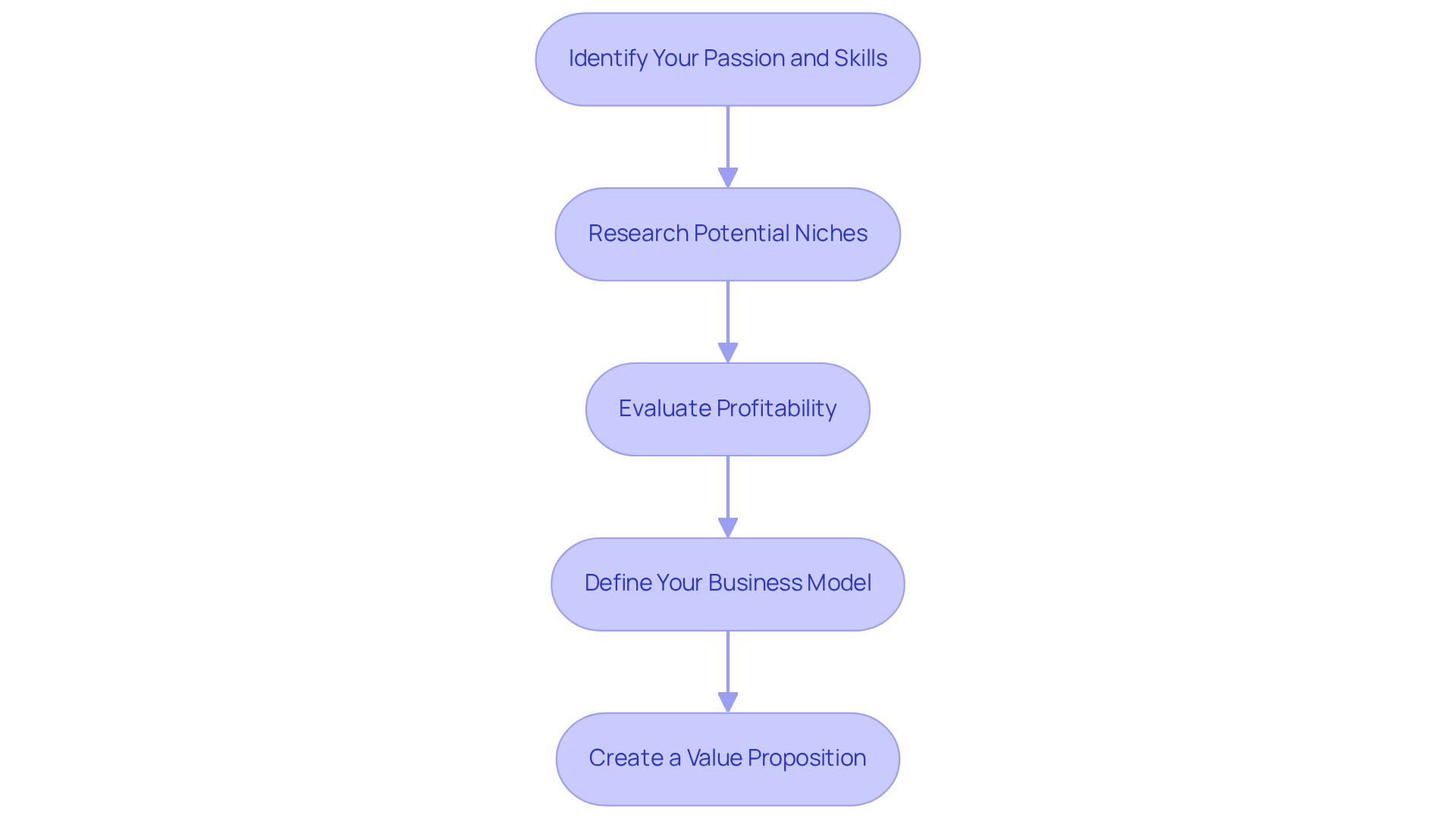
- Identify Your Passion and Skills: Begin by evaluating your passions and skills. This foundational step is crucial; it ensures you choose a niche that not only excites you but is also sustainable over time, which is important when learning .
- Research Potential Niches: Leverage resources like Google Trends, social media platforms, and industry reports to pinpoint . Focus on where your can deliver significant value, particularly in sectors projected for growth, such as health and wellness, , and . The digital product market, in particular, is thriving, recognized as one of the most lucrative eCommerce niches due to its online nature and absence of shipping requirements.
- Evaluate Profitability: Analyze the of your selected niche by examining competition, demand, and pricing strategies. Tools like SEMrush and Ahrefs can provide insights into , which is vital for assessing market potential. Remember, approximately 80% of online ventures fail within the first four months, emphasizing how to start online marketing business with thorough market research and competitive strategies.
- Define Your : Clarify how you will generate revenue. Common models include service-based (consulting or agency work), product-based (selling digital goods), or a hybrid approach. Ensure that your chosen model aligns with your niche and meets market demands.
- Create a : Clearly articulate what sets your business apart. This could involve your unique approach, competitive pricing, or the specific challenges you solve for your clients. A compelling is essential for guiding your marketing strategies and attracting customers. As industry experts highlight, personalization is a key factor for business success, making it vital to tailor your to meet customer expectations.
Conduct Market Research and Analyze Competitors
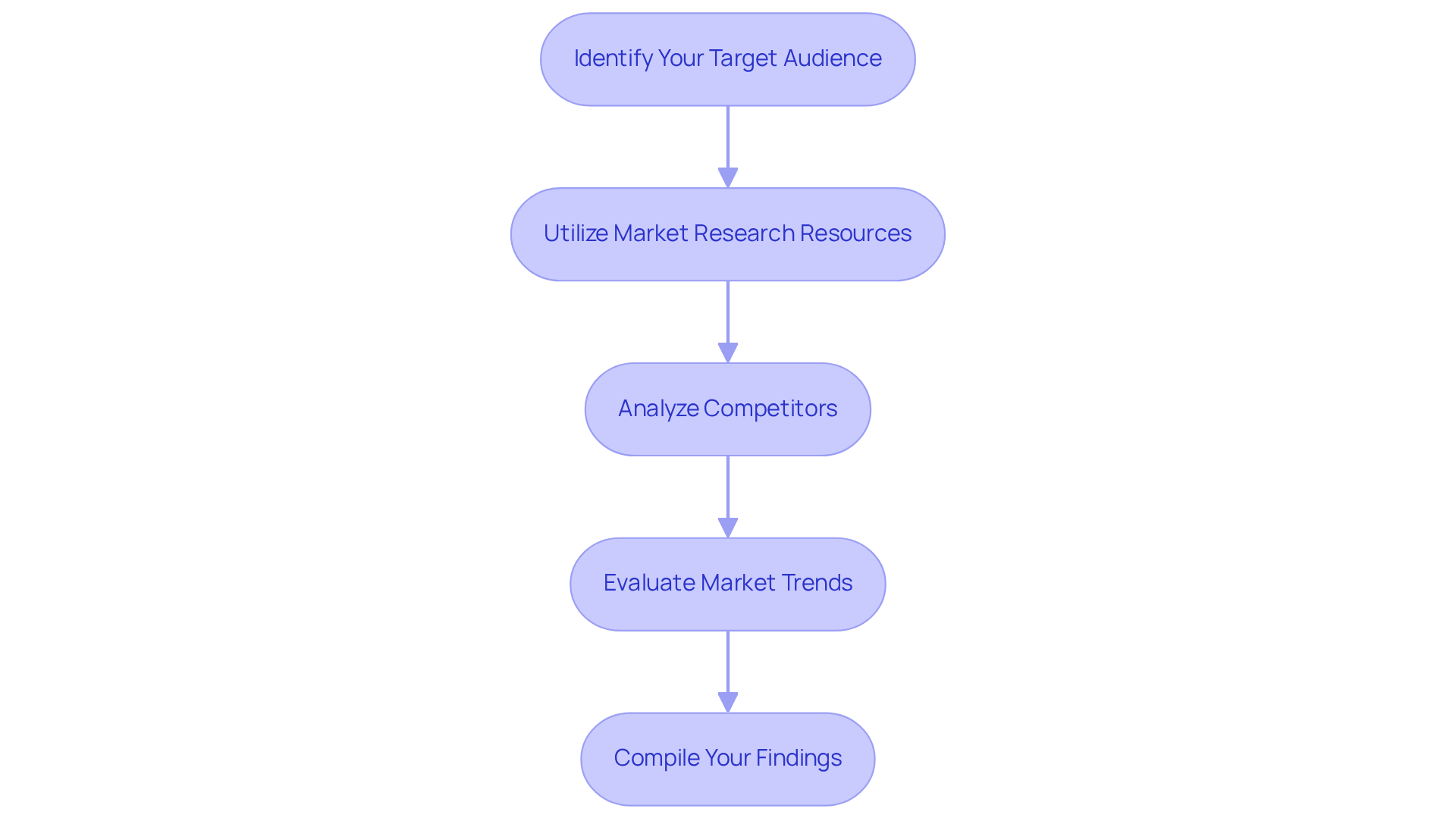
- : Who are your ideal customers? Defining this is crucial. Create detailed that encompass demographics, interests, and pain points. This clarity will direct your effectively.
- : Leverage platforms like SurveyMonkey, Google Surveys, or social media polls to gather valuable data on and behaviors. Analyzing this data will help you identify that can shape your approach.
- : Understanding your competition is vital. Identify your main competitors and assess their strengths and weaknesses. Tools such as SimilarWeb or BuzzSumo can provide insights into their online presence, content strategies, and customer engagement levels.
- : Staying informed about industry trends is essential. Follow relevant blogs, podcasts, and reports to grasp market dynamics. This knowledge will enable you to adjust your strategies proactively.
- : Summarize your research in a comprehensive report. Highlight key insights that will inform your corporate strategy and marketing efforts. This document will serve as a roadmap for your future initiatives.
Establish Legal Structure and Operational Framework
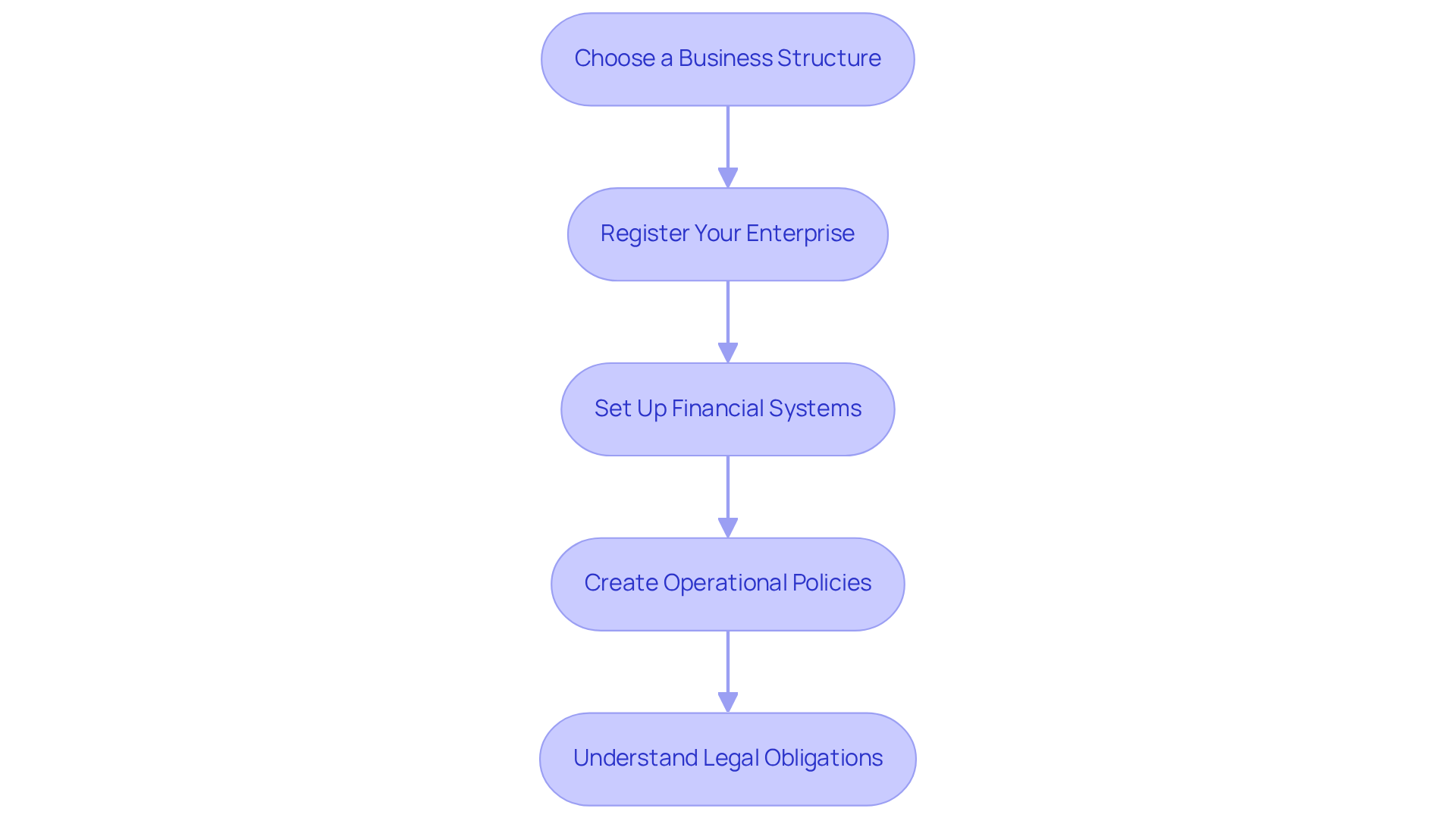
- Choose a Business Structure: Selecting the right - whether it’s an LLC, sole proprietorship, or corporation - is crucial. Each option carries distinct implications for liability and taxation. Legal experts stress the importance of to navigate these choices effectively, especially with evolving regulations on the horizon for 2025. As Deryck Jordan, Managing Attorney at Jordan Counsel, points out, "Corporations, particularly C corporations, are especially suitable for new enterprises that plan to ‘go public’ or seek funding from venture capitalists soon."
- : Once you’ve determined your organizational structure, it’s time to . This process typically involves obtaining a trade license and an , both essential for legal compliance and operational validity. Most businesses require an EIN from the IRS, marking a critical step in establishing your enterprise.
- : Establish a dedicated company bank account and implement accounting software like QuickBooks or FreshBooks. These tools are vital for , ensuring financial clarity and compliance.
- : Develop comprehensive policies that govern your organization’s operations, including client onboarding, project management, and communication protocols. These policies not only ensure consistency and professionalism but also enhance client trust and satisfaction.
- Understand : Familiarize yourself with the legal framework governing online enterprises, including and advertising standards. Staying compliant with these laws is essential for protecting your organization’s reputation and avoiding potential legal pitfalls. As highlighted in the case study "The Risks of Not Establishing a Legal Entity," neglecting to create a legal structure can expose personal assets to business liabilities, underscoring the importance of this step.
Build Your Online Presence and Brand Identity
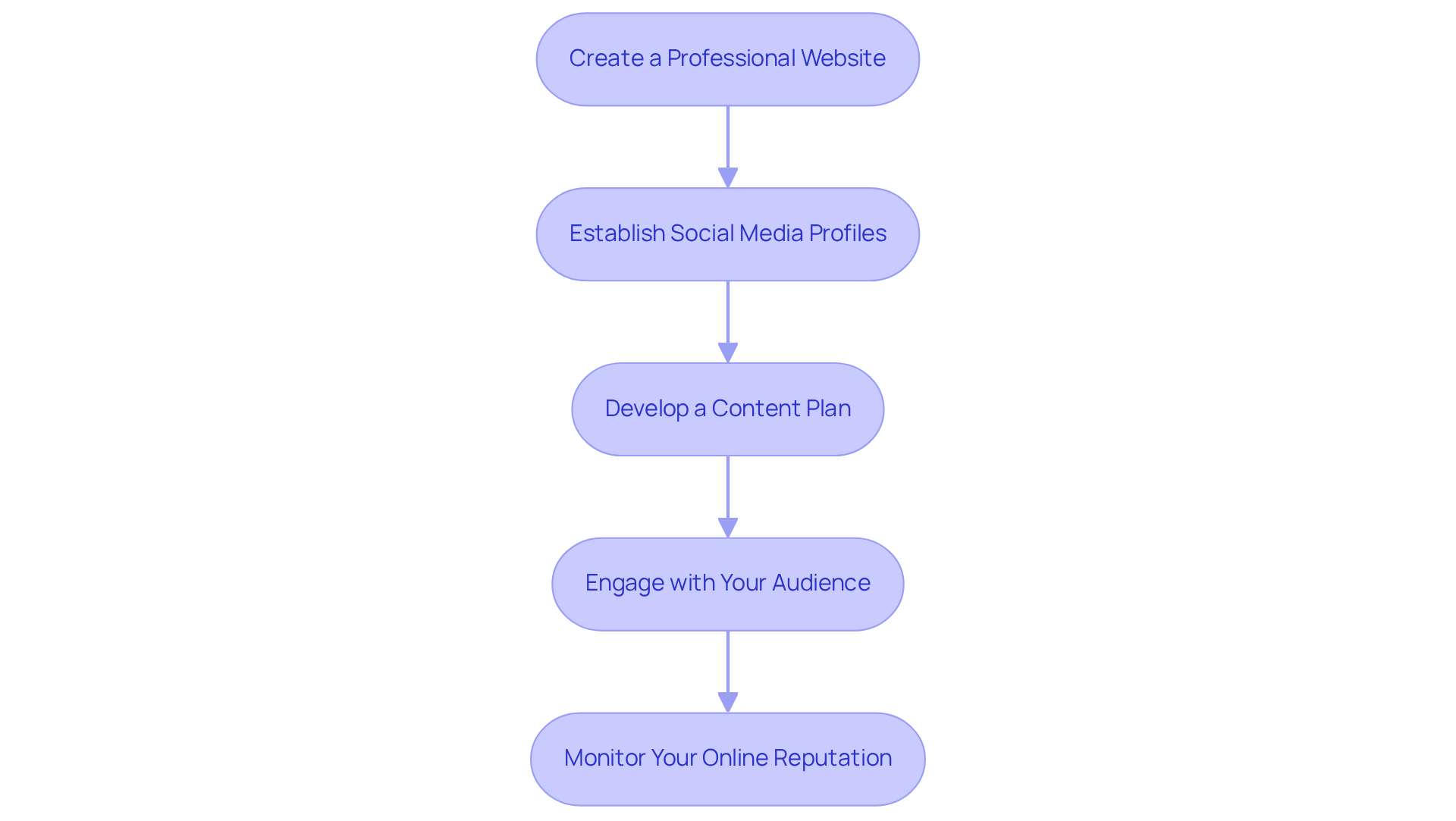
- Create a professional website: Your website is essential in demonstrating , serving as your digital storefront and proof of your legitimacy in the online space. It’s essential that it’s user-friendly, mobile-responsive, and optimized for SEO. Include vital information about your services, , and a blog to enhance your . but also provides 24/7 accessibility for potential customers, allowing them to explore your offerings at their convenience. Did you know that 94% of first impressions are related to your website's design? This statistic underscores the importance of knowing to establish a strong online presence.
- Establish Profiles: - Instagram, LinkedIn, or Facebook. Create profiles that authentically reflect your brand identity, ensuring consistency in visuals and messaging. Regular engagement through posts and interactions is crucial for understanding and building a loyal community around your brand. With over 60% of content focused on entertaining, educating, or informing, your approach should align with these objectives to .
- Develop a Content Plan: Craft a comprehensive content plan that resonates with your audience's interests and needs. This can include a mix of blog posts, . Aim for content that entertains, educates, or informs; this strategy is crucial for understanding how to start online marketing business and enhances your brand's visibility and engagement.
- Engage with Your Audience: is vital. Actively respond to comments, participate in discussions, and share to foster a sense of community. Engagement not only builds trust but also encourages loyalty, which is essential for understanding by making your audience feel valued and connected to your brand. Have you considered employing social listening resources? About 62% of social marketers prioritize these tools to comprehend audience sentiment and improve interactions.
- Monitor Your Online Reputation: Utilize tools like Google Alerts or monitoring software to stay informed about your brand's online presence. Keeping track of mentions and feedback allows you to address any negative comments swiftly, maintaining a positive image. Proactive reputation management is essential in today’s digital landscape, particularly for those learning how to start online marketing business, as customer perceptions can significantly impact your brand's success.
Develop and Implement Marketing Strategies
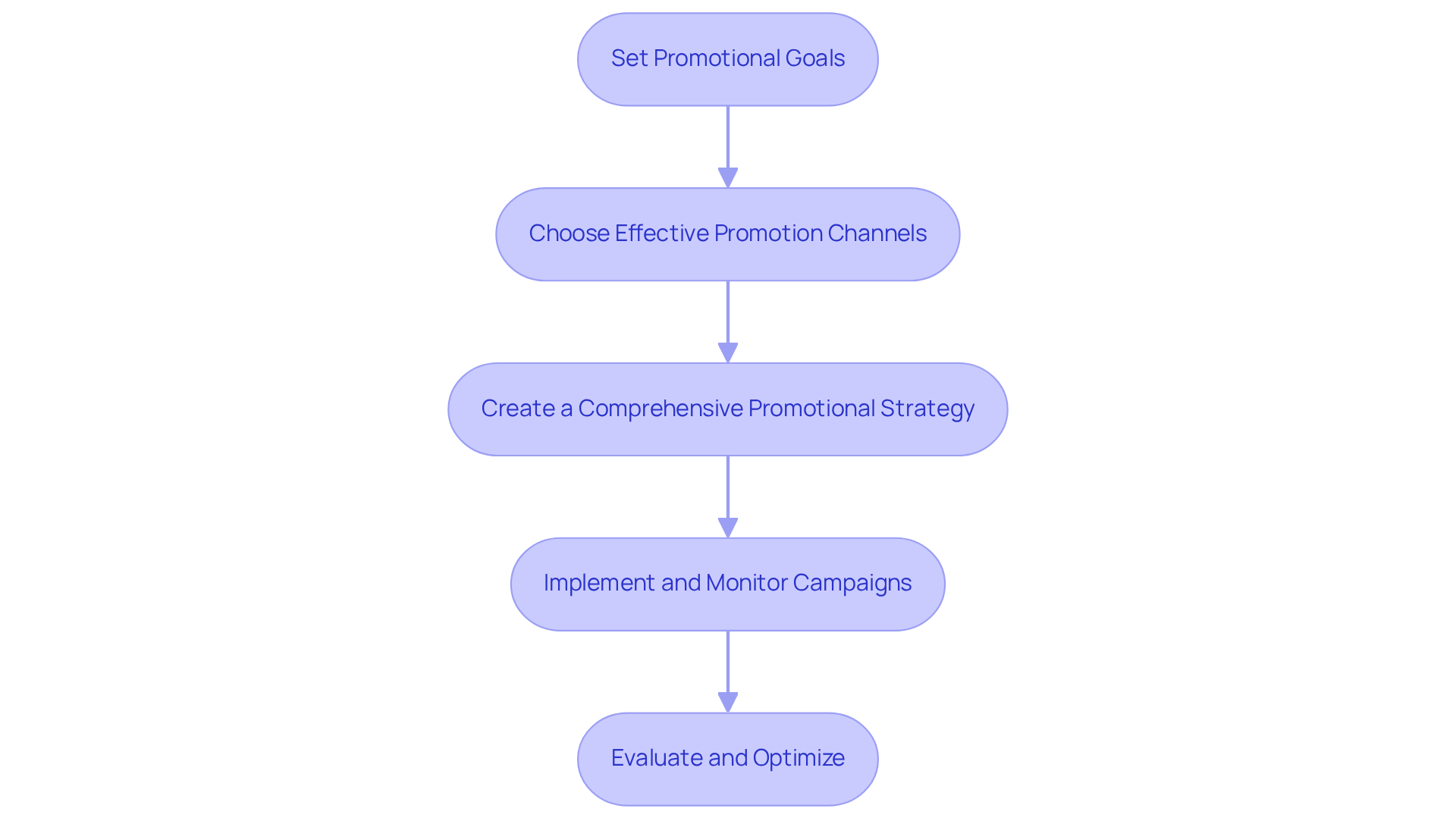
- Set clear by establishing specific objectives for your initiatives, including , increasing website traffic, generating leads, or . By employing the SMART criteria - Specific, Measurable, Achievable, Relevant, and Time-bound - you ensure your goals are not just lofty ideals but actionable and trackable targets.
- Choose : Identify the most impactful promotion channels tailored to your target audience. In 2025, social media, email promotion, content creation, and paid advertising are pivotal. For instance, leveraging social media can lead to a remarkable , significantly enhancing brand reach and credibility, as supported by recent statistics.
- To understand , create a that formulates a detailed plan outlining your strategies, tactics, budget, and timeline. This plan serves as your roadmap, directing your promotional efforts and ensuring alignment with your business objectives. Furthermore, incorporating cross-channel measurement resources can .
- Implement and Monitor Campaigns: Launch your promotional campaigns and utilize analytics tools, such as Google Analytics and social media insights, to monitor performance. Regularly assess metrics like click-through rates and engagement levels to gauge effectiveness. Modify your approaches based on real-time information to enhance results.
- Evaluate and Optimize: Conduct regular reviews of your marketing efforts to identify successful tactics and areas needing improvement. Implement , allowing for data-driven optimizations that enhance campaign performance. Refreshing creative content every two to four weeks can also prevent audience fatigue and maintain engagement - a strategy supported by industry best practices.
Conclusion
Starting an online marketing business demands a strategic approach that includes:
- Defining your niche
- Conducting thorough market research
- Establishing a solid legal framework
- Building a robust online presence
- Implementing effective marketing strategies
Each of these steps is essential for laying the groundwork for a successful venture in the digital landscape, ensuring that entrepreneurs not only attract but also retain their target audience.
Key insights emphasize the importance of:
- Aligning personal passions with market demands
- Conducting competitive analysis
- Creating a compelling value proposition
Furthermore, establishing a professional online presence and adopting a proactive approach to marketing can significantly enhance visibility and engagement. By leveraging available tools and resources for market research and promotion, aspiring business owners can navigate the complexities of the online marketplace with greater confidence.
Ultimately, starting an online marketing business is not merely about following a checklist; it’s about fostering a mindset of continuous learning and adaptation. Embracing the latest trends and being responsive to market dynamics will empower entrepreneurs to thrive in a competitive environment. Taking these steps seriously can lead to a sustainable and successful business that resonates with customers and stands the test of time.
Frequently Asked Questions
What is the first step in defining a business model and niche?
The first step is to identify your passions and skills, ensuring you choose a niche that excites you and is sustainable over time.
How can I research potential niches for my online marketing business?
You can research potential niches by using resources like Google Trends, social media platforms, and industry reports to find trending niches and market gaps where you can offer unique value.
What factors should I consider when evaluating the profitability of a niche?
When evaluating profitability, consider competition, demand, and pricing strategies. Tools like SEMrush and Ahrefs can help analyze keyword competitiveness to assess market potential.
What are common business models for online marketing?
Common business models include service-based (consulting or agency work), product-based (selling digital goods), or a hybrid approach that combines both.
What is a value proposition, and why is it important?
A value proposition articulates what sets your business apart, such as your unique approach or competitive pricing. It is essential for guiding marketing strategies and attracting customers.
How can I identify my target audience?
You can identify your target audience by creating detailed buyer personas that include demographics, interests, and pain points, which will help direct your marketing strategies effectively.
What resources can I use for market research?
Resources for market research include platforms like SurveyMonkey, Google Surveys, and social media polls to gather data on customer preferences and behaviors.
Why is analyzing competitors important?
Analyzing competitors helps you understand their strengths and weaknesses, which is vital for positioning your business effectively in the market.
How can I stay informed about market trends?
You can stay informed by following relevant blogs, podcasts, and reports to grasp industry dynamics and adjust your strategies proactively.
What should I do with the findings from my market research?
Compile your findings into a comprehensive report that highlights key insights to inform your corporate strategy and marketing efforts. This document will serve as a roadmap for future initiatives.
List of Sources
- Define Your Business Model and Niche
- cropink.com (https://cropink.com/business-statistics)
- podbase.com (https://podbase.com/blogs/profitable-niches)
- tekrevol.com (https://tekrevol.com/blogs/ecommerce-statistics-for-us-and-global-markets)
- ecomposer.io (https://ecomposer.io/blogs/ecommerce/top-trending-niches)
- entrepreneur.com (https://entrepreneur.com/starting-a-business/these-are-the-most-profitable-niches-to-build-an-online/497889)
- Conduct Market Research and Analyze Competitors
- sbecouncil.org (https://sbecouncil.org/2025/10/23/new-sbe-council-survey-small-businesses-confident-about-2025-year-end-performance-ai-digital-tools-and-multi-channel-strategies-driving-growth-and-competitiveness)
- blog.seedtag.com (https://blog.seedtag.com/new-marketing-trends-to-watch-in-2025)
- The 4 market research trends shaping 2026 (https://qualtrics.com/articles/strategy-research/market-research-trends)
- 2026 Marketing Statistics, Trends, & Data (https://hubspot.com/marketing-statistics)
- sprinklr.com (https://sprinklr.com/blog/market-research-tools)
- Establish Legal Structure and Operational Framework
- forbes.com (https://forbes.com/councils/forbesbusinesscouncil/2025/12/19/why-business-owners-underestimate-the-value-of-a-clean-legal-structure)
- businessnewsdaily.com (https://businessnewsdaily.com/4686-how-to-start-a-business.html)
- wolterskluwer.com (https://wolterskluwer.com/en/expert-insights/2025-business-and-legislative-trends-for-companies)
- masoomlaw.com (https://masoomlaw.com/news/new-year-new-compliance-legal-updates-for-2025)
- sba.gov (https://sba.gov/business-guide/launch-your-business/register-your-business)
- Build Your Online Presence and Brand Identity
- hootsuite.com (https://hootsuite.com/research/social-trends?srsltid=AfmBOoo4LKBimTCxw-UZMJZ2jN6m70Ydgd8yQ0yS19JOQ9uwbcsYt4Tm)
- recurpost.com (https://recurpost.com/blog/social-media-networks-list)
- mindspacetech.com (https://mindspacetech.com/why-small-businesses-need-a-website-2025)
- seeresponse.com (https://seeresponse.com/blog/top-reasons-business-needs-website)
- growthpointpartnership.com (https://growthpointpartnership.com/marketing/social-media/social-media-platforms-in-2025-26)
- Develop and Implement Marketing Strategies
- criteo.com (https://criteo.com/blog/7-steps-how-to-market-your-business-2025)
- bootcampdigital.com (https://bootcampdigital.com/blog/june-2025-digital-updates-meta-edits-app-continues-to-evolve-and-more-2)
- ever-wonder.com (https://ever-wonder.com/muse/smart-marketing-goals)
- thesocialshepherd.com (https://thesocialshepherd.com/blog/digital-marketing-statistics)
- marketveep.com (https://marketveep.com/blog/10-key-trends-in-digital-marketing-industry-news-for-2025)