
Introduction
The marketing landscape is experiencing a seismic shift as businesses increasingly recognize the unique approaches of B2B marketing companies compared to traditional firms. This shift is not just a trend; it’s a fundamental change in how companies engage with their audiences. With a strong emphasis on relationship-building and data-driven strategies, B2B marketers are not merely selling products; they are cultivating long-term partnerships that drive mutual success.
However, this evolution raises critical questions: How can businesses effectively blend the targeted precision of B2B marketing with the broad reach of traditional advertising? Exploring the key differences between these two paradigms reveals not only their unique strengths and weaknesses but also the potential for innovative marketing strategies that could redefine success in a competitive marketplace. Furthermore, understanding these distinctions can empower businesses to leverage the best of both worlds, enhancing their marketing effectiveness and overall impact.
Define B2B Marketing and Traditional Marketing
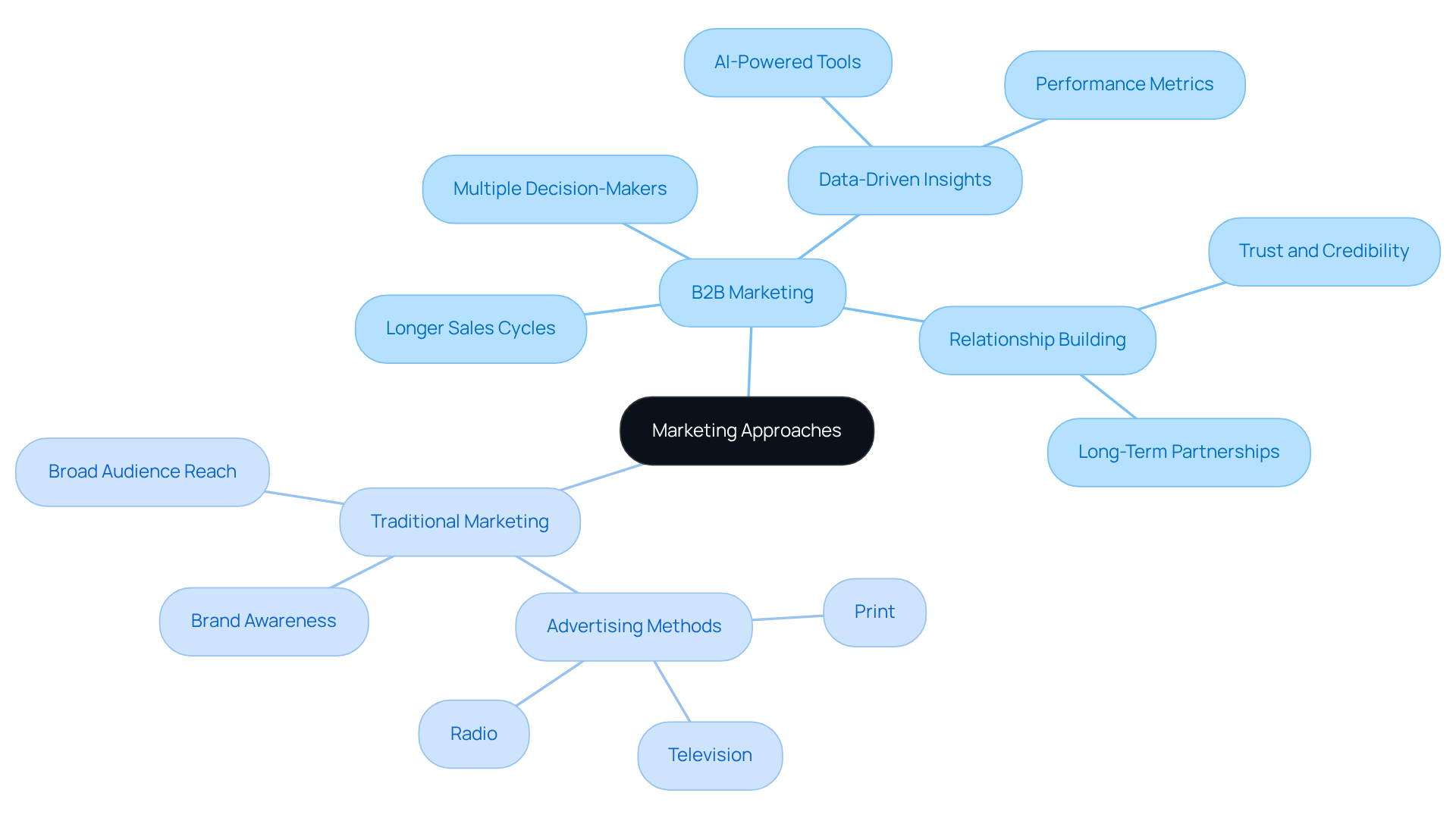
Business to business marketing companies engage in B2B promotion, or business-to-business promotion, as a strategic approach focused on selling products or services from one company to another. This method often entails longer sales cycles, multiple decision-makers, and a strong emphasis on building relationships and trust. In contrast, conventional promotion encompasses a broader array of advertising methods - think print, television, and radio - aimed at reaching a vast audience. While traditional promotion can effectively raise brand awareness, business to business marketing companies utilize more targeted B2B strategies, concentrating on specific industries or companies to drive sales and cultivate long-term partnerships.
Effective business to business marketing companies utilize data-driven insights and personalized content to engage potential clients. For example, companies that adopt a systematic, agile approach to their promotional efforts can witness remarkable growth, with some scaling from $2M to $10M in revenue. Furthermore, the integration of AI-powered tools to analyze buyer signals is becoming increasingly prevalent, enabling timely seller engagement and enhancing conversion rates by 15%.
As we approach 2025, the landscape influenced by business to business marketing companies is evolving. Marketers are shifting their focus from merely justifying promotional efforts to tracking performance-driven metrics that enhance impactful promotion. This shift is underscored by the fact that 84% of business to business marketing companies are moving away from conventional approaches towards performance-focused tactics. The integration of brand and demand promotion is also becoming essential, as companies recognize that all promotional functions serve as performance strategies, driving revenue rather than merely supporting it.
In summary, while conventional promotion seeks broad reach, business to business marketing companies are characterized by their targeted approach, reliance on data, and commitment to fostering lasting relationships. This makes B2B promotion an essential tactic for businesses striving to thrive in a competitive environment.
Contrast B2B Marketing Strategies with Traditional Marketing Approaches
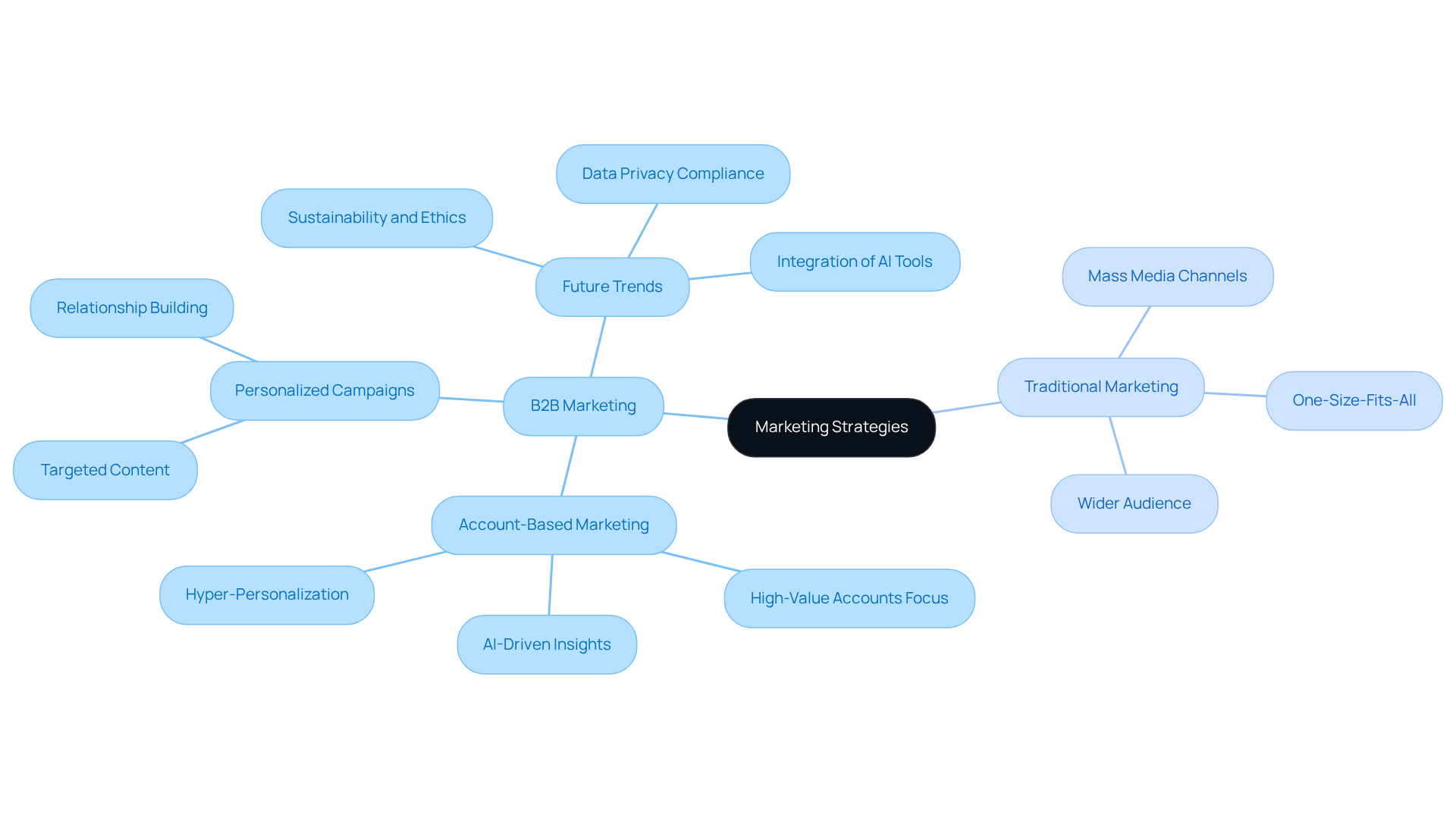
Business to business marketing companies are increasingly adopting account-based methods (ABM) in their promotional strategies, focusing on personalized campaigns aimed at specific high-value accounts. This approach stands in stark contrast to traditional advertising techniques that typically employ a one-size-fits-all strategy, casting a wide net to attract a larger audience. For example, while conventional promotion often relies on mass media channels to showcase products, B2B strategies prioritize targeted content like whitepapers and case studies to effectively engage decision-makers.
Furthermore, business to business marketing companies place a strong emphasis on relationship-building through networking and direct outreach, fostering deeper connections with clients. As we look ahead to 2025, the shift towards hyper-personalization in B2B promotion becomes increasingly evident. Companies are leveraging AI tools to enhance campaign performance and predict account intent, emphasizing the need for business to business marketing companies to adapt their strategies to meet the unique needs of their target accounts. This evolution not only drives higher ROI but also cultivates long-term relationships.
Additionally, as data privacy regulations tighten, maintaining compliance and transparency will be crucial for building trust with clients. Are you ready to embrace these changes and elevate your B2B marketing efforts? The time to act is now.
Evaluate Pros and Cons of B2B Marketing Companies vs. Traditional Marketing Firms
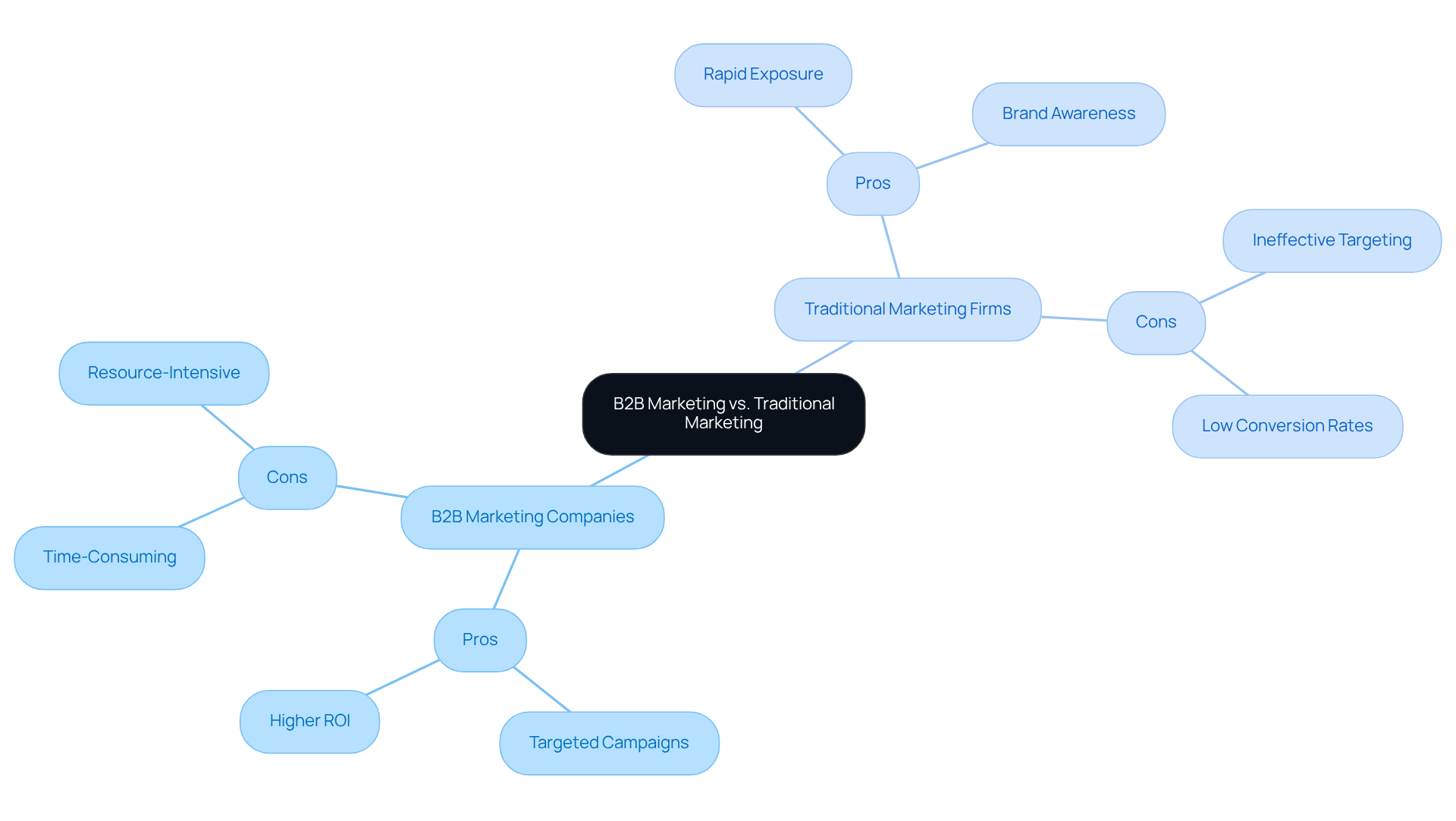
B2B firms, including business to business marketing companies, stand out by delivering targeted, data-driven campaigns that consistently yield higher ROI, thanks to their focus on specific audiences. However, developing personalized strategies often demands more time and resources. Conversely, traditional advertising agencies can achieve rapid exposure and brand awareness, yet they frequently struggle to assess effectiveness and target specific demographics. For example, while a conventional promotional campaign may generate significant impressions, it often falls short in conversion rates compared to a well-executed strategy by business to business marketing companies that nurtures leads through personalized content and direct engagement.
This contrast raises an important question: How can businesses leverage the strengths of both approaches? By integrating the precision of B2B strategies with the broad reach of traditional advertising, firms can create campaigns that not only capture attention but also drive meaningful engagement. The key lies in understanding the unique advantages each method offers and strategically combining them to maximize impact.
In conclusion, as you consider your marketing strategy, reflect on how a tailored approach can enhance your outreach efforts. Are you ready to elevate your campaigns and achieve greater success?
Examine Trends and Innovations in B2B vs. Traditional Marketing
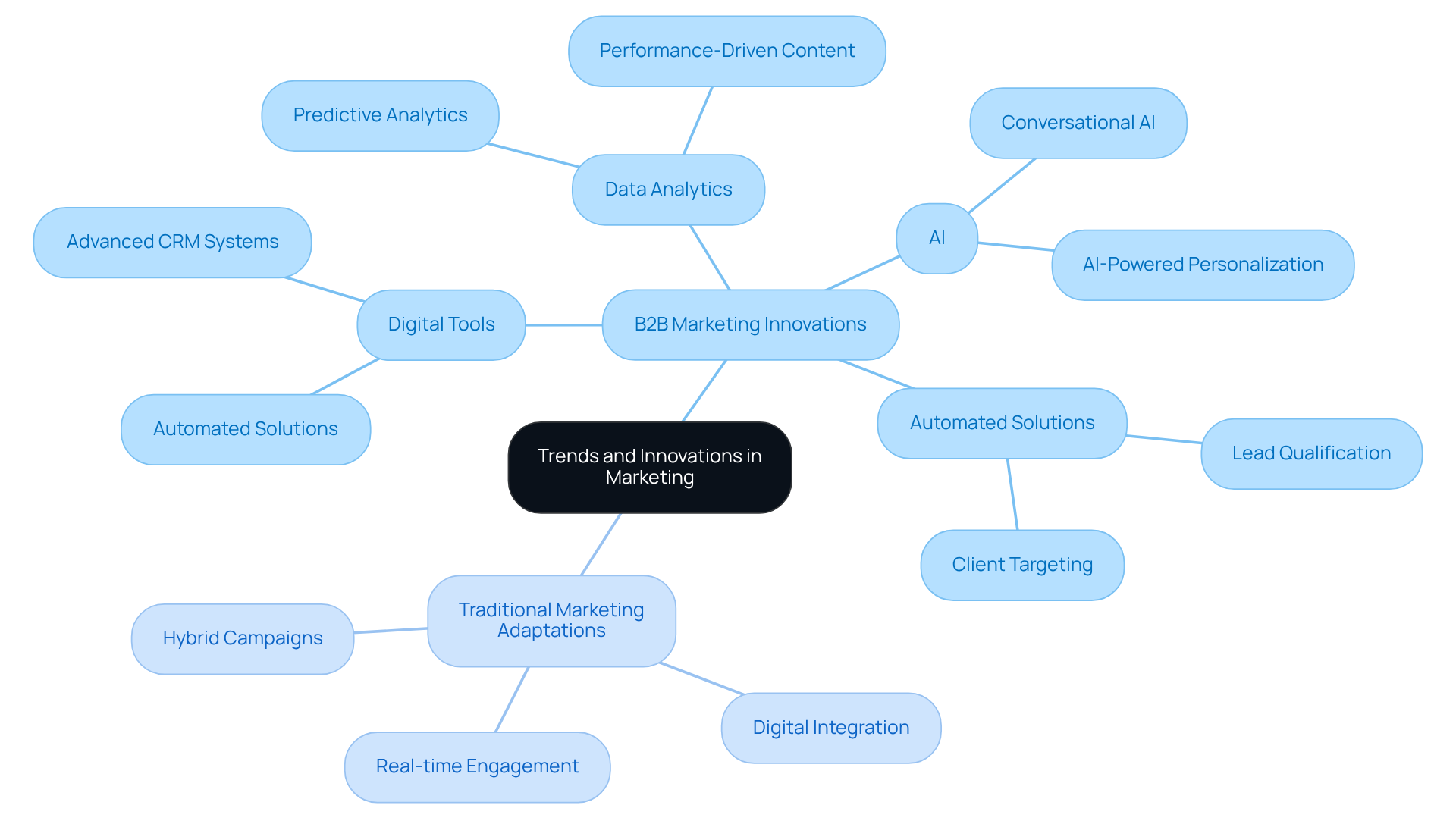
In recent years, B2B promotion has undergone a significant transformation, increasingly embracing digital tools and platforms. This shift is not just a trend; it’s a strategic move that leverages data analytics and AI to enhance targeting and personalization. For instance, innovations like automated promotional solutions and advanced CRM systems have revolutionized how business to business marketing companies engage with their clients, making interactions more efficient and tailored.
Furthermore, traditional promotion is evolving as well. Many firms are now integrating digital components into their strategies, creating hybrid campaigns that effectively utilize both online and offline channels. This integration allows for real-time engagement and feedback, demonstrating a clear shift towards a more cohesive marketing approach.
Consider how traditional advertising methods are now often complemented by digital campaigns. This synergy not only broadens reach but also enhances the overall effectiveness of marketing efforts. As business to business marketing companies navigate this landscape, their ability to adapt and innovate will be crucial for success. Are you ready to embrace these changes and elevate your marketing strategy?
Conclusion
In the realm of marketing, business-to-business (B2B) marketing companies and traditional marketing firms operate within distinct frameworks that significantly shape their strategies, objectives, and outcomes. Traditional marketing often casts a wide net, engaging broad audiences through mass media. In contrast, B2B marketing zeroes in on targeted, relationship-driven approaches tailored to specific industries and decision-makers. This fundamental difference not only dictates the execution of each marketing type but also underscores the necessity for businesses to adapt their strategies to meet the ever-evolving demands of the market.
Key arguments throughout this article highlight the advantages of B2B marketing, including:
- Its reliance on data-driven insights
- Personalized content
- The cultivation of long-term relationships
The shift towards account-based marketing, bolstered by AI tools, exemplifies how B2B firms are innovating to enhance engagement and conversion rates. Conversely, traditional marketing maintains its relevance by integrating digital components, yet it often lacks the precision and effectiveness that targeted B2B strategies deliver.
As the marketing landscape continues to evolve, grasping the strengths and weaknesses of both B2B and traditional marketing approaches becomes increasingly vital. Businesses must recognize the importance of leveraging these strategies in tandem to maximize their impact. Embracing this integrated approach not only amplifies outreach efforts but also positions companies for greater success in a competitive environment. Staying informed about the latest trends and innovations is essential to ensure that marketing strategies remain effective and relevant.
Frequently Asked Questions
What is B2B marketing?
B2B marketing, or business-to-business marketing, is a strategic approach focused on selling products or services from one company to another, emphasizing relationship-building and trust.
How does B2B marketing differ from traditional marketing?
B2B marketing is targeted and often involves longer sales cycles and multiple decision-makers, while traditional marketing encompasses broader advertising methods aimed at reaching a vast audience, such as print, television, and radio.
What strategies do effective B2B marketing companies use?
Effective B2B marketing companies utilize data-driven insights and personalized content to engage potential clients, often adopting systematic and agile promotional approaches to drive growth.
How has AI impacted B2B marketing?
The integration of AI-powered tools in B2B marketing helps analyze buyer signals, enabling timely seller engagement and enhancing conversion rates by 15%.
What trends are emerging in B2B marketing as we approach 2025?
Marketers are increasingly focusing on performance-driven metrics rather than justifying promotional efforts, with 84% of B2B marketing companies moving towards performance-focused tactics.
Why is the integration of brand and demand promotion important in B2B marketing?
The integration of brand and demand promotion is essential because it recognizes that all promotional functions serve as performance strategies that drive revenue rather than merely supporting it.
What is the overall goal of B2B marketing?
The overall goal of B2B marketing is to cultivate long-term partnerships and drive sales in a competitive environment through targeted strategies and relationship-building.