
Introduction
Choosing the right ecommerce paid online advertising agency can feel overwhelming, especially in a rapidly evolving digital marketing landscape. With e-commerce sales projected to soar to an astonishing $7.5 trillion by 2025, it’s crucial for businesses to align their advertising strategies with clear objectives and effective partnerships. But how can you ensure that the agency you choose not only grasps your unique needs but also has the creativity and capability to deliver measurable results?
This guide outlines five essential steps to help you navigate this critical selection process. By following these steps, you’ll empower your business to make informed decisions that can significantly enhance your advertising success.
Define Your E-commerce Goals and Objectives
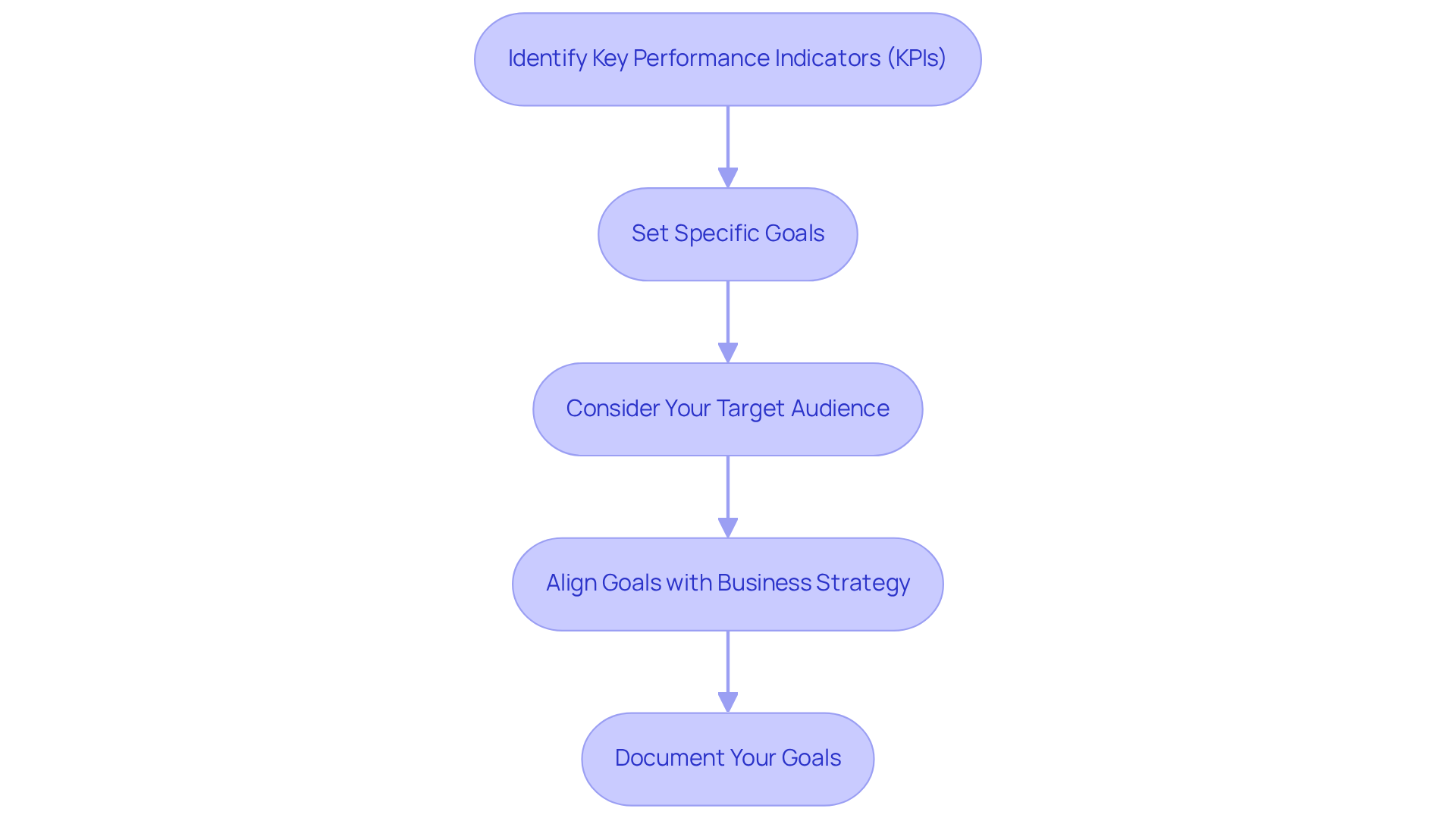
- Identify : To gauge success in your e-commerce business, it’s crucial to pinpoint what that success looks like. Common KPIs include sales revenue, , customer acquisition costs, and . These metrics will serve as your compass in navigating the complexities of the market.
- Set : Define your objectives using the SMART criteria - Specific, Measurable, Achievable, Relevant, and Time-bound. For instance, rather than a vague goal like 'increase sales', specify a target: 'increase sales by 20% in the next quarter'. This clarity will drive your strategy forward.
- Consider Your : Who are your customers, and what do they truly desire? Understanding your audience is key to tailoring your advertising efforts effectively. By aligning your campaigns with their needs, you enhance the likelihood of engagement and conversion.
- : It’s essential that your advertising goals reflect your overarching business strategy. If your focus is on expanding into new markets, your advertising objectives should mirror that ambition, ensuring a cohesive approach across all fronts.
- Document Your Goals: Writing down your goals and sharing them with your team . This practice ensures that everyone is working towards the same objectives, creating a unified effort that can significantly enhance your chances of success.
Research and Evaluate Potential Agencies
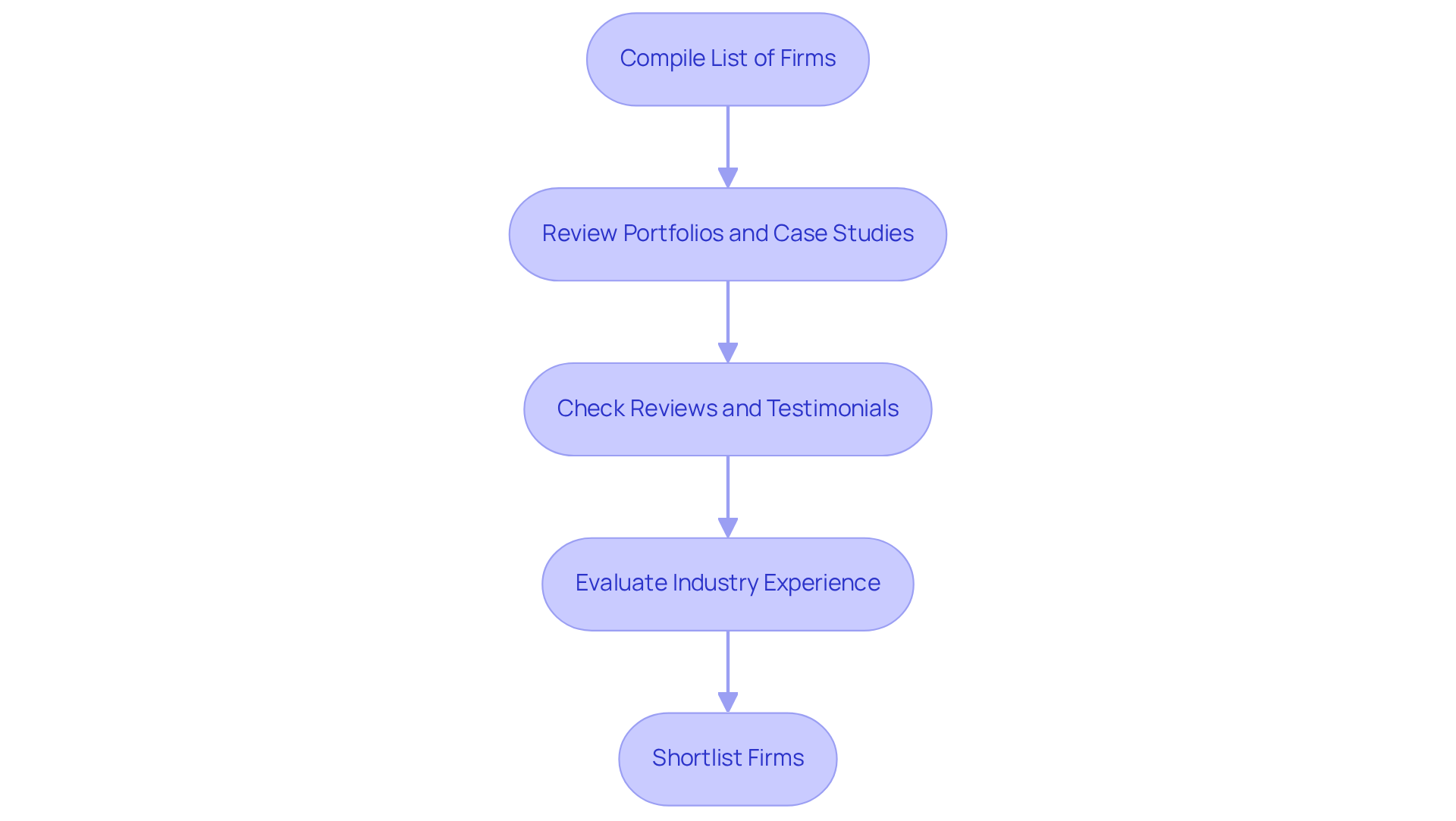
- Begin by compiling a list of firms that are specializing in . Utilize online resources, industry forums, and referrals from trusted sources. With , it’s crucial to prioritize firms that showcase expertise in mobile optimization.
- : Scrutinize the firms' past work to assess their creativity and effectiveness. Seek out case studies that highlight successful campaigns aligned with your objectives. For instance, organizations that have effectively integrated AI into their strategies are vital, considering that .
- : Investigate client reviews on platforms like Clutch or Google. Testimonials provide valuable insights into the organization’s reliability and performance. Including endorsements from brands that emphasize successful partnerships in e-commerce will further substantiate your evaluation.
- : Confirm that the firm possesses experience in your specific industry. Agencies well-versed in your market will have a deeper understanding of your challenges and opportunities. With , it is more critical than ever to select an with relevant experience.
- Shortlist Firms: Based on your research, compile a shortlist of firms that meet your criteria for further evaluation. This focused approach will streamline your decision-making process and ensure you partner with a firm capable of delivering measurable results.
Assess Agency Capabilities and Creative Strategies
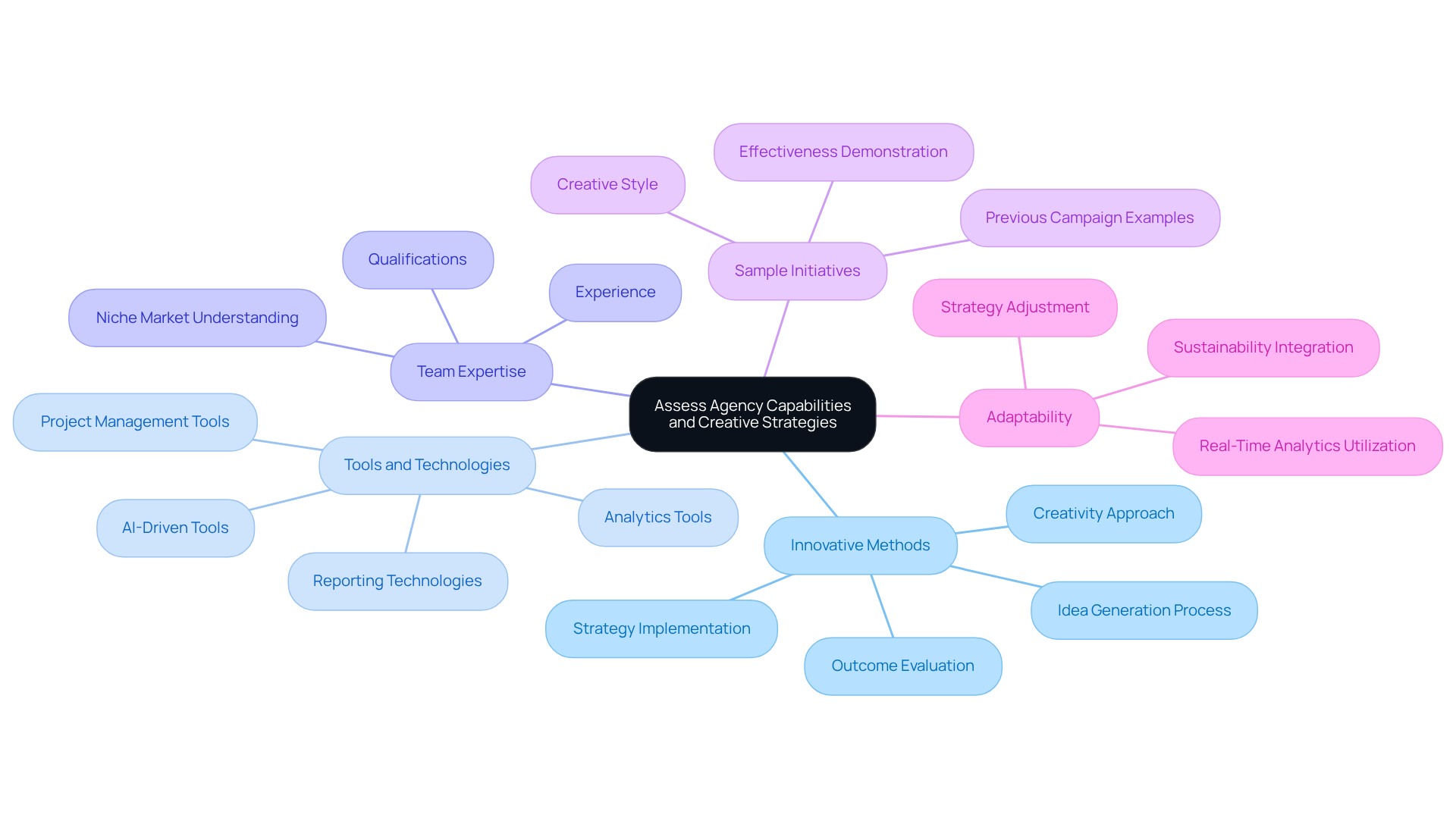
- Assess Innovative Methods: How does the firm approach creativity? Understanding their , implementing strategies, and evaluating outcomes is crucial. A well-defined process can significantly enhance effectiveness, especially considering that 70% of a project's success hinges on .
- Inquire About : What does the agency leverage for ? Agencies that utilize can significantly boost performance and provide deeper insights into effectiveness. This capability is increasingly vital as clients demand tangible outcomes from their marketing efforts.
- Assess Team Expertise: What qualifications and experience do the possess? A skilled team can harness technology effectively, making a substantial impact on project outcomes. Agencies that focus on niche markets often have a deeper understanding of industry dynamics, enhancing their ability to execute influential initiatives.
- Request Sample Initiatives: Can you provide examples of ? This inquiry will shed light on their . Successful organizations frequently showcase initiatives that employ innovative tools and techniques, demonstrating their adaptability to evolving market conditions.
- Discuss Adaptability: Is the organization capable of adjusting its strategies based on performance data? A will refine and enhance strategies as needed, utilizing real-time analytics to improve engagement and conversion rates. As the marketing landscape evolves, firms that embrace will be better positioned to meet client expectations and drive results. Additionally, how do they incorporate sustainability initiatives into their campaigns? This aspect can significantly build trust and loyalty with clients.
Establish Clear Communication and Collaboration
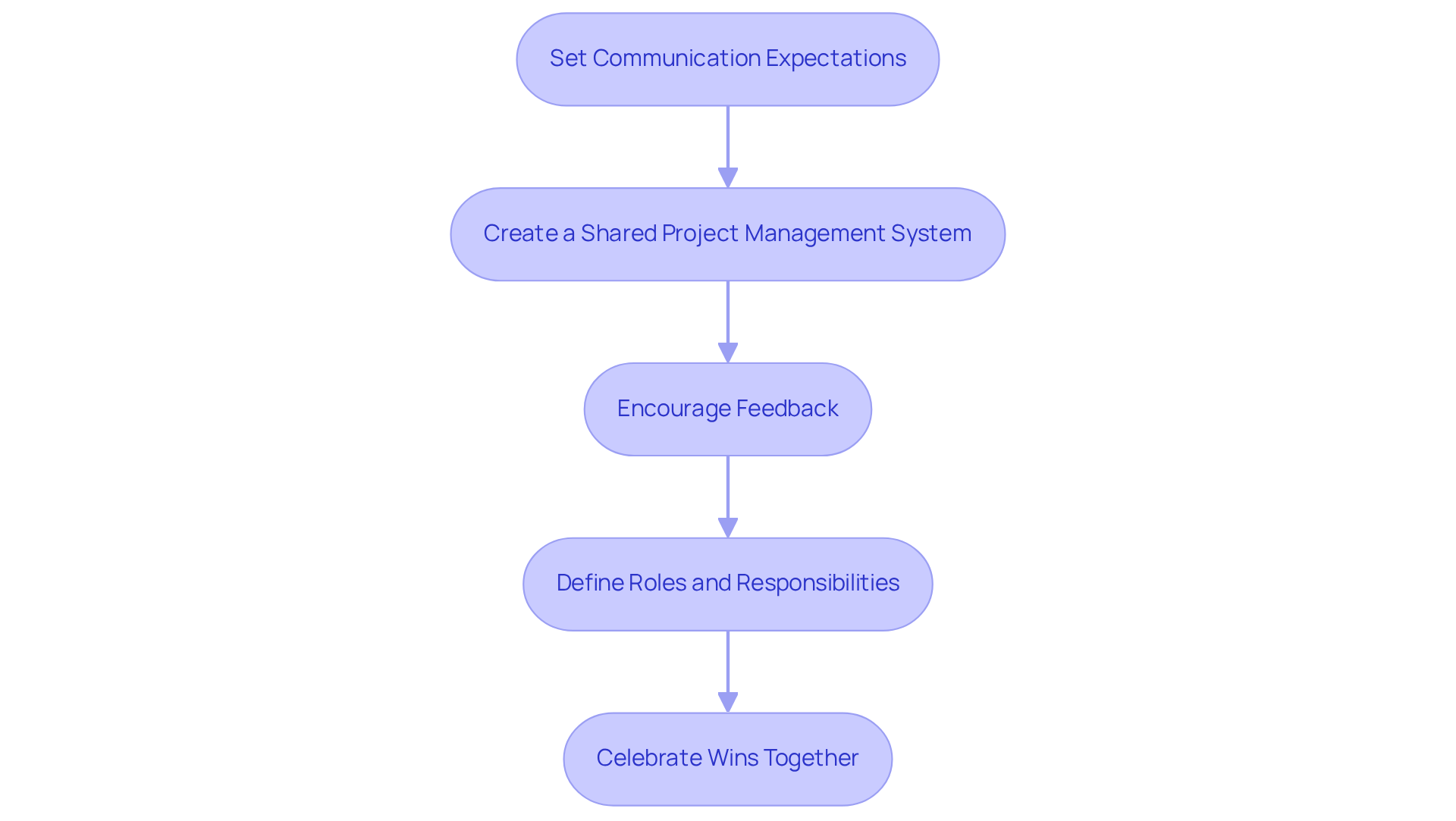
- : Clearly define how often you will meet with the organization and through which channels-be it email or . are crucial for keeping projects on track and ensuring alignment with overarching goals.
- Create a : Implement like Trello or Asana to manage tasks and deadlines effectively. This approach fosters transparency and accountability, enabling both teams to monitor progress in real-time. Additionally, incorporating visual aids such as Gantt charts or timelines can significantly enhance understanding and engagement.
- Encourage Feedback: Cultivate an environment where both parties feel comfortable providing . This practice not only leads to but also strengthens relationships. Regular assessments of organizational performance against established goals are vital for achieving collaborative success.
- : It’s essential to for what within both your team and the organization. This clarity helps prevent confusion and ensures accountability. Documenting the decision-making process after a client selects a solution can further enhance clarity and alignment in the agency-client relationship.
- : Recognize and honor achievements, regardless of their size. This practice boosts morale and fortifies the partnership. As one expert aptly noted, 'Solution-oriented communication involves presenting issues to clients not as roadblocks, but as opportunities for collaborative decision-making.
Finalize Your Selection and Set Performance Metrics
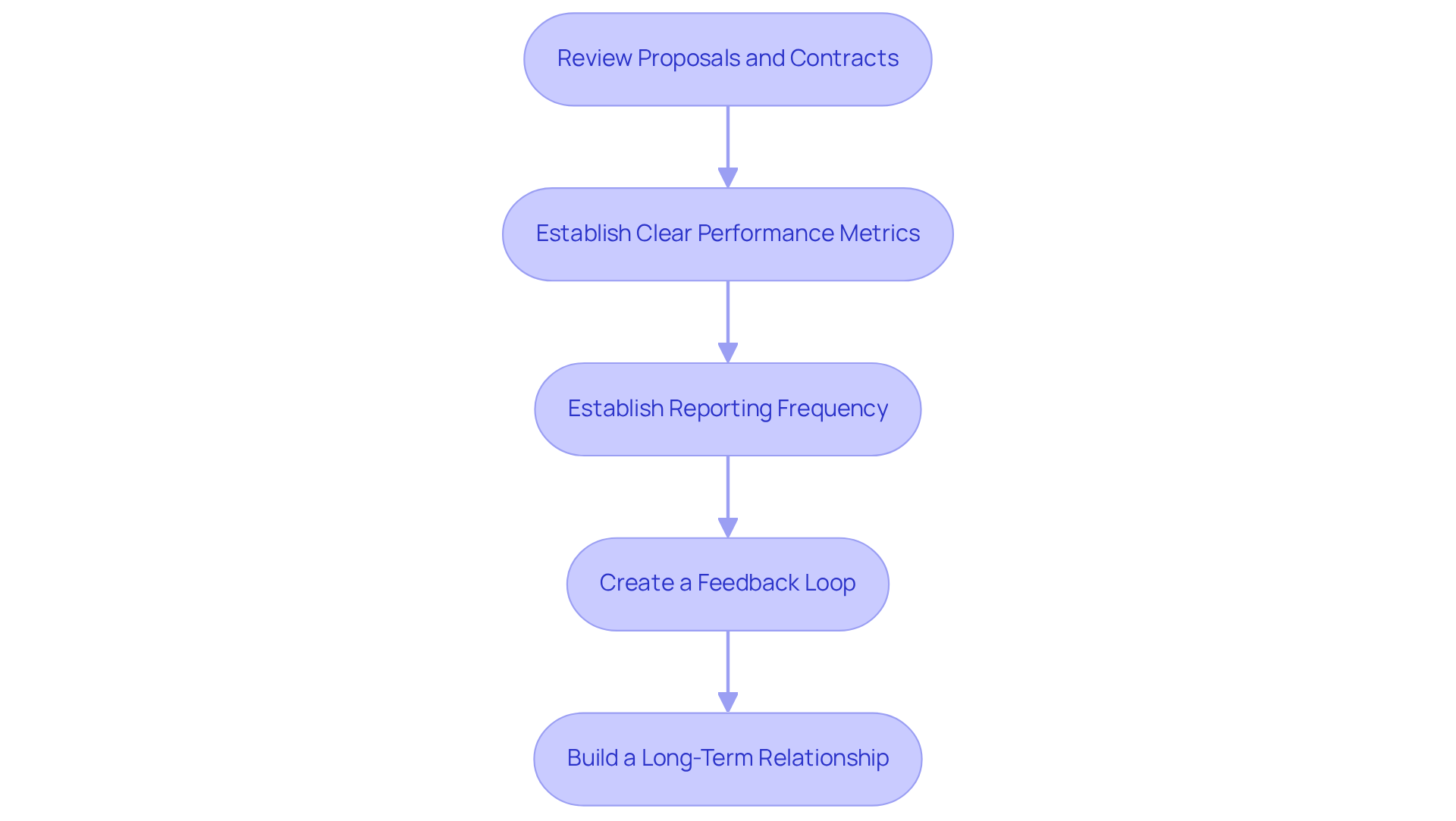
- Review Proposals and Contracts: Carefully evaluate the proposals from your shortlisted agencies. Are the terms aligning with your expectations and budget? This step is crucial as it sets the foundation for a successful partnership.
- Establish Clear : What does success look like for your initiatives? Key effectiveness indicators (KPIs) such as , , and are essential. For instance, e-commerce initiatives in 2025 are projected to achieve an average conversion rate of 7.04%, with CAC averaging around $53.52, according to industry reports. Establishing these metrics early on will guide your strategy and help measure effectiveness.
- : How often do you want to receive performance reports from the agency? Frequent updates are essential for staying informed about progress and making timely adjustments. Industry leaders highlight that consistent communication can significantly improve results, as observed in various studies.
- : Have you implemented a structured process for providing feedback on the performance of the initiative? This will enable the agency to make necessary adjustments and . A case study revealed that brands actively engaging in feedback loops see a 400% higher conversion rate due to improved user experience and campaign alignment. As highlighted by marketing experts, feedback is crucial for refining strategies and achieving better results.
- : Are you viewing the partnership as a long-term collaboration? Establishing trust and mutual understanding will lead to better outcomes over time. As noted by industry experts, nurturing this relationship can enhance the effectiveness of your advertising efforts, ultimately driving sustained growth.
Conclusion
Selecting the right e-commerce paid online advertising agency is crucial for achieving your business goals. By following five essential steps:
- Defining clear objectives
- Researching potential agencies
- Assessing their capabilities
- Establishing effective communication
- Finalizing your selection
you can forge a strategic partnership that aligns with your vision. This process not only enhances your advertising efforts but also drives measurable results that contribute to your overall success.
Key insights from this guide highlight the necessity of understanding your e-commerce goals and aligning them with the agency's expertise. Identifying KPIs, evaluating industry experience, and fostering open communication are vital components that can significantly impact the effectiveness of your campaigns. Furthermore, nurturing a long-term relationship with your chosen agency can lead to sustained growth and improved performance over time.
In conclusion, investing time and effort into selecting the right advertising agency is essential for maximizing your e-commerce potential. By leveraging these strategies, businesses can navigate the complexities of digital marketing and achieve their desired outcomes. Embrace this opportunity to elevate your advertising initiatives and witness your e-commerce venture flourish in a competitive landscape.
Frequently Asked Questions
What are the key performance indicators (KPIs) for e-commerce success?
Common KPIs for e-commerce success include sales revenue, conversion rates, customer acquisition costs, and return on ad spend (ROAS).
How should I set specific goals for my e-commerce business?
Goals should be defined using the SMART criteria: Specific, Measurable, Achievable, Relevant, and Time-bound. For example, instead of a vague goal like 'increase sales', specify a target such as 'increase sales by 20% in the next quarter'.
Why is it important to understand my target audience in e-commerce?
Understanding your target audience is crucial for tailoring advertising efforts effectively. By aligning campaigns with their needs, you enhance the likelihood of engagement and conversion.
How can I ensure my advertising goals align with my business strategy?
Your advertising goals should reflect your overarching business strategy. For instance, if your focus is on expanding into new markets, your advertising objectives should mirror that ambition for a cohesive approach.
Why is it important to document my e-commerce goals?
Documenting your goals and sharing them with your team fosters alignment and accountability, ensuring that everyone is working towards the same objectives and enhancing your chances of success.
How can I research potential e-commerce advertising agencies?
Begin by compiling a list of firms specializing in e-commerce advertising using online resources, industry forums, and referrals. Prioritize firms that showcase expertise in mobile optimization.
What should I look for in an agency's portfolio and case studies?
Review the agency's past work to assess creativity and effectiveness, and seek case studies that highlight successful campaigns aligned with your objectives, especially those integrating AI capabilities.
How can client reviews and testimonials help in evaluating an agency?
Client reviews on platforms like Clutch or Google provide valuable insights into the agency’s reliability and performance. Endorsements from brands that emphasize successful partnerships in e-commerce further substantiate your evaluation.
Why is industry experience important when selecting an advertising agency?
Agencies with experience in your specific industry will have a deeper understanding of your challenges and opportunities, which is critical as e-commerce sales continue to grow.
What is the next step after researching potential agencies?
Based on your research, compile a shortlist of firms that meet your criteria for further evaluation, streamlining your decision-making process to ensure you partner with a capable firm.
List of Sources
- Define Your E-commerce Goals and Objectives
- thesocialshepherd.com (https://thesocialshepherd.com/blog/ecommerce-statistics)
- blog.clover.com (https://blog.clover.com/embrace-smart-goals-to-maximize-ecommerce-conversion-rates)
- creativethemes.com (https://creativethemes.com/blocksy/blog/ecommerce-sales-goals-set-targets-to-drive-business-growth)
- modeeffect.com (https://modeeffect.com/setting-measurable-ecommerce-goals-for-2025-a-january-action-plan)
- redstagfulfillment.com (https://redstagfulfillment.com/ecommerce-statistics)
- Research and Evaluate Potential Agencies
- swell.is (https://swell.is/blog/agency-scaling-ecommerce-statistics)
- singlegrain.com (https://singlegrain.com/advertising/top-10-e-commerce-advertising-agencies-in-2025)
- thriveagency.com (https://thriveagency.com/news/21-best-ecommerce-marketing-companies-in-2025)
- seoprofy.com (https://seoprofy.com/blog/best-ecommerce-marketing-agencies)
- The Top 25 Digital Commerce Statistics to Know for 2025 - Cimulate AI (https://cimulate.ai/resources/digital-commerce-statistics)
- Assess Agency Capabilities and Creative Strategies
- TOP 20 CREATIVE THINKING MARKETING STATISTICS 2025 | Amra And Elma LLC (https://amraandelma.com/creative-thinking-marketing-statistics)
- determ.com (https://determ.com/blog/top-marketing-technologies-for-digital-agencies)
- fox4kc.com (https://fox4kc.com/business/press-releases/ein-presswire/823698832/crafting-digital-dreams-how-creative-agencies-shape-the-future)
- entrepreneur.com (https://entrepreneur.com/growing-a-business/why-marketing-agencies-are-struggling-in-2025/495568)
- Creative Agency Trends to Watch in 2025 - FunctionFox (https://functionfox.com/creative-agency-trends-to-watch)
- Establish Clear Communication and Collaboration
- 10 Client Communication Best Practices for Modern Agencies (https://scribbl.co/post/client-communication-best-practices)
- byfinessegroup.com (https://byfinessegroup.com/blog/4-best-practices-for-working-with-public-relations-advertising-agencies)
- clevertize.com (https://clevertize.com/blog/the-art-of-client-communication-best-practices-for-ad-agencies)
- 11 Tips for Effective Communication with Clients & Agencies | Wrapbook (https://wrapbook.com/blog/effective-communication-with-clients-and-agencies)
- collingmedia.com (https://collingmedia.com/advertising-strategies/how-to-effectively-communicate-with-your-advertising-agency)
- Finalize Your Selection and Set Performance Metrics
- digiday.com (https://digiday.com/marketing/agency-new-business-crunch-now-permanent-say-execs)
- 180+ Powerful Digital Marketing Statistics for 2026 - WordStream (https://wordstream.com/blog/ws/2022/04/19/digital-marketing-statistics)
- campaignlive.com (https://campaignlive.com/article/agency-performance-review-2025-ai-rewiring-ad-agency-workflow/1916440)
- webfx.com (https://webfx.com/blog/marketing/ecommerce-marketing-benchmarks)
- 2026 Marketing Statistics, Trends, & Data (https://hubspot.com/marketing-statistics)