Introduction
The rise of social media has transformed everyday individuals into powerful influencers, capable of shaping consumer behavior and driving brand success. This article serves as a comprehensive guide for those looking to navigate the influencer landscape, revealing essential steps to not only become an influencer but also effectively monetize that influence. However, with the market evolving rapidly and competition intensifying, what key strategies can ensure financial sustainability and audience engagement in this dynamic environment?
Define Influencer and Content Creator Roles
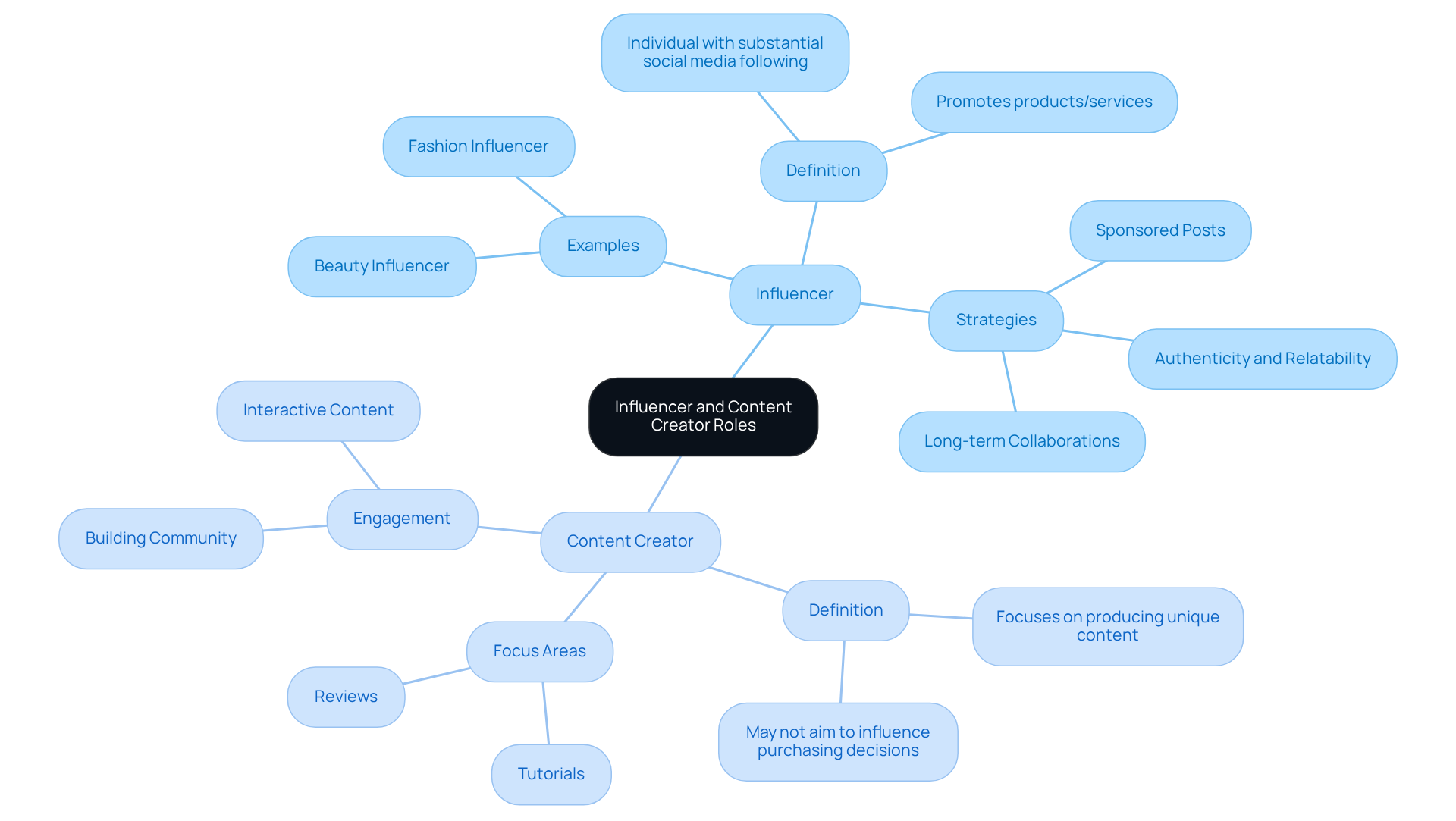
An is defined as an individual who has built a substantial following on social media, showing others by utilizing their platform to promote products or services while leveraging their credibility to sway consumer behavior. In contrast, a focuses on producing unique content that may not directly aim to influence purchasing decisions. This distinction is vital for aspiring s as they learn while developing their strategies in the digital landscape. For instance, a beauty might spotlight makeup products through sponsored posts, whereas a might concentrate on tutorials or reviews without formal brand partnerships. can significantly inform strategy and .
As of 2025, , underscoring the growing recognition of these roles within the marketing ecosystem. increasingly emphasize authenticity and relatability, showcasing , since consumers are 54% more likely to purchase from relatable s. Furthermore, trends indicate that , with a notable shift towards and the integration of AI tools to enhance quality and engagement. Recognizing where one fits within this framework can guide effective and foster meaningful audience interaction.
Evaluate the Financial Viability of Influencing
To evaluate the financial viability of becoming an influencer, consider these critical factors:
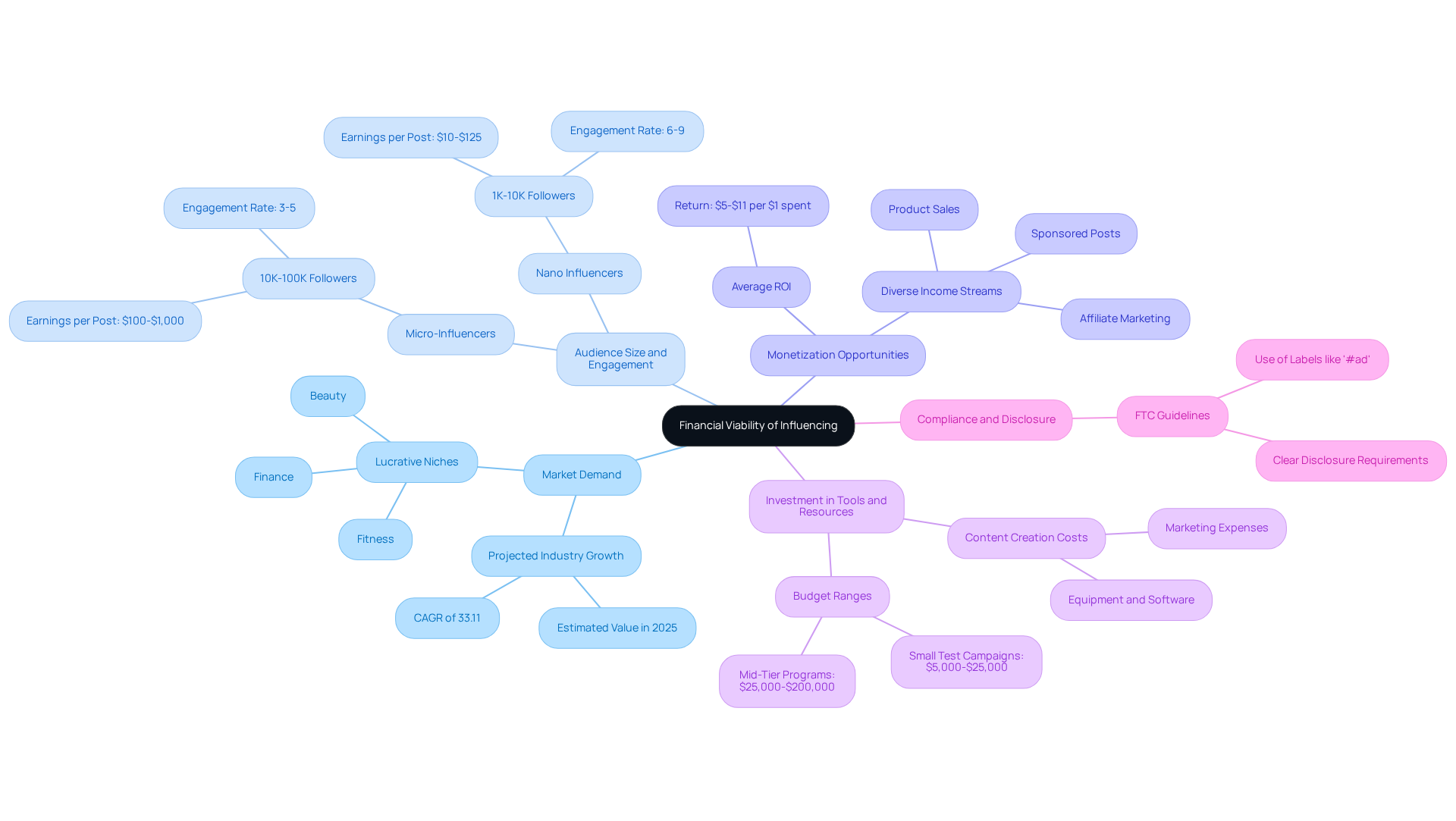
- Market Demand: Understanding the demand for key figures in your niche is crucial. Niches such as fitness, beauty, and finance are particularly lucrative, often attracting higher . In 2025, the industry is projected to reach approximately $32.55 billion, reflecting a . This growth indicates robust opportunities for creators in these sectors.
- : Brands typically offer greater remuneration to individuals with larger and more engaged audiences. For instance, micro- (10K-100K followers) can earn between $100 and $1,000 per post on platforms like Instagram, with interaction rates ranging from 3% to 5%. Furthermore, nano (1K-10K followers) achieve even higher interaction rates of 6-9%. By analyzing your current following and engagement metrics, you can learn .
- : can diversify their income through various streams, including sponsored posts, affiliate marketing, and product sales. In 2025, brands report an , highlighting the financial potential of effective collaborations. Exploring these avenues can give you a clearer projection of .
- Investment in Tools and Resources: Consider the . These investments can significantly . Successful social media personalities often allocate budgets ranging from $5,000 to $25,000 for small test campaigns, while mid-tier program budgets can span from $25,000 to $200,000, covering expenses for high-quality production and promotional efforts.
- Compliance and Disclosure: It's essential to be aware of the Federal Trade Commission (FTC) guidelines, which require clear disclosure of material connections in endorsements. must use labels like '#ad' and 'Paid partnership with [Brand Name]' to ensure compliance and maintain transparency with their audience.
By thoroughly evaluating these factors, including the increasing dependence on -63.8% of companies intend to collaborate with in 2025-you can learn while aligning with your financial objectives and aspirations.
Explore Monetization Strategies for Influencers
To effectively monetize your influence, consider these key strategies:
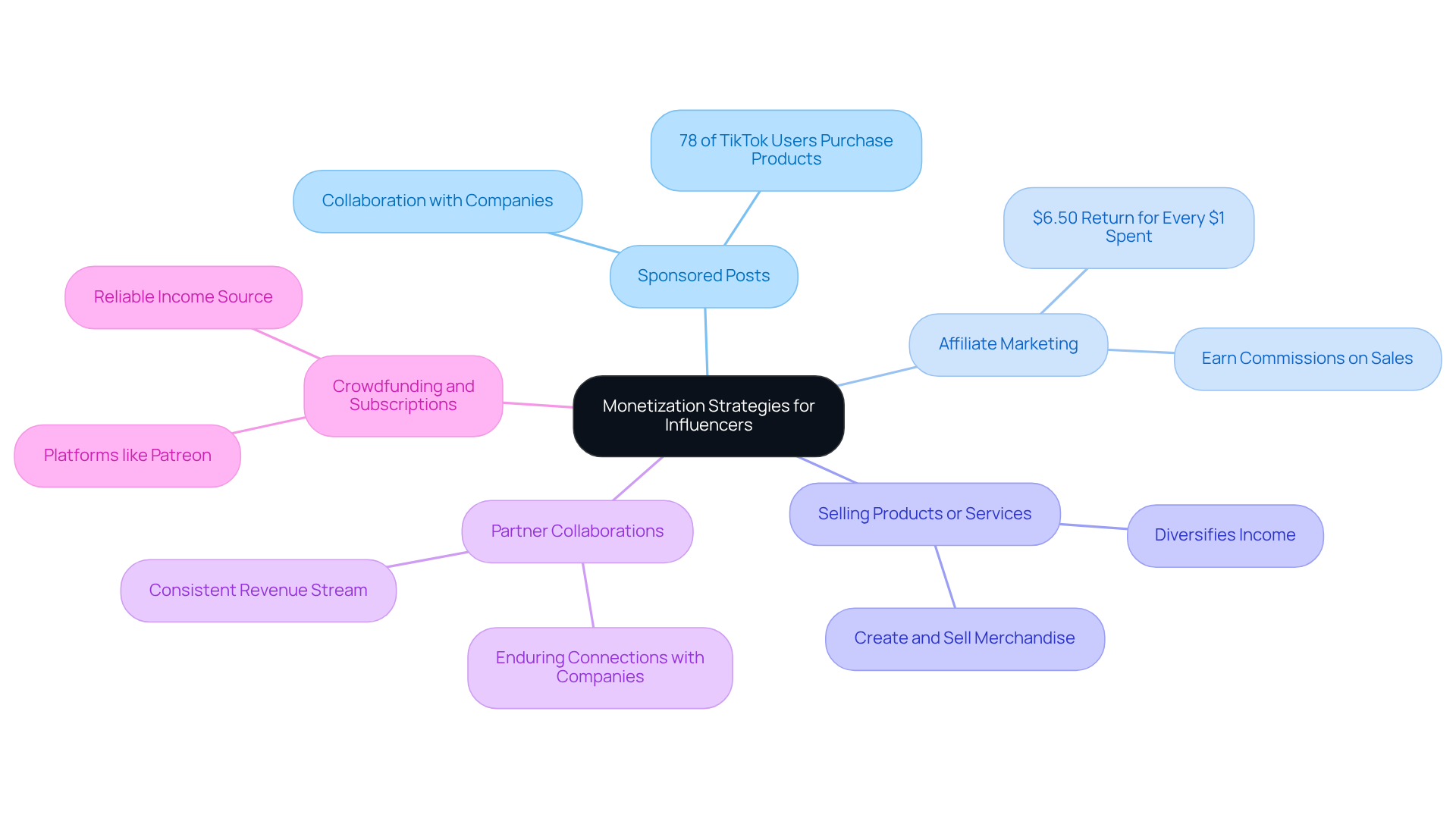
- : Collaborate with companies to produce that resonates with your audience. Successful collaborations hinge on aligning the company's message with your followers' interests, which enhances both credibility and engagement. Notably, . This statistic underscores the potential of .
- : Utilize in your posts to earn commissions on sales generated through your recommendations. This approach offers a low-risk income stream, with businesses making an average of $6.50 for every $1 spent on . Such figures reinforce the effectiveness of this strategy.
- Selling Products or Services: Leverage your expertise by creating and selling your own products, such as merchandise, e-books, or online courses. This not only diversifies your income but also strengthens your personal brand.
- : Foster enduring connections with companies for continuous partnerships. Experts recommend focusing on these collaborations, as they can provide a consistent revenue stream and foster deeper connections with your audience.
- Crowdfunding and Subscriptions: Platforms like Patreon enable your followers to support you directly through subscriptions, creating a reliable income source. This model has gained traction, with many influencers successfully through community support.
By implementing these strategies, you will discover how to be an influencer and make money while building a sustainable income. Capitalize on .
Assess the Importance of Followers and Engagement
In the realm of , are pivotal metrics that shape brand partnerships and campaign success.
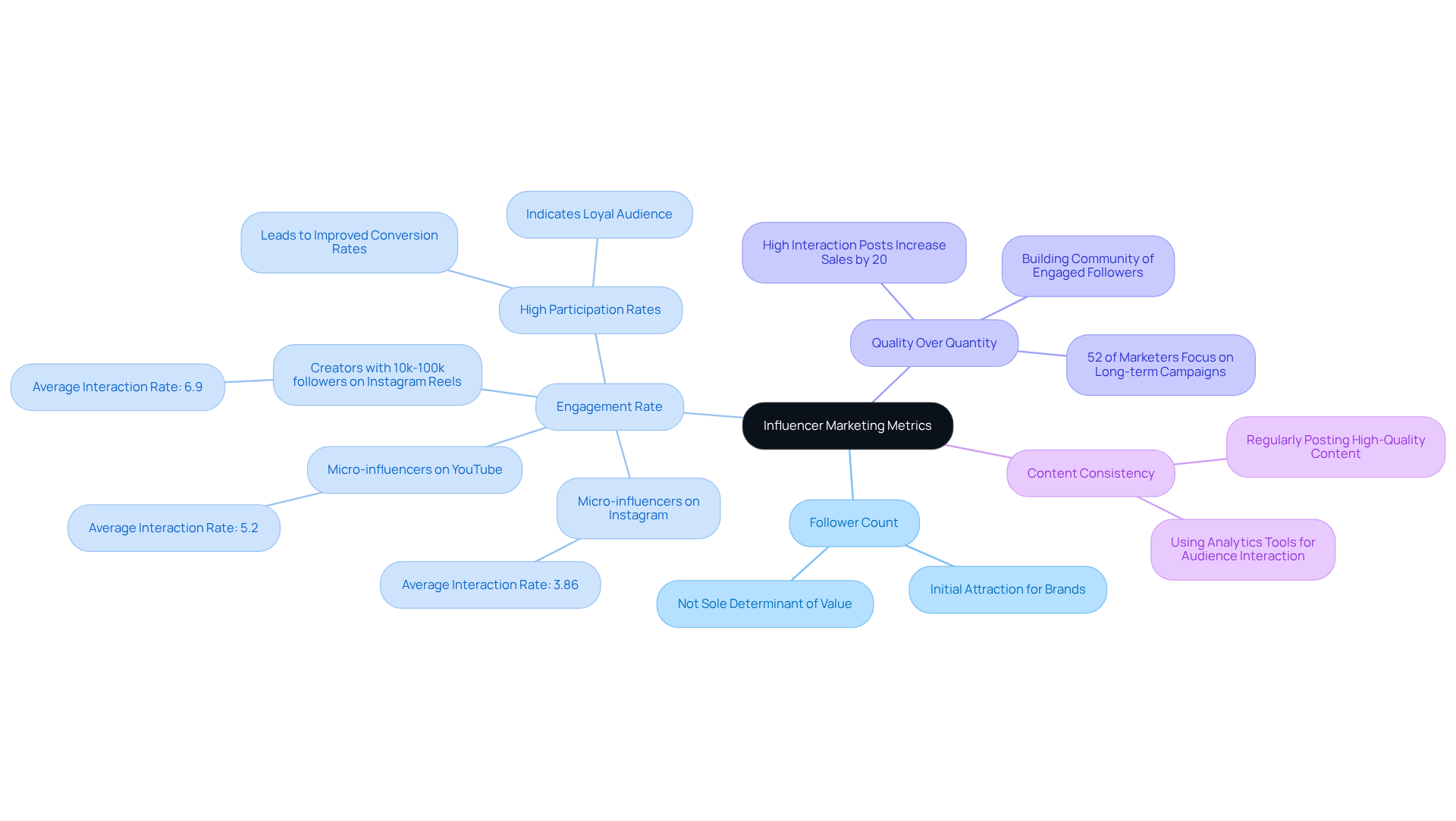
Follower Count: While a substantial following can initially attract brands, it is not the sole determinant of value. with their audiences, acknowledging that authenticity boosts interaction.
Engagement Rate: This metric reflects how actively an audience interacts with content, encompassing likes, comments, and shares. High participation rates indicate a loyal and interested audience, often leading to improved conversion rates for brands. For instance, micro-influencers on Instagram achieve an average interaction rate of about 3.86%, while those with 10,000 to 100,000 followers on Instagram Reels experience interaction around 6.9%. Furthermore, micro-influencers on YouTube attain interaction rates of approximately 5.2%.
Quality Over Quantity: is more beneficial than merely increasing follower numbers. are more likely to convert into customers, making them more valuable to brands than sheer follower counts. Indeed, 52% of marketers currently concentrate on long-term campaigns with influencers, highlighting the significance of ongoing interaction. Moreover, and generate 4.3 times greater ROI.
Content Consistency: Regularly posting is essential for maintaining and growing interaction. Utilizing to track audience interactions can assist content creators in identifying what resonates most, allowing for strategic adjustments that enhance overall performance. As Pulse states, "."
Individuals can significantly increase their earning potential by through prioritizing engagement and nurturing a devoted audience, which enhances their appeal to companies. In 2025, influencers are viewed as storytellers, salespeople, and long-term brand allies, not just spokespeople.
Conclusion
Aspiring to become an influencer in the digital landscape opens up a world of opportunities for those looking to monetize their passions. Did you know that influencer marketing is projected to soar to approximately $32.55 billion by 2025? By understanding the distinct roles of influencers and content creators, individuals can effectively tailor their strategies to build authentic connections with their audience. This journey involves not only creating engaging content but also navigating the financial aspects of influencer marketing.
Key insights discussed throughout this guide highlight the importance of:
- Market demand
- Audience engagement
- Diverse monetization strategies
From sponsored posts and affiliate marketing to selling personal products and fostering long-term partnerships, influencers have multiple avenues for generating income. Furthermore, the emphasis on engagement over sheer follower count underscores the need for genuine relationships with audiences, ultimately leading to more successful brand collaborations.
In this evolving landscape, the potential for influencers is vast. However, success hinges on a strategic approach to content creation and audience interaction. By prioritizing authenticity and leveraging effective monetization strategies, individuals can not only navigate the complexities of influencer marketing but also establish sustainable careers in this dynamic field. Embrace the journey of becoming an influencer, and take actionable steps toward building a fulfilling and financially rewarding presence online.
Frequently Asked Questions
What is the definition of an influencer?
An influencer is an individual who has built a substantial following on social media and utilizes their platform to promote products or services, leveraging their credibility to sway consumer behavior.
How does a content creator differ from an influencer?
A content creator focuses on producing unique content that may not directly aim to influence purchasing decisions, while an influencer actively promotes products and services to influence consumer behavior.
Why is it important for aspiring influencers to understand the distinction between these roles?
Understanding the distinction between influencers and content creators is vital for aspiring influencers as it helps them develop effective strategies in the digital landscape and enhance audience engagement.
What percentage of global creators identified as influencers as of 2025?
Approximately 14% of global creators identified as influencers as of 2025.
What factors are emphasized in effective influencer strategies for social media marketing?
Effective influencer strategies increasingly emphasize authenticity and relatability, as consumers are 54% more likely to purchase from relatable creators.
How is influencer marketing evolving?
Influencer marketing is evolving with a notable shift towards long-term collaborations and the integration of AI tools to enhance quality and engagement in content creation.
What can recognizing one's role within the influencer and creator framework help with?
Recognizing where one fits within the influencer and creator framework can guide effective content creation and foster meaningful audience interaction.
List of Sources
- Define Influencer and Content Creator Roles
- sociallypowerful.com (https://sociallypowerful.com/influencer/marketing/statistics)
- spiralytics.com (https://spiralytics.com/blog/content-creator-statistics-2025)
- shopify.com (https://shopify.com/blog/influencer-marketing-statistics)
- adamconnell.me (https://adamconnell.me/influencer-marketing-statistics)
- 2026 Influencer Marketing Statistics: ROI, Trends & Platform Data (https://sociallyin.com/influencer-marketing-statistics)
- Evaluate the Financial Viability of Influencing
- influencermarketinghub.com (https://influencermarketinghub.com/influencer-marketing-benchmark-report)
- goviralglobal.com (https://goviralglobal.com/post/united-states-influencer-marketing-kol-statistics-for-2025)
- sociallypowerful.com (https://sociallypowerful.com/influencer/marketing/statistics)
- prnewswire.com (https://prnewswire.com/news-releases/influencer-marketing-in-2025-new-data-reveals-what-works-what-costs-and-whats-next-302490369.html)
- 2026 Influencer Marketing Statistics: ROI, Trends & Platform Data (https://sociallyin.com/influencer-marketing-statistics)
- Explore Monetization Strategies for Influencers
- socialsnowball.io (https://socialsnowball.io/post/influencer-marketing-statistics)
- prnewswire.com (https://prnewswire.com/news-releases/influencer-marketing-in-2025-new-data-reveals-what-works-what-costs-and-whats-next-302490369.html)
- How The Creator Economy Is Reshaping Modern Marketing – And Why Brands Are Paying Attention (https://forbes.com/sites/lowes-creator/2025/06/16/how-the-creator-economy-is-reshaping-modern-marketing--and-why-brands-are-paying-attention)
- thesocialshepherd.com (https://thesocialshepherd.com/blog/influencer-marketing-statistics)
- Influencer Marketing in 2026: Key Stats That Matter (https://thunderbit.com/blog/influencer-marketing-stats)
- Assess the Importance of Followers and Engagement
- socialsnowball.io (https://socialsnowball.io/post/influencer-marketing-statistics)
- emarketer.com (https://emarketer.com/content/brands-prioritizing-engagement--loyalty-influencer-marketing)
- sociallypowerful.com (https://sociallypowerful.com/influencer/marketing/statistics)
- pulse-advertising.com (https://pulse-advertising.com/news/creator-partnerships-in-2025-that-make-influencer-marketing-actually-convert)
- 2026 Influencer Marketing Statistics: ROI, Trends & Platform Data (https://sociallyin.com/influencer-marketing-statistics)