Introduction
Social media influencers have emerged as vital players in the marketing arena, wielding the power to shape consumer behavior and brand perception. With projections indicating that a staggering 76% of consumers will rely on social media for purchasing decisions by 2025, businesses must recognize the significance of this trend. As they strive to harness this influence, understanding how to effectively identify and engage with the right influencers becomes paramount.
The challenge lies in navigating the crowded digital landscape to find those who truly resonate with target audiences. How can brands strategically uncover these influential voices? By leveraging their potential, companies can amplify their marketing success and drive meaningful engagement. This is not just an opportunity; it’s a necessity in today’s competitive market.
Define Social Media Influencers and Their Role in Marketing
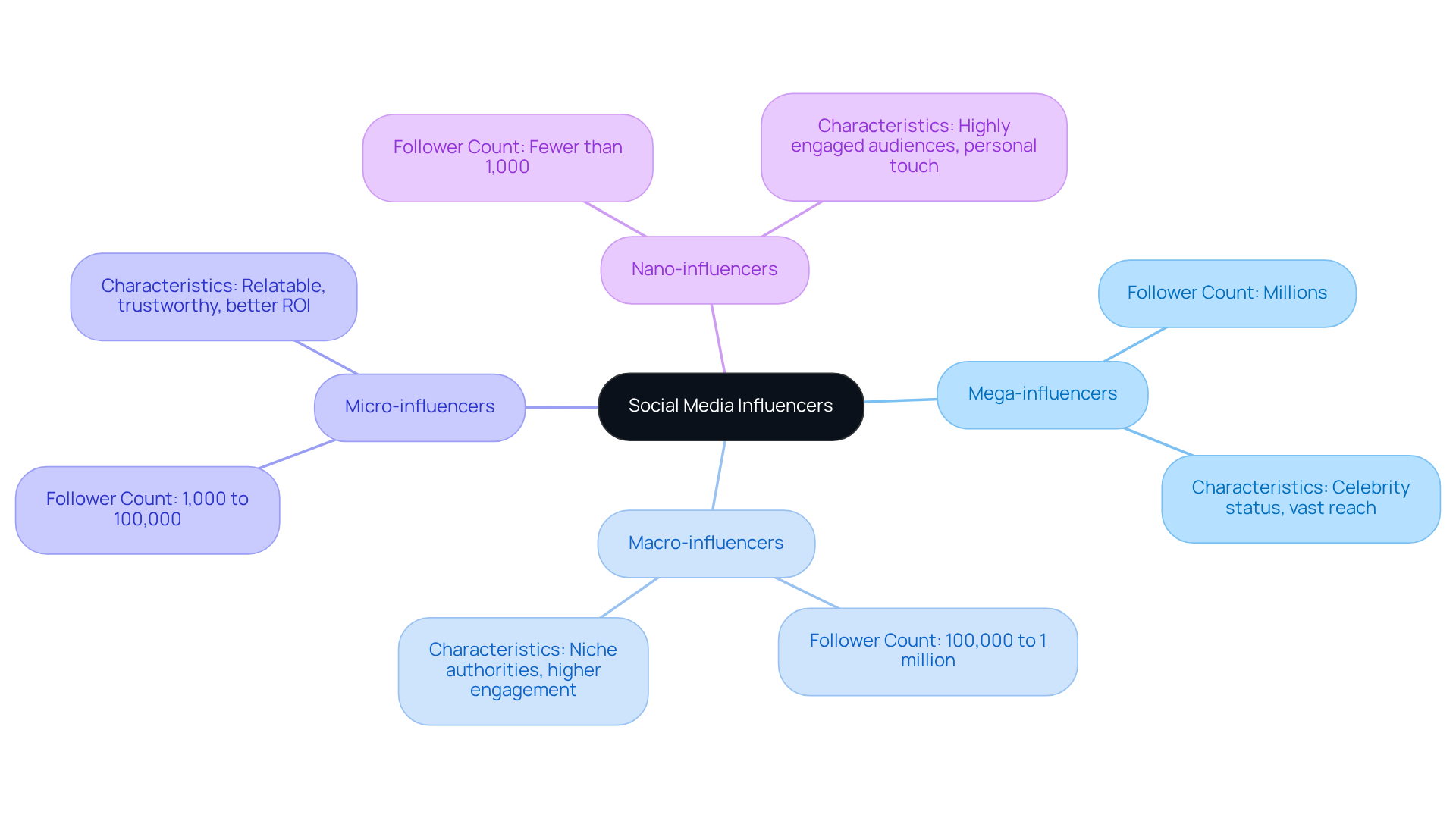
Social media personalities have become , establishing credibility and amassing substantial followings on platforms like Instagram, TikTok, and YouTube. Their influence extends beyond mere entertainment; they significantly impact the purchasing decisions of their audiences through engaging content. is crucial for businesses aiming to align their marketing strategies effectively:
- Mega-influencers: These are celebrities boasting millions of followers, commanding vast reach.
- Macro-influencers: Individuals with a following ranging from 100,000 to 1 million, often seen as authorities in their niches.
- Micro-influencers: Niche figures with 1,000 to 100,000 followers, who are often perceived as more relatable and trustworthy.
- Nano-influencers: Those with fewer than 1,000 followers, yet they can cultivate highly engaged audiences.
Recognizing these categories enables companies to find social media influencers who best align with their marketing objectives. To find social media influencers is crucial as they play a vital role in enhancing product visibility, fostering trust, and driving interaction through authentic content that resonates with their followers. In fact, by 2025, it is projected that . This statistic underscores the essential role of key figures in boosting visibility and fostering engagement.
Moreover, , highlighting the increasing significance of these figures in marketing strategies. Notably, . Are you ready to leverage the power of influencers in your marketing strategy?
Explore Effective Methods to Identify Influencers
Identifying the right influencers for your brand is crucial, and several effective methods can help you achieve this:
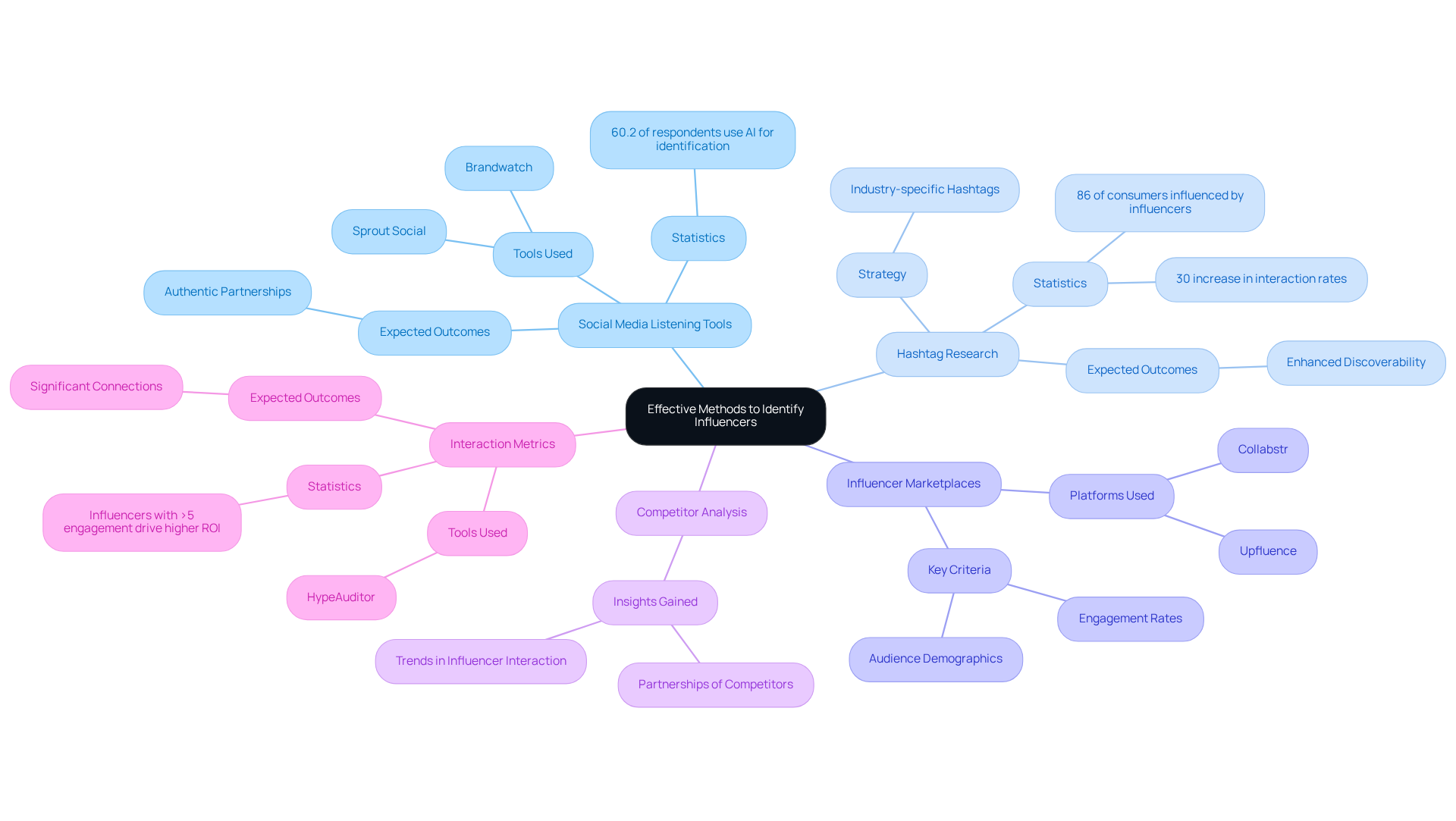
- : Leverage platforms like Brandwatch or Sprout Social to monitor conversations within your industry. These tools reveal key individuals already engaging with topics relevant to your brand, paving the way for authentic partnerships. In 2025, a striking 60.2% of respondents are actively using AI to identify key figures and optimize campaigns, underscoring the growing importance of technology in this area.
- : Conduct searches for industry-specific hashtags across social media platforms. This strategy helps pinpoint influencers actively posting content related to your niche, significantly enhancing your chances to who are suitable collaborators. Effective hashtag tactics are expected to boost discoverability, with interaction rates for posts utilizing relevant hashtags rising by as much as 30%. Moreover, 86% of consumers make a purchase inspired by an influencer at least once per year, highlighting the profound impact of effective on consumer behavior.
- : Utilize platforms such as Collabstr and Upfluence, which enable companies to search for content creators based on specific criteria, including audience demographics and engagement rates. These marketplaces simplify the process of discovering individuals who resonate with your values and target audience.
- : Examine which individuals your competitors are partnering with. This insight can uncover potential partnerships that may be advantageous for your brand while also highlighting trends in influencer interaction within your industry.
- : Prioritize influencers with high interaction rates over mere follower counts. Tools like HypeAuditor can effectively , ensuring that your collaborations yield significant connections. Influencers with engagement rates above 5% are expected to drive significantly higher ROI in 2025, making them more valuable partners.
By employing these methods, brands can to create a targeted list of potential advocates for collaboration. This strategic approach ultimately enhances marketing strategies and drives better results.
Evaluate Influencers Based on Audience and Content Quality
Once potential influencers are identified, the next step is to find by evaluating them based on and . Here’s how to effectively assess influencers:
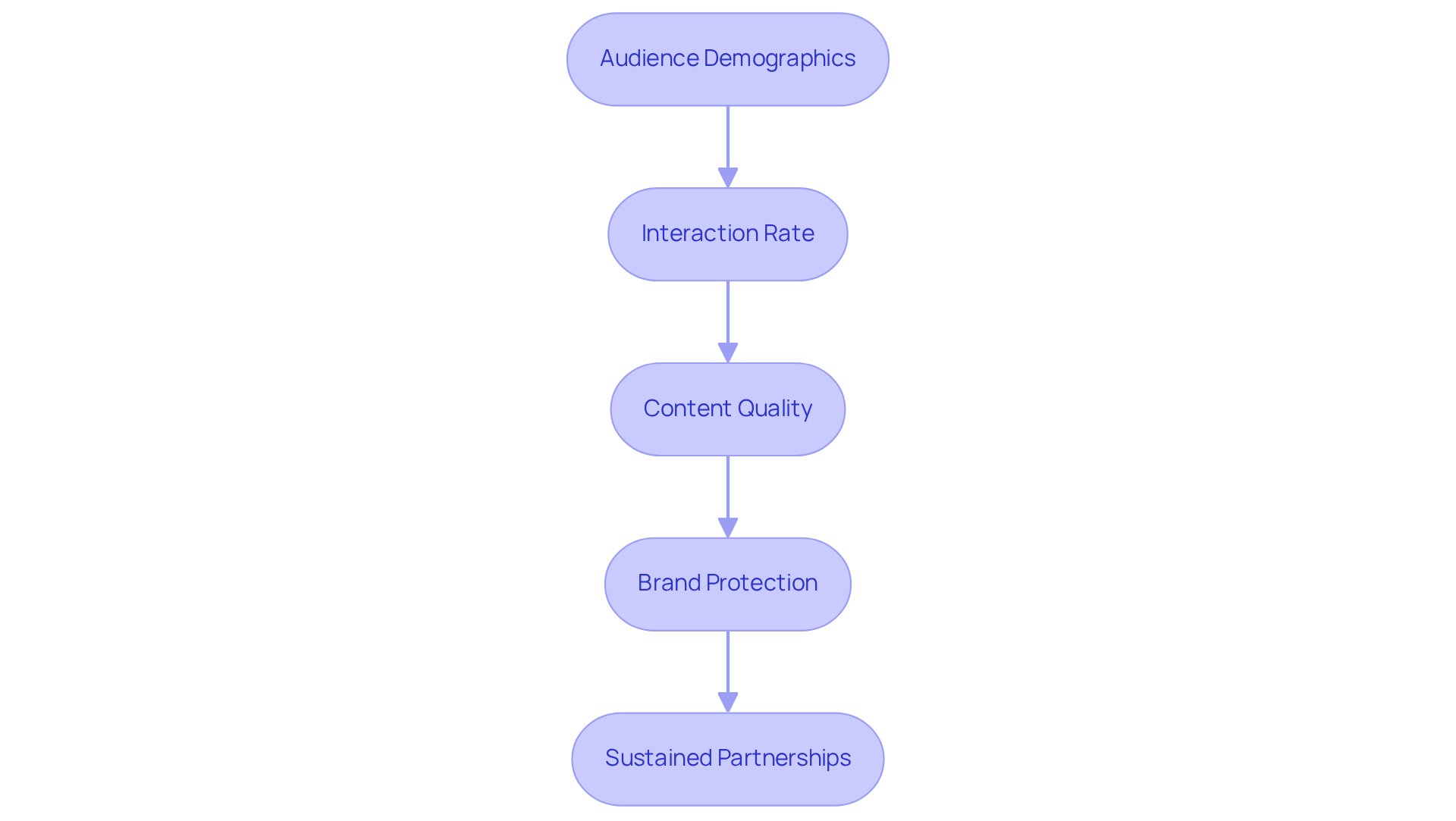
- : Analyze the influencer's audience to ensure it aligns with your target market. Look for information on age, gender, location, and interests, as these factors significantly influence participation and conversion rates.
- : Determine the by dividing total interactions (likes, comments, shares) by the number of followers. In 2025, micro-influencers showcase an average of 1.7%, while macro-influencers average around 0.6%. Notably, micro and nano creators dominate the marketing landscape, comprising almost 90% of all promoters and providing higher s than their macro counterparts. A higher engagement rate often signifies a more active and interested audience, making it a crucial metric for selecting representatives.
- : Review the influencer's previous posts to assess the quality of their content. Authenticity and creativity are key; content should resonate with your brand's messaging and values. Brands that prioritize high-quality content often see better engagement and ROI. In fact, is regarded as 8 times more effective than promotional posts, highlighting the significance of authenticity in content creation.
- : Investigate the influencer's previous partnerships and public image to guarantee consistency with your values. Steer clear of personalities with a background of contentious actions that could harm your company's reputation.
- : Consider individuals who focus on establishing lasting partnerships with companies. Such collaborations can lead to more genuine and impactful interactions, enhancing loyalty and audience trust.
By thoroughly evaluating these factors, brands can find social media influencers who genuinely resonate with their audience, ultimately enhancing their marketing efforts and driving measurable growth. Additionally, it's worth noting that 74% of consumers report purchasing a product based on an influencer's recommendation, and 80% of online users have made a purchase after seeing a social media ad, underscoring the effectiveness of influencer marketing.
Engage and Collaborate with Selected Influencers
After evaluating and selecting the right influencers, the next step is to engage and collaborate with them effectively:
- : Craft tailored messages when contacting key individuals. Highlight specific elements of their content that resonate with you and articulate how a partnership could be mutually beneficial. increases the likelihood of positive responses; in fact, . Furthermore, 60% of consumers rely on suggestions from rather than direct company messaging, underscoring the impact of marketing through these personalities.
- : Clearly define your expectations regarding deliverables, timelines, and compensation. and ensures alignment between both parties. In 2025, companies that establish report higher satisfaction rates in influencer collaborations, with 55% of firms believing enhances credibility, trust, and revenue growth.
- : Provide creators the artistic freedom to present your product in their distinctive manner. This authenticity resonates more effectively with their audience and enhances the campaign's overall impact. Successful collaborations often stem from allowing influencers to express their creativity. Notably, 61% of brands are primarily working with nano- and micro-influencers, focusing on authenticity over follower count.
- Regular Communication: Maintain open lines of communication throughout the collaboration. Regular check-ins can address concerns and keep the project on track. Effective communication is crucial, as it helps in managing expectations and adapting to any changes that may arise during the campaign.
- : After the campaign, analyze the results based on predefined KPIs such as engagement, reach, and conversions. This evaluation will inform future collaborations and refine your strategy. Brands that effectively can adapt their approaches; currently, , leading to improved outcomes in subsequent campaigns.
By following these steps, brands can successfully find to engage and collaborate with, resulting in impactful marketing campaigns that resonate with their target audience.

Conclusion
Finding the right social media influencers is crucial for brands aiming to elevate their marketing strategies. Understanding the diverse types of influencers and their unique strengths allows businesses to align their objectives with personalities that truly resonate with their target audience. The growing impact of social media on purchasing decisions underscores the vital role these figures play in shaping consumer behavior. Therefore, it’s imperative for brands to harness their influence effectively.
This article outlines several effective methods for identifying influencers:
- Utilizing social media listening tools
- Conducting hashtag research
- Exploring influencer marketplaces
These key strategies streamline the discovery process. These approaches ensure that selected influencers not only have the right audience alignment but also maintain high content quality. Evaluating potential partners based on interaction rates and past collaborations significantly enhances the likelihood of successful partnerships.
Ultimately, engaging and collaborating with influencers demands a thoughtful approach. This includes:
- Personalized outreach
- Setting clear expectations
- Allowing creative freedom
By nurturing genuine relationships and measuring campaign success, brands can craft impactful marketing initiatives that resonate deeply with their audience. As the landscape of influencer marketing evolves, adapting to these best practices will be essential for brands striving to thrive in 2025 and beyond.
Frequently Asked Questions
What are social media influencers?
Social media influencers are personalities on platforms like Instagram, TikTok, and YouTube who have established credibility and amassed substantial followings, significantly impacting their audience's purchasing decisions through engaging content.
What are the different types of social media influencers?
The different types of social media influencers include: - Mega-influencers: Celebrities with millions of followers and vast reach. - Macro-influencers: Individuals with 100,000 to 1 million followers, often seen as authorities in their niches. - Micro-influencers: Niche figures with 1,000 to 100,000 followers, perceived as more relatable and trustworthy. - Nano-influencers: Those with fewer than 1,000 followers, who can cultivate highly engaged audiences.
Why is it important for businesses to understand the different types of influencers?
Understanding the different types of influencers helps businesses align their marketing strategies effectively by finding influencers who best fit their marketing objectives.
How do social media influencers impact marketing?
Social media influencers enhance product visibility, foster trust, and drive interaction through authentic content that resonates with their followers, significantly impacting consumer purchasing choices.
What is the projected influence of social media on consumer buying choices by 2025?
By 2025, it is projected that 76% of consumers will be influenced by social media in their buying choices.
What is the expected growth of the marketing industry surrounding social media influencers by 2025?
The marketing industry surrounding social media personalities is expected to grow to $32.55 billion by 2025.
What do marketers believe is essential for promoting business success?
85% of marketers believe that finding social media influencers is essential for effective customer acquisition and promoting business success.
List of Sources
- Define Social Media Influencers and Their Role in Marketing
- prnewswire.com (https://prnewswire.com/news-releases/influencer-marketing-in-2025-new-data-reveals-what-works-what-costs-and-whats-next-302490369.html)
- 20 Surprising Influencer Marketing Statistics | Digital Marketing Institute (https://digitalmarketinginstitute.com/blog/20-influencer-marketing-statistics-that-will-surprise-you)
- 32 influencer marketing statistics to guide your brand’s strategy in 2026 (https://sproutsocial.com/insights/influencer-marketing-statistics)
- viralnation.com (https://viralnation.com/resources/blog/influencer-marketing-trends-2025-what-marketers-need-to-know)
- loudcrowd.com (https://loudcrowd.com/blog/top-trends-influencer-marketing-what-you-need-to-know-in-2025)
- Explore Effective Methods to Identify Influencers
- t2marketinginternational.com (https://t2marketinginternational.com/resources_t2/case_studies-dkny-uk2012)
- 85 vital influencer marketing statistics for your 2026 (https://iqfluence.io/public/blog/influencer-marketing-statistics)
- 32 influencer marketing statistics to guide your brand’s strategy in 2026 (https://sproutsocial.com/insights/influencer-marketing-statistics)
- mightyscout.com (https://mightyscout.com/blog/how-to-use-social-listening-for-influencer-marketing-in-2025)
- sociallypowerful.com (https://sociallypowerful.com/influencer/marketing/statistics)
- Evaluate Influencers Based on Audience and Content Quality
- The role of engagement rate in evaluating influencer campaign success - Agility PR Solutions (https://agilitypr.com/pr-news/social-media-influencer-marketing/the-role-of-engagement-rate-in-evaluating-influencer-campaign-success)
- Social media demographics to inform your 2026 strategy (https://sproutsocial.com/insights/new-social-media-demographics)
- stackinfluence.com (https://stackinfluence.com/influencer-marketing-stats-2025-key-numbers)
- inbeat.agency (https://inbeat.agency/blog/social-media-statistics)
- Engage and Collaborate with Selected Influencers
- slateteams.com (https://slateteams.com/blog/essential-influencer-marketing-tools-2025)
- Top Influencer Marketing Statistics for 2026 (https://aspire.io/blog/10-influencer-marketing-stats)
- 2026 Influencer Marketing Statistics: ROI, Trends & Platform Data (https://sociallyin.com/influencer-marketing-statistics)
- stackinfluence.com (https://stackinfluence.com/influencer-marketing-stats-2025-key-numbers)
- prnewswire.com (https://prnewswire.com/news-releases/influencer-marketing-in-2025-new-data-reveals-what-works-what-costs-and-whats-next-302490369.html)