
Introduction
In today's digital landscape, where a brand's online presence can determine its success, influencer marketing stands out as a formidable strategy for businesses aiming to forge genuine connections with their audiences. This approach not only enhances visibility but also cultivates trust and engagement through relatable voices that resonate with specific demographics. Yet, the challenge remains: how can brands navigate the complexities of selecting the right influencer marketing professionals? Ensuring alignment with core values and the ability to drive impactful results is crucial. This guide reveals the essential steps for hiring influencer marketing experts, empowering brands to fully leverage this dynamic marketing strategy.
Understand Influencer Marketing Basics
Influencer promotion stands as a strategic approach that leverages the reach and credibility of individuals with substantial followings on social media platforms. Understanding its core components is essential for any brand that wants to to thrive in today's digital landscape.
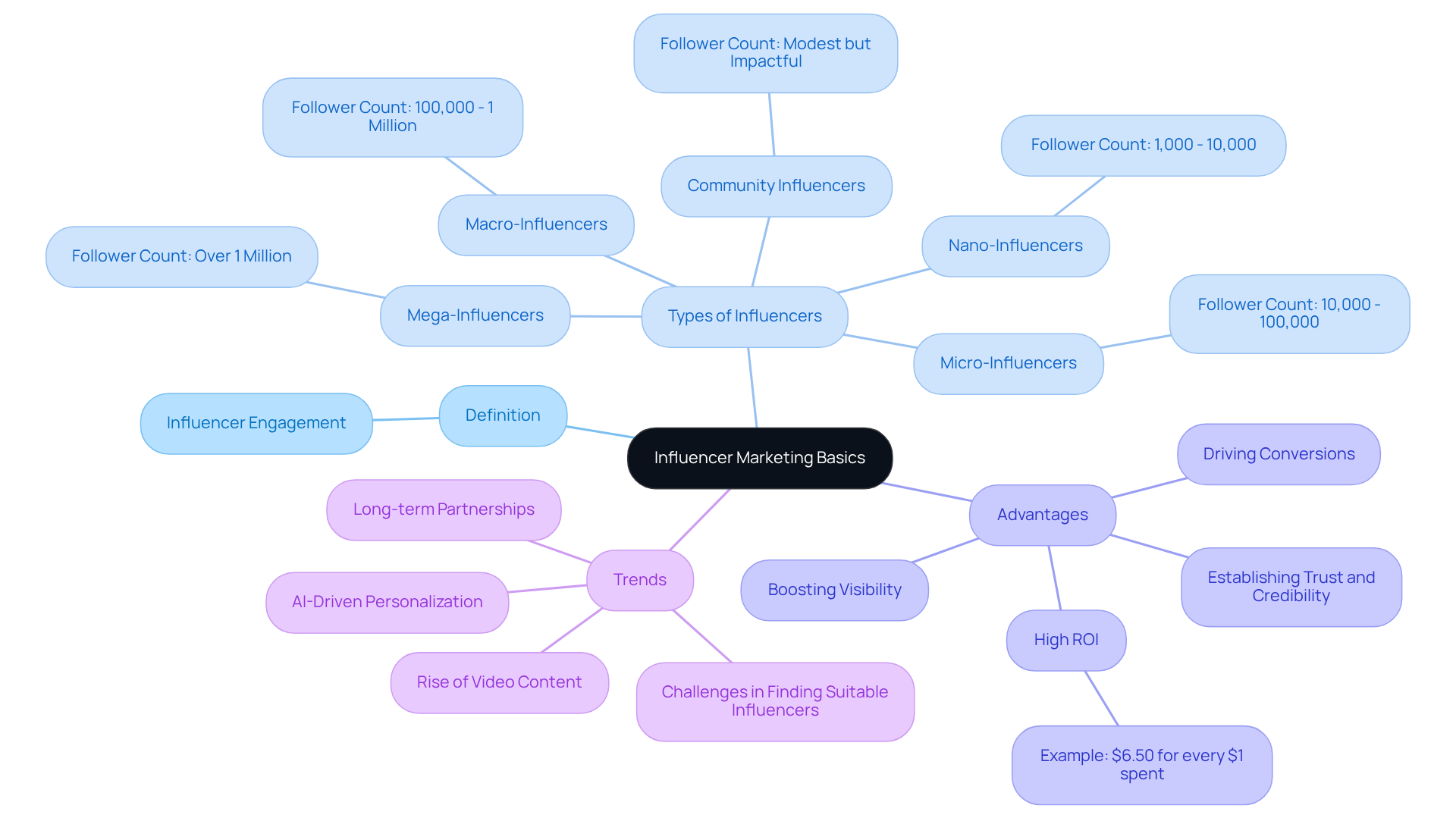
Definition: involves partnering with key figures to advertise your brand's products or services. These social media figures can range from celebrities and industry experts to everyday individuals with dedicated audiences. This partnership is not just about visibility; it’s about to align your brand with trusted voices that resonate with your target market.
Types of Influencers: Influencers are categorized based on their follower count:
- Mega-influencers: Typically boast over a million followers, often including celebrities.
- Macro-influencers: Have between 100,000 and 1 million followers, usually focusing on specific niches.
- Micro-influencers: Possess 1,000 to 100,000 followers and are recognized for their high engagement rates within their communities.
- Nano-influencers: With fewer than 1,000 followers, they can be particularly effective in niche markets due to their close-knit relationships with their audience.
- Community influencers: These influencers possess a modest yet impactful following in particular cities or districts, rendering them beneficial for local promotional efforts.
The advantages of include significantly boosting visibility, establishing trust and credibility, and driving conversions. By choosing to hire influencer marketing, companies can engage with specific audiences genuinely, often yielding a greater return on investment than conventional advertising techniques. For instance, , showcasing its effectiveness. Furthermore, 36% of companies indicate that content from social media personalities surpasses material produced by the companies themselves.
Trends: Staying updated on the latest trends in influencer marketing is crucial. is reshaping strategies, as these formats tend to generate higher engagement rates. In fact, , making it a vital platform for reaching younger demographics. Additionally, companies often face challenges in locating individuals that align with their product niche, which is a frequent issue in the sector.
By mastering these fundamentals, you will be well-equipped to identify the right advocates for your campaigns and recognize the substantial value they can bring to your brand when you hire influencer marketing.
Identify and Select Suitable Influencers
To effectively identify and select influencers for your marketing campaigns, follow these essential steps:
- Define Your Target Audience: Understanding your ideal customers is crucial. Who are they? What are their demographics, interests, and online behaviors? For instance, did you know that ? This statistic underscores the importance of choosing individuals who genuinely connect with this audience.
- : Leverage marketing platforms like Collabstr or Upfluence to find that meet your specific criteria, such as niche, follower count, and engagement rates. Prioritize individuals who have successfully collaborated with brands in your sector, as their experience can be invaluable.
- : When assessing potential influencers, focus on their engagement rates - likes, comments, and shares - rather than just follower counts. High engagement often indicates a more dedicated and responsive audience. For example, , significantly higher than that of larger accounts.
- Check Authenticity: It's essential to verify that the influencers you consider have genuine followers and aren't inflating their numbers with bots. Tools like HypeAuditor can help you of a creator's audience, ensuring your investment reaches real potential customers. Moreover, 58% of marketers now use AI to hire for their campaigns, highlighting the growing importance of technology in this selection process.
- Review Content Style: Take a close look at the influencer's previous content to ensure their style aligns with your company's voice and values. Consistency in messaging and quality of content is vital, as it reflects on your reputation. As Shuai Guan aptly states, "Trust drives results: Micro-influencers are the MVPs," emphasizing the value of authentic content.
- : Compile a list of potential influencers who meet your criteria and align with your brand's objectives. This streamlined approach will facilitate the next steps in the hiring process, enabling us to hire for more focused outreach and collaboration.

Negotiate Terms and Structure Agreements
Once suitable influencers have been identified, the next step is to hire experts to and structure agreements effectively. How can you navigate this process successfully?
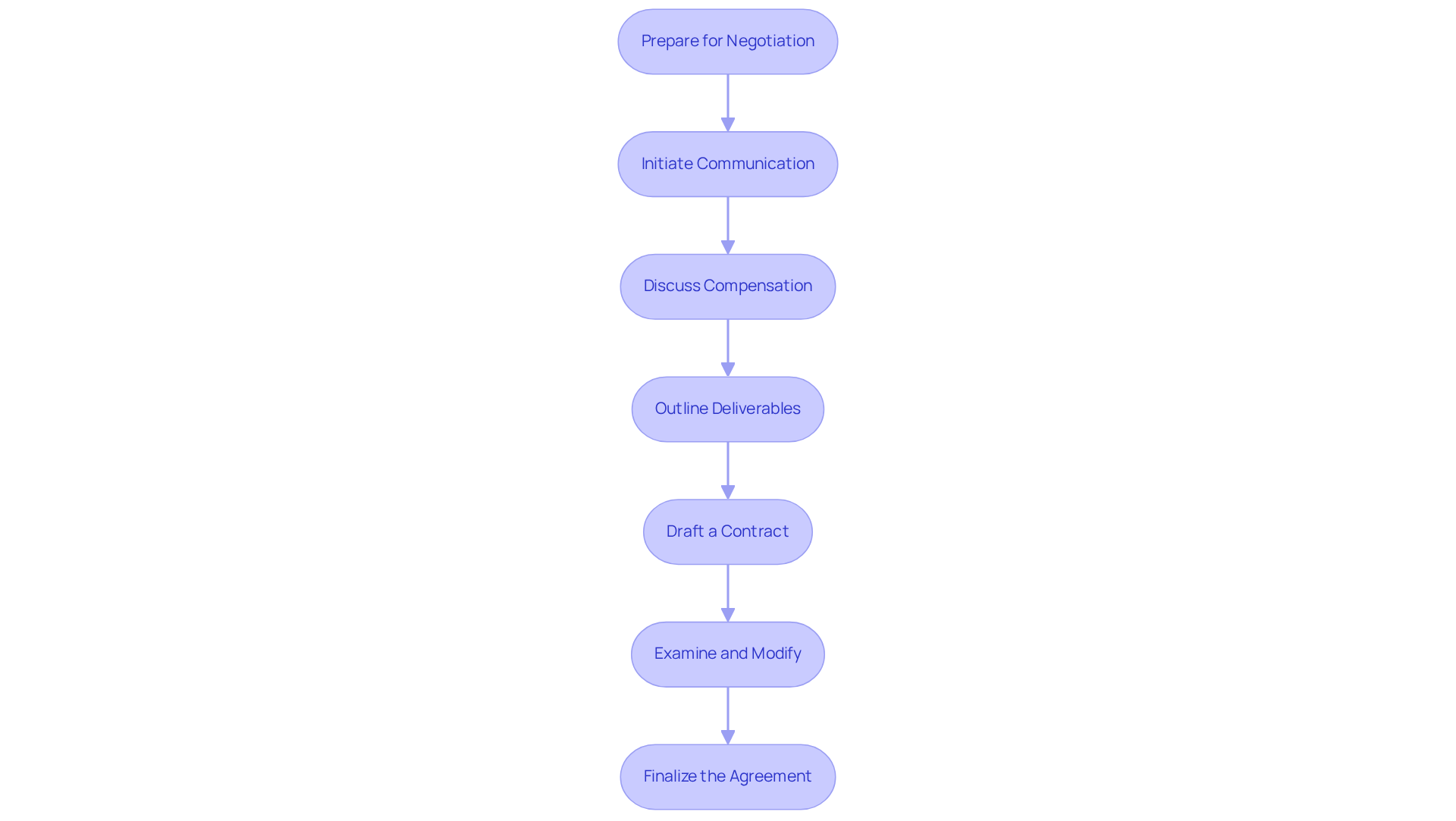
- Prepare for Negotiation: Establish your budget, , and expectations from the individual promoting your brand. Clearly outline deliverables, timelines, and compensation to set a solid foundation for discussions.
- Initiate Communication: Reach out to the social media personality or their management team to express interest in collaboration. Maintain professionalism and clarity in your communication to foster a positive initial impression.
- Discuss Compensation: Be upfront about your budget and explore various compensation models, such as flat fees, commission-based structures, or product exchanges. and respected in the agreement. Notably, 41% of brands now compensate creators for their efforts, highlighting the evolving dynamics of remuneration in promotional collaborations.
- Outline Deliverables: Clearly define expectations regarding the type of content, number of posts, and specific messaging or hashtags to be included. This clarity helps prevent misunderstandings and ensures alignment on campaign goals.
- : Create a formal agreement that encapsulates all discussed terms, including payment structures, content rights, deadlines, and any exclusivity clauses. A well-structured contract protects both parties and establishes accountability.
- Examine and Modify: Allow the individual to review the contract and suggest alterations. Being open to negotiation can strengthen the working relationship and lead to a more collaborative partnership.
- : Once both parties agree on the terms, sign the contract and retain a copy for your records. This formalizes the partnership and clarifies expectations moving forward.
In 2026, for are essential. A significant 59% of marketers intend to hire to raise their budgets for promotion, as indicated by recent surveys. Understanding the nuances of , such as hybrid models that combine cash payments with performance-based incentives, can enhance the effectiveness of your campaigns. Additionally, incorporating clear performance metrics in contracts can help measure ROI and ensure that both parties are aligned on success criteria. As highlighted by Hub, with are an effective method of promotion, underscoring the significance of these alliances.
Track and Measure Campaign Performance
To effectively track and measure the performance of your campaigns, consider these :
- Set Clear Goals: Before launching your campaign, define what success looks like. This could include metrics such as brand awareness, engagement, website traffic, or sales conversions.
- Use : Implement like Google Analytics, UTM parameters, or affiliate links to generated by promotional content. These tools assist in linking results directly to the contributor's efforts.
- Monitor : Track key performance indicators (KPIs) such as likes, comments, shares, and click-through rates (CTR) to gauge audience engagement with the creator's content.
- Analyze Reach and Impressions: Measure how many individuals viewed the posts of the content creator and how many interacted with them. This helps assess the overall visibility of your campaign.
- Evaluate ROI: Calculate the by comparing the revenue generated from the campaign against the costs incurred. This will assist you in comprehending the financial effect of your partnership with social media personalities.
- Gather Feedback: After the campaign, request input from the social media personality and analyze audience responses. This can provide insights into what worked well and what could be improved for future campaigns.
- Report Findings: Compile a report summarizing the campaign's performance, including successes and areas for improvement. Use this data to inform your future hire strategies.

Conclusion
Hiring influencer marketing professionals is not just a strategic decision; it’s a game-changer that can dramatically elevate a brand's visibility and credibility in the fiercely competitive digital landscape. By grasping the essentials of influencer marketing, brands can forge authentic connections with their target audiences through trusted voices, ultimately driving engagement and conversions.
To successfully hire influencer marketing experts, brands should follow four critical steps:
- Understand the basics of influencer marketing
- Identify and select suitable influencers
- Negotiate terms and structure agreements
- Track and measure campaign performance
Each of these steps is designed to ensure that brands not only find the right influencers but also cultivate fruitful partnerships that yield measurable results.
Incorporating influencer marketing into a brand's strategy transcends mere trend-following; it’s about leveraging genuine connections to foster trust and stimulate business growth. As the landscape continues to evolve, staying informed about the latest tools and best practices will empower brands to maximize their investment in influencer collaborations. This proactive approach will lead to more successful marketing campaigns, ensuring that brands remain at the forefront of their industries.
Frequently Asked Questions
What is influencer marketing?
Influencer marketing is a strategic approach that involves partnering with individuals who have substantial followings on social media to promote a brand's products or services. It focuses on aligning brands with trusted voices that resonate with their target market.
What are the different types of influencers?
Influencers are categorized based on their follower count: - Mega-influencers: Over 1 million followers, often celebrities. - Macro-influencers: 100,000 to 1 million followers, usually focused on specific niches. - Micro-influencers: 1,000 to 100,000 followers, known for high engagement rates. - Nano-influencers: Fewer than 1,000 followers, effective in niche markets due to close relationships with their audience. - Community influencers: Modest followings in specific cities or districts, beneficial for local promotions.
What are the advantages of hiring influencer marketing?
The advantages include increased visibility, enhanced trust and credibility, and improved conversion rates. Influencer marketing can yield a return of approximately $6.50 for every $1 invested, and 36% of companies find that content from social media influencers performs better than their own.
How does video content impact influencer marketing?
The rise of video content on platforms like TikTok and Instagram Reels is reshaping influencer marketing strategies, as these formats tend to generate higher engagement rates. TikTok, in particular, has a significantly higher engagement rate than Instagram, making it essential for reaching younger demographics.
What challenges do companies face in influencer marketing?
Companies often struggle to find influencers that align with their product niche, which is a common issue in the influencer marketing sector.
Why is it important to understand influencer marketing basics?
Understanding the basics of influencer marketing is crucial for brands that want to thrive in the digital landscape. It helps in identifying the right advocates for campaigns and recognizing the substantial value they can bring to a brand.
List of Sources
- Understand Influencer Marketing Basics
- metricool.com (https://metricool.com/influencer-marketing-trends-2)
- 40+ Influencer Marketing Stats for 2026 Strategy (https://driveresearch.com/market-research-company-blog/influencer-marketing-statistics)
- marketingweek.com (https://marketingweek.com/2026-social-media-influencer-marketing)
- Influencer Marketing in 2026: Key Stats That Matter (https://thunderbit.com/blog/influencer-marketing-stats)
- sixthcitymarketing.com (https://sixthcitymarketing.com/influencer-marketing-statistics)
- Identify and Select Suitable Influencers
- Influencer Marketing in 2026: Key Stats That Matter (https://thunderbit.com/blog/influencer-marketing-stats)
- sixthcitymarketing.com (https://sixthcitymarketing.com/influencer-marketing-statistics)
- 40+ Influencer Marketing Stats for 2026 Strategy (https://driveresearch.com/market-research-company-blog/influencer-marketing-statistics)
- emarketer.com (https://emarketer.com/content/brands-turn-influencer-marketing-2026--key-issues-remain)
- 85 vital influencer marketing statistics for your 2026 (https://iqfluence.io/public/blog/influencer-marketing-statistics)
- Negotiate Terms and Structure Agreements
- Influencer Marketing in 2026: Key Stats That Matter (https://thunderbit.com/blog/influencer-marketing-stats)
- sixthcitymarketing.com (https://sixthcitymarketing.com/influencer-marketing-statistics)
- Influencer Marketing Agreements in 2026: Protecting ROI and Scaling Partnerships (https://brands.joinstatus.com/influencer-marketing-agreements?hs_amp=true)
- influenceflow.io (https://influenceflow.io/resources/campaign-budgets-and-creator-payments-the-complete-2026-guide)
- Track and Measure Campaign Performance
- Influencer Marketing Strategy: A 5-Step Guide for 2026 - Shopify (https://shopify.com/enterprise/blog/influencer-marketing-strategy)
- 13 Steps to Measure Influencer Marketing Success 2026 (https://brands.joinstatus.com/steps-measure-influencer-marketing)
- Influencer Marketing in 2026: Key Stats That Matter (https://thunderbit.com/blog/influencer-marketing-stats)
- awisee.com (https://awisee.com/blog/track-influencer-marketing-performance)