
Introduction
In an era where digital interactions significantly influence consumer behavior, social media engagement stands as a cornerstone for brand success. The ability to connect meaningfully with audiences on platforms like Instagram and TikTok not only enhances visibility but also drives sales. Studies reveal that a substantial percentage of users make purchases influenced by social media content. However, as engagement rates fluctuate and competition intensifies, brands confront the urgent challenge of distinguishing themselves in a crowded marketplace.
What strategies can they adopt to capture attention and foster lasting connections with their audience? Brands must explore innovative approaches that not only engage but also resonate deeply with consumers, ensuring they remain top-of-mind in an ever-evolving digital landscape.
Define Social Media Engagement and Its Importance
Social media engagement is crucial for any brand aiming to thrive in today's digital landscape. It encompasses the interactions users have with your content on platforms like TikTok, Instagram, and Facebook - think likes, shares, comments, and more. These interactions not only reflect user interest but also significantly impact your visibility and reach. According to Sprout's 2025 Content Benchmarks Report, interaction rates have surged by nearly 20% this year, despite a slight dip in content volume. This trend underscores the in social media interactions.
High levels of engagement foster , enhance , and ultimately lead to . In fact, a staggering 80% of internet users have made a purchase after seeing a social media ad, illustrating the direct connection between engagement and sales. In a competitive environment, brands must prioritize understanding to ensure their success.
Experts agree that understanding hinges on the quality of connections rather than merely the frequency of posts. Brands that focus on creating unique, engaging content that resonates with their audience are more likely to learn and achieve positive results. Additionally, and attract new customers, as it encourages consumers to share their experiences. Moreover, optimizing content for visibility through keyword-rich titles and searchable captions is vital for maximizing engagement.
In conclusion, effective social media participation transcends mere interaction; it represents a strategic approach that can significantly boost visibility and foster long-term consumer loyalty. Balancing paid marketing campaigns with organic content is essential for maintaining visibility in the face of complex social media algorithms. Are you ready to elevate your social media strategy?

Identify Key Metrics for Measuring Engagement
To effectively measure , brands must focus on several key metrics that reveal the true impact of their efforts:
- : This crucial metric indicates the level of interaction relative to your audience size. Calculate it by dividing total interactions (likes, comments, shares) by total followers and multiplying by 100. A healthy interaction rate typically falls between 1% to 5%, signaling an effective connection with your audience. As industry experts note, "an of 1% to 5% is generally accepted to be good."
- : Reach measures how many unique users viewed your content, while impressions count the total number of times your content was displayed, regardless of clicks. Understanding the distinction between these metrics is essential; for instance, a might suggest that your content isn't being shown often enough to engage users.
- : This metric indicates how frequently individuals click on your content in relation to how many times it was seen. A higher CTR signifies effective content that resonates with the audience. For example, a CTR of 3% is considered good, indicating strong involvement.
- : These metrics reflect how often users share your content with their networks, significantly amplifying your reach. Encouraging shares can enhance visibility and promote community involvement. Target s for shares are between 0.04% and 0.10% per impression, while saves should aim for 0.08% to 0.15% per impression. Case studies have shown that companies focusing on shareable content experienced a significant rise in audience engagement.
- Comments: The number and quality of comments provide insights into how well your content resonates with your audience. Engaging in conversations through comments not only boosts visibility but also builds community trust and loyalty.
By diligently monitoring these metrics, along with like CSAT, companies can gain a comprehensive understanding of their and learn how to improve . This approach allows them to identify areas for enhancement, ultimately driving better performance in their social media strategies.

Implement Effective Strategies to Boost Engagement
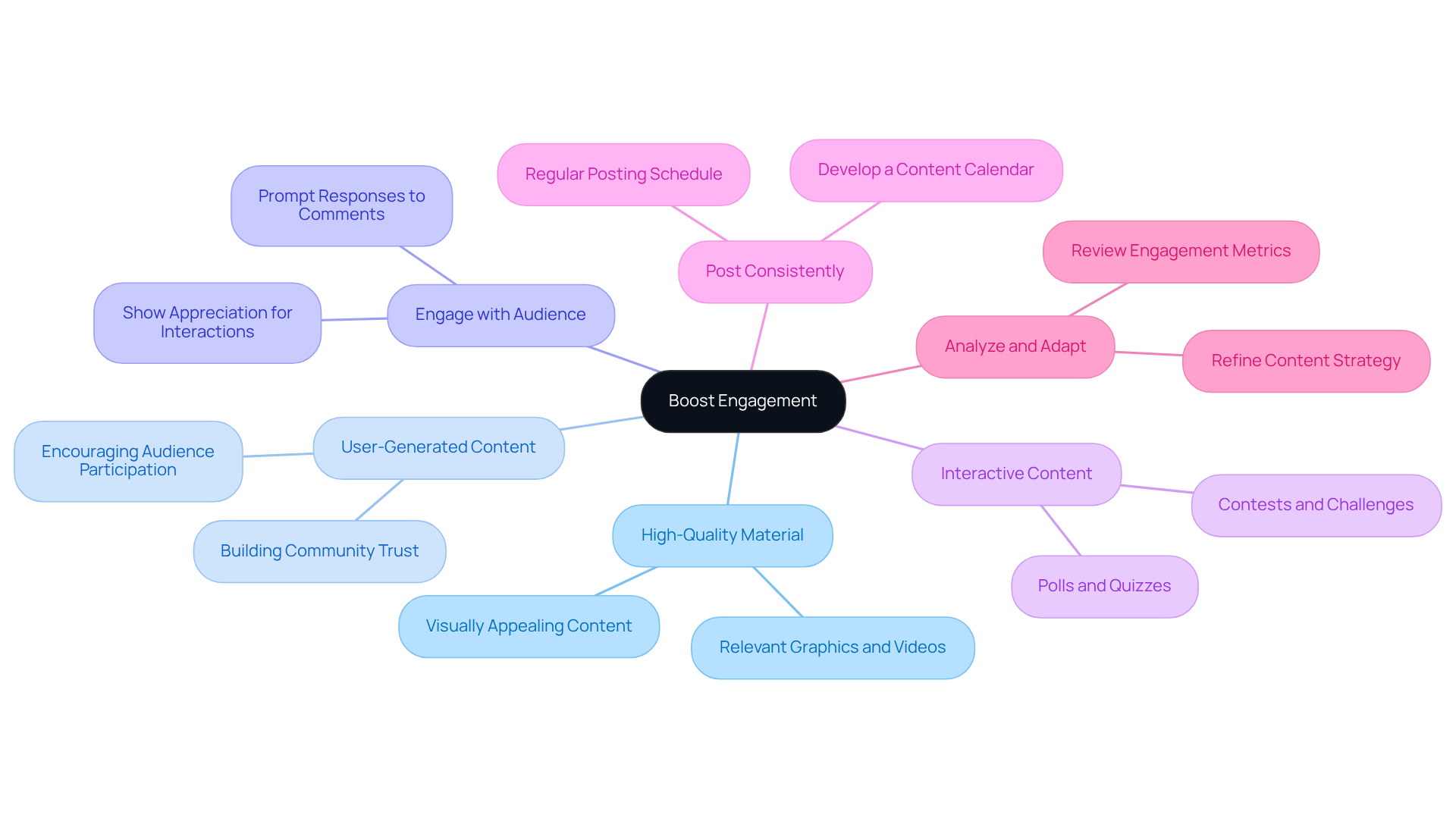
To significantly enhance , brands must learn how to improve by adopting effective strategies that resonate with their audience.
- : Invest in visually appealing and relevant content that captures attention. High-quality images, videos, and graphics are essential to engage your audience effectively.
- : Encourage your audience to share their experiences with your brand. UGC not only fosters a sense of community but also serves as authentic material that can boost trust among potential customers.
- Engage with Your Audience: Respond promptly to comments and messages. Showing appreciation for user interactions cultivates a strong community and encourages further engagement.
- Utilize : Incorporate polls, quizzes, and contests to stimulate participation. can significantly elevate engagement rates, making your brand more relatable.
- Post Consistently: Develop a to ensure regular posting. Consistency keeps your audience informed and engaged with your brand, reinforcing their connection.
- : Regularly review your engagement metrics to identify what works and what doesn’t. Use this data to continuously refine your content strategy, ensuring it remains effective.
By implementing these tactics, companies can discover how to improve and create a more captivating social media presence that truly connects with their audience.
Utilize Tools for Tracking and Analyzing Engagement
To effectively track and analyze , brands must utilize various :
- Hootsuite: This platform empowers users to manage multiple social media accounts seamlessly, schedule posts, and evaluate across various platforms.
- Sprout Social: Renowned for its robust , Sprout Social provides , audience demographics, and content performance, allowing brands to refine their approach.
- Buffer: Buffer not only offers scheduling capabilities but also delivers analytics to track post performance in terms of engagement, ensuring brands stay informed.
- Google Analytics: While primarily a web analytics tool, Google Analytics can effectively , providing insights into how social media influences overall business objectives.
- Socialbakers: This tool leverages AI-powered insights to enhance , helping companies understand their audience better and improve their .
By leveraging these tools, brands can gain invaluable insights into their . This enables them to make that enhance their overall strategy, ultimately leading to greater success in their marketing efforts.

Conclusion
Social media engagement stands as a crucial pillar for brands aiming to excel in the digital arena. It encompasses the myriad interactions users have with content - likes, shares, comments - that not only signify user interest but also play a pivotal role in determining visibility and reach. Prioritizing engagement over sheer content volume is not just beneficial; it’s essential for nurturing brand loyalty and strengthening customer relationships, ultimately driving conversion rates.
This article outlines several key strategies to enhance social media engagement. These include:
- Crafting high-quality content
- Leveraging user-generated material
- Ensuring consistent interaction with the audience
Furthermore, measuring engagement through metrics like engagement rate, reach, and click-through rate offers invaluable insights into performance. Tools such as Hootsuite and Sprout Social can significantly bolster tracking and analysis, empowering brands to make informed, data-driven decisions.
In today’s competitive digital landscape, brands must acknowledge engagement as a strategic avenue to connect with their audience. By implementing effective strategies and utilizing the right tools, businesses can markedly elevate their social media presence and foster customer loyalty. Embracing these practices not only amplifies visibility but also cultivates deeper relationships with consumers, paving the way for sustained success in the ever-evolving realm of social media.
Frequently Asked Questions
What is social media engagement?
Social media engagement refers to the interactions users have with content on platforms like TikTok, Instagram, and Facebook, including likes, shares, comments, and more.
Why is social media engagement important for brands?
Social media engagement is crucial for brands because it reflects user interest, impacts visibility and reach, fosters brand loyalty, enhances customer relationships, and leads to increased conversion rates.
How much have interaction rates changed recently?
According to Sprout's 2025 Content Benchmarks Report, interaction rates have surged by nearly 20% this year, despite a slight dip in content volume.
What is the relationship between social media engagement and sales?
A staggering 80% of internet users have made a purchase after seeing a social media ad, illustrating a direct connection between engagement and sales.
What do experts suggest for improving social media engagement?
Experts suggest that improving social media engagement depends on the quality of connections rather than the frequency of posts. Creating unique, engaging content that resonates with the audience is key.
How can user-generated content impact social media engagement?
User-generated content can enhance brand credibility and attract new customers by encouraging consumers to share their experiences, which can lead to increased engagement.
What strategies can brands use to maximize engagement?
Brands can maximize engagement by optimizing content for visibility through keyword-rich titles and searchable captions, as well as balancing paid marketing campaigns with organic content.
What does effective social media participation involve?
Effective social media participation involves a strategic approach that boosts visibility and fosters long-term consumer loyalty, going beyond mere interaction.
List of Sources
- Define Social Media Engagement and Its Importance
- prnewswire.com (https://prnewswire.com/news-releases/marketers-urged-to-level-up-social-media-to-turn-engagement-into-business-value-says-info-tech-research-group-in-new-resource-302608884.html)
- chiefmarketer.com (https://chiefmarketer.com/marketers-are-looking-beyond-top-of-funnel-when-gauging-social-media-effectiveness)
- The Power Of Social Media In Modern Marketing (https://forbes.com/councils/forbesbusinesscouncil/2024/10/09/the-power-of-social-media-in-modern-marketing)
- The Impact of Social Media on Brand Management (https://indwes.edu/articles/2025/04/the-impact-of-social-media-on-brand-management)
- inbeat.agency (https://inbeat.agency/blog/social-media-statistics)
- Identify Key Metrics for Measuring Engagement
- key-g.com (https://key-g.com/blog/key-social-media-metrics-to-track-in-2025-and-why-they-matter)
- The social media metrics to track in 2026 (and why) (https://sproutsocial.com/insights/social-media-metrics)
- blog.hootsuite.com (https://blog.hootsuite.com/calculate-engagement-rate)
- 100poundsocial.com (https://100poundsocial.com/social-media-metrics)
- talkwalker.com (https://talkwalker.com/blog/social-media-metrics)
- Implement Effective Strategies to Boost Engagement
- slateteams.com (https://slateteams.com/blog/best-social-media-strategies-for-engagement-growth)
- sciencedirect.com (https://sciencedirect.com/science/article/pii/S0747563225000895)
- User-Generated Content: UGC Types, Benefits & Best Practices (https://business.com/articles/user-generated-content)
- socialtargeter.com (https://socialtargeter.com/blogs/the-role-of-user-generated-content-in-boosting-brand-engagement)
- cdpinstitute.org (https://cdpinstitute.org/business-show-media/social-media-strategies-that-drive-real-business-growth-in-2025)
- Utilize Tools for Tracking and Analyzing Engagement
- blog.hootsuite.com (https://blog.hootsuite.com/average-engagement-rate)
- databox.com (https://databox.com/social-media-analytics)
- blog.hootsuite.com (https://blog.hootsuite.com/hootsuite-g2-fall-2025)
- adamconnell.me (https://adamconnell.me/social-media-monitoring-tools)
- replibee.com (https://replibee.com/blog/12-best-social-media-engagement-tools-for-2025)