Introduction
Brand awareness is a cornerstone of successful marketing, shaping consumer trust and loyalty in an increasingly competitive landscape. As brands navigate the complexities of 2025, the challenge isn't just recognition; it's about forging meaningful connections that resonate with consumers across various platforms.
What innovative strategies can businesses adopt to elevate their visibility and foster lasting relationships with their audience? This guide explores effective methods and essential tools that can transform brand awareness from a mere concept into a powerful driver of growth and engagement.
Understand Brand Awareness and Its Importance
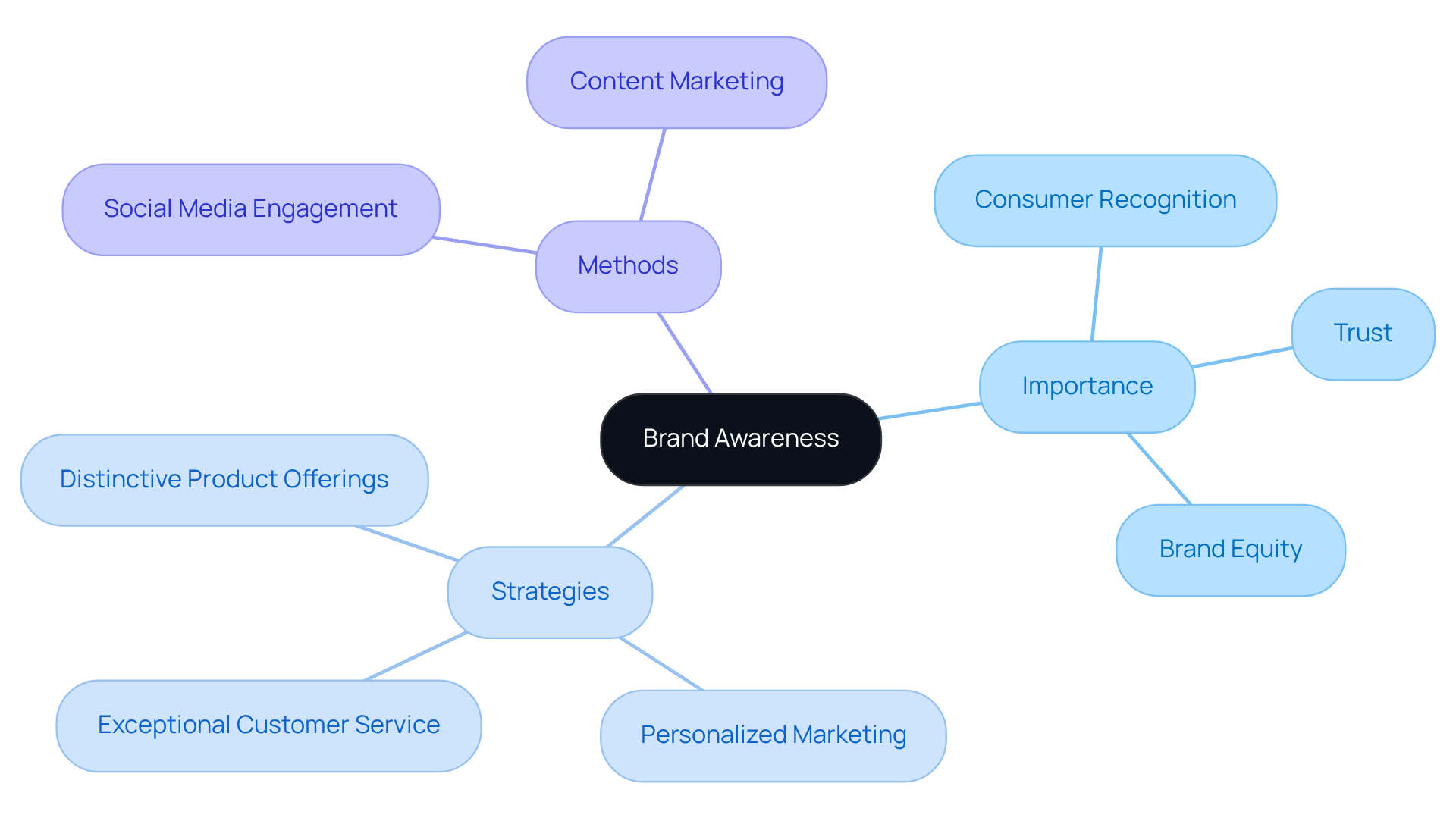
Consumer recognition is crucial for successful marketing; it reflects how well individuals identify and remember a brand. This recognition fosters trust, builds , and sets a company apart from its competitors. Notably, studies reveal that 61% of consumers prefer purchasing from familiar brands, underscoring the strong connection between recognition and customer loyalty. As we approach 2025, with consumers engaging with brands across multiple touchpoints, establishing a robust presence becomes imperative.
Brands that prioritize recognition not only raise but also create . This can be achieved through:
- Personalized marketing
Effective will leverage innovative strategies, such as:
to raise , connect with consumers, and drive sales.
By crafting and ensuring consistent messaging across all channels, companies can cultivate loyalty and encourage repeat purchases. This strategy ultimately leads to increased revenue and market share. Furthermore, utilizing , including reviews and testimonials, can broaden reach and provide authentic endorsements, further enhancing brand recognition.
Implement Effective Strategies to Raise Brand Awareness
To effectively raise brand awareness, consider these powerful strategies:
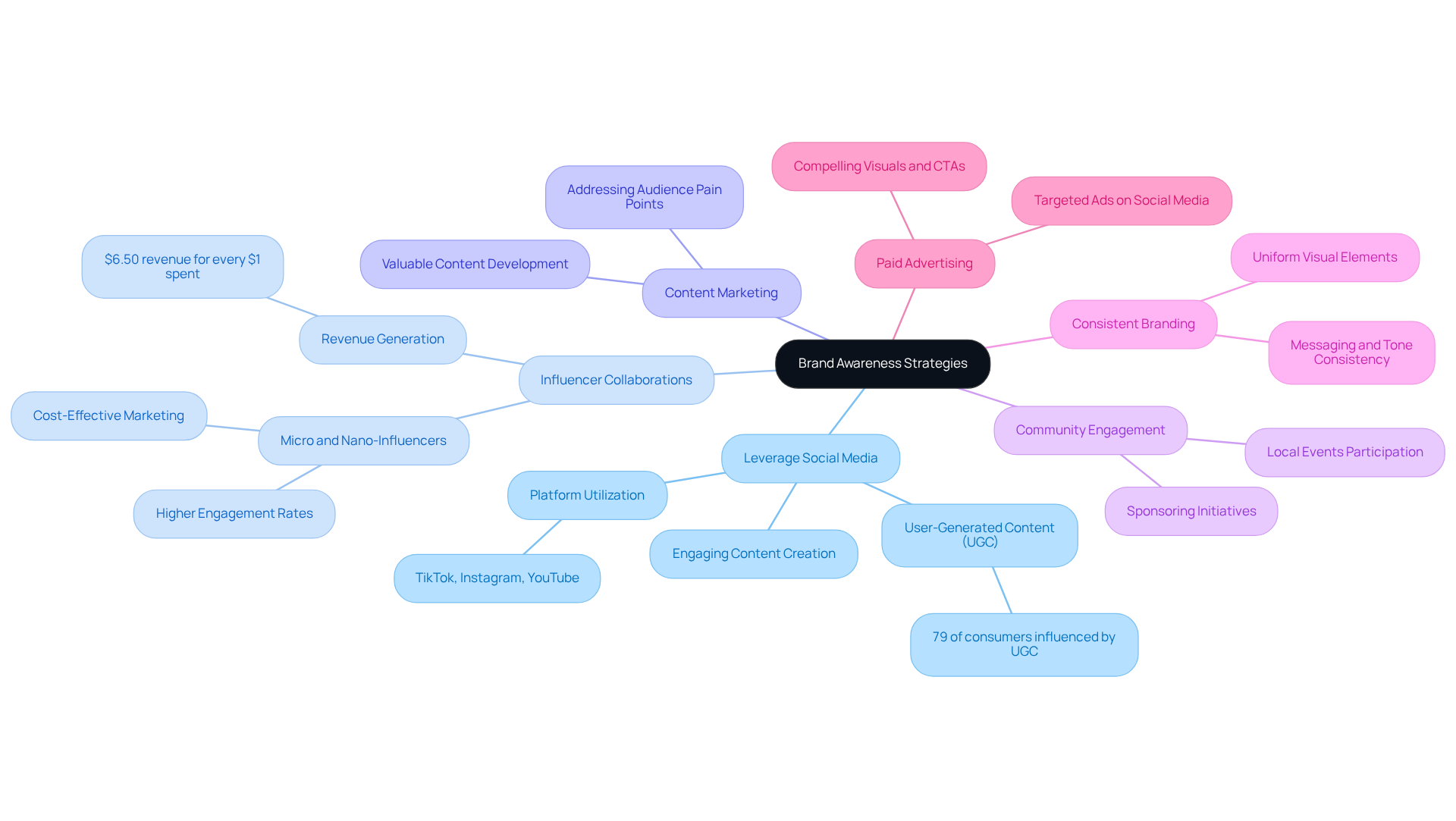
- : Utilize platforms like TikTok, Instagram, and YouTube to create engaging content that resonates with your target audience. Regularly posting fosters community and authenticity, with 79% of consumers indicating that UGC significantly influences their purchasing decisions.
- Influencer Collaborations: Partner with who align with your brand values. Micro-influencers boast between 10,000 and 100,000 followers, while nano-influencers range from 1,000 to 10,000. These influencers often achieve higher engagement rates and can introduce your product to a wider audience, enhancing credibility. In fact, generates an impressive average of $6.50 in revenue for every $1 spent, making it a cost-effective strategy for visibility. As Jeremy Jacobowitz aptly states, "A local influencer's endorsement doesn't just drive sales; it builds trust."
- : Develop valuable content that addresses your audience's pain points. This could include blogs, videos, or podcasts that not only promote your brand but also provide useful information. and recall of your company.
- Community Engagement: Actively participate in local events or sponsor . This approach not only but also cultivates goodwill and a positive image, fostering emotional connections with your audience. Consistent promotion by influencers nurtures genuine relationships, transforming them into loyal advocates.
- : Ensure your branding is uniform across all platforms. This includes visual elements, messaging, and tone, which strengthens recognition of your identity. In can lead to disengagement from your target audience and forgetfulness about your business.
- Paid Advertising: Invest in and search engines to reach specific demographics. Use compelling visuals and clear calls to action to drive engagement. With over 4.89 billion people using social media worldwide, targeted advertising can significantly enhance your reach.
By implementing these strategies, companies can effectively raise brand awareness, boost their visibility, and foster a deeper connection with their audience, ultimately driving sales and growth.
Measure and Optimize Brand Awareness Efforts
To effectively measure and optimize your efforts, follow these essential steps:
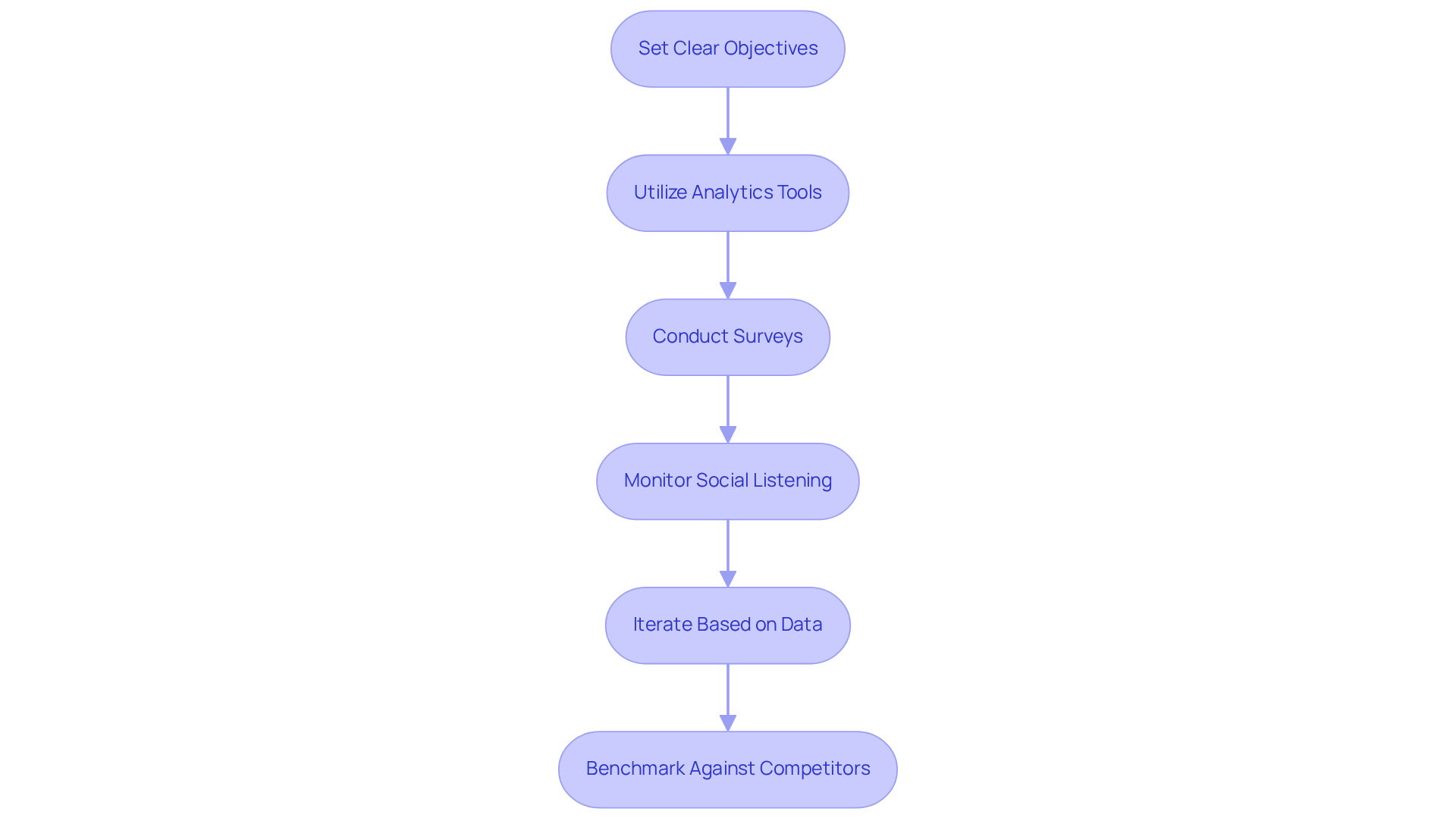
- Set : Establish specific goals for your promotional campaign. Are you aiming to increase website traffic, enhance , or improve brand recall? will help to raise and guide your strategy.
- : Leverage tools like Google Analytics and social media insights to . Focus on engagement rates, impressions, and demographics to gain a comprehensive view of your visibility. Consistently monitor awareness metrics daily through automated tools to ensure timely adjustments.
- Conduct Surveys: Implement surveys to evaluate recognition and perception of your product among your target audience. Customize questions to , offering direct insights into consumer attitudes. Surveys can help you understand how well consumers recall your brand, which can ultimately raise when prompted.
- : Track conversations about your brand on social media platforms. Tools such as Hootsuite and Brandwatch can help and identify areas for improvement. Staying attuned to audience feedback is crucial; improvements in social engagement can help raise and are often observed within 2-4 weeks.
- Iterate Based on Data: Analyze the information gathered to enhance your approaches. If certain content types or platforms demonstrate higher engagement, allocate more resources to those areas to maximize impact. Continuous measurement allows you to raise through real-time adjustments to your campaigns.
- Benchmark Against Competitors: Assess your awareness in comparison to rivals. This analysis can reveal insights into market positioning and highlight opportunities for differentiation. Understanding your Share of Voice (SoV) provides a clearer picture of your presence in the market.
By consistently evaluating and enhancing your reputation efforts, you can sustain relevance and raise to promote growth in and engagement. Remarkable campaigns, like Coca-Cola's 'Share a Coke' and Dove's 'Real Beauty Sketches', illustrate how effective strategies can significantly improve recognition and consumer engagement.
Explore Tools and Resources for Brand Awareness
To elevate your , consider leveraging powerful tools and resources that can significantly enhance your visibility:
- : Platforms like Hootsuite and Buffer are essential for scheduling posts, tracking engagement, and analyzing performance across various social media channels. Hootsuite, for instance, supports over 35 social networks and offers a pricing plan starting at $99 per month. This makes it crucial for maintaining a consistent online presence and refining your .
- : Google Analytics delivers invaluable insights into website traffic and user behavior. Understanding how visitors interact with your business online is vital for and boosting user engagement.
- : Tools such as Mention and Brandwatch allow you to track mentions of your brand across the web and social media. This monitoring provides insights into public perception and sentiment. Effective tracking can lead to a 25% increase in ROI on marketing campaigns by enabling timely responses to consumer feedback. As Kent Campbell, chief strategist for Reputation X, notes, investing in reputation management is about building trust and credibility that drive sustainable business growth.
- : Utilize platforms like SurveyMonkey or Typeform to create surveys that assess product recognition and consumer sentiment. Gathering direct feedback from your audience can guide your and enhance product positioning.
- : Canva and Adobe Spark are invaluable for designing eye-catching visuals for your marketing campaigns. Engaging visuals can significantly boost audience interaction and product recall, ensuring your content stands out in a crowded marketplace.
- : Tools like AspireIQ and Upfluence connect you with influencers who align with your brand identity. These partnerships can enhance visibility and engagement. Influencer marketing has been shown to yield an average ROI of $5.78 for every dollar invested, making it a powerful strategy for promoting your company, as highlighted by BuzzSumo.
By effectively utilizing these tools, brands can streamline their efforts and implement strategies that significantly raise brand awareness. Are you ready to take your brand to the next level?

Conclusion
Establishing strong brand awareness is not just beneficial; it's essential for businesses that want to thrive in an increasingly competitive marketplace. By recognizing the significance of consumer familiarity, companies can leverage a variety of strategies and tools to forge deeper connections with their audience. Effective brand awareness enhances trust and loyalty, driving sales and growth - making it a crucial element for success in 2025 and beyond.
Throughout this article, we've explored key strategies such as:
- Leveraging social media
- Collaborating with influencers
- Implementing consistent branding
Furthermore, measuring and optimizing efforts through analytics and community engagement are vital for refining marketing approaches. By utilizing tools that enhance visibility and facilitate audience interaction, brands can significantly improve their recognition and market positioning.
Ultimately, the journey to raising brand awareness is ongoing and demands a commitment to innovation and adaptability. As businesses implement these strategies, they not only increase their market presence but also build lasting relationships with consumers. Embracing these insights and taking decisive action can lead to remarkable growth and success in the evolving landscape of brand marketing. Are you ready to elevate your brand awareness and engage more effectively with your audience?
Frequently Asked Questions
What is brand awareness and why is it important?
Brand awareness refers to how well individuals recognize and remember a brand. It is crucial for successful marketing as it fosters trust, builds brand equity, and differentiates a company from its competitors.
How does consumer recognition impact purchasing behavior?
Studies show that 61% of consumers prefer purchasing from familiar brands, highlighting the strong link between recognition and customer loyalty.
What strategies can brands use to enhance brand awareness?
Brands can enhance brand awareness through exceptional customer service, personalized marketing, and distinctive product offerings.
What innovative strategies are expected to be effective for promotional campaigns in 2025?
Effective strategies in 2025 will include social media engagement and content marketing to connect with consumers and drive sales.
How can companies cultivate customer loyalty through brand awareness?
Companies can cultivate loyalty by crafting memorable experiences, ensuring consistent messaging across all channels, and encouraging repeat purchases.
What role does user-generated content play in brand recognition?
User-generated content, such as reviews and testimonials, can broaden a brand's reach and provide authentic endorsements, further enhancing brand recognition.
List of Sources
- Understand Brand Awareness and Its Importance
- mindmethods.com.au (https://mindmethods.com.au/marketing-blog/the-importance-of-investing-in-brand-awarensss-and-updating-your-marketing-strategy-in-2025)
- warc.com (https://warc.com/content/article/warc-wwi/whats-working-in-raising-brand-awareness-2025/en-gb/160297)
- ibrolly.com.au (https://ibrolly.com.au/news/benefits-of-brand-awareness-boost-your-business-now)
- togetheragency.co.uk (https://togetheragency.co.uk/news/why-brand-awareness-should-be-your-top-priority-in-2025)
- Implement Effective Strategies to Raise Brand Awareness
- influential.co (https://influential.co/news)
- marq.com (https://marq.com/blog/how-to-increase-brand-awareness)
- sociallypowerful.com (https://sociallypowerful.com/influencer/marketing/brand-awareness)
- marketing.sfgate.com (https://marketing.sfgate.com/blog/local-influencer-marketing-strategies-benefits-best-practices)
- marketingtechnews.net (https://marketingtechnews.net/news/from-ads-to-ai-to-podcasts-why-social-media-is-the-centre-of-every-marketing-strategy-in-2025)
- Measure and Optimize Brand Awareness Efforts
- breakingac.com (https://breakingac.com/news/2025/mar/05/measuring-brand-awareness-strategies)
- sproutsocial.com (https://sproutsocial.com/insights/how-to-measure-brand-awareness)
- qualtrics.com (https://qualtrics.com/en-gb/experience-management/brand/how-to-measure-brand-awareness)
- materialplus.io (https://materialplus.io/perspectives/dont-fly-blind-why-you-need-to-be-measuring-your-brand-awareness)
- smartyads.com (https://smartyads.com/blog/brand-awareness-kpi)
- Explore Tools and Resources for Brand Awareness
- initialdataoffering.com (https://initialdataoffering.com/blog/10-essential-brand-monitoring-software-tools-for-market-analysts)
- cision.com (https://cision.com/resources/insights/social-media-management-tools)
- juicer.io (https://juicer.io/blog/the-ultimate-social-media-tools-guide)
- thecmo.com (https://thecmo.com/tools/best-free-social-media-management-tools)
- statusbrew.com (https://statusbrew.com/insights/social-media-management-tools)