
Introduction
In today's fast-paced world, where consumer preferences shift at lightning speed, brands must expertly navigate the complexities of audience engagement. Crafting custom content that resonates deeply with target audiences is no longer just a choice; it’s a strategic necessity. This article explores effective strategies for enhancing brand engagement through tailored content creation.
We’ll delve into how to:
- Define audience needs
- Develop comprehensive strategies
- Leverage data-driven insights
But what challenges do brands face in ensuring their content not only reaches but truly connects with their audience?
Define Your Target Audience and Their Needs
To effectively engage your listeners, start with a clear definition of who they are. Leverage demographic data, psychographics, and behavioral insights to develop comprehensive buyer personas. This process includes:
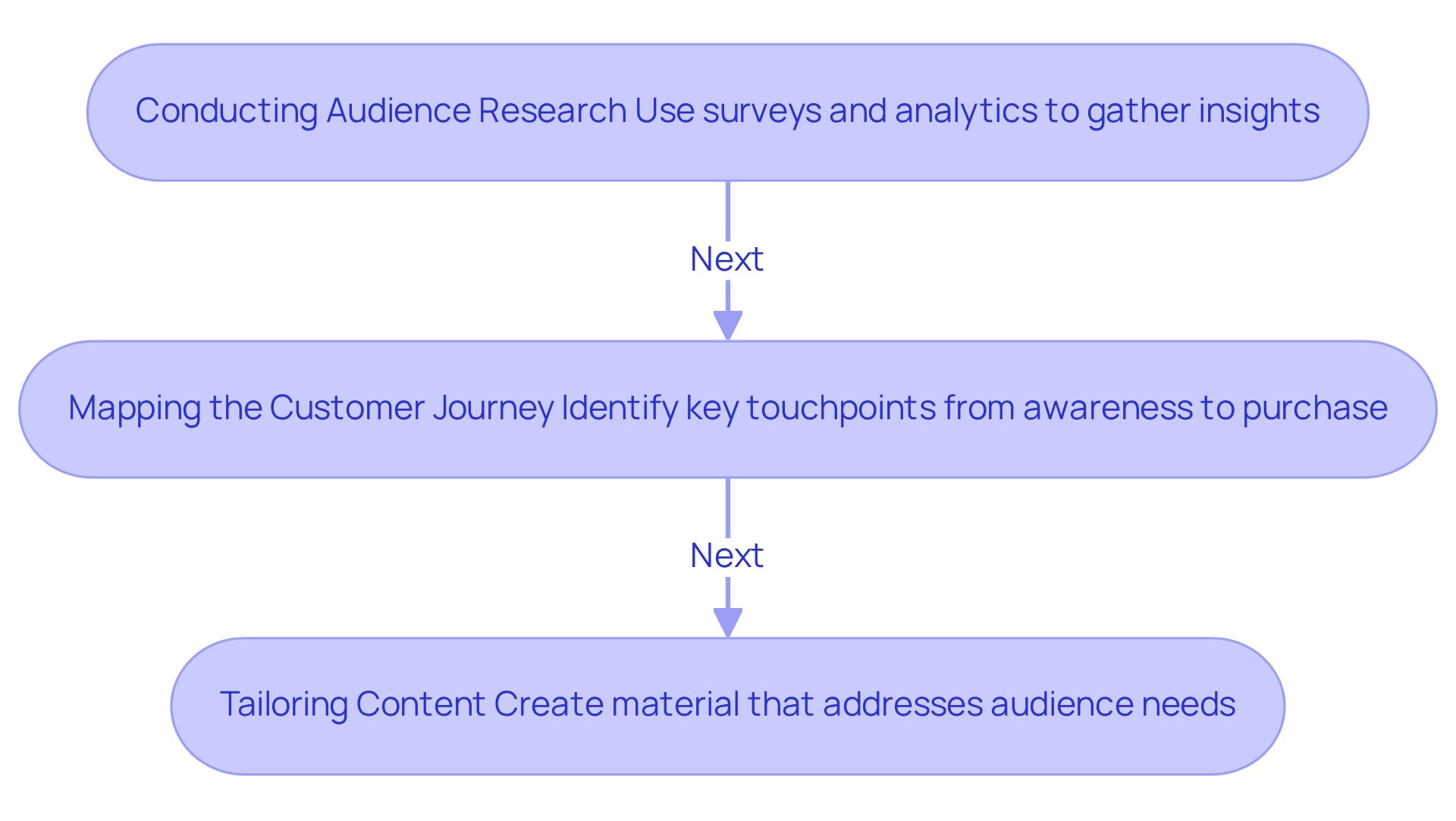
- : Utilize surveys, social media analytics, and market research to gather insights into your group's preferences and behaviors. This foundational step is essential, especially considering that . Understanding what is vital.
- : Examine the phases your target audience navigates from awareness to purchase. Identify key touchpoints where your material can effectively sway their choices. Comprehending these stages enables you to strategically place content that aligns with consumer moments, enhancing engagement.
- : Use your research findings to create material that directly addresses the needs and interests of your target group. For instance, if for your market, emphasize eco-friendly practices in your messaging. This approach not only fosters connection but also builds trust, as . Furthermore, , highlighting the long-term impact of effective .
By focusing your content strategy on the specific requirements and preferences of your audience, you can achieve that produces more relevant and captivating work, encouraging interaction and nurturing loyalty. As Neal Schaffer notes, "Trust and relevance scale performance across every channel," underscoring the importance of building authentic connections with your audience.
Develop a Comprehensive Content Strategy
For any brand aiming to thrive in today’s competitive landscape, is essential as part of a comprehensive .
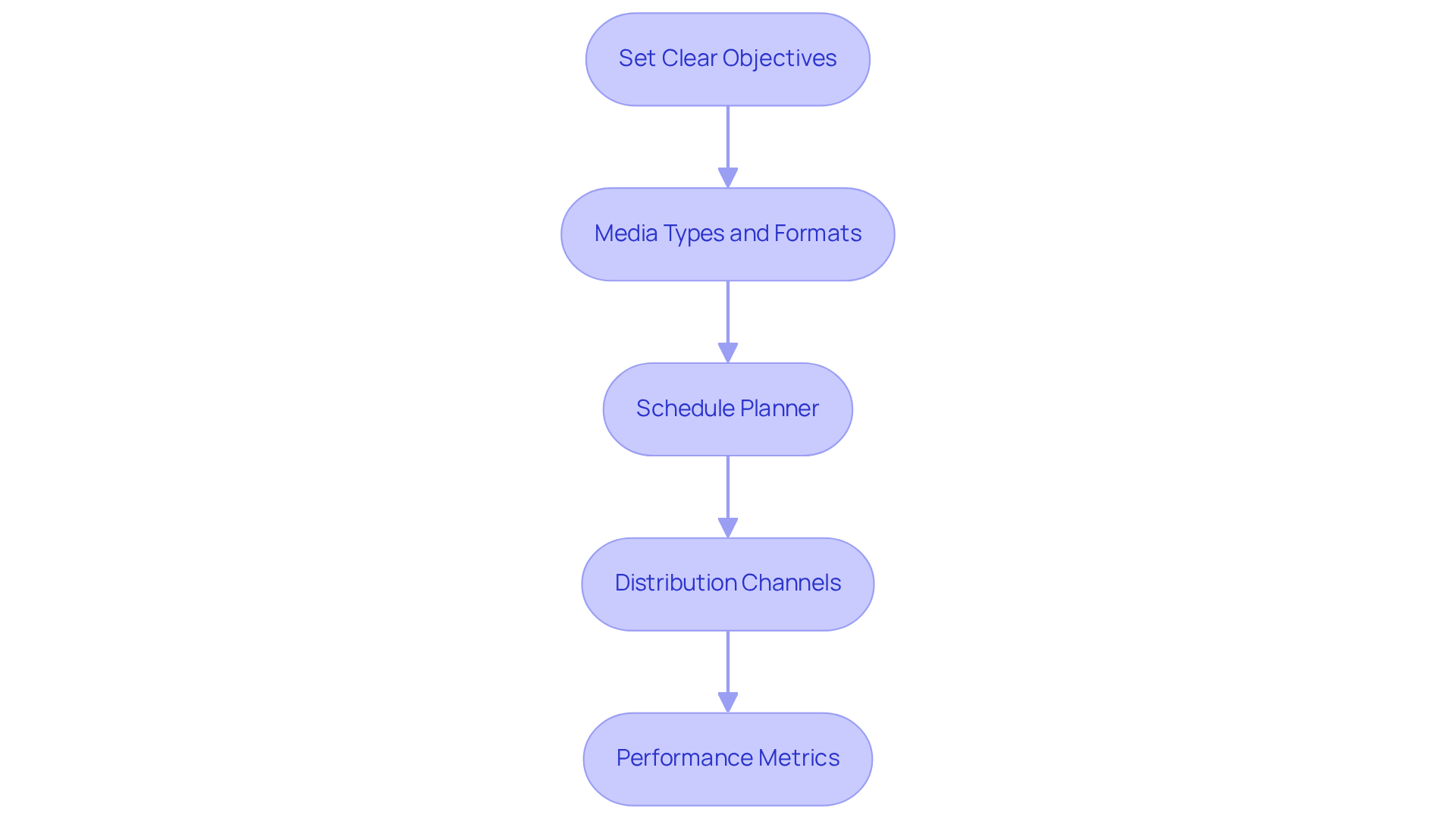
- : Start by clearly defining your marketing goals. Are you looking to enhance brand awareness, generate leads, or improve customer retention? Establishing specific, measurable objectives is crucial for guiding your strategy and ensuring every effort aligns with your overarching vision.
- Media Types and Formats: Next, select media types that resonate with your audience. In 2026, are particularly effective on platforms like TikTok and Instagram, while detailed articles and infographics may perform better on LinkedIn. Engaging formats in can significantly enhance interaction and retention among viewers, making your content more impactful.
- : A well-structured is vital for organizing and arranging your releases. This guarantees consistency and of relevant material, which is crucial for sustaining viewer interest and achieving your .
- : Identify the platforms where your target audience is most active. Customize your content for each platform; for instance, utilize for Instagram and in-depth articles for LinkedIn to maximize engagement. This approach to ensures your message reaches the right people effectively.
- : Finally, establish key performance indicators (KPIs) to measure the success of your . Monitor metrics such as interaction rates, conversion rates, and audience growth. Regularly analyzing these metrics allows for continuous refinement of your approach, ensuring alignment with your .
By following these steps, brands can utilize to establish a structured strategy that not only drives engagement but also effectively achieves their marketing goals. Are you ready to elevate your ?
Utilize Data-Driven Insights for Continuous Improvement
To effectively leverage , consider these essential practices:
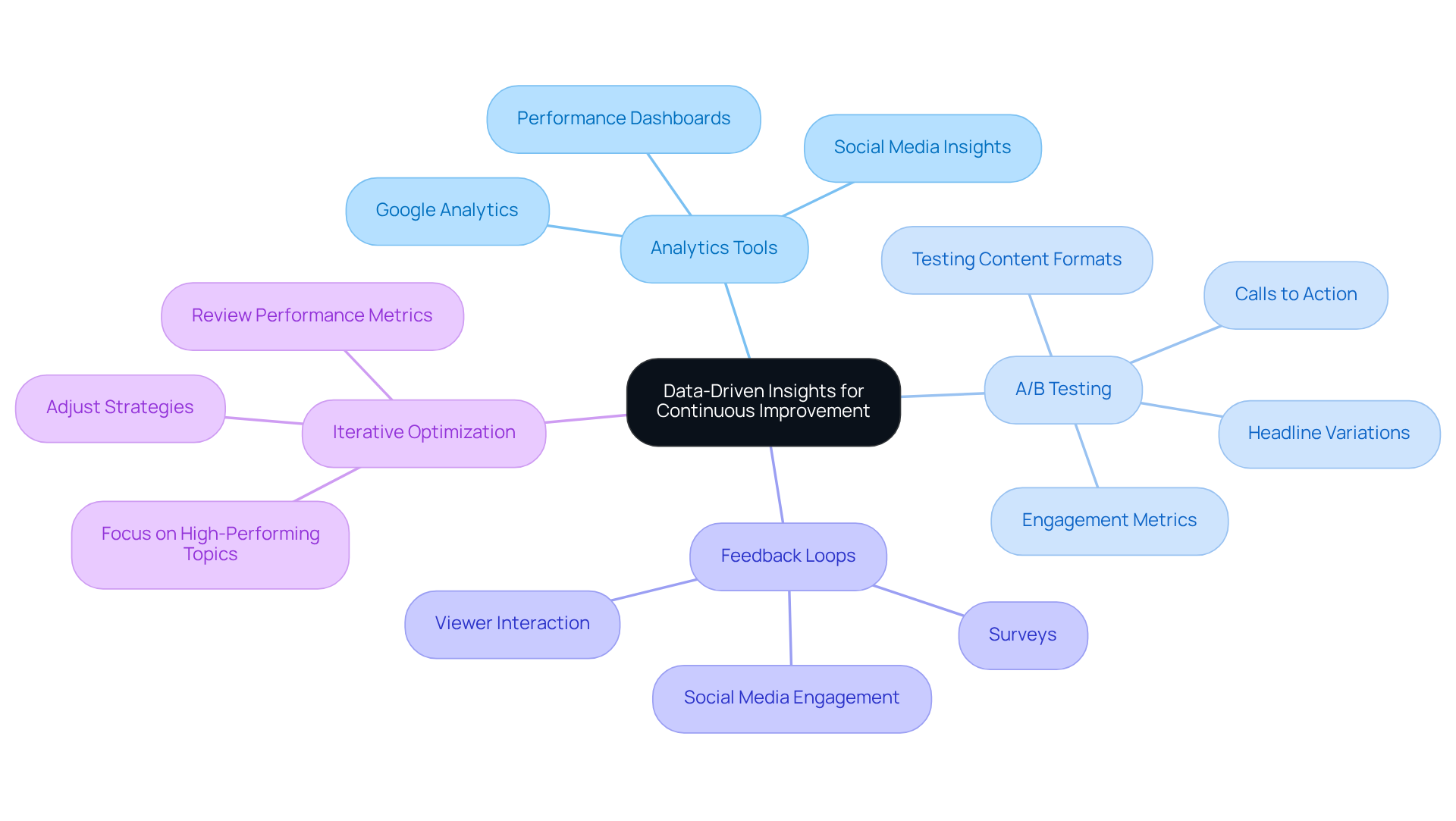
- : Utilize powerful tools like , social media insights, and performance dashboards to gather critical data on how your content performs across various platforms. This data is invaluable for understanding .
- : Implement for different content formats, headlines, and calls to action. This approach helps identify what resonates most with your audience. For instance, testing two distinct video styles can reveal which garners more engagement, guiding your content strategy.
- : Foster viewer interaction through comments, surveys, and social media engagement. This feedback is crucial for refining your content and addressing any gaps in audience needs. Are you truly meeting their expectations?
- : Regularly review and adjust your strategy accordingly. If certain topics or formats are underperforming, pivot your approach to focus on what works best. Continuous improvement is key to success.
By consistently analyzing data and adapting strategies, companies can significantly enhance their and drive superior results.
Collaborate with Creators and Influencers
To effectively and influencers, consider these essential guidelines:
- Identify Relevant Influencers: Research and select . Utilize to pinpoint suitable partners who can amplify your message.
- Define Collaboration Objectives: Clearly outline your goals for the collaboration. Are you aiming to increase visibility, drive traffic, or generate sales? .
- : Grant influencers the to showcase your brand in their unique style. Authenticity is crucial; audiences engage more with than with scripted messages. How can you encourage this authenticity?
- Measure Impact: , referral traffic, and conversion rates. Analyze what strategies worked and what didn’t, using these insights to inform future collaborations.
- Build : Consider establishing ongoing partnerships with influencers who resonate with your values. Long-term collaborations can foster deeper connections with the public and sustain engagement over time.
By effectively collaborating with creators and influencers, brands can significantly enhance their content reach and cultivate stronger connections with their audience. Are you ready to take your to the next level?

Conclusion
Mastering custom content creation is crucial for brands that want to build genuine engagement and loyalty with their audience. By understanding the specific needs and preferences of target groups, brands can create tailored content that resonates deeply and fosters ongoing interaction. This strategic focus on audience-centric content not only boosts brand visibility but also cultivates lasting trust - an essential factor in today’s competitive landscape.
The article highlighted several key strategies for effective custom content creation. These include:
- Defining target audiences through thorough research
- Developing a structured content strategy with clear objectives
- Leveraging data-driven insights for continuous improvement
- Collaborating with creators and influencers
Each of these elements is vital in ensuring that content not only reaches its intended audience but also engages them in a meaningful way.
Ultimately, the importance of custom content creation cannot be overstated. Brands that invest in understanding their audience and refining their content strategies are better positioned to achieve their marketing goals. By embracing these practices, companies can enhance their engagement efforts and cultivate a loyal customer base, securing their place in the market. The time to elevate content strategies and forge authentic connections with audiences is now.
Frequently Asked Questions
How can I define my target audience?
To define your target audience, leverage demographic data, psychographics, and behavioral insights to create comprehensive buyer personas.
What methods can I use to conduct audience research?
You can conduct audience research using surveys, social media analytics, and market research to gather insights into your audience's preferences and behaviors.
Why is understanding my audience's preferences important?
Understanding your audience's preferences is vital because 82% of internet traffic is expected to be video material by 2026, and knowing what resonates with viewers can enhance engagement.
What is the customer journey, and why is it important?
The customer journey refers to the phases your target audience navigates from awareness to purchase. It's important because identifying key touchpoints allows you to strategically place content that influences consumer choices.
How can I tailor my content to my audience?
You can tailor your content by using your research findings to create material that directly addresses the needs and interests of your target group, such as emphasizing eco-friendly practices if sustainability is a priority for them.
What role does trust play in customer engagement?
Trust is crucial as 81% of consumers need to trust a company before considering a purchase, and building trust can lead to long-term customer loyalty.
How can effective customer engagement impact loyalty?
Effective customer engagement can lead to loyalty, as 88% of consumers become loyal customers after buying from a brand at least three times.
What is the overall goal of focusing on audience needs in content creation?
The overall goal is to achieve custom content creation that is more relevant and captivating, encouraging interaction and nurturing loyalty among your audience.
List of Sources
- Define Your Target Audience and Their Needs
- blacksmith.agency (https://blacksmith.agency/resources/branding/top-branding-statistics)
- nealschaffer.com (https://nealschaffer.com/social-media-marketing-statistics)
- Target Market Analysis in 2026 (How to Identify Customers) (https://bigcommerce.com/articles/ecommerce/target-market-analysis)
- How Audience Insights Will Shape Performance Marketing in 2026 (https://amsive.com/insights/strategy/how-audience-insight-will-shape-performance-marketing-in-2026)
- Knowing your audience is key: 20 marketing expert quotes (https://veracontent.com/mix/knowing-your-audience-great-marketing)
- Develop a Comprehensive Content Strategy
- entrepreneur.com (https://entrepreneur.com/growing-a-business/why-your-current-marketing-strategy-wont-hold-up-in-2026/500874)
- 80+ Content Marketing Statistics & Facts | Marketing Stats (https://sixthcitymarketing.com/content-marketing-stats)
- 105 Hand-Picked Content Marketing Statistics for 2026 Planning (https://ahrefs.com/blog/content-marketing-statistics)
- backlinko.com (https://backlinko.com/content-strategy)
- Utilize Data-Driven Insights for Continuous Improvement
- 99firms.com (https://99firms.com/research/ab-testing-statistics)
- nisum.com (https://nisum.com/nisum-knows/must-read-inspirational-quotes-data-analytics-experts)
- 30 Key A/B Testing Statistics: A Comprehensive Guide | Wingify (https://vwo.com/blog/ab-testing-statistics)
- Data Analytics Statistics 2026 | Latest Insights & Trends (https://data.folio3.com/blog/data-analytics-stats)
- 23 Must-Read Quotes About Data [& What They Really Mean] (https://careerfoundry.com/en/blog/data-analytics/inspirational-data-quotes)
- Collaborate with Creators and Influencers
- 25 Influencer Marketing ROI Metrics Statistics Every Brand Should Track in 2026 (https://archive.com/blog/influencer-marketing-roi-metrics-statistics)
- 99firms.com (https://99firms.com/research/influencer-marketing-statistics)
- 40+ Influencer Marketing Stats for 2026 Strategy (https://driveresearch.com/market-research-company-blog/influencer-marketing-statistics)
- archive.com (https://archive.com/blog/brand-partnership-preference-statistics?p=743)
- sixthcitymarketing.com (https://sixthcitymarketing.com/influencer-marketing-statistics)