Introduction
In an era where consumer trust is increasingly elusive, influencers have become pivotal figures in shaping purchasing decisions and brand perceptions. Their ability to engage audiences authentically presents brands with a unique opportunity to connect and resonate on a deeper level.
However, with countless influencers available, how can brands ensure they partner with the right ones to maximize their marketing impact?
This guide explores the essential strategies and characteristics for identifying and collaborating with the best influencers, empowering brands to navigate the evolving landscape of influencer marketing effectively.
Define Influencers and Their Role in Marketing
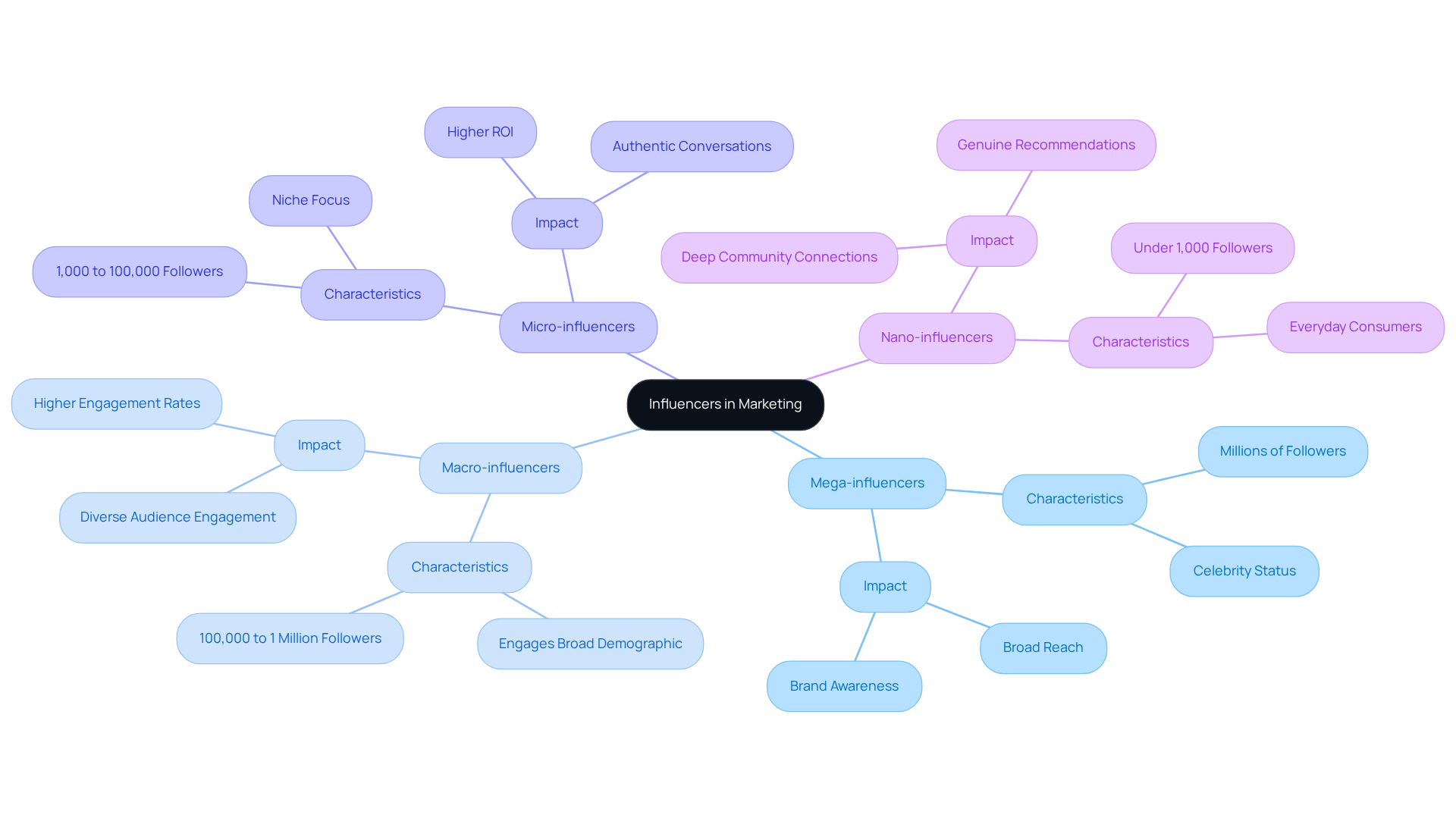
over their audience's purchasing decisions, thanks to their authority, expertise, and the relationships they cultivate with followers. In the advertising landscape, they act as vital conduits between brands and consumers, leveraging their trustworthiness and extensive reach to effectively promote products and services. Influencers can be categorized as follows:
- Mega-influencers: These celebrities boast millions of followers, using their fame to connect with vast audiences.
- Macro-influencers: With a following typically between 100,000 and 1 million, these individuals engage a broad demographic.
- Micro-influencers: Niche figures with followers ranging from 1,000 to 100,000, they are known for their . Their strength lies in generating authentic conversations and driving niche engagement.
- Nano-influencers: Everyday consumers with a small but dedicated following, usually under 1,000, who provide that resonate deeply within their community.
As we look ahead to 2025, is becoming increasingly vital. A striking 81% of consumers report interacting with products after seeing them advertised by these influencers. This trend underscores the , with 92% of advertisers believing that sponsored content from these individuals surpasses traditional promotional messaging. Furthermore, the average CPM for has plummeted by 53% year-over-year, which highlights in a more cost-efficient manner. Notably, 83% of creators are willing to collaborate with brands for merely complimentary products, presenting opportunities for .
As brands navigate this dynamic landscape, understanding is essential for aligning promotional strategies with target audiences and achieving successful campaign outcomes. Additionally, the rise of B2B advocate promotion highlights the importance of partnering with industry specialists and thought leaders to build trust and authority in professional settings. Brands must also remain vigilant regarding the impacting marketing strategies involving , adding another layer of complexity to their campaigns.
Identify Your Ideal Influencer Characteristics
To find the right influencers for your brand, start by defining the that matter most:
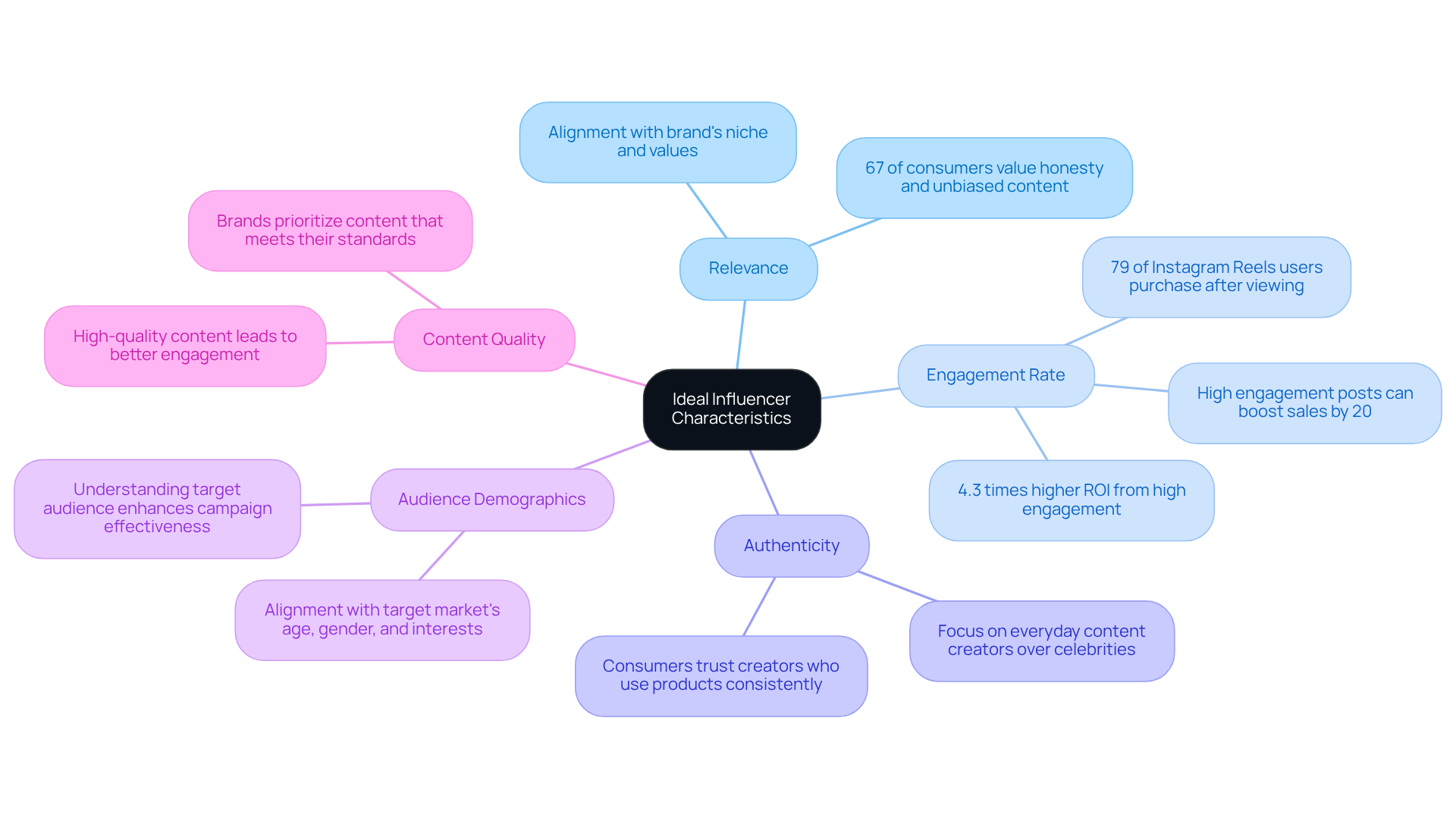
- Relevance: The influencer's content must align with your brand's niche and values. Brands are increasingly recognizing that relevance is crucial; .
- Engagement Rate: Seek individuals with high interaction rates, as this indicates a loyal following. Engagement rates are becoming a focal point for marketers, with and yielding 4.3 times higher ROI. Notably, 79% of weekly Instagram Reels users have purchased a product or service after watching a Reel, highlighting the effectiveness of specific content formats in driving conversions.
- Authenticity: Choose individuals who are genuine and transparent in their endorsements. Consumers are more likely to trust creators who consistently use a product, making authenticity a vital component of successful partnerships. As Isha Patel, co-founder of Kale, mentioned, .
- : Ensure the individual's audience aligns with your target market regarding age, gender, location, and interests. Comprehending your target audience can help pinpoint key figures with similar followers, enhancing the effectiveness of your campaigns.
- : Assess the quality of the creator's content to ensure it aligns with your company's standards. Brands that prioritize often see better engagement and conversion rates.
By establishing these criteria, brands can streamline their search on how to find the , who will effectively represent their products and foster meaningful connections with their audience. Furthermore, with the marketing sector expected to attain around US$32.55 billion in 2025, employing is more crucial than ever.
Utilize Effective Strategies to Find Influencers
Identifying requires a blend of strategic research and outreach. To enhance your , consider these effective strategies:
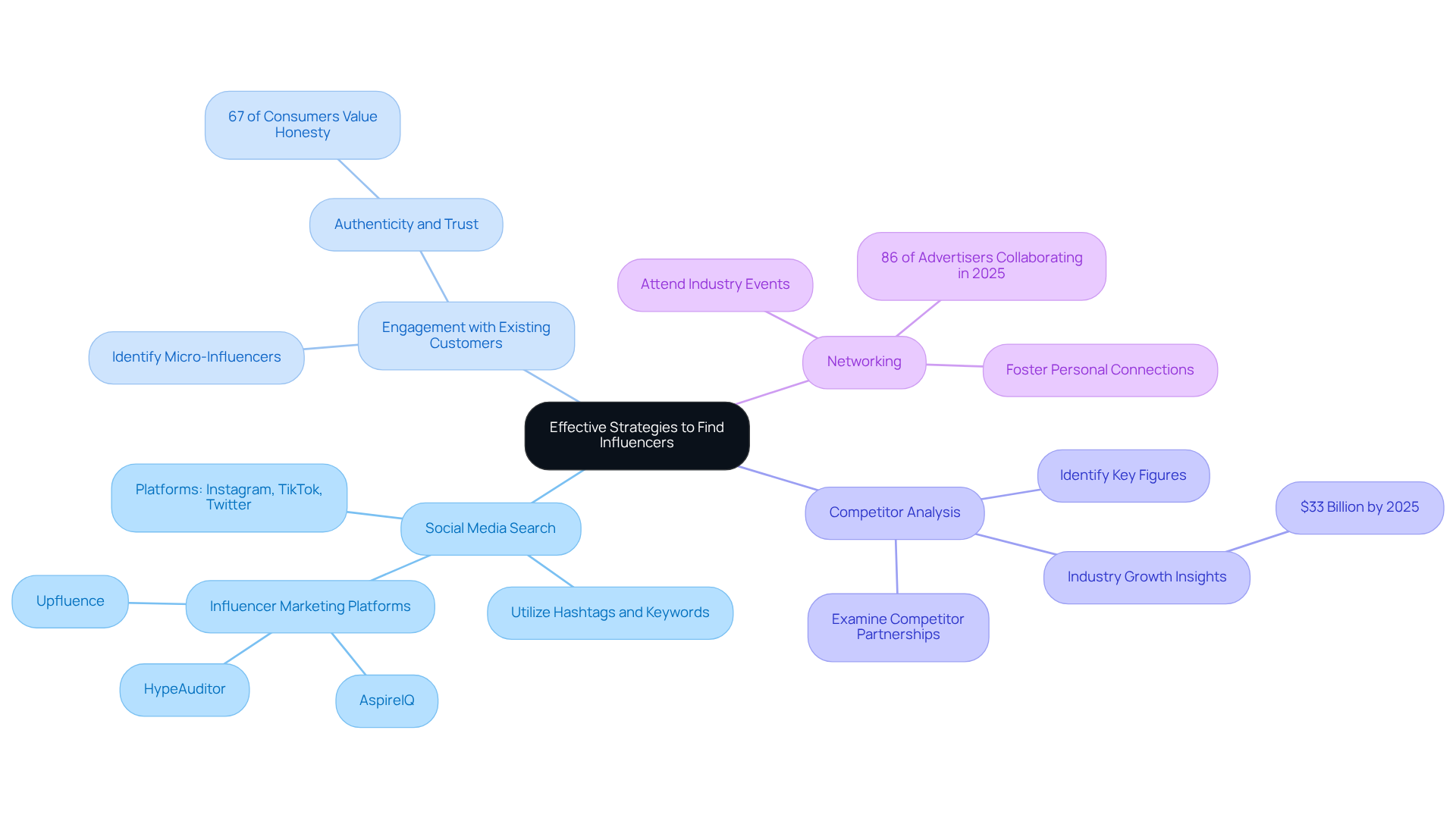
- Social Media Search: Utilize relevant hashtags and keywords on platforms like Instagram, TikTok, and Twitter to uncover influencers discussing topics aligned with your brand. This method taps into the organic conversations happening around your niche, allowing you to engage with potential advocates directly. can be used to learn by identifying and evaluating potential influencers based on specific criteria, including audience demographics and engagement metrics. These platforms simplify the discovery process and provide valuable insights into the performance of social media personalities, making your selection process more efficient.
- Engagement with Existing Customers: Identify customers who already support your company and possess a . These individuals can serve as , leveraging their authentic connections to promote your products effectively. Notably, , making these advocates particularly valuable.
- Competitor Analysis: To assess their effectiveness, examine by looking at the key figures your competitors are partnering with. This insight can guide your strategy and assist you in recognizing individuals who connect with your target audience. With the by 2025, understanding competitor strategies is crucial for your success.
- Networking: to foster relationships. Establishing personal connections can lead to more genuine collaborations and improve your visibility. Indeed, 86% of US advertisers will collaborate with advocates in 2025, emphasizing the increasing dependence on advocate promotion.
By adopting these strategies, companies can create an extensive list of possible advocates to contact, ultimately improving their marketing initiatives.
Establish Successful Collaborations with Influencers
Once you've identified and approached potential advocates, .
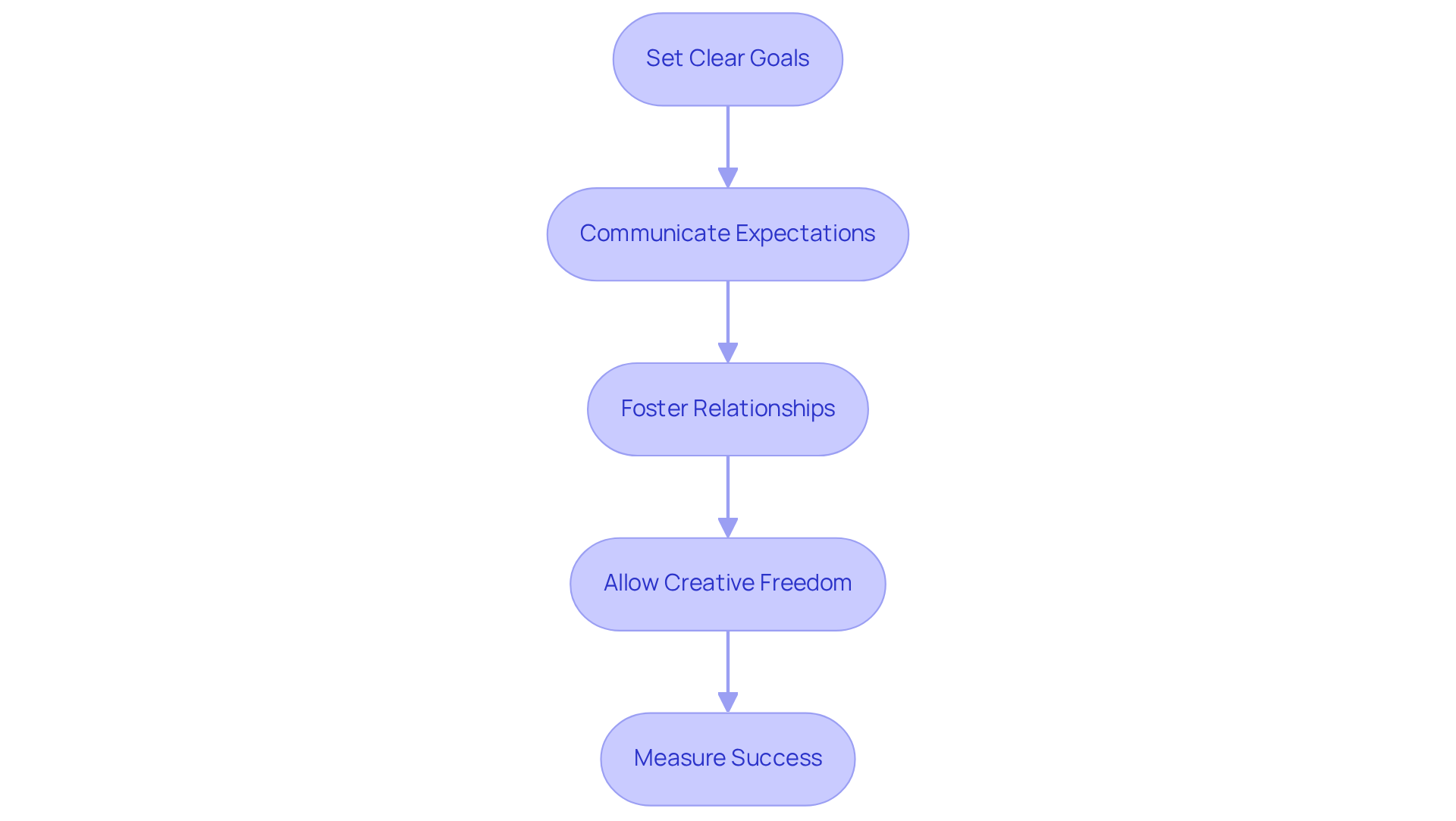
- : What do you aim to achieve from this partnership? Whether it's brand awareness, engagement, or sales, is essential. , underscoring the importance of having specific goals in mind.
- Communicate Expectations: To avoid misunderstandings, clearly outline deliverables, timelines, and compensation. This transparency fosters trust and sets the stage for a productive relationship.
- : Building rapport with key figures is vital. Engage with their content and provide thoughtful feedback. This approach can lead to more authentic partnerships that resonate with audiences.
- : Trust creators to develop content that speaks to their audience while aligning with your brand message. Authenticity in content creation often results in higher engagement and conversion rates.
- : Utilize analytics tools to track the performance of . Focus on metrics such as engagement rates, click-through rates, and conversions. Businesses typically earn an average of $5.78 for every dollar invested in promotional figures, highlighting the effectiveness of a data-driven approach.
By adhering to these practices, brands can forge meaningful partnerships that drive results and enhance marketing efforts. For instance, Gymshark has successfully cultivated long-term relationships with fitness influencers, leading to significant community engagement and sales growth. Similarly, Lume Deodorant's use of as ads exemplifies the power of and authentic collaborations in achieving remarkable revenue growth.
Conclusion
Influencer marketing has become a crucial strategy for brands aiming to forge meaningful connections with their audiences. The impact of influencers on consumer behavior is significant; they act as trusted intermediaries between brands and potential customers. By recognizing the various types of influencers - from mega to nano - and understanding their unique strengths, brands can strategically align their marketing efforts for maximum impact.
To identify the ideal influencers, brands should consider essential criteria such as:
- Relevance
- Engagement rates
- Authenticity
- Audience demographics
- Content quality
These factors are vital for ensuring that collaborations resonate with target audiences and yield positive results. Furthermore, employing effective strategies like:
- Social media searches
- Customer engagement
- Competitor analysis
- Networking
can greatly enhance the influencer discovery process, positioning brands for success in a competitive landscape.
Ultimately, the journey to finding and collaborating with the right influencers transcends mere reach; it’s about cultivating genuine connections that foster loyalty and drive sales. As the influencer marketing landscape evolves, brands must adapt their strategies to embrace these changes and prioritize authentic partnerships. By investing time and effort into building relationships with influencers who align with their values and objectives, brands can open new avenues for growth and engagement, ensuring their voice stands out in an increasingly crowded marketplace.
Frequently Asked Questions
What are influencers and their role in marketing?
Influencers are individuals who have significant power over their audience's purchasing decisions due to their authority, expertise, and relationships with followers. They serve as important connections between brands and consumers, using their trustworthiness and reach to promote products and services effectively.
What are the different categories of influencers?
Influencers can be categorized into four main types: Mega-influencers: Celebrities with millions of followers. Macro-influencers: Individuals with 100,000 to 1 million followers, engaging a broad demographic. Micro-influencers: Niche figures with 1,000 to 100,000 followers, known for higher engagement rates and authentic connections. Nano-influencers: Everyday consumers with under 1,000 followers who provide genuine recommendations within their community.
How effective are influencers in promoting products?
Influencers are highly effective in product promotion, with 81% of consumers reporting interaction with products after seeing them advertised by influencers. Additionally, 92% of advertisers believe that sponsored content from influencers is more effective than traditional promotional messaging.
What trends are impacting influencer marketing as we approach 2025?
The role of social media personalities in product promotion is becoming increasingly vital, with a significant decline in the average cost per thousand impressions (CPM) for social media personalities by 53% year-over-year. This indicates a more cost-efficient way to find suitable influencers.
What opportunities exist for brands to collaborate with influencers?
Many influencers, specifically 83% of creators, are willing to collaborate with brands in exchange for complimentary products, creating budget-friendly partnership opportunities for brands.
What should brands consider when finding the best influencers?
Brands should focus on aligning promotional strategies with their target audiences and understanding the dynamics of the influencer landscape to achieve successful campaign outcomes.
How is B2B advocate promotion relevant in influencer marketing?
The rise of B2B advocate promotion emphasizes the importance of partnering with industry specialists and thought leaders to build trust and authority in professional settings.
What challenges do brands face in influencer marketing?
Brands must be aware of increasing regulatory scrutiny impacting marketing strategies involving social media personalities, adding complexity to their campaigns.
List of Sources
- Define Influencers and Their Role in Marketing
- dlapiper.com (https://dlapiper.com/en/insights/publications/2025/10/influencer-marketing-updates-in-2025)
- localvalue.com (https://localvalue.com/the-role-of-influencer-marketing-in-building-brand-presence-in-2025)
- viralnation.com (https://viralnation.com/resources/blog/influencer-marketing-trends-2025-what-marketers-need-to-know)
- aspire.io (https://aspire.io/guides/the-state-of-influencer-marketing-2025)
- forbes.com (https://forbes.com/councils/forbesagencycouncil/2025/12/02/from-reach-to-relevance-current-trends-in-influencer-marketing)
- Identify Your Ideal Influencer Characteristics
- 32 influencer marketing statistics to guide your brand’s strategy in 2026 (https://sproutsocial.com/insights/influencer-marketing-statistics)
- The role of engagement rate in evaluating influencer campaign success - Agility PR Solutions (https://agilitypr.com/pr-news/social-media-influencer-marketing/the-role-of-engagement-rate-in-evaluating-influencer-campaign-success)
- emarketer.com (https://emarketer.com/content/brands-prioritizing-engagement--loyalty-influencer-marketing)
- kingfluencers.com (https://kingfluencers.com/en/blog/die-richtigen-influencer-in-2025)
- sociallypowerful.com (https://sociallypowerful.com/influencer/marketing/statistics)
- Utilize Effective Strategies to Find Influencers
- 32 influencer marketing statistics to guide your brand’s strategy in 2026 (https://sproutsocial.com/insights/influencer-marketing-statistics)
- viralnation.com (https://viralnation.com/resources/blog/influencer-marketing-trends-2025-what-marketers-need-to-know)
- loudcrowd.com (https://loudcrowd.com/blog/top-trends-influencer-marketing-what-you-need-to-know-in-2025)
- New Research Unveils Key Strategies for influencer authenticity - Georgia State University News - Press Releases, Robinson College of Business - (https://news.gsu.edu/2025/02/20/influencer-authenticity)
- Establish Successful Collaborations with Influencers
- 20 Surprising Influencer Marketing Statistics | Digital Marketing Institute (https://digitalmarketinginstitute.com/blog/20-influencer-marketing-statistics-that-will-surprise-you)
- sageminietech.com (https://sageminietech.com/influencer-collaboration-guide-2025)
- joinbrands.com (https://joinbrands.com/blog/influencer-marketing-best-practices-2)
- project-aeon.com (https://project-aeon.com/blogs/10-game-changing-influencer-marketing-campaigns-for-2025)
- atomicsocial.com (https://atomicsocial.com/the-best-practices-for-influencer-marketing-in-2025)