
Introduction
In-house advertising is swiftly establishing itself as a cornerstone for brands looking to boost their marketing effectiveness and operational efficiency. By harnessing internal resources, organizations not only gain enhanced control over their messaging but also achieve significant cost savings and agility in responding to market dynamics. Yet, the shift to an in-house model presents its own set of challenges.
How can brands effectively navigate these hurdles to fully unlock the potential of in-house advertising? This article explores key strategies that empower companies to master this approach and drive brand success.
Define In-House Advertising: Key Concepts and Importance
refers to the strategic practice of managing marketing and advertising activities internally within an organization, utilizing its own resources and personnel instead of depending on external agencies. This approach allows companies to maintain over their messaging, streamline communication, and develop a . As brands increasingly strive to to market changes, has emerged as a .
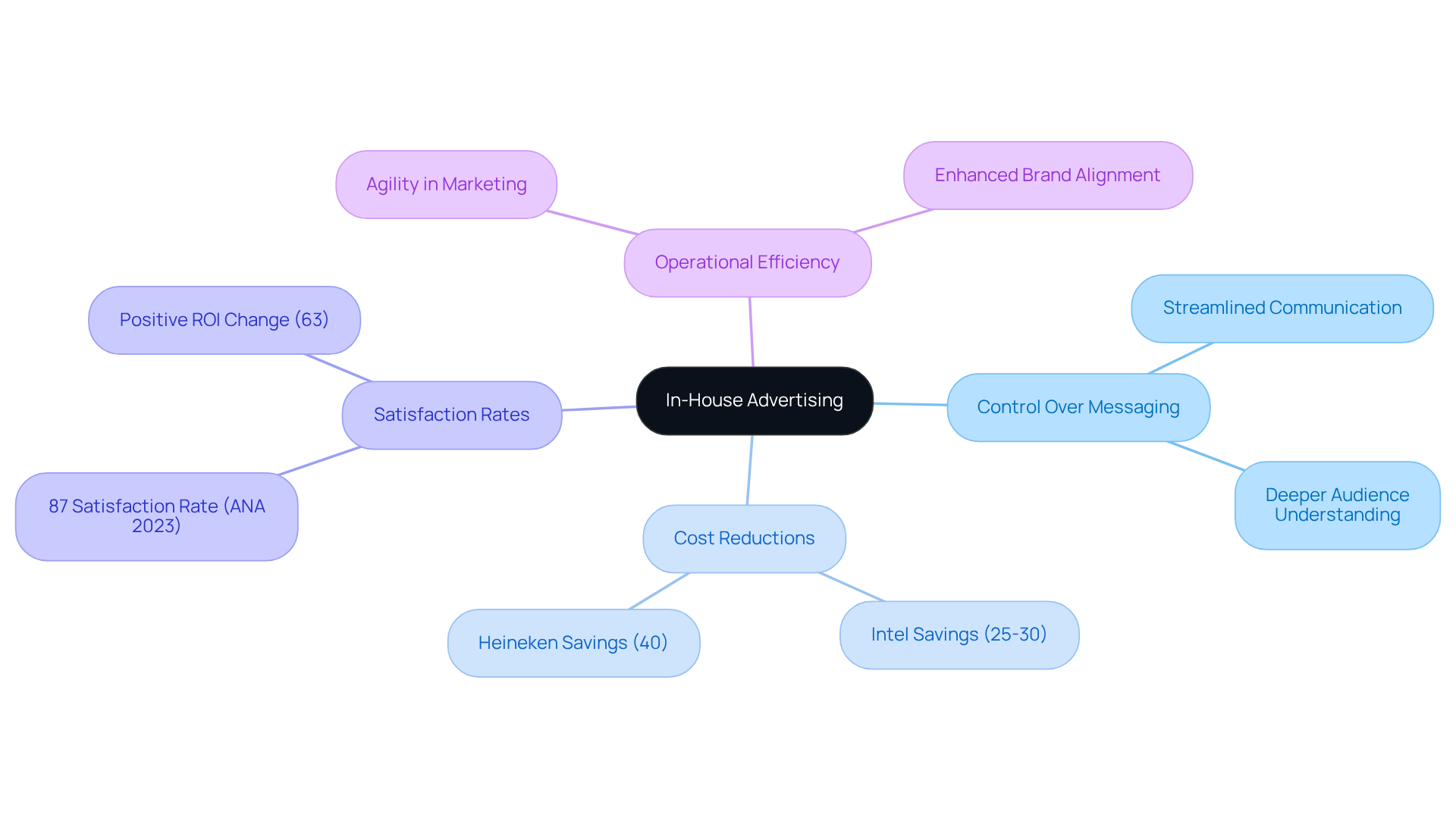
A recent report from the Association of National Advertisers (ANA) reveals that a striking 87% of respondents express satisfaction with their internal agencies. This statistic underscores the effectiveness of this approach. Furthermore, companies like Intel and Heineken have reported -25% to 30% and nearly 40%, respectively-by employing internal teams. These examples showcase not only the but also the improved alignment and that are associated with .
As we approach the end of 2025, the significance of for enhancing company performance continues to grow. It is crucial for organizations to adapt and innovate within this evolving landscape. Are you ready to explore how can transform your ? Engage with MediaNug to learn more about optimizing your .
Leverage Benefits: Cost Savings, Control, and Agility
offers , particularly in terms of cost efficiency. By eliminating agency fees and commissions, brands can allocate more resources to their initiatives. This model not only enhances but also fosters a more by utilizing . can quickly adapt to real-time data and feedback, which is crucial in the fast-paced world of social media, where trends can shift overnight. Furthermore, these teams develop a deep understanding of the brand's voice and values, which improves their , leading to messaging that is both authentic and impactful.
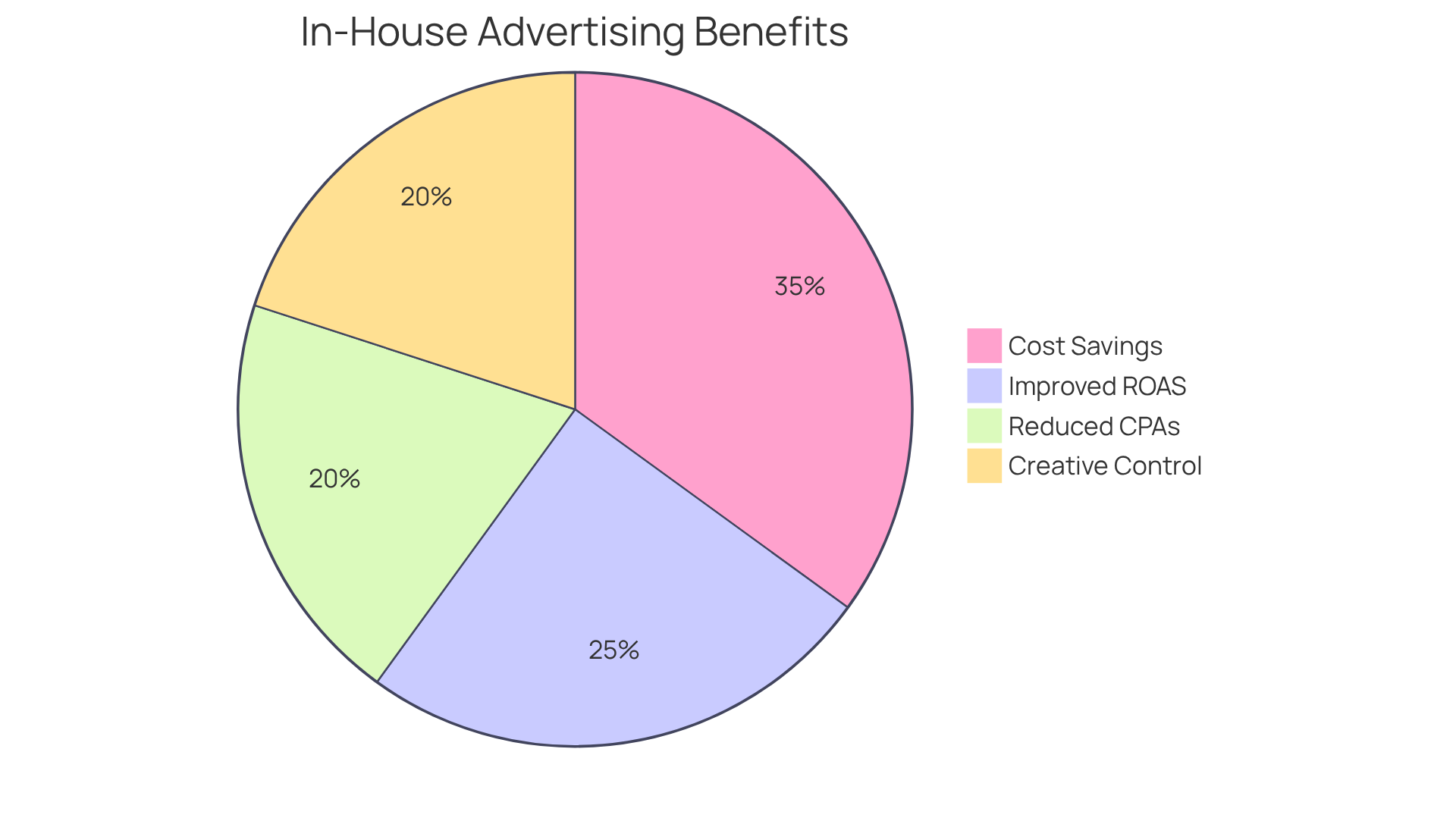
As JT Pierce, GM and Chief Client Officer, aptly states, 'Having an internal team of innovators, producers, makers, and strategists that can concentrate on means you are constructing innovative solutions that address business challenges, not merely responding to briefs.' Brands that leverage these advantages with often report improved and reduced . For instance, companies utilizing have reported savings of 25% to 40% compared to traditional agency partnerships, highlighting the financial benefits of this approach.
As become more integrated into the company's operations, they not only enhance through but also contribute to a more cohesive narrative, ultimately driving better performance metrics. This transformation is exemplified by companies like Heineken, which have reported and improved efficiency by leveraging and their internal resources.
Implement Best Practices: Strategies for Effective In-House Advertising
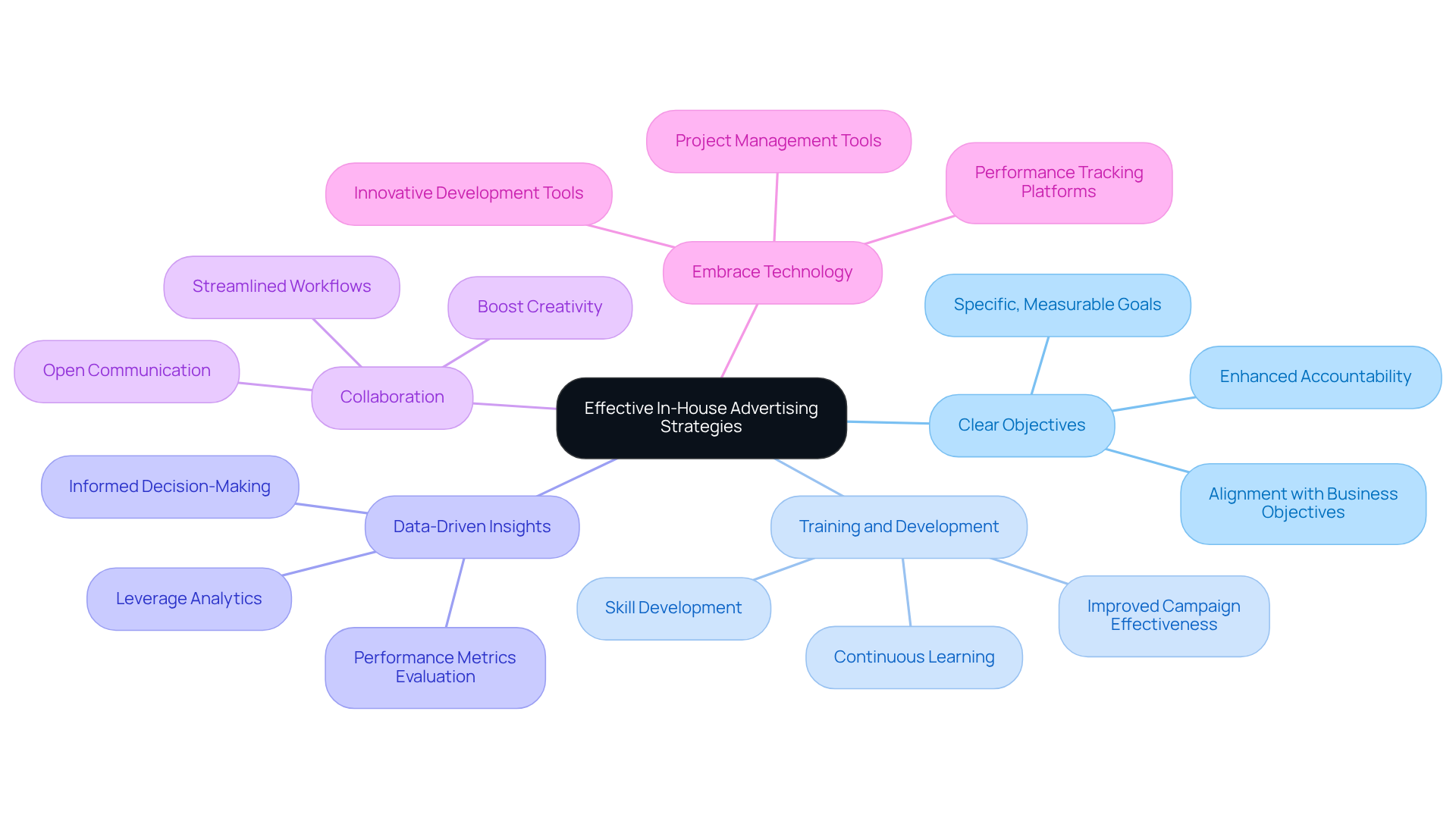
To maximize the effectiveness of , brands must adopt several key practices:
- Establish : It's essential to define specific, measurable goals for your internal group. This ensures alignment with overall business objectives, guiding daily operations while enhancing accountability and performance tracking.
- Invest in : Equip your team with the skills and knowledge necessary to excel. Continuous learning fosters innovation and adaptability - crucial traits in today’s rapidly evolving marketing landscape. For instance, Stephanie McCarty began building her group's capabilities in 2019, culminating in a complete-funnel, media and design studio by 2024. This long-term dedication is vital for success. Organizations prioritizing training often see and team morale.
- Utilize : Leverage analytics to inform creative decisions and optimize campaigns. Regularly evaluating performance metrics allows teams to identify areas for improvement and adjust strategies accordingly. Brands effectively using data report up to 87% satisfaction with their internal groups, underscoring the importance of informed decision-making.
- : Encourage open communication and cooperation among team members to boost creativity and streamline workflows. A collaborative environment not only enhances morale but also leads to innovative solutions and quicker project turnaround times.
- : that facilitate project management, innovative development, and performance tracking. Utilizing advanced technologies can significantly enhance efficiency and output quality, enabling teams to focus on high-impact creative work.
By adopting these strategies, companies can establish a robust operation that delivers measurable results, ensuring they remain competitive in an increasingly digital marketplace.
Address Challenges: Overcoming Barriers to In-House Success
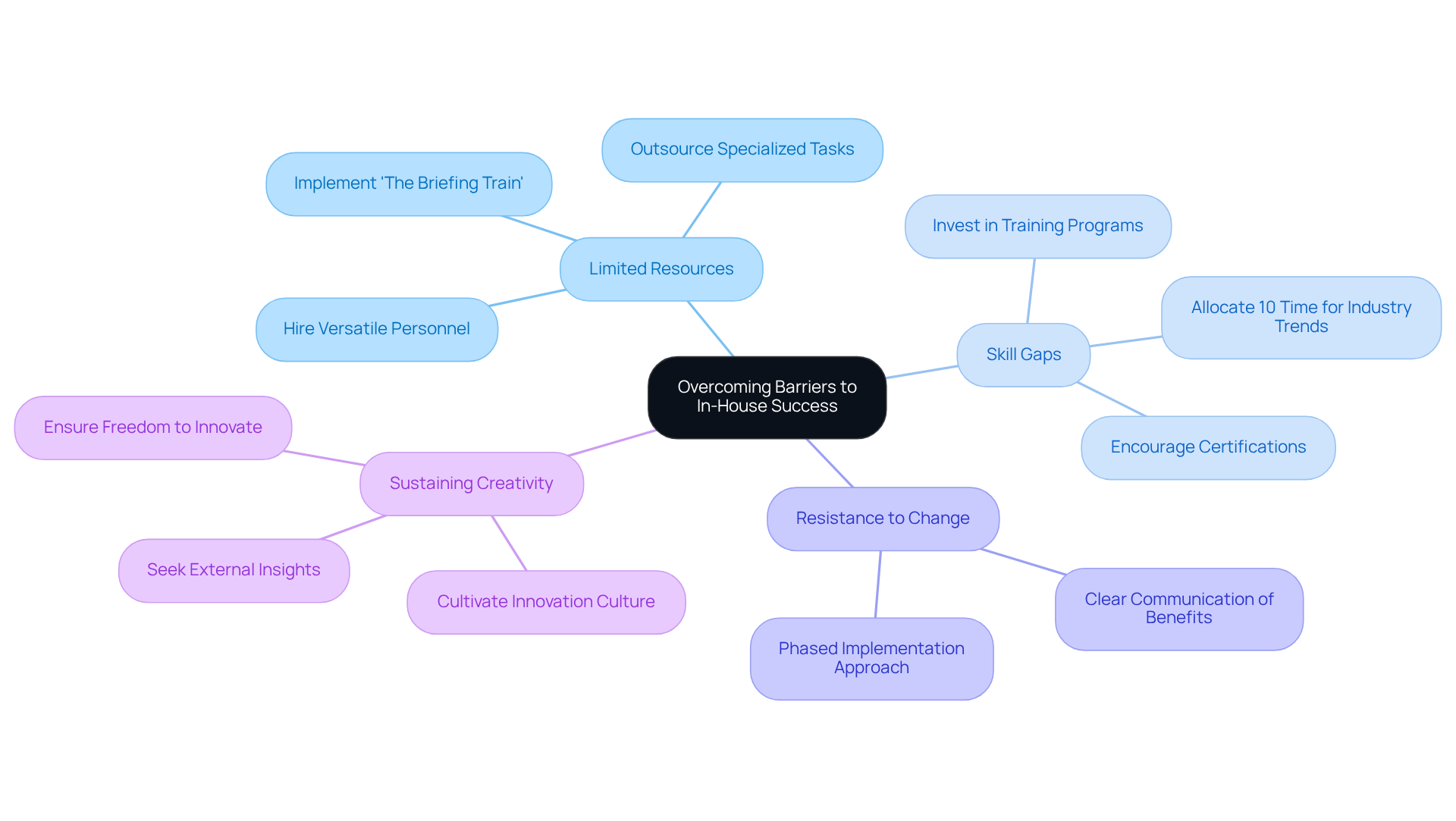
While presents numerous advantages, brands often encounter significant challenges.
- : In-house teams frequently grapple with and staffing shortages. To tackle this, brands must prioritize hiring versatile personnel and consider outsourcing specialized tasks when necessary. Implementing a structured briefing process, such as ',' can enhance efficiency and creativity by effectively managing briefs.
- : The fast-paced evolution of digital marketing demands continuous skill development. Brands should invest in training programs and encourage team members to pursue certifications in relevant areas. Notably, statistics indicate that 80% of individuals may stagnate in their artistic careers, underscoring the necessity of . Allocating 10% of internal creative groups' time to studying industry trends can significantly boost their capabilities and maintain competitiveness.
- : Transitioning to an in-house model may encounter resistance from stakeholders accustomed to traditional agency relationships. Clear communication about the benefits and a phased approach to implementation can facilitate this transition.
- Sustaining Creativity: Internal teams may struggle to generate new concepts without external input. and collaboration, along with seeking insights from outside sources, can help sustain creative momentum. As Kelly McConville emphasizes, it is vital to ensure that have the freedom to innovate.
By proactively addressing these challenges, brands can enhance the effectiveness of their efforts and achieve sustained success.
Conclusion
In-house advertising represents a strategic necessity for brands eager to elevate their marketing strategies. By managing advertising efforts internally, organizations not only gain greater control but also foster agility and cultivate a deeper understanding of their audience. This shift streamlines communication and aligns marketing efforts more closely with business objectives, making it crucial for success in today’s competitive landscape.
Key insights throughout this article have underscored the numerous benefits of in-house advertising, including significant cost savings, improved operational efficiency, and the ability to respond swiftly to market changes. Establishing clear objectives, investing in team development, leveraging data-driven insights, and fostering collaboration are essential strategies for effective in-house operations. Furthermore, addressing common challenges - such as limited resources and resistance to change - is vital for sustaining creativity and innovation within internal teams.
Ultimately, embracing in-house advertising is not merely a trend; it’s a strategic imperative for brands aiming to thrive in a rapidly evolving marketplace. By prioritizing this model, organizations can unlock substantial advantages, ensuring they remain competitive and relevant. The journey toward mastering in-house advertising begins with a commitment to innovation and a willingness to adapt. Are you ready to take the leap and transform your marketing strategy?
Frequently Asked Questions
What is in-house advertising?
In-house advertising refers to the practice of managing marketing and advertising activities internally within an organization, using its own resources and personnel instead of relying on external agencies.
What are the benefits of in-house advertising?
Benefits of in-house advertising include greater control over messaging, streamlined communication, a deeper understanding of the audience, cost reductions, improved alignment, and operational efficiency.
How satisfied are companies with their internal advertising agencies?
A report from the Association of National Advertisers (ANA) indicates that 87% of respondents express satisfaction with their internal agencies.
Can you provide examples of companies that have benefited from in-house advertising?
Companies like Intel and Heineken have reported significant cost reductions of 25% to 30% and nearly 40%, respectively, by utilizing internal teams for advertising.
Why is in-house advertising becoming more important?
In-house advertising is becoming more important as companies strive to enhance their agility and responsiveness to market changes, and it is seen as a strategic imperative for improving company performance.
How can organizations optimize their in-house advertising capabilities?
Organizations can learn more about optimizing their internal capabilities by engaging with experts and resources, such as MediaNug, to explore strategies for enhancing their in-house advertising efforts.
List of Sources
- Define In-House Advertising: Key Concepts and Importance
- digiday.com (https://digiday.com/marketing/the-fragile-promise-of-in-house-agencies-meets-economic-reality)
- loopagencies.com (https://loopagencies.com/blog-articles/top-5-in-house-agency-trends-for-2025)
- forbes.com (https://forbes.com/sites/cmo/2025/10/29/why-more-brands-are-bringing-marketing-in-house)
- camphouse.io (https://camphouse.io/blog/moving-advertising-operations-in-house)
- majorplayers.co.uk (https://majorplayers.co.uk/insights/welcome-to-the-in-house-revolution)
- Leverage Benefits: Cost Savings, Control, and Agility
- ana.net (https://ana.net/miccontent/show/id/aa-2025-04-in-house-agency-value)
- forbes.com (https://forbes.com/sites/cmo/2025/10/29/why-more-brands-are-bringing-marketing-in-house)
- lbbonline.com (https://lbbonline.com/news/Why-In-House-Agencies-Are-Winning-Everything-Except-Recognition)
- lbbonline.com (https://lbbonline.com/news/In-House-Production-Reshaping-Advertising)
- Implement Best Practices: Strategies for Effective In-House Advertising
- ana.net (https://ana.net/miccontent/show/id/aa-2025-08-in-house-agency)
- loopagencies.com (https://loopagencies.com/blog-articles/top-5-in-house-agency-trends-for-2025)
- mondo.com (https://mondo.com/insights/how-to-build-an-in-house-marketing-team)
- skydeo.com (https://skydeo.com/2025/03/the-ultimate-playbook-for-in-housing-marketing-what-works-what-fails-and-how-to-win)
- business.com (https://business.com/articles/4-tips-to-build-in-house-marketing-team)
- Address Challenges: Overcoming Barriers to In-House Success
- weareamnet.com (https://weareamnet.com/blog/the-top-challenges-for-in-house-agencies)
- weareamnet.com (https://weareamnet.com/blog/to-challenges-in-marketing-production)
- adage.com (https://adage.com/brand-marketing/aa-in-house-agencies-under-pressure)
- digiday.com (https://digiday.com/marketing/the-fragile-promise-of-in-house-agencies-meets-economic-reality)
- webfx.com (https://webfx.com/blog/marketing/challenges-of-moving-marketing-in-house)