Introduction
Crafting effective social media video advertising is no longer optional; it’s essential for brands striving to capture audience attention in today’s crowded digital landscape. With the right strategies, companies can align their video goals with broader business objectives, ensuring that each piece of content not only entertains but also drives measurable results. But with platforms evolving rapidly and audience preferences shifting, how can brands navigate this dynamic environment to maximize engagement and conversion?
Furthermore, by implementing best practices, brands can create compelling video content that resonates with their target audience. This approach not only enhances viewer engagement but also fosters a deeper connection with potential customers. As we delve into this topic, consider how your brand can leverage these insights to elevate its video advertising strategy.
Align Video Goals with Business Objectives
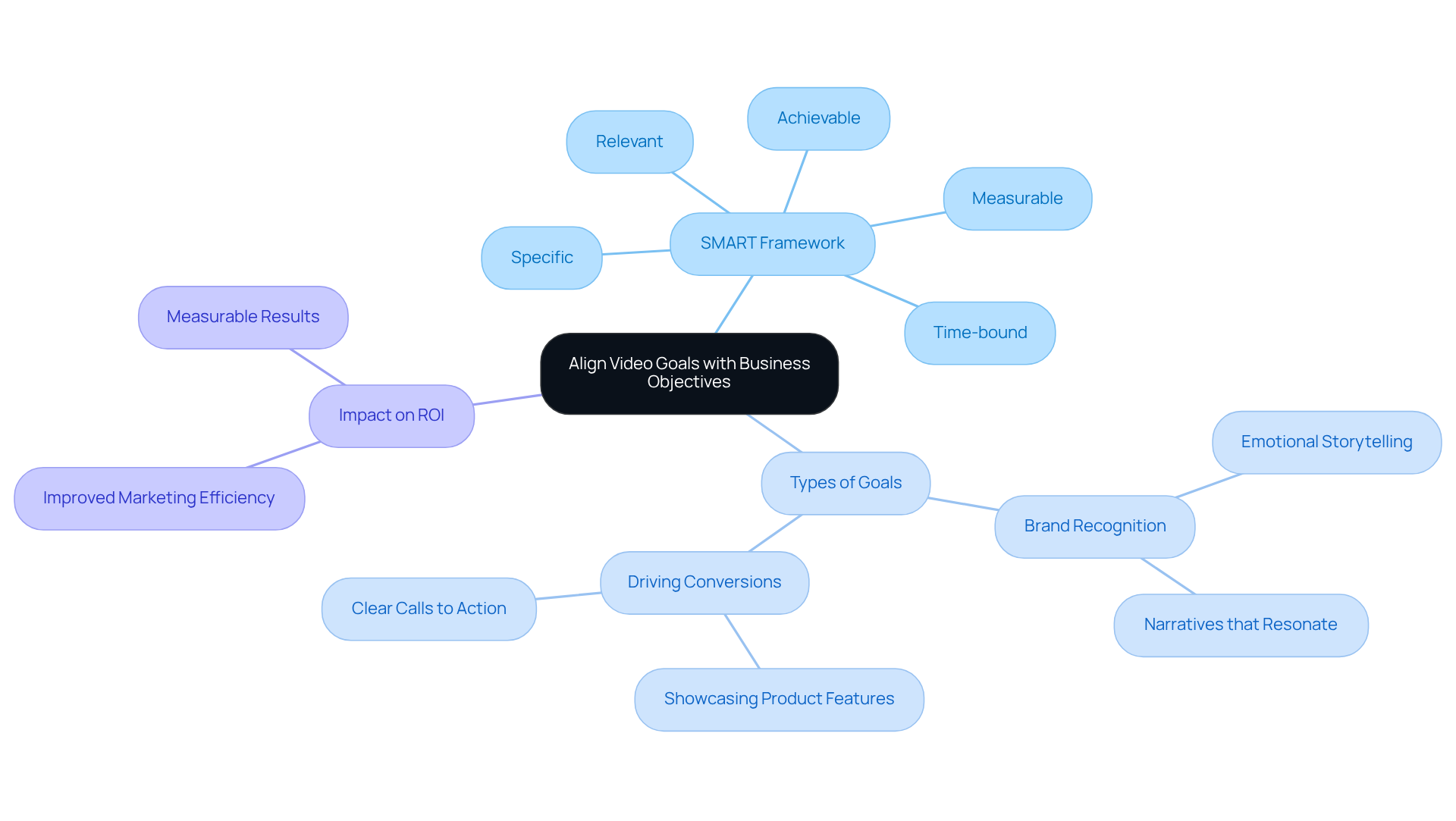
To maximize the impact of your advertising, defining specific goals that align with your overall business objectives is crucial. For example, if your aim is to enhance , your content should focus on narratives that resonate with your target audience. Conversely, if is your goal, create content that showcases product features and includes . Utilizing the - Specific, Measurable, Achievable, Relevant, Time-bound - can effectively structure your goals. This alignment ensures that each piece of content contributes to , ultimately improving the for your promotional efforts.
In fact, 42% of marketers prioritize lead generation as their primary goal for videos, highlighting the . Furthermore, with 244.4 million individuals in the U.S. regularly viewing content by 2025, the importance of a robust marketing strategy for this medium cannot be overstated. By focusing on specific business outcomes, brands can create that captivates audiences and drives substantial results. Case studies have shown that leads to more effective campaigns, reinforcing the necessity for clarity in goal-setting.
Conduct In-Depth Audience Research
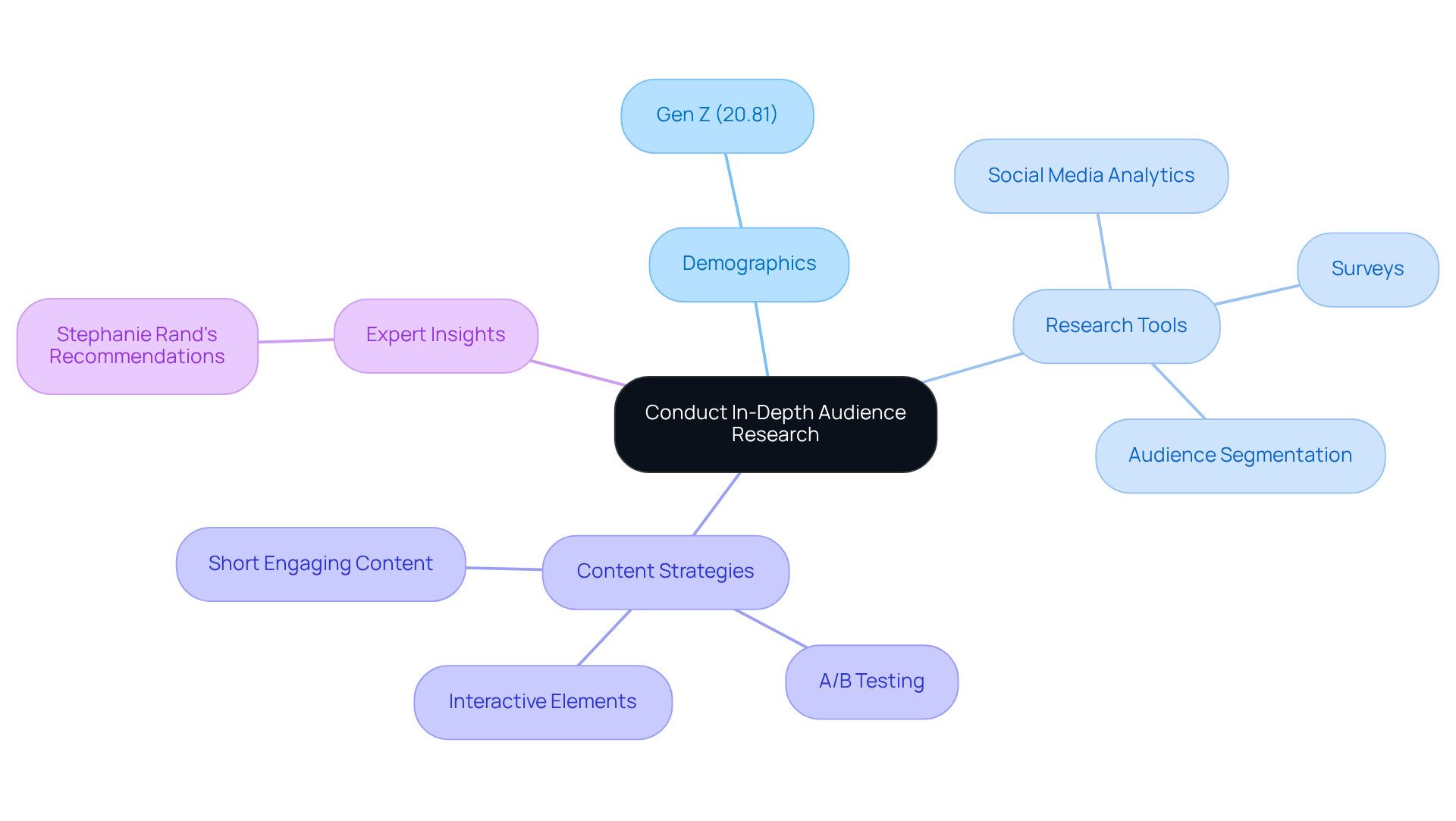
Understanding your audience is crucial for crafting in . Start by diving into demographic data, preferences, and viewing habits. Tools like surveys, social media analytics, and offer invaluable insights. For example, with , brands must focus on by creating that resonates with trends on platforms like TikTok, where 21% of this demographic gets their news.
Furthermore, as , this underscores the growing trend of content consumption across all demographics. can refine your approach, revealing which formats resonate best with your audience. Incorporating , favored by Gen Z, can significantly enhance engagement. This research-driven strategy ensures that your is tailored to meet the evolving needs and preferences of audiences, ultimately boosting engagement and effectiveness.
As Stephanie Rand, Senior Customer Research Manager, aptly puts it, "To connect with Gen Z, be real, be fast, and be interactive. Personalization and authenticity matter more than ever." So, are you ready to adapt your content strategy to connect with this dynamic audience?
Choose Appropriate Platforms and Formats
Choosing the right platforms and formats for your is crucial for boosting engagement. Did you know that are effective for ? In contrast, YouTube is ideal for . On mobile platforms, vertical videos significantly outperform landscape formats, which is vital for effective , as over 90% of social media users access content via mobile devices. Moreover, , accounting for 65% of all internet traffic. This underscores the importance of in marketing strategies, especially through .
To through , to meet each platform's specifications and audience expectations. For example:
- A casual behind-the-scenes glimpse of your brand might thrive as a TikTok video.
- A comprehensive product tutorial is better suited for on YouTube's longer format.
As Catherine Kay wisely states, "Lead with the result, then rewind to the how." This strategic alignment not only boosts visibility but also ensures that your resonates deeply with your target audience, driving higher and conversions.
Failing to customize content for specific platforms in can result in missed opportunities for interaction and brand connection. So, how are you adapting your strategy to leverage these insights?

Measure and Analyze Video Performance
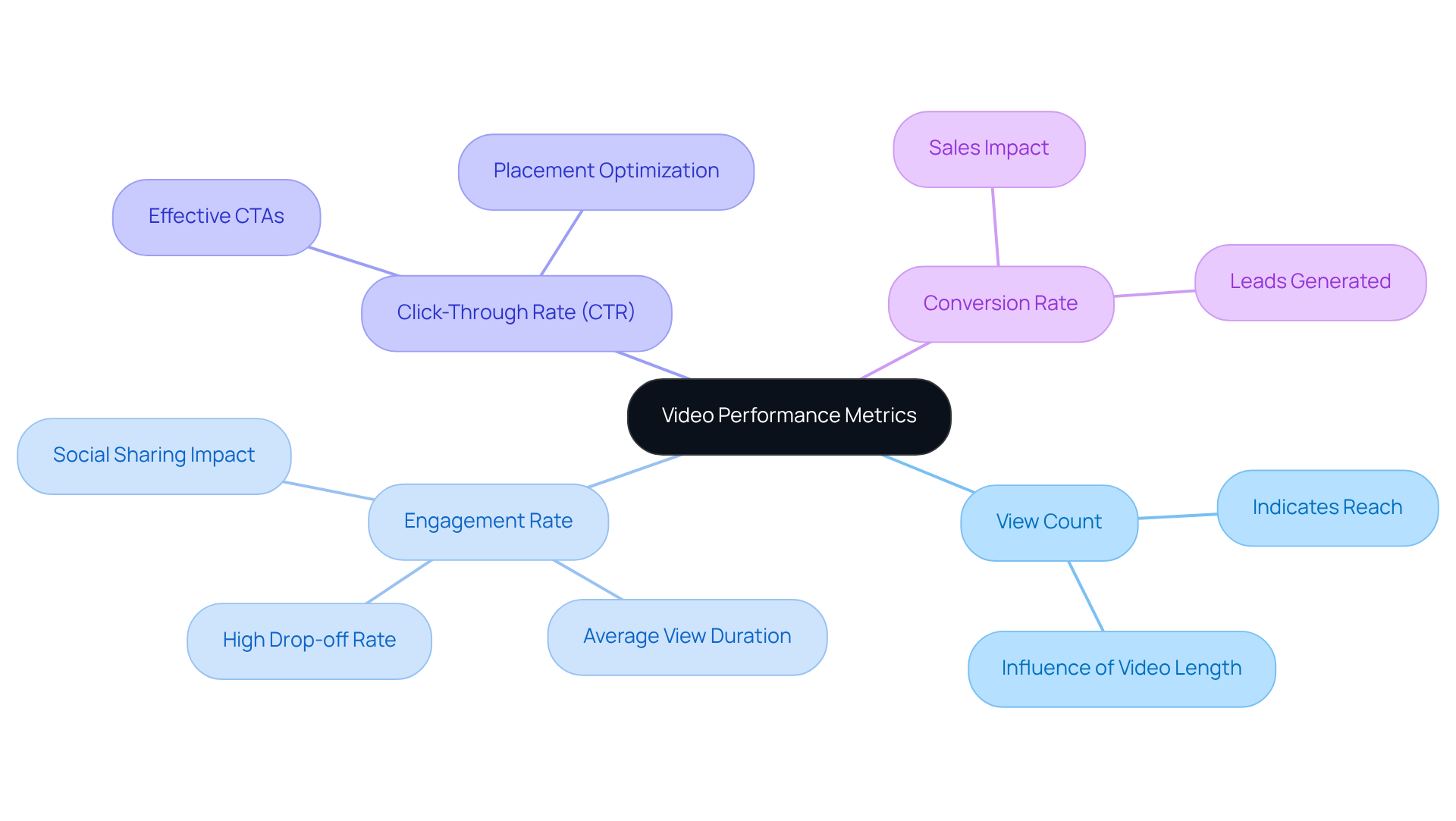
To maximize the effectiveness of your visual marketing efforts, should be measured and analyzed alongside . What metrics should you monitor? View count, , click-through rate (CTR), and conversion rate are critical indicators of success. By utilizing analytics tools from platforms like YouTube and Facebook, you can gather valuable data on the performance of your . For example, if you notice a high drop-off rate at a specific moment in your presentation, it may signal that the material is either uninteresting or too lengthy. Consistently assessing these metrics allows you to make informed modifications to your strategy, ensuring that future productions are optimized for improved performance and .
In 2025, vary across platforms. TikTok and Instagram lead in viewer retention, while Facebook Reels show significant engagement peaks for clips lasting between 90 and 120 seconds. As Ritesh Kewlani, Head of Product Marketing, states, " such as average view duration, total watch time, and play rate provide a more comprehensive view of your content performance." is essential for enhancing your strategy and achieving significant outcomes in .
Furthermore, consider the influence of social sharing on content performance. Clips that are shared frequently experience enhanced reach and engagement. Avoid common pitfalls, such as overwhelming viewers with information or neglecting to optimize your CTAs, as these can hinder the effectiveness of your content. By integrating these insights and continuously analyzing your performance, you can significantly enhance your strategy for .
Conclusion
Mastering social media video advertising is not just about crafting visually appealing content; it demands a strategic approach that aligns video goals with broader business objectives. Establishing specific, measurable targets and understanding the audience are crucial steps. When brands produce videos that engage viewers, they also drive significant results. This synergy between video marketing and business strategy is essential for achieving a high return on investment, ensuring that each piece of content serves a clear purpose.
Key practices highlighted throughout this article include the necessity of:
- Conducting thorough audience research
- Selecting the right platforms and formats for distribution
- Continuously measuring and analyzing video performance
These practices guarantee that content resonates with viewers and maximizes engagement. For example, adapting video styles to cater to the preferences of different demographics, such as Gen Z, and utilizing analytics to refine strategies are vital components for success in the competitive landscape of social media advertising.
In an era where digital content consumption is skyrocketing, implementing these best practices can distinctly set brands apart from the competition. Embracing a data-driven approach not only enhances the effectiveness of social media video advertising but also fosters deeper connections with audiences. As brands navigate this dynamic environment, their commitment to aligning video content with business goals and audience insights will serve as the cornerstone of impactful advertising strategies.
Frequently Asked Questions
Why is it important to align video goals with business objectives?
Aligning video goals with business objectives is crucial to maximize the impact of advertising. It ensures that each piece of content contributes to measurable results, ultimately improving the return on investment (ROI) for promotional efforts.
What is the SMART framework for setting goals?
The SMART framework stands for Specific, Measurable, Achievable, Relevant, and Time-bound. It is a structured approach to defining clear and effective goals.
What are some specific goals that can be set for video content?
Specific goals can include enhancing brand recognition through narratives that resonate with the target audience or driving conversions by showcasing product features and including clear calls to action.
What percentage of marketers prioritize lead generation as a goal for videos?
42% of marketers prioritize lead generation as their primary goal for videos.
How many individuals in the U.S. are projected to regularly view content by 2025?
It is projected that 244.4 million individuals in the U.S. will regularly view content by 2025.
What is the benefit of aligning visual content goals with business growth objectives?
Aligning visual content goals with business growth objectives leads to more effective campaigns, reinforcing the necessity for clarity in goal-setting.
What is the impact of a robust marketing strategy for video content?
A robust marketing strategy for video content is essential as it helps brands create impactful visual material for social media video advertising that captivates audiences and drives substantial results.
List of Sources
- Align Video Goals with Business Objectives
- jammydigital.com (https://jammydigital.com/how-to-set-the-right-goals-for-your-video-marketing)
- entrepreneur.com (https://entrepreneur.com/growing-a-business/4-ways-to-ensure-your-video-marketing-aligns-with-your/429424)
- quickframe.mountain.com (https://quickframe.mountain.com/blog/video-marketing-strategy)
- web.inbound281.com (https://web.inbound281.com/blog/aligning-video-content-with-marketing-objectives-a-marketers-guide-2025)
- sprinklr.com (https://sprinklr.com/blog/social-media-video-marketing)
- Conduct In-Depth Audience Research
- digitalcontentnext.org (https://digitalcontentnext.org/blog/2025/06/23/get-to-know-gen-zs-news-habits-to-build-future-audiences)
- statista.com (https://statista.com/topics/10794/gen-z-media-consumption-in-the-united-states?srsltid=AfmBOopQv3b9ZfSUvkHK0W_d-iJAtCNCYurQ4jjqCKH-YSpM9x2a6fnD)
- weforum.org (https://weforum.org/stories/2025/07/news-consumption-social-video)
- askattest.com (https://askattest.com/blog/research/gen-z-media-consumption)
- reutersinstitute.politics.ox.ac.uk (https://reutersinstitute.politics.ox.ac.uk/digital-news-report/2025)
- Choose Appropriate Platforms and Formats
- techsmith.com (https://techsmith.com/blog/video-marketing-trends?srsltid=AfmBOorS2WQSKBikgCtm6Ac1B_SA4NU-wIuj_iOJlxz-OxomykzXIN5G)
- spielcreative.com (https://spielcreative.com/blog/best-video-marketing-platforms-2025)
- engagecoders.com (https://engagecoders.com/the-best-social-media-platforms-for-video-content-in-2025)
- socialinsider.io (https://socialinsider.io/social-media-benchmarks/social-media-video-statistics)
- wordstream.com (https://wordstream.com/blog/video-marketing-trends-2025)
- Measure and Analyze Video Performance
- firework.com (https://firework.com/blog/video-marketing-metrics)
- socialinsider.io (https://socialinsider.io/social-media-benchmarks/social-media-video-statistics)
- 7 Key Metrics for Video Marketing Success in 2026 (https://blog.nextinymarketing.com/7-metrics-to-focus-on-when-measuring-success-of-video-marketing-efforts)
- How To Measure Your Video Marketing Success And Performance (https://forbes.com/councils/forbesagencycouncil/2025/02/14/how-to-measure-your-video-marketing-success-and-performance)