
Introduction
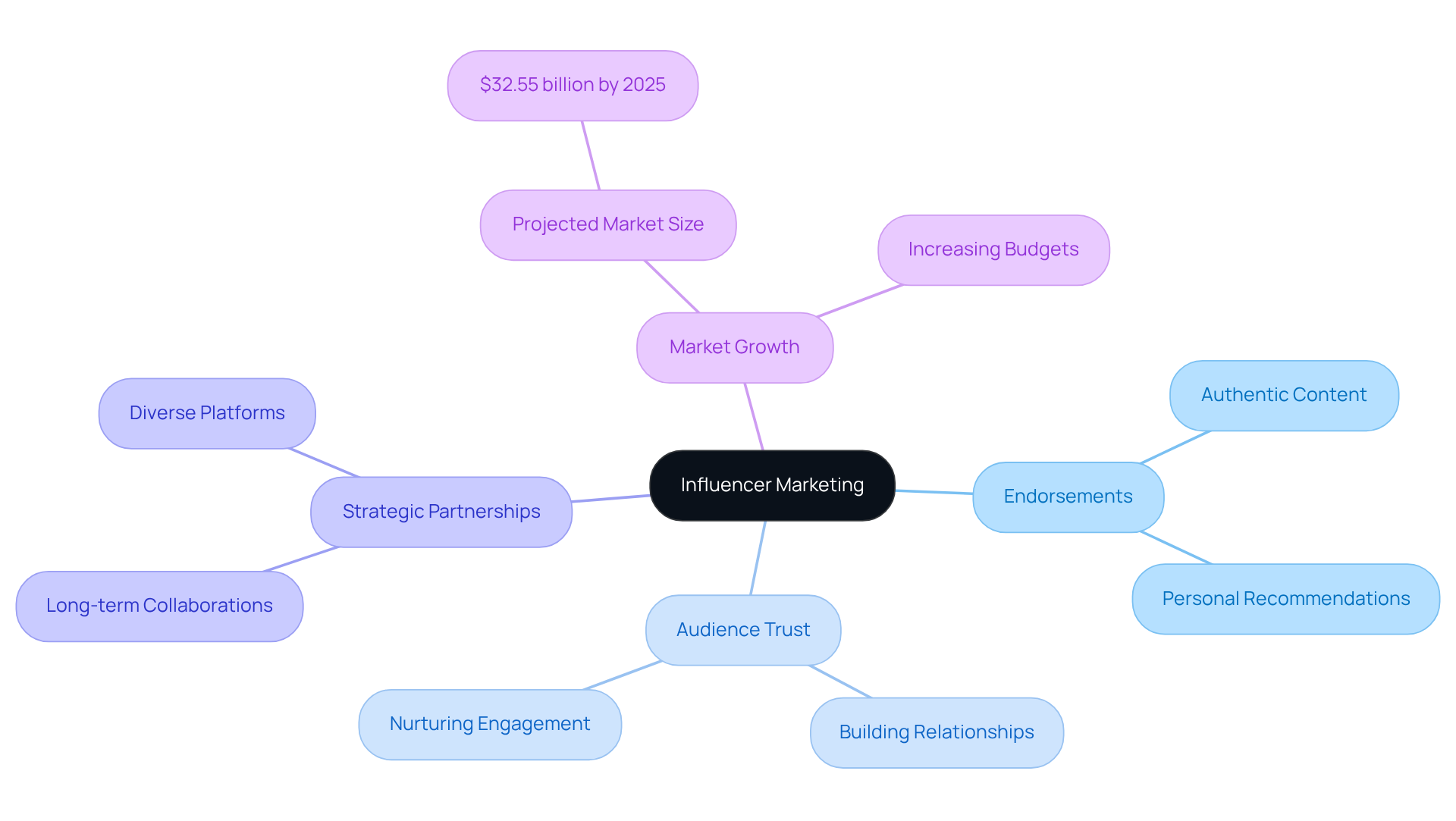
In an era where consumer trust is becoming increasingly elusive, influencer marketing stands out as a crucial strategy for brands eager to forge authentic connections with their audiences. This dynamic approach taps into the credibility of social media personalities, enhancing visibility and fostering deeper engagement. With the market for influencer partnerships projected to soar to $32.55 billion by 2025, the potential for significant returns is undeniable.
However, as brands navigate the diverse landscape of influencers and the ever-evolving digital marketing terrain, they face the challenge of effectively harnessing this powerful tool. What strategies can companies adopt to fully leverage influencer marketing and ensure their brand shines in a crowded marketplace? It's time to explore actionable insights that can elevate your brand's presence and impact.
Define Influencer Marketing: Understanding the Concept
stands as a from individuals who have built credibility and a following on . This method connects companies with influencers - individuals capable of swaying their audience's buying decisions through authentic content and personal recommendations. Unlike traditional advertising, which often relies on direct promotions, focus on nurturing relationships and trust between the influencer and their audience. This establishes the as a powerful asset for companies seeking to and engagement in an increasingly crowded digital landscape.
As we look ahead to 2025, are . This statistic underscores the growing importance of the within the advertising ecosystem. Companies that recognize and leverage this trend in will enhance their market presence and foster deeper connections with their target audiences.
Explain the Importance of Influencer Marketing for Brands
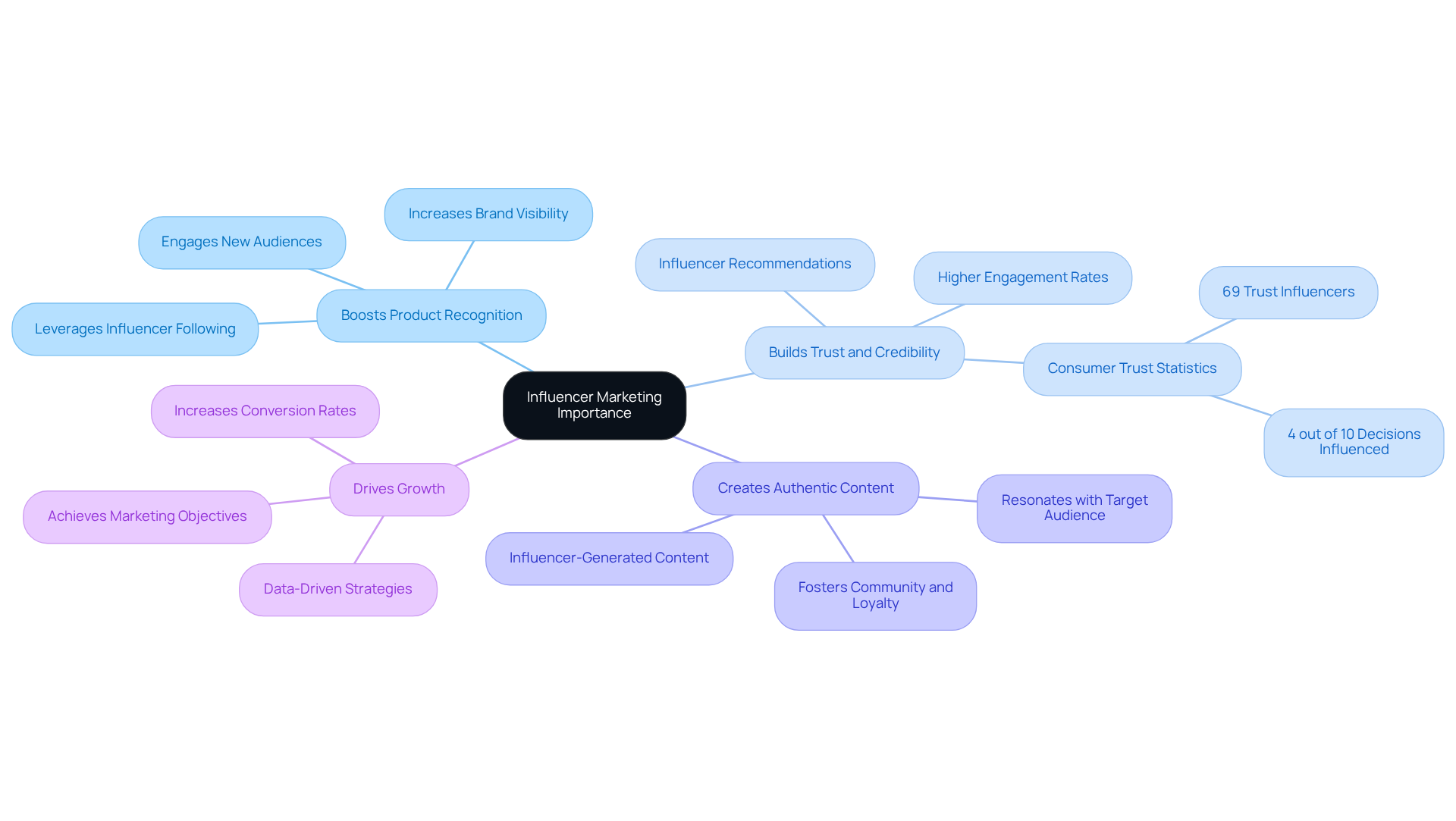
In today's digital landscape, being an is not just beneficial; it's essential for companies aiming to thrive. Why? Because it significantly boosts . By leveraging the established following of influencers, an can connect with potential clients who may not yet be aware of their offerings.
Moreover, an builds . Consumers are more inclined to trust recommendations from influencers they admire over traditional advertisements. This trust translates into , making it a powerful tool for an .
Furthermore, social media personalities help companies create with their target audience. This approach fosters a sense of community and loyalty among consumers. As we navigate the complexities of , it's clear that emerges as a key strategy for driving growth and achieving marketing objectives.
So, are you ready to harness the power of ? Engage with MediaNug today and explore how we can elevate your brand's presence in the digital realm.
Identify Types of Influencers: Navigating the Landscape
Influencers can be categorized into distinct types based on their follower count and engagement levels, each offering unique advantages for brands:
- Nano-influencers (1K-10K followers): These influencers often boast highly engaged audiences and are perceived as relatable and authentic. Their close-knit communities allow for genuine interactions, making them particularly effective for and trust on a budget. With an impressive on Instagram and 10.3% on TikTok in 2024, they excel in hyperlocal marketing. Notably, nano-influencers represent 87.7% of all influencers on TikTok, highlighting their dominance on that platform.
- Micro-influencers (10K-100K followers): Known for their niche expertise and strong community ties, micro-influencers typically achieve higher engagement rates than larger influencers, averaging around 2.53%. This rate is lower than that of nano-influencers, emphasizing the effectiveness of smaller influencers. They are adept at connecting with specific audiences, making them ideal for targeted campaigns that require authenticity and relatability. Brands often find that their can benefit significantly from partnerships with micro-influencers, yielding substantial engagement and awareness by leveraging their authority in niche markets.
- Macro-influencers (100K-1M followers): These influencers have a broader reach and can generate substantial visibility for companies. However, their engagement rates tend to be lower than those of micro-influencers, as their larger follower counts can dilute personal connections. Macro-influencers are best suited for campaigns with larger budgets aimed at increasing awareness and driving sales.
- Mega-influencers (over 1M followers): Often celebrities or well-known figures, mega-influencers can provide significant visibility for companies. Despite their capacity to engage large groups, they may lack the personal connection that smaller influencers maintain with their followers. Research indicates that while mega-influencers attract attention, they often do not translate that attention into sales, making them less effective for direct conversions compared to their smaller counterparts, as highlighted by research from Bocconi University.
Comprehending these classifications is essential for companies that want to align their with particular goals and target audiences, especially as an . By choosing the appropriate kind of promoter, brands can enhance their promotional effect and cultivate with their viewers.

Outline Key Characteristics of Effective Influencer Marketing
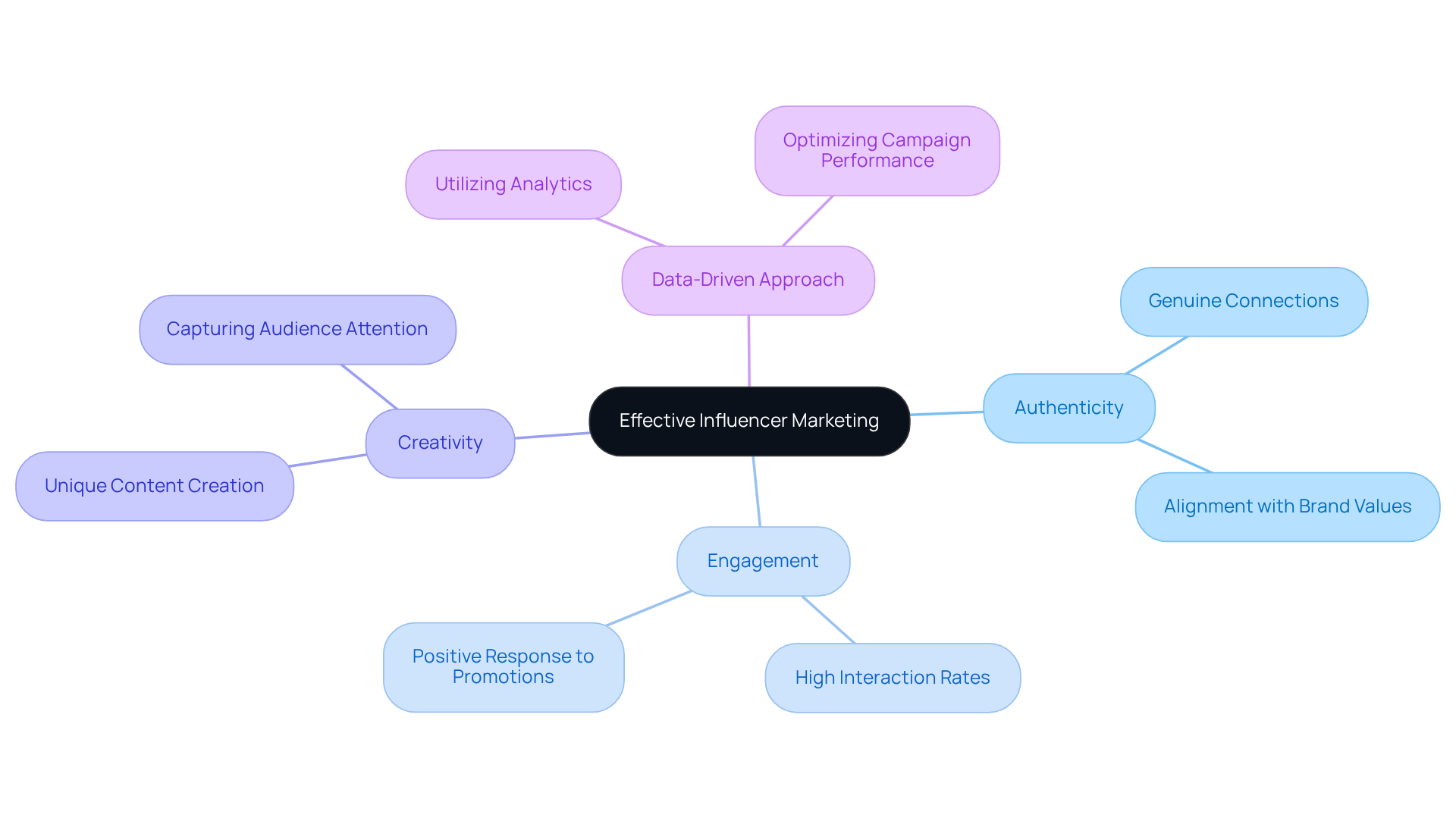
Effective campaigns possess several that can significantly enhance their effectiveness.
- Authenticity stands out as a crucial element; successful influencers forge , . Furthermore, the significance of with the company's values cannot be overstated. This alignment ensures a cohesive message that resonates with the target market.
- Engagement is another vital factor. High interaction rates indicate that followers are actively engaging with the creator's content, making them more likely to respond positively to promotional offers.
- Additionally, creativity plays a pivotal role. Influencers who craft are better positioned to capture their audience's attention and drive conversions.
- Lastly, a is essential. Utilizing and optimize strategies is key to achieving desired outcomes.
By focusing on these characteristics, brands can significantly enhance their brand efforts and achieve better results. Are you ready to elevate your strategy?
Conclusion
Influencer marketing has become an essential strategy for brands aiming to forge meaningful connections with their audiences. By tapping into the authenticity and trust that influencers have built with their followers, companies can significantly boost their visibility and engagement in an increasingly crowded marketplace. This approach not only deepens connections with potential customers but also positions brands to excel in the ever-evolving digital landscape.
Key insights throughout this article underscore the critical role of influencer marketing. The projected growth of this market to a staggering $32.55 billion by 2025 highlights the urgent need for brands to embrace this trend. Different types of influencers - from nano to mega - offer distinct advantages, allowing brands to customize their strategies to meet specific goals and target demographics. Moreover, successful influencer campaigns hinge on characteristics such as authenticity, engagement, creativity, and a data-driven approach, all vital for maximizing impact.
As brands refine their marketing strategies, the importance of influencer marketing cannot be overstated. Adopting this approach not only elevates brand awareness but also fosters trust and loyalty among consumers. To remain competitive and relevant, brands must integrate influencer partnerships into their marketing plans, ensuring they fully leverage the potential of this dynamic and evolving field.
Frequently Asked Questions
What is influencer marketing?
Influencer marketing is a strategic approach that uses endorsements and product mentions from credible individuals on social media to connect companies with their audiences.
How do influencers impact buying decisions?
Influencers can sway their audience's buying decisions through authentic content and personal recommendations, establishing trust and credibility.
How does influencer marketing differ from traditional advertising?
Unlike traditional advertising, which often relies on direct promotions, influencer marketing focuses on nurturing relationships and trust between the influencer and their audience.
What is the projected market size for influencer marketing by 2025?
The projected market size for promotional partnerships in influencer marketing is expected to reach $32.55 billion by 2025.
Why is influencer marketing important for companies?
Influencer marketing is important for companies as it enhances their visibility and engagement in a crowded digital landscape, allowing them to foster deeper connections with their target audiences.
List of Sources
- Define Influencer Marketing: Understanding the Concept
- deptagency.com (https://deptagency.com/insight/whats-next-influencer-marketing-in-2025)
- prnewswire.com (https://prnewswire.com/news-releases/influencer-marketing-in-2025-new-data-reveals-what-works-what-costs-and-whats-next-302490369.html)
- influencermarketinghub.com (https://influencermarketinghub.com/influencer-marketing-benchmark-report)
- Explain the Importance of Influencer Marketing for Brands
- wppmedia.com (https://wppmedia.com/news/Influencer-Marketing-is-Your-Brands-Next-Big-Win)
- forbes.com (https://forbes.com/councils/forbesagencycouncil/2025/12/02/from-reach-to-relevance-current-trends-in-influencer-marketing)
- dlapiper.com (https://dlapiper.com/en/insights/publications/2025/10/influencer-marketing-updates-in-2025)
- What is influencer marketing: An influencer strategy guide for 2026 (https://sproutsocial.com/insights/influencer-marketing)
- emarketer.com (https://emarketer.com/content/how-influencer-marketing-became-essential-gap--unilever--more)
- Identify Types of Influencers: Navigating the Landscape
- hbr.org (https://hbr.org/2024/09/when-it-comes-to-influencers-smaller-can-be-better)
- emarketer.com (https://emarketer.com/content/tracking-impact-of-nano-micro-mid-tier-creators-audience-engagement)
- openinfluence.com (https://openinfluence.com/the-continued-rise-of-micro-and-nano-influencers)
- sproutsocial.com (https://sproutsocial.com/insights/types-of-influencers)
- later.com (https://later.com/blog/types-of-social-media-influencers)
- Outline Key Characteristics of Effective Influencer Marketing
- New Research Unveils Key Strategies for influencer authenticity - Georgia State University News - Press Releases, Robinson College of Business - (https://news.gsu.edu/2025/02/20/influencer-authenticity)
- listrak.com (https://listrak.com/blog/influencer-marketing-in-2025-whats-changed-and-what-still-works)
- marketingtechnews.net (https://marketingtechnews.net/news/how-performance-teams-are-taking-over-influencer-marketing-in-2025)
- forbes.com (https://forbes.com/councils/forbesagencycouncil/2025/01/16/the-top-5-influencer-marketing-trends-for-2025)
- sproutsocial.com (https://sproutsocial.com/insights/authenticity-in-influencer-marketing)