
Introduction
Narrative advertising has emerged as a formidable tool for brands aiming to forge meaningful connections with consumers through the art of storytelling. This innovative approach transcends traditional marketing tactics, engaging audiences on an emotional level and fostering loyalty and trust.
But as the digital landscape evolves, how can brands effectively harness storytelling to captivate their audience and distinguish themselves in a crowded marketplace?
This exploration delves into the definition, origins, and key traits of narrative advertising, revealing the essential elements that make it a compelling strategy for modern marketers.
Define Narrative Advertising: A Comprehensive Overview
serves as a strategic marketing method that harnesses storytelling techniques to effectively convey a company's message, forging . Unlike conventional promotions that focus solely on direct product marketing, on a deeper level. This approach not only captures attention but also cultivates loyalty by resonating with the audience's values and emotions. By weaving in elements like characters, conflict, and resolution, transforms a simple message into an engaging narrative that fosters a .
In 2025, the is more pronounced than ever. Companies that leverage see a remarkable 20% increase in customer retention rates compared to those that do not. As consumers grow increasingly fatigued by traditional promotions, they gravitate towards by offering genuine, relatable stories. In fact, statistics reveal that 92% of consumers prefer brands that appear authentic, and 55% are more likely to purchase from companies that share .
, like Airbnb's 'Belong Anywhere' initiative, exemplify how storytelling can effectively communicate a brand's mission while fostering a sense of community among users. Similarly, Coca-Cola's 'Share a Coke' campaign personalized consumer experiences, enhancing engagement through shared stories.
As the digital landscape evolves, the necessity for seamless storytelling across multiple platforms cannot be overstated. Brands that implement experience three times greater engagement, underscoring the importance of integrating narratives across social media, blogs, and interactive experiences. In this context, emerges not merely as a marketing strategy but as a vital component in building trust and loyalty within an increasingly competitive marketplace.

Trace the Origins: The Evolution of Narrative Advertising
The origins of date back to the , where storytelling served as a vital tool to engage audiences and effectively convey messages. A prime example is John Deere's 'The Furrow' magazine, launched in 1895, which shared narratives about farming and agriculture, positioning the company as a in its field.
As media evolved from print to radio and television, storytelling in marketing adapted accordingly, leveraging the unique strengths of each medium to tell compelling stories. With the rise of digital platforms, has transformed further, allowing companies to create that resonate with today's consumers.
In the current landscape, transcends mere product promotion; it focuses on that emotionally connects with consumers, making it an indispensable tool in the marketer's arsenal.

Identify Key Characteristics: Elements of Effective Narrative Advertising
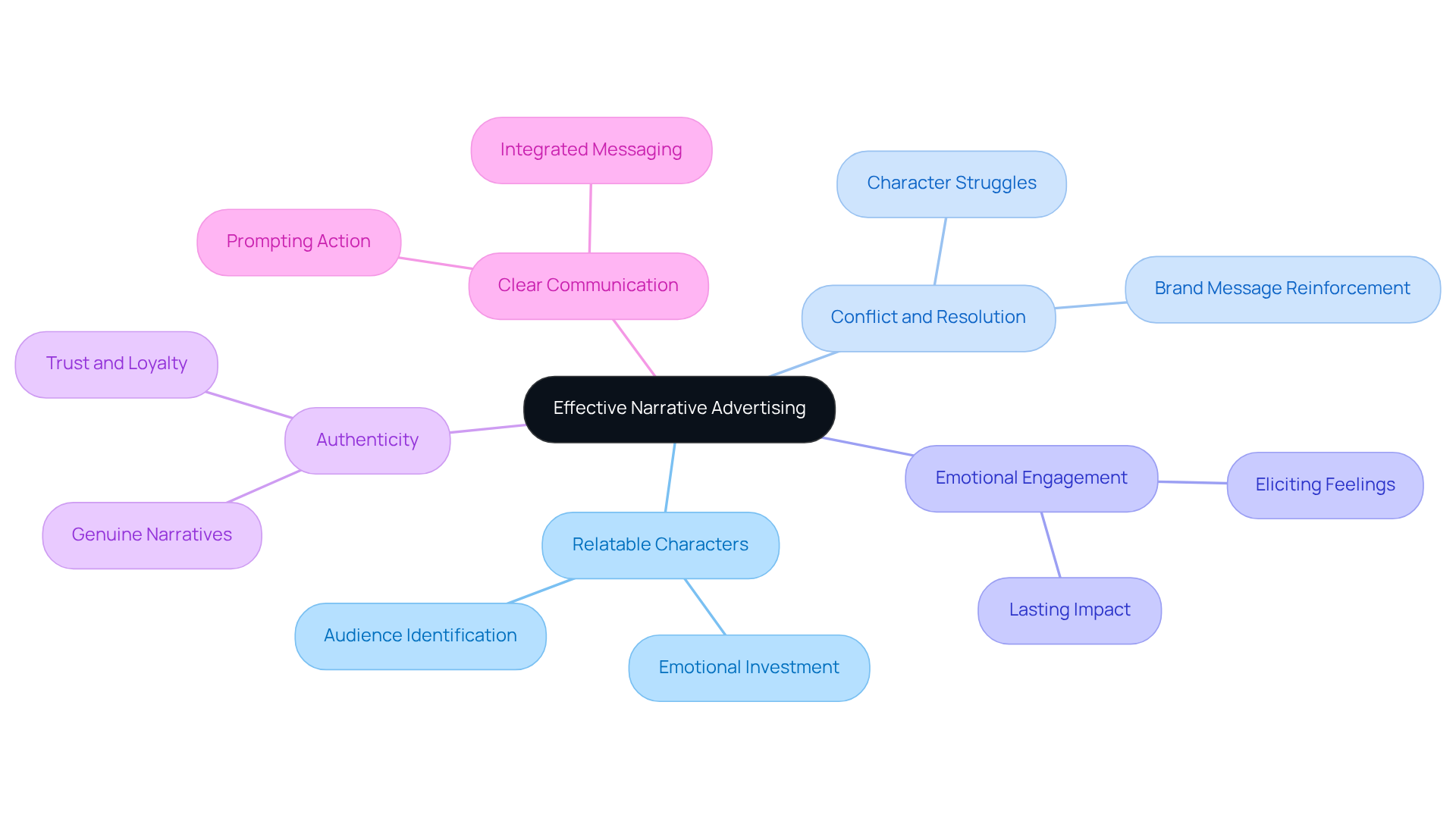
Effective hinges on several key elements that can significantly enhance its impact:
- : Successful stories often feature characters that the audience can identify with, making the plot more engaging. This connection not only draws viewers in but also fosters a deeper emotional investment in the narrative.
- : A compelling story typically includes a conflict that the characters must overcome. This struggle leads to a resolution that , demonstrating how the product or service can solve real problems.
- : The most effective storytelling ads elicit feelings-whether joy, nostalgia, or empathy-leaving a on the audience. Have you ever found yourself moved by a commercial? That’s the power of .
- Authenticity: Genuine narratives that reflect real experiences or values resonate more with consumers. This and loyalty, essential components in building lasting relationships with your audience.
- : While the story is central, the company's message should remain clear and integrated into the tale. This ensures that the audience understands the connection between the story and the product, prompting them to take action.
These elements collaborate to form a narrative that not only captures attention but also motivates . By leveraging these principles, brands can create that resonates deeply with their target audience.
Examine Successful Campaigns: Real-World Examples of Narrative Advertising
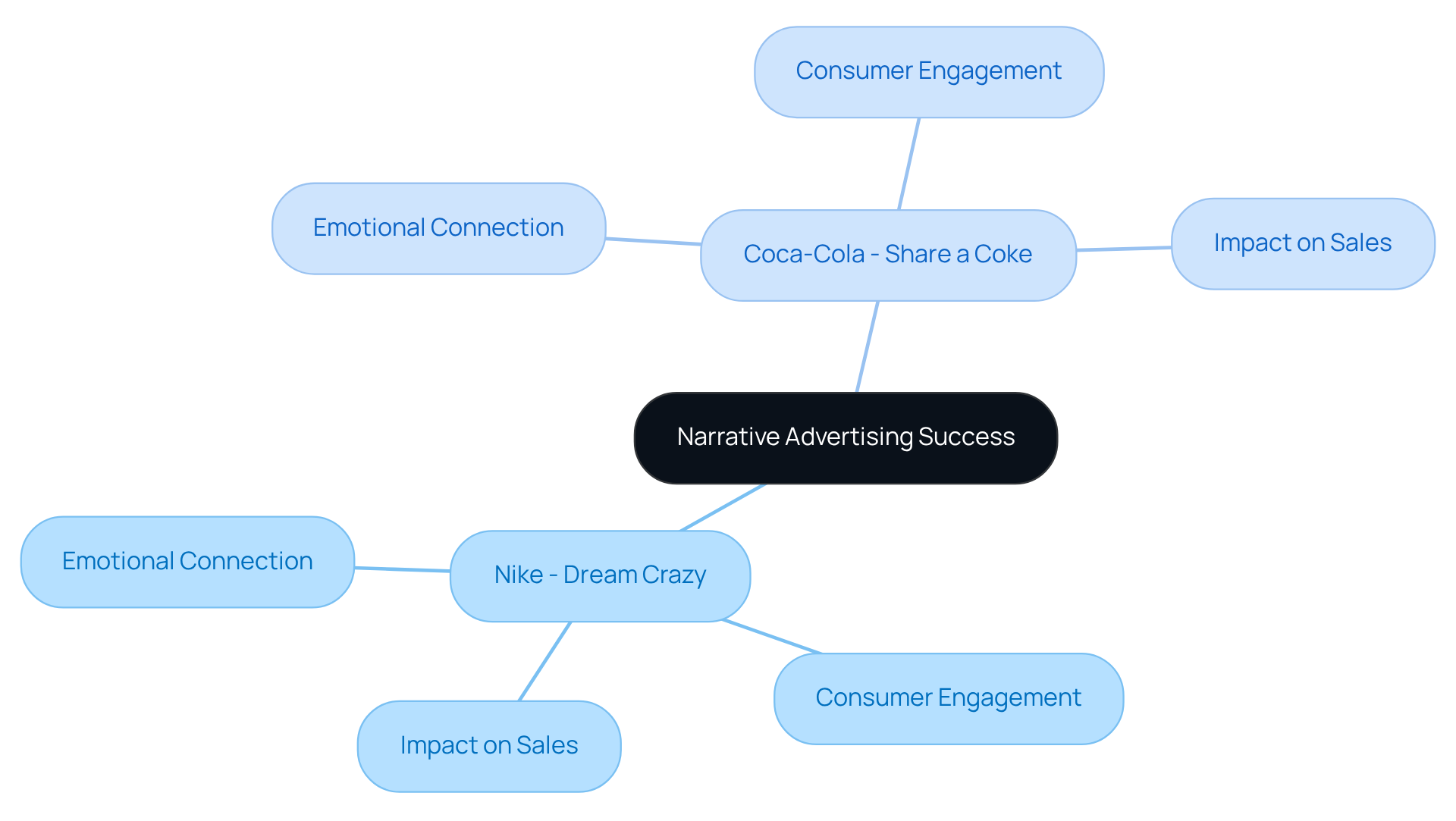
Many companies have effectively harnessed narrative advertising to forge deeper connections with their audiences. Take , for instance. It stands out for its compelling portrayal of athletes overcoming adversity, featuring . This campaign not only elevated loyalty to the brand but also resonated with consumers on an emotional level, reinforcing Nike's commitment to empowerment and perseverance. The impact of 'Dream Crazy' is evident; it has become a benchmark for how companies can leverage storytelling to foster loyalty and community.
Similarly, personalized the experience by encouraging consumers to find bottles emblazoned with their names. This initiative established a and connection, resulting in a substantial rise in sales and consumer engagement. The campaign's success is reflected in its ability to generate over 500 million personalized bottles, transforming a simple product into a catalyst for social interaction and emotional resonance.
These campaigns exemplify how , build brand loyalty, and drive sales by . The emotional resonance and relatability of these narratives underscore the and crafting messages that resonate deeply. So, how can your brand harness the power of storytelling to connect with your audience? The answer lies in creating narratives that not only inform but also inspire.
Conclusion
Narrative advertising emerges as a powerful force in the marketing landscape, leveraging the art of storytelling to forge deeper emotional connections between brands and their audiences. This innovative approach goes beyond traditional advertising, focusing on relatable narratives that resonate with consumers, ultimately cultivating loyalty and trust. In an increasingly competitive marketplace, the ability to convey a compelling story is not merely an advantage; it’s a necessity.
The article underscores essential characteristics of effective narrative advertising, including:
- Relatable characters
- Emotional engagement
- Authenticity
Take, for instance, Nike's 'Dream Crazy' and Coca-Cola's 'Share a Coke' campaigns. These real-world examples demonstrate how successful brands harness these elements to create meaningful connections with consumers. By weaving storytelling into their marketing strategies across various platforms, brands can significantly enhance engagement and retention, showcasing the profound impact of narrative-driven marketing.
In a marketplace saturated with conventional promotions, the allure of narrative advertising presents a refreshing alternative. Brands are urged to embrace this approach, crafting authentic and engaging stories that not only inform but also inspire action. By doing so, they can cultivate lasting relationships with their audiences and distinguish themselves in a crowded market. Thus, narrative advertising stands as an indispensable tool for modern marketers.
Frequently Asked Questions
What is narrative advertising?
Narrative advertising is a strategic marketing method that uses storytelling techniques to convey a company's message and create emotional connections with the audience, moving beyond traditional product-focused promotions.
How does narrative advertising differ from conventional promotions?
Unlike conventional promotions that focus solely on direct product marketing, narrative advertising engages consumers on a deeper level through storytelling, which captures attention and fosters loyalty by resonating with the audience's values and emotions.
What elements are typically included in narrative advertising?
Narrative advertising often includes elements such as characters, conflict, and resolution, transforming a simple message into an engaging story that fosters a personal connection with the brand.
What impact does storytelling have on customer retention?
Companies that leverage authentic narratives in their marketing see a remarkable 20% increase in customer retention rates compared to those that do not.
What do consumers prefer regarding brand authenticity?
Statistics show that 92% of consumers prefer brands that appear authentic, and 55% are more likely to purchase from companies that share engaging narratives.
Can you provide examples of successful narrative advertising campaigns?
Successful examples include Airbnb's 'Belong Anywhere' initiative, which communicates the brand's mission while fostering community, and Coca-Cola's 'Share a Coke' campaign, which personalizes consumer experiences through shared stories.
Why is cross-platform storytelling important in narrative advertising?
As the digital landscape evolves, seamless storytelling across multiple platforms is crucial. Brands that implement cross-platform strategies experience three times greater engagement, highlighting the need to integrate narratives across social media, blogs, and interactive experiences.
What role does narrative advertising play in building brand trust and loyalty?
Narrative advertising is not just a marketing strategy; it serves as a vital component in building trust and loyalty in an increasingly competitive marketplace by offering genuine, relatable stories to consumers.
List of Sources
- Define Narrative Advertising: A Comprehensive Overview
- dev.to (https://dev.to/priyankapandey/the-role-of-storytelling-in-marketing-2025-how-brands-can-create-impactful-narratives-1ado)
- entrepreneur.com (https://entrepreneur.com/growing-a-business/why-strong-storytelling-beats-out-good-advertisements/497088)
- campaignsoftheworld.com (https://campaignsoftheworld.com/news/why-storytelling-remains-essential-in-advertising)
- reelreve.com (https://reelreve.com/why-brand-storytelling-is-the-key-to-marketing-success-in-2025)
- forbes.com (https://forbes.com/councils/forbesagencycouncil/2025/01/22/why-storytelling-is-more-valuable-than-ever-to-your-company-in-2025)
- Trace the Origins: The Evolution of Narrative Advertising
- Storytelling Statistics 2026: 94+ Stats & Insights [Expert Analysis] - Marketing LTB (https://marketingltb.com/blog/statistics/storytelling-statistics)
- higocreative.com (https://higocreative.com/blog/storytelling-marketing-statistics)
- prioritymarketing.com (https://prioritymarketing.com/2024-marketing-trends-storytelling-drives-pr-social-media)
- The Power Of Storytelling In Modern Marketing (https://forbes.com/councils/forbescommunicationscouncil/2024/08/05/the-power-of-storytelling-in-modern-marketing)
- Identify Key Characteristics: Elements of Effective Narrative Advertising
- Storytelling in Marketing: The Importance of Brand Narrative | UWA Online (https://online.uwa.edu/news/brand-narrative-storytelling)
- socalnewsgroup.com (https://socalnewsgroup.com/2025/03/18/narrative-driven-marketing-guide)
- The power of storytelling in advertising (https://annenberg.usc.edu/news/research-and-impact/power-storytelling-advertising)
- pulse-advertising.com (https://pulse-advertising.com/news/why-emotional-content-is-the-way-to-go-for-brands)
- lbbonline.com (https://lbbonline.com/news/mastering-storytelling-in-advertising-emotion-driven-marketing-that-connects)
- Examine Successful Campaigns: Real-World Examples of Narrative Advertising
- adage.com (https://adage.com/events-awards/year-in-review/2025/aa-best-ads-of-2025)
- pulse-advertising.com (https://pulse-advertising.com/resources/social-media-news/top-10-marketing-campaigns-of-2025)
- marketingdive.com (https://marketingdive.com/news/best-marketing-campaigns-2025-navigating-uncertainty/807155)
- ideascollide.com (https://ideascollide.com/news/5-marketing-campaigns-changed-the-game)