
Introduction
As businesses strive to navigate the complexities of the digital landscape, social media marketing stands out as a crucial strategy that transcends mere trendiness. This powerful tool not only enhances brand visibility but also cultivates meaningful connections with consumers, driving engagement and sales. Furthermore, with an overwhelming majority of companies expected to utilize these platforms by 2026, one must ask: how can businesses effectively harness the full potential of social media to distinguish themselves in a crowded marketplace?
The answer lies in understanding the multifaceted benefits that social media offers. By leveraging these platforms, companies can not only reach a wider audience but also engage with their customers on a more personal level. This engagement fosters loyalty and can significantly impact sales. In addition, successful case studies demonstrate that businesses that effectively utilize social media strategies see a marked improvement in their overall performance.
In conclusion, the time to act is now. Businesses must embrace social media marketing not just as an option but as a necessity to thrive in today's competitive environment. By doing so, they can ensure they stand out and connect with their audience in meaningful ways.
Define Social Media Marketing for Businesses
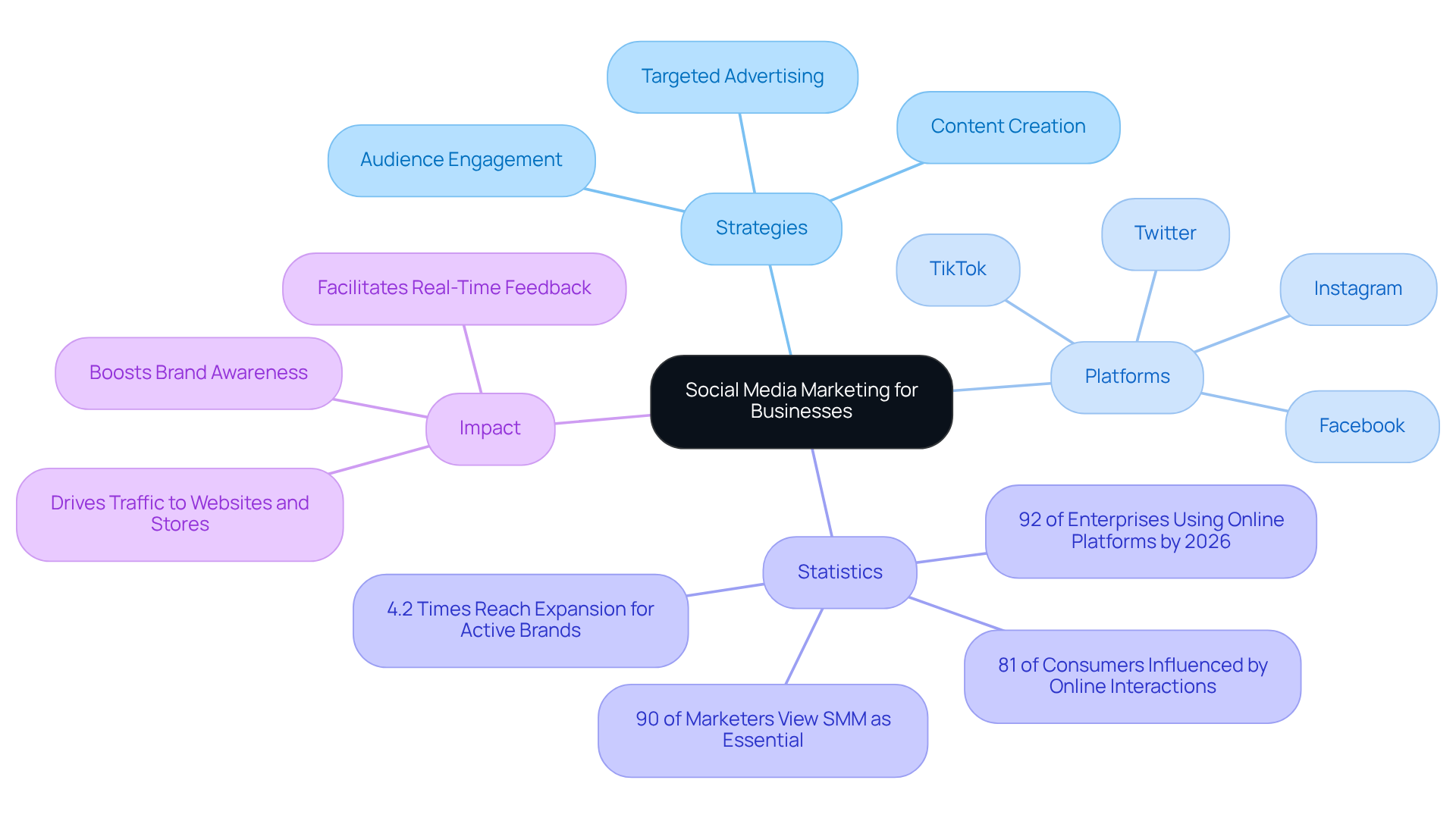
recognize that SMM is not just a trend; it’s a strategic powerhouse for promoting products and services. With activities ranging from content creation to and targeted advertising, SMM is designed to captivate and connect with your . The primary goal? To boost awareness and drive traffic to both websites and physical stores.
By harnessing platforms like Facebook, Instagram, Twitter, and TikTok, can tap into a vast audience, fostering and building a community centered around their brand. This approach not only amplifies visibility but also facilitates real-time feedback and interaction with consumers, making it an indispensable component of .
Consider this: by 2026, a staggering . This statistic underscores the critical role that play in today’s marketing landscape. Moreover, and their own businesses, reflecting a widespread recognition of their value.
Brands that actively engage across various communication channels can expand their reach by an impressive 4.2 times, significantly enhancing visibility and customer interaction. Additionally, , highlighting the platform's ability to forge meaningful connections with consumers.
As brands navigate the ever-evolving digital landscape, integrating online community engagement into their overall strategy is crucial for achieving sustained growth and visibility. Are you ready to elevate your marketing game? today and harness the full potential of social media marketing.
Contextualize Social Media Marketing in Digital Strategy
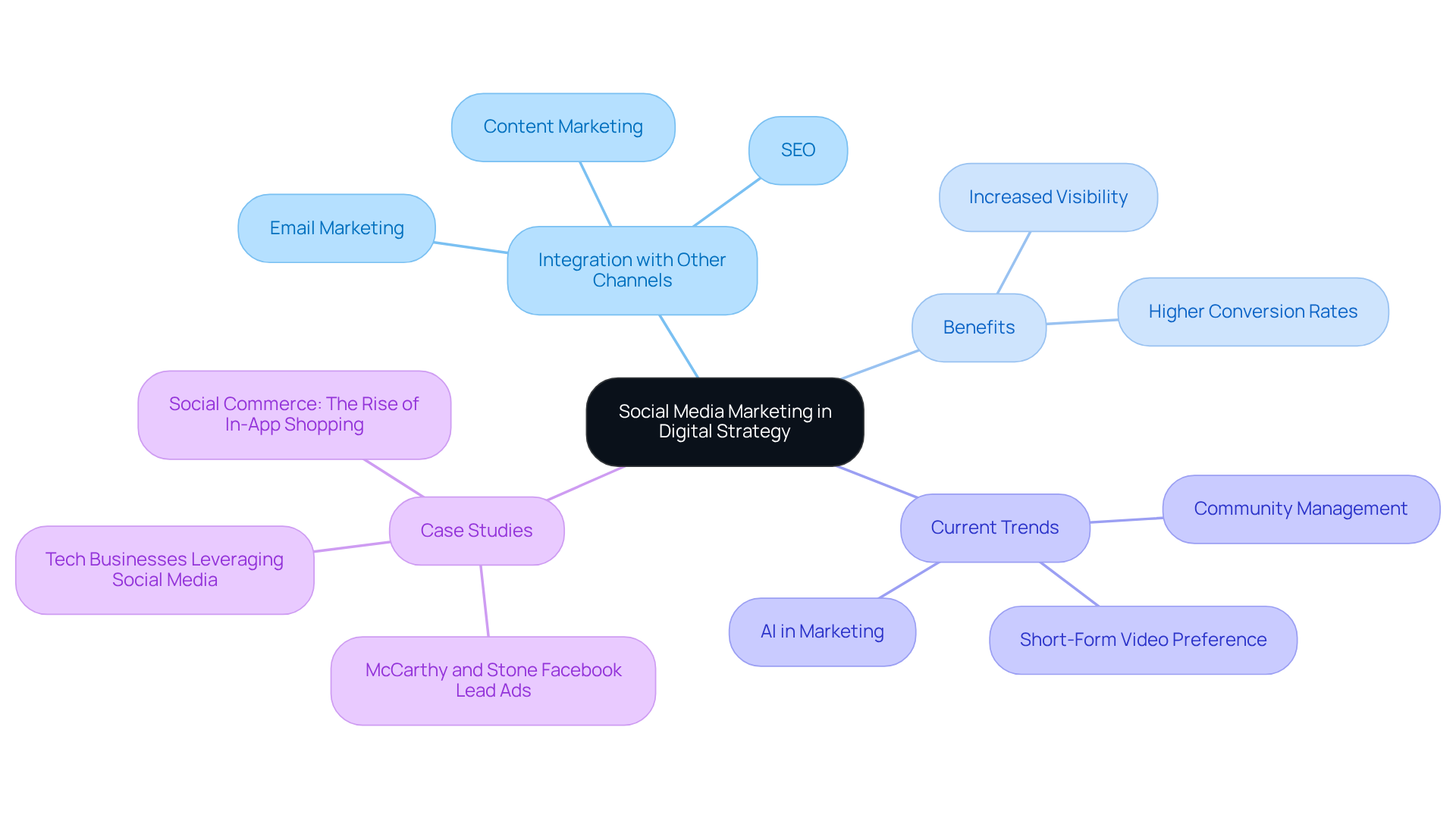
In today’s dynamic digital landscape, promoting online communities is not just an option; it’s a cornerstone of effective . This approach works in harmony with other channels like email marketing, search engine optimization (SEO), and content marketing. By weaving online networks into a comprehensive , businesses can craft cohesive messaging that resonates across various platforms. For instance, a campaign might kick off with an eye-catching social media teaser, followed by targeted email follow-ups and detailed blog posts that explore the topic in depth. This not only boosts visibility but also significantly elevates conversion rates, as consumers encounter consistent messaging across multiple touchpoints.
Current trends reveal that brands employing enjoy heightened engagement and . In fact, a staggering 92% of marketers report improved visibility thanks to , while 93% attribute increased website traffic to these channels. Moreover, provide invaluable analytics that can refine and enhance other promotional efforts, making them indispensable for data-driven decision-making. Take, for example, McCarthy and Stone’s use of Facebook lead advertisements, which demonstrates how integrating can yield remarkable results, generating 4.3 times more sales leads than previous attempts. As we look toward 2026, the importance of a well-structured multi-channel promotional strategy, inclusive of , cannot be overstated.
Trace the Evolution of Social Media Marketing
began in the early 2000s with platforms like Friendster and MySpace, which allowed users to connect and share content. As these platforms gained traction, recognized their promotional potential. The launch of Facebook in 2004 marked a significant turning point, introducing targeted advertising and analytics that transformed .
Furthermore, the rise of mobile technology and visual platforms such as Instagram and Snapchat has reshaped online promotion. By 2019, social media usage skyrocketed from 5% in 2005 to 79%, showcasing the rapid adoption of these platforms. Today, the emphasis has shifted towards and , reflecting evolving consumer preferences and technological advancements. For instance, TikTok's gross merchandise value (GMV) is projected to double by 2026, underscoring its impact on promotional trends.
In addition, in 2020, with 88% of advertisers reporting positive returns on investment from video content. This evolution underscores the necessity for to remain agile and adapt their strategies to seize new opportunities in the ever-changing digital communication landscape. Are you ready to leverage these trends for your brand's success?

Identify Key Characteristics of Effective Social Media Marketing
Effective social media promotion relies heavily on authenticity, engagement, and . Authenticity is crucial; consumers gravitate towards brands that share genuine and relatable content. Did you know that ? This statistic underscores the immense value of . Furthermore, 55% of consumers across all age groups trust UGC more than other marketing strategies, highlighting its credibility in marketing efforts.
Engagement is equally vital. Actively interacting with followers through comments, messages, and UGC not only fosters community but also builds loyalty. Brands that prioritize interaction often see a significant increase in customer spending, with . Aishwarya Suresh notes that positive interpersonal interactions greatly influence consumer behavior, further emphasizing the importance of engagement.
Moreover, is . This approach allows businesses to track performance metrics such as , reach, and conversion rates. By analyzing this data, companies can refine their strategies, optimize content, and allocate resources more effectively. For instance, businesses that implement measurement frameworks to monitor traffic and conversions can significantly enhance their promotional effectiveness.
The global UGC content market is currently valued at $5.36 billion and is projected to soar to $32.6 billion by 2030. This growth indicates the increasing importance of UGC in marketing strategies. Consistency in branding and messaging across platforms is also essential, as it enhances recognition and builds trust, making it easier for consumers to connect with the brand's identity. Winning brands invest in a and a strategic content mix, ensuring their messaging resonates with their audience.
Collectively, these characteristics contribute to a robust presence for social media marketing businesses that not only drives growth but also cultivates lasting customer relationships. Are you ready to elevate your social media strategy?

Conclusion
Social media marketing has become an essential strategy for businesses looking to boost their visibility and connect with consumers. This approach goes beyond fleeting trends; it has solidified its role as a cornerstone of modern marketing, fostering engagement and community building. By utilizing platforms like Facebook, Instagram, and TikTok, businesses can effectively promote their products and services, driving traffic and enhancing brand awareness.
Key insights from this exploration underscore the necessity of weaving social media into a broader digital strategy. The synergy between social media marketing and other channels - such as email and SEO - creates a cohesive narrative that resonates with audiences. Furthermore, the evolution of social media - from early platforms to today’s emphasis on video content and influencer partnerships - highlights the need for brands to stay agile and responsive to shifting consumer preferences. The focus on authenticity, engagement, and data-driven decision-making further emphasizes the traits that characterize successful social media campaigns.
As businesses navigate the complexities of the digital landscape, embracing social media marketing is not merely advantageous; it is crucial for sustained growth and customer loyalty. The statistics are compelling: effective social media strategies significantly enhance engagement, visibility, and conversion rates. By committing to a well-structured approach that prioritizes genuine interactions and robust analytics, brands can fully harness the potential of social media marketing. It’s time for businesses to leverage these insights and elevate their marketing strategies, ensuring they remain competitive in an ever-evolving marketplace.
Frequently Asked Questions
What is social media marketing (SMM) for businesses?
Social media marketing (SMM) for businesses is a strategic approach to promoting products and services through activities such as content creation, audience engagement, and targeted advertising, aimed at boosting awareness and driving traffic to websites and physical stores.
What platforms are commonly used in social media marketing?
Common platforms used in social media marketing include Facebook, Instagram, Twitter, and TikTok.
What are the primary goals of social media marketing?
The primary goals of social media marketing are to boost brand awareness, drive traffic to websites and physical stores, and foster engagement with the target audience.
Why is social media marketing considered essential for businesses?
Social media marketing is considered essential because it allows businesses to tap into a vast audience, facilitates real-time feedback and interaction with consumers, and significantly enhances visibility and customer interaction.
What is the expected trend for social media marketing by 2026?
By 2026, it is expected that 92% of American enterprises will leverage online platforms for marketing, indicating the growing importance of social media marketing.
How do consumers respond to online interactions in terms of purchasing decisions?
81% of consumers admit that online interactions influence their impulsive purchasing decisions, highlighting the effectiveness of social media in creating meaningful connections with consumers.
How can brands benefit from engaging across various communication channels?
Brands that actively engage across various communication channels can expand their reach by an impressive 4.2 times, significantly enhancing their visibility and customer interaction.
What is the significance of integrating online community engagement into marketing strategies?
Integrating online community engagement into marketing strategies is crucial for achieving sustained growth and visibility as brands navigate the evolving digital landscape.
List of Sources
- Define Social Media Marketing for Businesses
- The Importance of Social Media Marketing in 2026 - JCT Growth (https://jctgrowth.com/why-social-media-marketing-matters-more-than-ever-in-2026)
- thunderbit.com (https://thunderbit.com/blog/social-media-marketing-stats)
- 120+ Must-know social media marketing statistics for 2026 (https://sproutsocial.com/insights/social-media-statistics)
- nealschaffer.com (https://nealschaffer.com/social-media-marketing-statistics)
- Key Social Media Marketing Statistics for 2025 | Sprinklr (https://sprinklr.com/blog/social-media-marketing-statistics)
- Contextualize Social Media Marketing in Digital Strategy
- Cross-channel marketing strategies for 2026: A practical guide for small teams | Criteo (https://criteo.com/blog/cross-channel-marketing-strategies-for-2026-a-practical-guide-for-small-teams)
- 7 social media trends you need to know in 2026 (https://sproutsocial.com/insights/social-media-trends)
- thunderbit.com (https://thunderbit.com/blog/social-media-marketing-stats)
- The Importance of Social Media Marketing in 2026 - JCT Growth (https://jctgrowth.com/why-social-media-marketing-matters-more-than-ever-in-2026)
- wearesocial.com (https://wearesocial.com/us/blog/2025/10/digital-2026-global-overview-report)
- Trace the Evolution of Social Media Marketing
- go.photoshelter.com (https://go.photoshelter.com/brands/blog/the-state-of-social-media-marketing-the-2026-outlook)
- socialmediatoday.com (https://socialmediatoday.com/news/36-predictions-social-media-marketing-2026/802195)
- online.maryville.edu (https://online.maryville.edu/blog/evolution-social-media)
- The rise of social media (https://ourworldindata.org/rise-of-social-media)
- backlinko.com (https://backlinko.com/social-media-users)
- Identify Key Characteristics of Effective Social Media Marketing
- 6 Predictions That Will Shape Social Media Strategies In 2026 (https://forbes.com/councils/forbescommunicationscouncil/2026/01/02/the-next-social-wave-the-top-6-predictions-that-will-shape-social-media-strategies-in-2026)
- The Importance of Social Media Marketing in 2026 - JCT Growth (https://jctgrowth.com/why-social-media-marketing-matters-more-than-ever-in-2026)
- 47 Most Important User-Generated Content Statistics for 2024 (and Why They Matter) - CrowdRiff (https://crowdriff.com/resources/ugc-stats)
- 120+ Must-know social media marketing statistics for 2026 (https://sproutsocial.com/insights/social-media-statistics)
- Key Social Media Marketing Statistics for 2025 | Sprinklr (https://sprinklr.com/blog/social-media-marketing-statistics)