
Introduction
As consumer preferences evolve at breakneck speed, brands must not only adapt but also distinguish themselves in a saturated digital landscape. A creative testing framework emerges as a vital tool, enabling marketers to systematically evaluate and refine their advertising strategies for maximum impact. By leveraging data-driven insights, companies can uncover the creative elements that truly resonate with their audiences. However, as competition intensifies, the question arises: how can brands put this framework into action to not just survive but truly thrive?
Define Creative Testing Framework
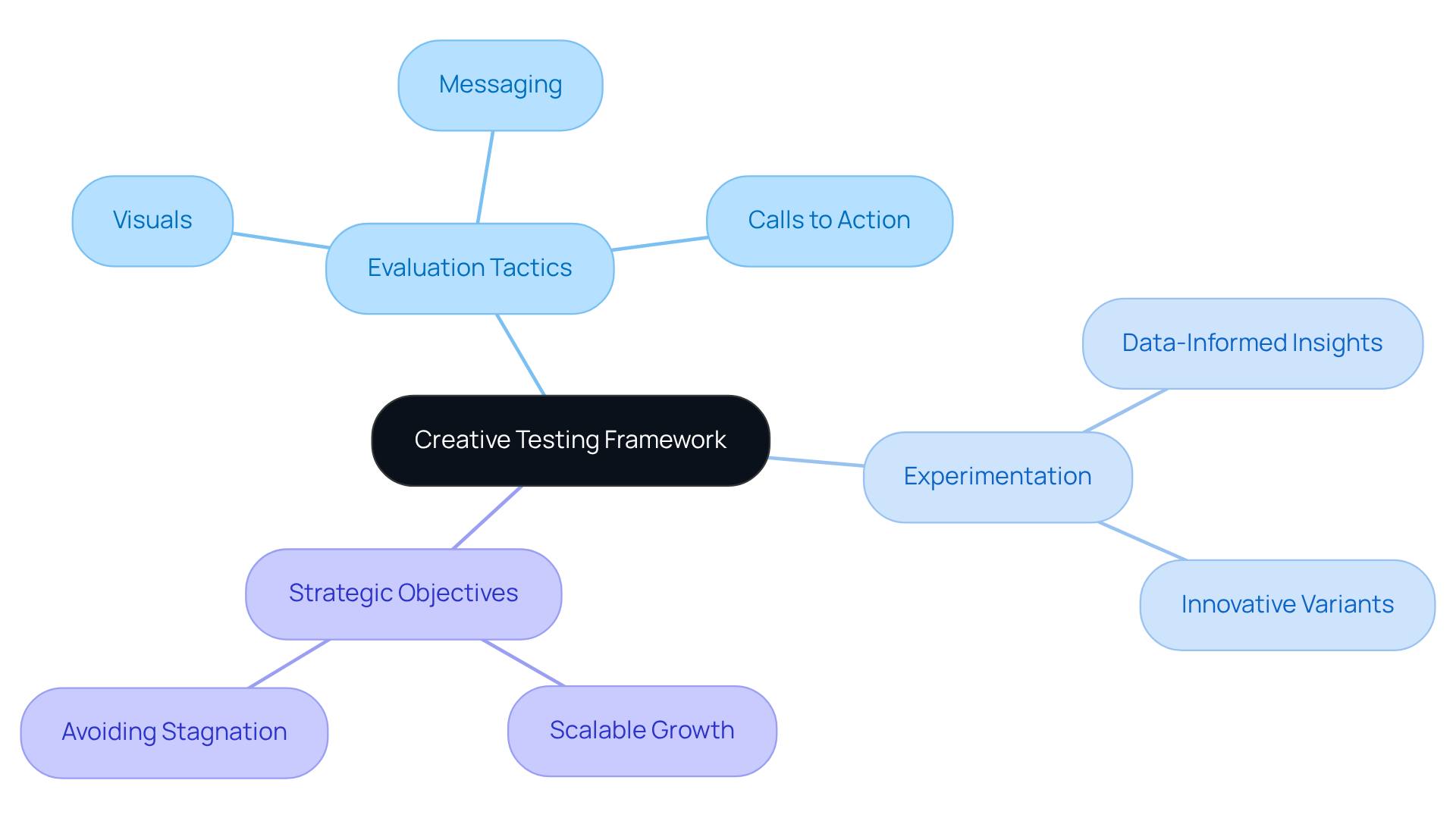
In a rapidly evolving digital landscape, brands must innovate their advertising strategies to stay ahead of shifting consumer preferences. An innovative assessment structure serves as a creative testing framework designed to analyze and improve the efficiency of advertising designs. This structure employs various evaluation tactics, enabling marketers to experiment with visuals, messaging, and calls to action. This experimentation helps identify the combinations that yield optimal performance. By employing a creative testing framework, brands can surpass speculation and rely on data-informed insights to enhance their advertising strategies.
As we look ahead to 2026, how can brands adapt to the rapidly evolving digital landscape? Continuous adaptation and refinement of marketing strategies are essential for maintaining relevance and effectiveness in this dynamic environment. Expert insights highlight that continuous evaluation of small innovative variants is a best practice, especially for bottom-funnel campaigns that drive immediate conversions. As John Liu, a senior director at a digital marketing performance agency, emphasizes, prioritizing innovative experimentation has become essential for improving marketing performance, particularly as choices for targeting and bidding grow more restricted.
In high-spend accounts, design is responsible for the majority of performance variance, making organized experimentation essential to address hypotheses and avoid the diminishing returns of static design. Therefore, a well-executed innovative evaluation structure, which includes a creative testing framework, not only enhances advertising efficiency but also closely aligns with the strategic objectives of companies seeking scalable growth. Without a robust evaluation structure, brands risk stagnation in a competitive market.
Explain Importance in Modern Marketing
In a digital advertising landscape where competition is fierce, utilizing a creative testing framework is not just beneficial - it's essential. This creative testing framework assists companies in pinpointing the creative elements that resonate with their target audiences. As a result, engagement and conversion rates improve.
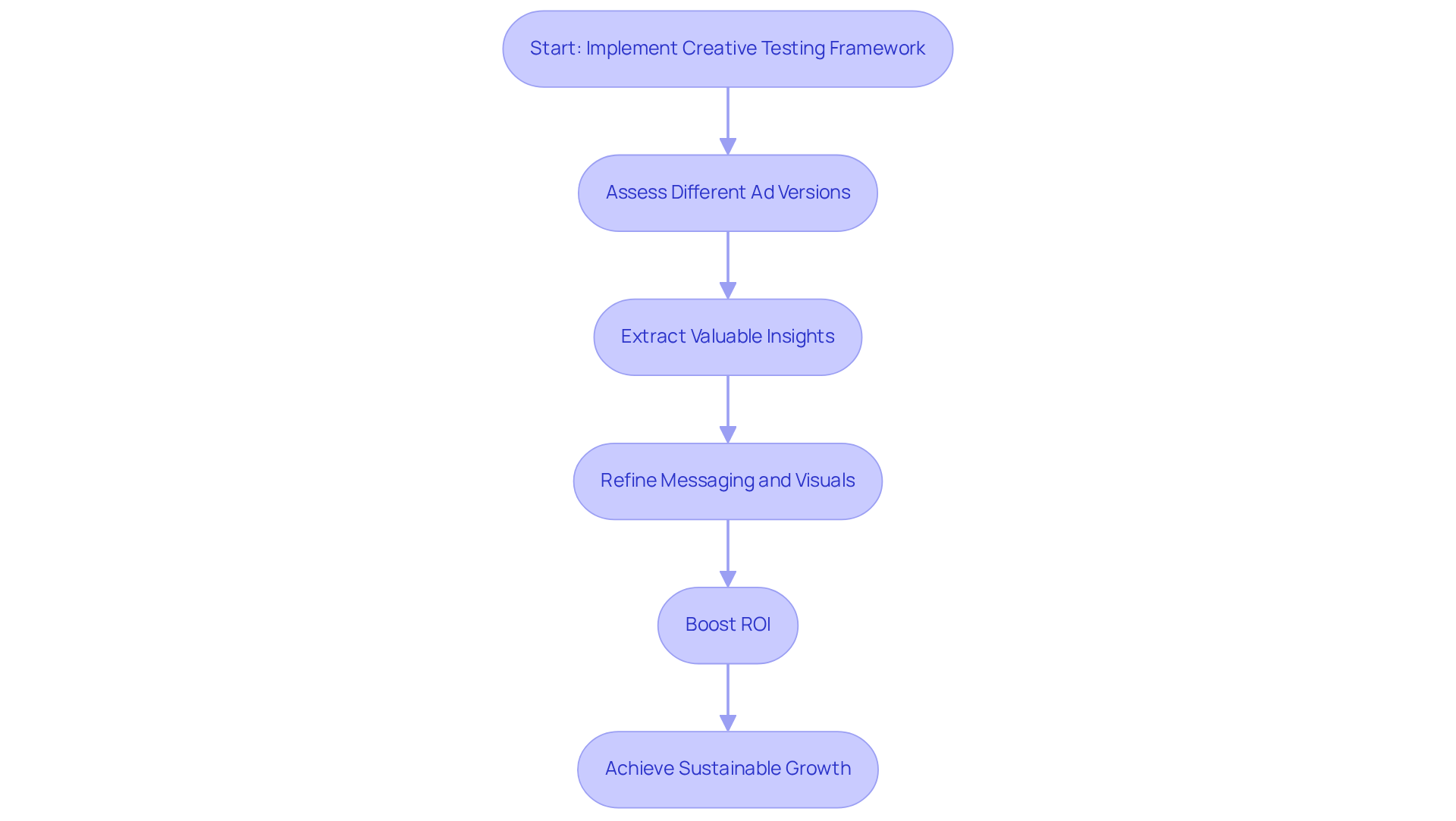
Using a creative testing framework for systematic assessment of different ad versions allows companies to extract valuable insights. These insights refine messaging and visuals. Consequently, companies that utilize a creative testing framework are better positioned to boost their return on investment (ROI). This leads to sustainable growth in advertising efforts.
Research indicates that companies employing data-informed strategies are 23 times more likely to acquire customers. This underscores the importance of efficient design evaluation in maximizing advertising ROI. Moreover, continuous evaluation allows brands to quickly adapt to changing consumer preferences. This ensures their campaigns remain relevant and effective in a crowded market, where individuals face 6,000 to 10,000 ads daily.
Identify Key Components of a Creative Testing Framework
A successful creative testing framework is essential for brands aiming to optimize their advertising efforts, not just beneficial.
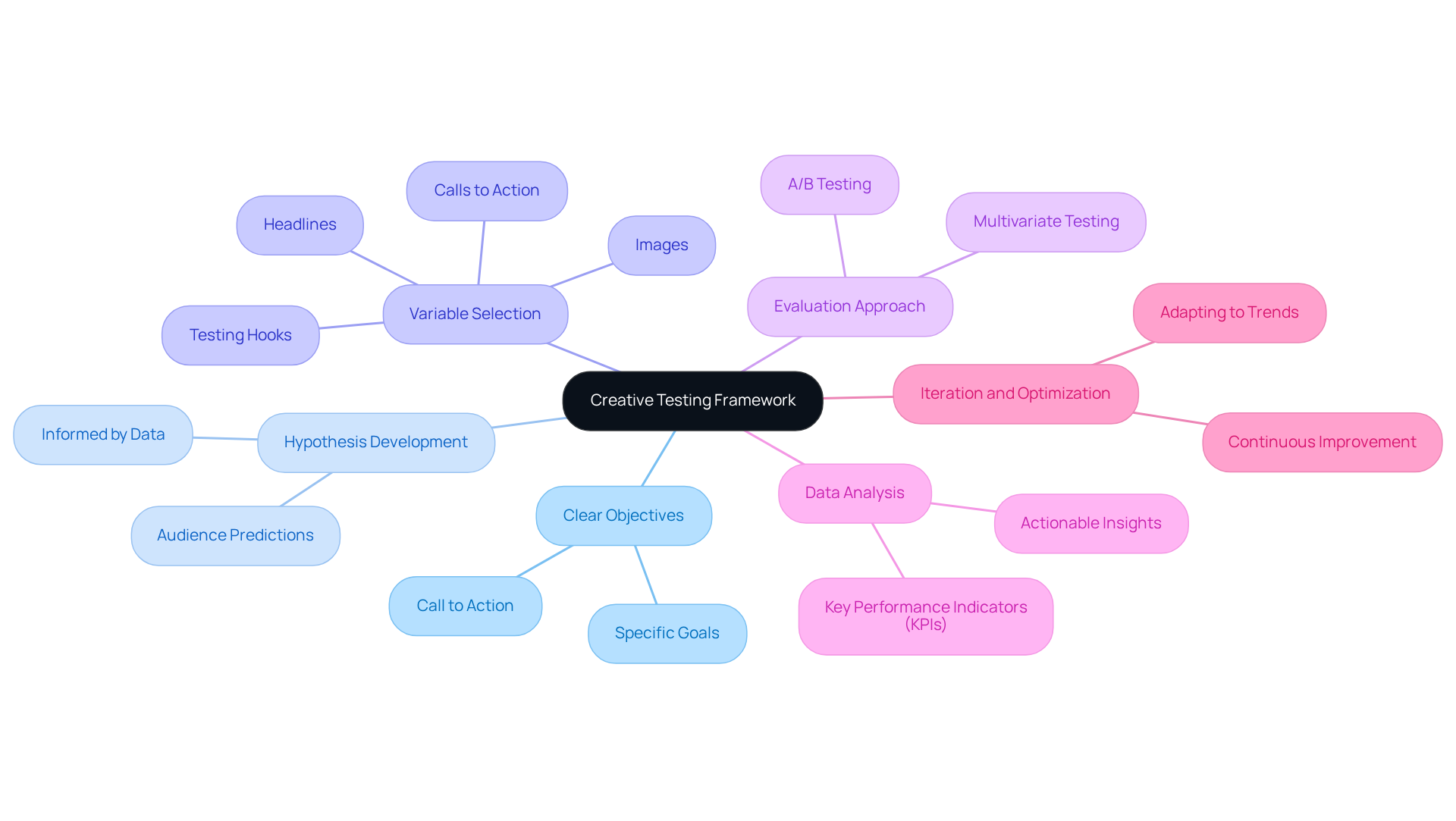
- Clear Objectives: Establishing specific goals is crucial for guiding the testing process. Objectives may include increasing click-through rates or improving conversion rates, providing a clear direction for the tests. A well-positioned call to action can significantly improve conversions, making it an essential part of these objectives.
- Hypothesis Development: Formulating hypotheses about which imaginative elements might perform better is vital. This process should be informed by previous data or market research, allowing brands to make educated predictions about audience responses. This aligns with the significance of hypothesis-driven evaluation, fostering more effective innovative strategies.
- Variable Selection: Identifying the specific aspects of the creative to be tested is key. This includes elements such as headlines, images, and calls to action, which can significantly influence ad performance. Testing different hooks in the first three seconds can dramatically improve engagement in video ads, highlighting the importance of selecting impactful variables.
- Evaluation Approach: Selecting the appropriate evaluation method is crucial for assessing various creatives effectively. Options encompass A/B analysis, which isolates singular changes, and multivariate evaluation, which assesses multiple variables simultaneously to understand their interactions. This structured approach helps performance data inform each cycle, speeding up learning.
- Data Analysis: Implementing a robust system for analyzing test results is critical. This analysis should focus on actionable insights that guide future strategies and boost performance. Setting up key performance indicators (KPIs) prior to evaluation is essential for assessing success and identifying the impact of the innovative components.
- Iteration and Optimization: Leveraging knowledge acquired from evaluation to refine and enhance future inventive efforts ensures a continuous cycle of improvement. Consistently arranged evaluations enable companies to adjust to evolving audience behaviors and market trends. Ultimately, without a robust creative testing framework, brands risk stagnation in their advertising effectiveness.
By combining these elements, brands can create a thorough structure that promotes efficient artistic evaluation, ultimately improving their advertising results.
Trace the Evolution and Context of Creative Testing Frameworks
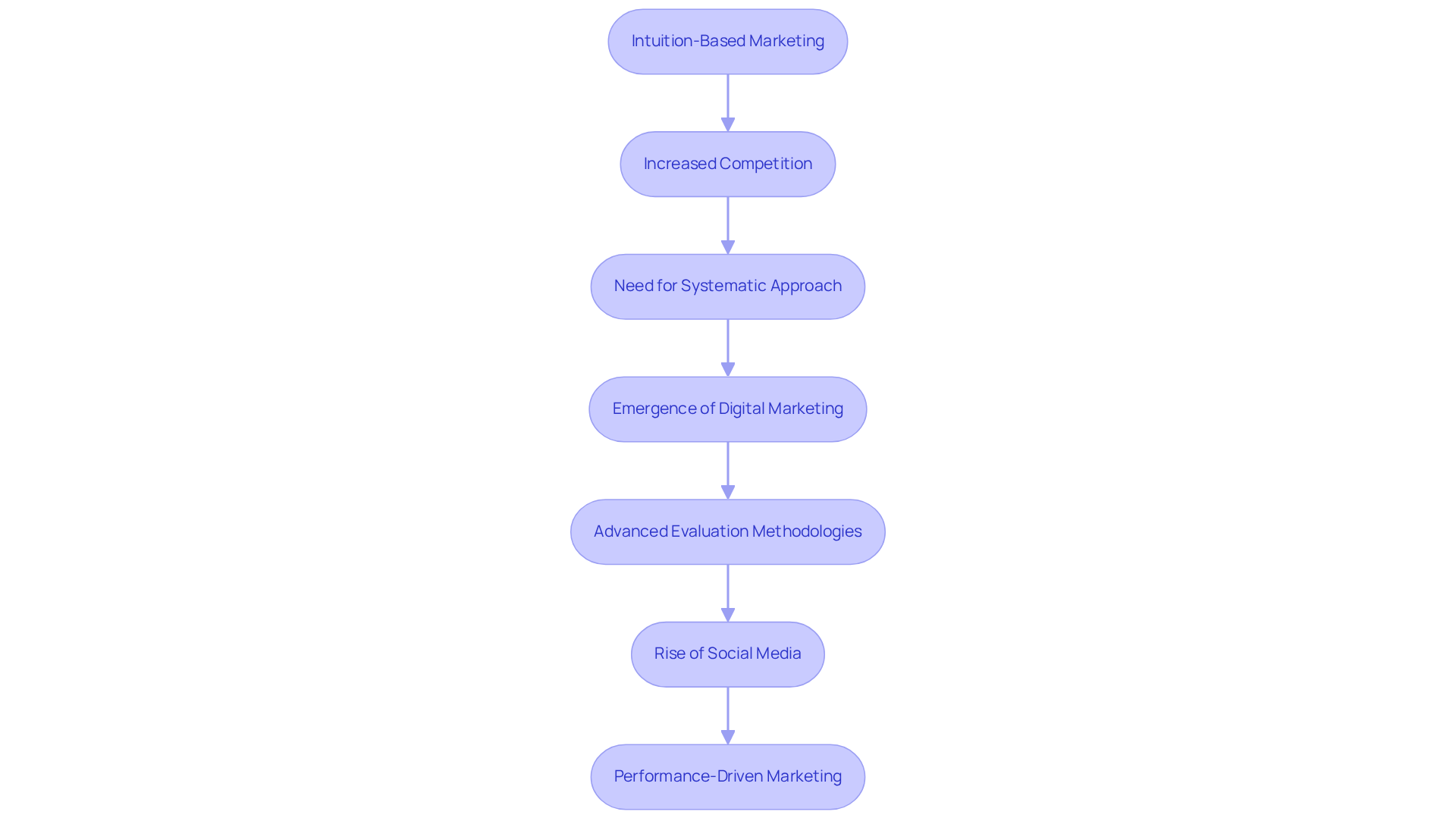
The evolution of innovative assessment frameworks in advertising began with marketers relying heavily on intuition, but as competition grew, a more systematic approach became crucial. Initially, marketers depended significantly on personal experience to shape their messages. However, as competition intensified and the advertising landscape became increasingly data-driven, marketers quickly realized that relying solely on intuition was no longer sufficient in a data-driven world. The late 20th century marked a notable turning point with the emergence of digital marketing, which introduced advanced tools and technologies that enabled more complex evaluation methodologies. Furthermore, the rise of social media platforms has accelerated this evolution, as companies acknowledged the essential need to tailor their creatives for different audience segments.
In today's competitive landscape, adopting a creative testing framework is not just beneficial; it's imperative for success in digital marketing. These brands can leverage a creative testing framework to utilize data analytics and consumer insights for continuous refinement of their advertising efforts. This evolution not only enhances marketing effectiveness but also ensures brands remain relevant in an ever-changing digital landscape. This shift highlights a critical transformation towards performance-driven marketing, where the effectiveness of creative content is rigorously measured and optimized based on real-time feedback and results.
Conclusion
In the fast-paced world of digital advertising, brands often grapple with uncertainty in their strategies. The creative testing framework emerges as a vital tool for navigating these complexities. By evaluating creative elements systematically, companies can eliminate guesswork. They can leverage data-driven insights to enhance marketing performance and engage meaningfully with their target audiences.
This article underscores several key components essential to a successful creative testing framework:
- Establishing clear objectives
- Developing hypotheses
- Selecting variables
- Conducting robust data analysis
Each of these elements contributes to a structured approach that not only improves ad performance but also supports continuous refinement in response to evolving consumer preferences. Brands that embrace this systematic evaluation are better equipped to achieve sustainable growth and maximize their return on investment.
The truth is, a creative testing framework is crucial for success in today's advertising landscape. As competition intensifies and consumer attention becomes increasingly fragmented, brands must prioritize innovative experimentation. This approach fosters adaptability and positions companies to thrive in an ever-changing market, ensuring their messaging resonates with audiences amid the noise of countless daily advertisements.
Frequently Asked Questions
What is a creative testing framework?
A creative testing framework is an innovative assessment structure designed to analyze and improve the efficiency of advertising designs by employing various evaluation tactics to experiment with visuals, messaging, and calls to action.
Why is a creative testing framework important for brands?
It helps brands move beyond speculation by relying on data-informed insights to enhance their advertising strategies, ultimately improving performance and effectiveness in a rapidly evolving digital landscape.
How can brands adapt to the changing digital landscape by 2026?
Brands can adapt by continuously evaluating and refining their marketing strategies, particularly through innovative experimentation with small variants, especially for bottom-funnel campaigns that drive immediate conversions.
What role does design play in high-spend accounts?
In high-spend accounts, design is responsible for the majority of performance variance, making organized experimentation essential to test hypotheses and avoid diminishing returns from static design.
What are the risks of not having a robust evaluation structure?
Without a robust evaluation structure, brands risk stagnation in a competitive market, which can hinder their ability to maintain relevance and effectiveness in their advertising efforts.
List of Sources
- Define Creative Testing Framework
- The Meta Creative Testing Frameworks Top Brands Use in 2026 (https://linkedin.com/pulse/meta-creative-testing-frameworks-top-brands-use-2026-andrew-foxwell-xijec)
- get-ryze.ai (https://get-ryze.ai/blog/advanced-creative-testing-frameworks-google-ads)
- forbes.com (https://forbes.com/sites/charlesrtaylor/2025/03/31/how-artificial-intelligence-is-changing-creative-testing-of-ads)
- forbes.com (https://forbes.com/sites/paultalbot/2021/06/13/marketers-enter-a-new-era-of-creative-testing)
- The Ultimate Creative Testing Framework Guide (https://dataally.ai/blog/mastering-creative-testing-framework)
- Explain Importance in Modern Marketing
- onepulse.com (https://onepulse.com/creative-testing-best-practices-how-to-maximize-advertising-roi)
- 5 reasons why you need creative testing in 2026 (https://rkh.co.uk/news-views/5-reasons-why-you-need-creative-testing-in-2026)
- The Rise Of 'Always-On Testing' In Marketing (https://forbes.com/councils/forbesagencycouncil/2026/02/11/the-rise-of-always-on-testing-in-marketing-from-campaign-bursts-to-continuous-growth)
- fiveninestrategy.com (https://fiveninestrategy.com/creative-testing-algorithmic-campaigns)
- Identify Key Components of a Creative Testing Framework
- 2pointagency.com (https://2pointagency.com/glossary/meta-ads-creative-testing-framework-a-comprehensive-guide-to-optimizing-your-campaigns)
- forbes.com (https://forbes.com/sites/charlesrtaylor/2025/03/31/how-artificial-intelligence-is-changing-creative-testing-of-ads)
- inbounderz.com (https://inbounderz.com/blogs/why-creative-testing-is-the-key-to-high-performing-ads)
- jordanglickman.com (https://jordanglickman.com/writing/creative-testing-structure-paid-social-statistical-validity)
- blog.theperformers.io (https://blog.theperformers.io/p/the-ultimate-guide-to-creative-testing-strategy)
- Trace the Evolution and Context of Creative Testing Frameworks
- Creative Testing Evolved: What Andromeda Actually Changed (And What It Didn't) • The Shelf, a Data-First Influencer Marketing Company (https://theshelf.com/industry-news/creative-testing-strategy)
- tolunacorporate.com (https://tolunacorporate.com/the-evolution-of-creative-testing)
- forbes.com (https://forbes.com/sites/paultalbot/2021/06/13/marketers-enter-a-new-era-of-creative-testing)
- forbes.com (https://forbes.com/sites/charlesrtaylor/2025/03/31/how-artificial-intelligence-is-changing-creative-testing-of-ads)
Need Better Performing Social Content?
MediaNug helps brands scale through creator partnerships, performance creative, and platform-native content strategies built for modern social platforms.
Continue Reading
Influencer & Creator Marketing
- The Complete Guide to Influencer Marketing Strategy & Operations
- The Complete Guide to UGC Content Strategy for Brands
- Master UGC Creator Tools: Best Practices for Brand Success
Paid Social & Performance Creative
- The Complete Guide to Paid Social Creative Strategy
- Why Your Brand Needs a Performance Creative Agency for Growth
- What is an Ad Creative Agency and Why It Matters for Brands
Platform & Trend Insights
- UGC Creators for Paid Social Ads: How to Find, Vet, and Scale Winning Creative
- 4 Best Practices for Effective TikTok Creatives That Drive Engagement
- 10 Key Insights on Instagram Demographics for Brand Strategies
- The Role Of Visual Storytelling In Social Media
Strategy & Growth
- Understanding Creative Strategy: Key Concepts and Examples
- 6 Steps to Create an Effective Creative Strategy Sample
- Understanding eCommerce Brand Strategy: Importance and Key Components