Introduction
The rapid evolution of video marketing has fundamentally transformed how brands engage with their audiences. As consumer preferences shifted dramatically from 2020 to 2021, it became clear that brands must adapt to stay relevant. This article explores the pivotal trends that emerged during this period, highlighting essential strategies that brand managers need to adopt to remain effective.
As the landscape increasingly favors short-form, interactive content that drives immediate action, a pressing question arises: how will brands navigate these changes? To harness the full potential of visual marketing in an ever-competitive digital environment, brands must not only understand these trends but also implement strategies that resonate with their audiences.
In addition, the importance of engaging content cannot be overstated. Brands that leverage these insights will find themselves better positioned to connect with consumers and drive meaningful interactions. The time to act is now - how will your brand respond to this evolving landscape?
Overview of Video Marketing Trends: 2020 vs. 2021
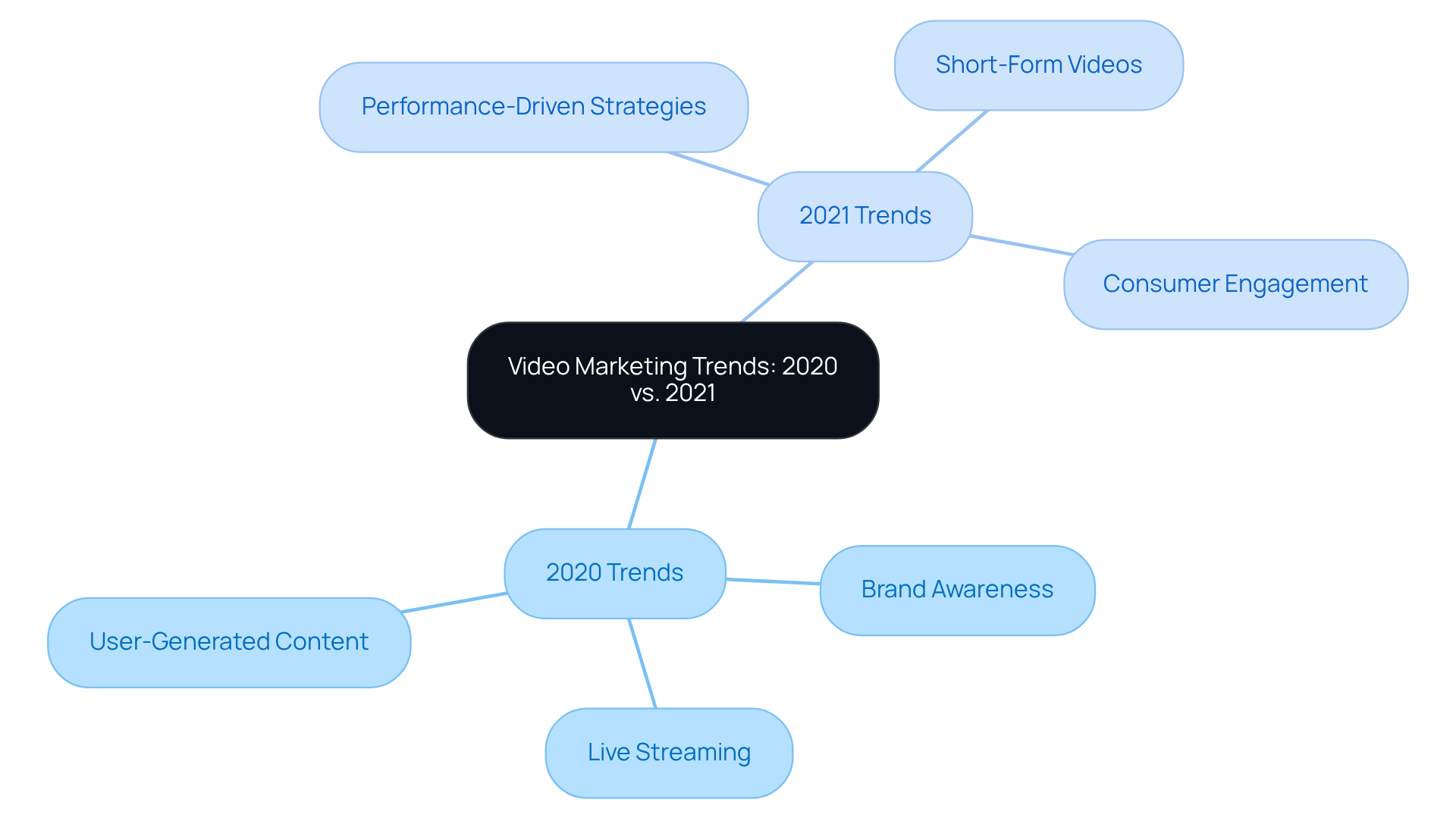
In 2020, took center stage, focusing on . The pandemic spurred a significant rise in and , as brands sought to connect with consumers during uncertain times. This approach emphasized authenticity and relatability, resonating deeply with audiences.
The landscape evolved dramatically by 2021, influenced by the . emerged, reflecting the , with a marked increase in , especially on platforms like TikTok and Instagram Reels. The emphasis shifted from merely generating content to , reflecting a growing demand for quantifiable outcomes in marketing initiatives. This transition underscores the importance of adapting to buyer preferences for rapid, that prompts immediate action.
Furthermore, brands must recognize that today's consumers crave . As the marketing landscape continues to evolve, staying ahead of these trends is crucial for success.
Key Statistical Insights: Performance Metrics Comparison
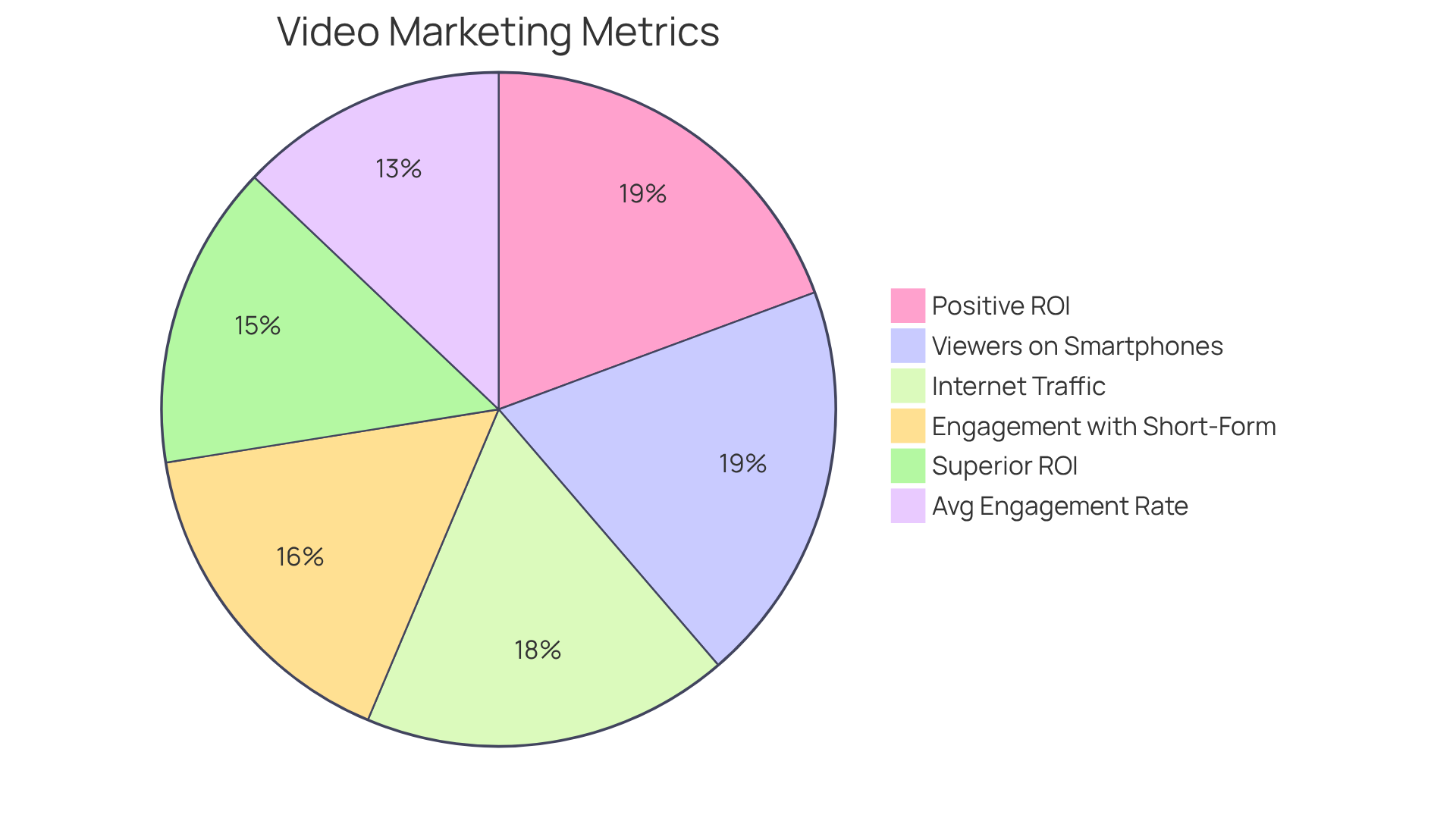
In 2021, the indicated that . This statistic reflects a growing preference among consumers for visual media over other content types. Brands experienced an impressive average engagement rate of 60% on posts, a significant rise from 54% in the prior year. This increase can be attributed to the adoption of more interactive and personalized formats that resonate better with audiences.
Furthermore, , reinforcing its value in marketing strategies. In addition, 68% of marketers acknowledged that provided a . The trend towards , with 90% of viewers choosing to watch clips on their smartphones. Notably, 75% of viewers engage with on mobile devices.
These persuasive figures emphasize the vital necessity for brands to prioritize in their promotional efforts. To remain competitive in an ever-evolving digital environment, and .
Emerging Trends in Video Marketing: Innovations from 2020 to 2021
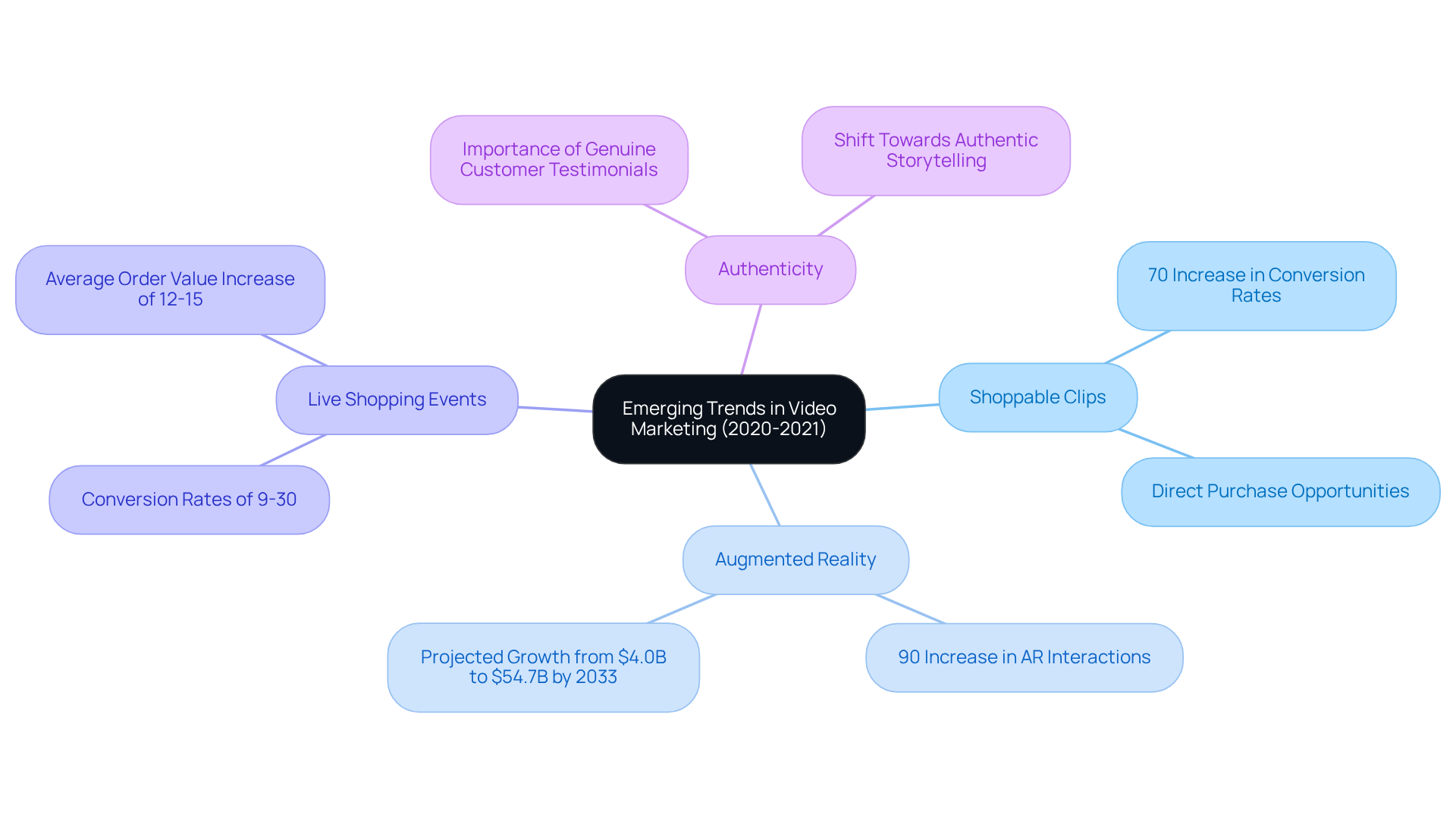
The transition from 2020 to 2021 marked a pivotal moment in , particularly with the emergence of . These innovative tools enabled buyers to purchase products directly through visual material, simplifying the shopping experience and significantly influencing buyer behavior. In fact, have been shown to increase by as much as 70% compared to traditional, non-interactive formats.
Furthermore, the integration of has gained substantial traction, providing immersive experiences that not only captivate viewers but also enhance engagement. Brands that have embraced AR technology have seen an impressive 90% increase in among consumers interacting with AR experiences. This underscores the . The global AR shopping market is projected to grow from USD 4.0 billion in 2023 to a staggering USD 54.7 billion by 2033, showcasing the immense potential of AR in marketing.
In addition, have emerged as a formidable strategy, boasting ranging from 9% to 30%, which far surpasses the typical 2% to 3% seen on standard eCommerce platforms. Authenticity has become a cornerstone of promotional strategies, with brands increasingly showcasing behind-the-scenes content and . This shift towards authentic storytelling is further supported by a growing emphasis on personalization, as brands leverage data analytics to tailor content for specific audience segments, thereby enhancing relevance and engagement.
Consequently, the landscape of promotional content has transformed in accordance with , establishing and AR as essential tools for brands aiming to connect with customers meaningfully. As we move forward, the question remains: how will your brand adapt to these evolving trends in visual marketing?
Implications for Brand Marketing Managers: Adapting to Change
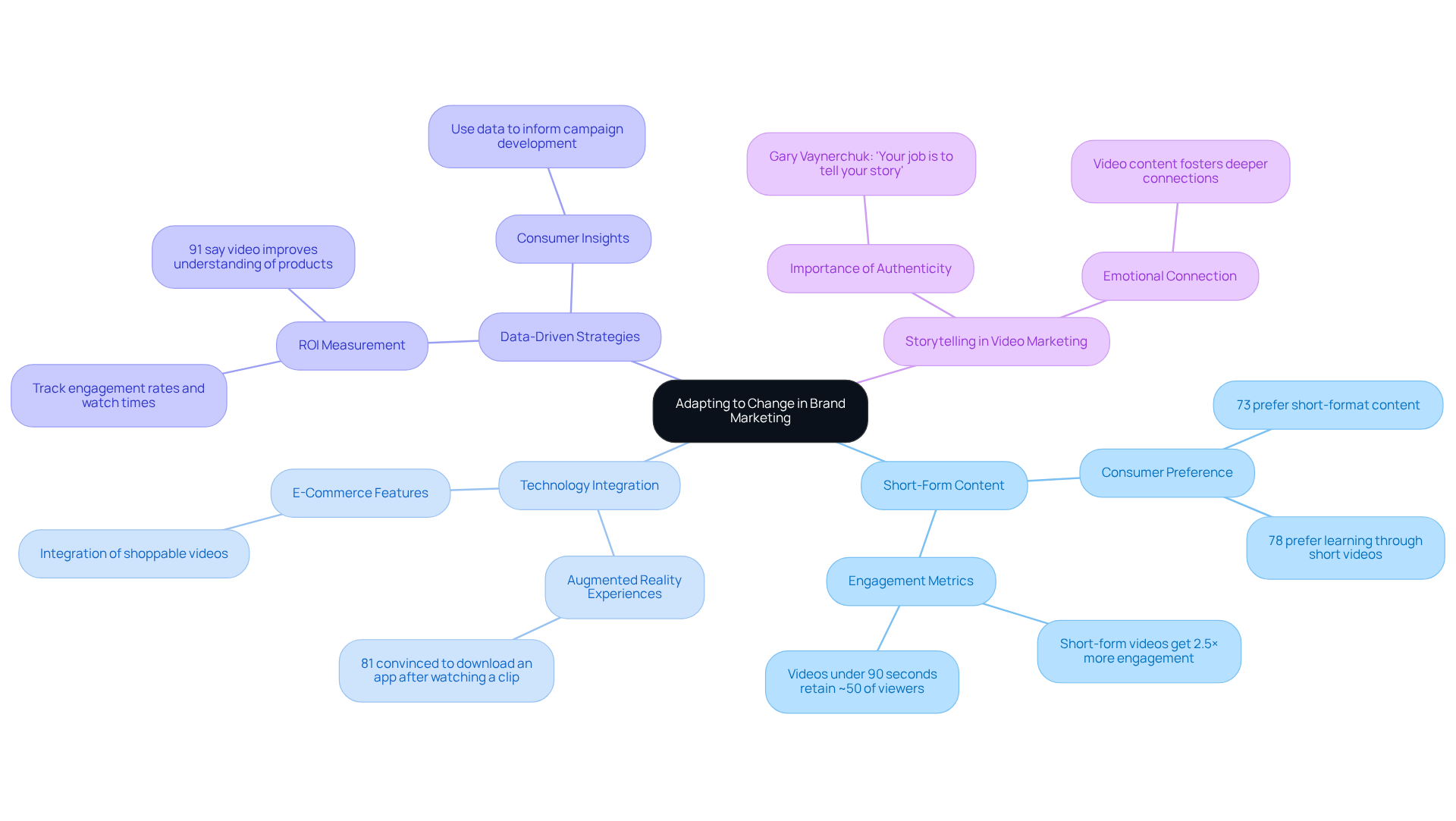
Brand marketing managers must recognize the urgent need to adapt their strategies in light of the evolving of 2025. The ongoing shift towards demands a reevaluation of content creation processes, emphasizing quick, impactful messaging that captures attention in mere seconds. Recent statistics reveal that 73% of buyers prefer for learning about products, underscoring the necessity for brands to prioritize this approach.
Furthermore, the integration of and augmented reality experiences is reshaping . A striking 81% of viewers report being convinced to download an app after watching a clip. To capitalize on these trends, brands must invest in technology and training to bolster their digital capabilities, ensuring they can craft .
As consumer preferences continue to evolve, adopting a versatile strategy for visual promotion is crucial for enhancing engagement and driving conversions. Emphasizing will empower brands to refine their content for maximum impact, keeping them competitive in a rapidly changing market.
The cannot be overstated. As Gary Vaynerchuk aptly stated, "No matter what you do, your job is to tell your story." This narrative-driven approach, coupled with a commitment to authenticity, will resonate with audiences and foster deeper connections.
Conclusion
The evolution of video marketing from 2020 to 2021 underscores a significant transformation in strategies that brand managers must adopt to stay competitive. Did you know that visual content now accounts for a staggering 82% of all internet traffic? This shift from brand awareness to performance-driven content highlights the necessity for brands to adapt to changing consumer preferences, particularly the growing demand for short, engaging videos that prompt immediate action.
Furthermore, brands are achieving higher engagement rates through interactive formats. Innovations like shoppable clips and augmented reality have emerged as powerful tools that not only enhance consumer experiences but also boost conversion rates. This emphasizes the critical importance of integrating these technologies into marketing strategies.
As the digital landscape continues to evolve, brand managers must prioritize adaptability and data-driven decision-making. By leveraging the latest video marketing trends and embracing authentic storytelling, brands can forge deeper connections with their audiences. The future of video marketing is not merely about creating content; it’s about crafting compelling narratives that resonate and inspire action. Are you ready to embrace these changes and elevate your brand's video marketing strategy?
Frequently Asked Questions
What was the focus of video marketing in 2020?
In 2020, video marketing focused on brand awareness and engagement, with a significant rise in live streaming and user-generated content (UGC) due to the pandemic.
How did the pandemic influence video marketing trends in 2020?
The pandemic spurred brands to connect with consumers during uncertain times, emphasizing authenticity and relatability in their content.
What major changes occurred in video marketing trends by 2021?
By 2021, the landscape evolved to include performance-driven strategies, with an increase in short-form videos on platforms like TikTok and Instagram Reels.
What was the shift in emphasis for video marketing from 2020 to 2021?
The emphasis shifted from merely generating content to enhancing it for conversions, reflecting a demand for quantifiable outcomes in marketing initiatives.
What do today's consumers crave in video content?
Today's consumers crave engaging content that informs and inspires action.
Why is it important for brands to adapt to video marketing trends?
Adapting to video marketing trends is crucial for success as the marketing landscape continues to evolve, requiring brands to meet changing consumer preferences.
List of Sources
- Overview of Video Marketing Trends: 2020 vs. 2021
- vidyard.com (https://vidyard.com/blog/25-quotes-inspire-video-marketing)
- thriveagency.com (https://thriveagency.com/news/video-marketing-statistics-you-should-know-in-2021)
- tntmagazine.com (https://tntmagazine.com/uncategorized/video-marketing-trends-working-in-2021)
- marketing.sfgate.com (https://marketing.sfgate.com/blog/video-marketing-trends)
- wyzowl.com (https://wyzowl.com/sovm-results-2021)
- Key Statistical Insights: Performance Metrics Comparison
- insivia.com (https://insivia.com/video-marketing-statistics-you-must-know-in-2025)
- thriveagency.com (https://thriveagency.com/news/video-marketing-statistics-you-should-know-in-2021)
- gudsho.com (https://gudsho.com/blog/video-marketing-statistics)
- thesocialshepherd.com (https://thesocialshepherd.com/blog/video-marketing-statistics)
- marketingltb.com (https://marketingltb.com/blog/statistics/visual-content-statistics)
- Emerging Trends in Video Marketing: Innovations from 2020 to 2021
- storyly.io (https://storyly.io/post/latest-statistics-and-trends-for-video-commerce)
- statista.com (https://statista.com/statistics/1255362/frequent-augmented-reality-consumers-worldwide?srsltid=AfmBOoouPG8ossHUM0oa3lhbirTvpUi-eC-CR3TniYxk1ZHECOpOG_4M)
- resources.imagine.io (https://resources.imagine.io/blog/2025-ar-trends)
- burnwe.com (https://burnwe.com/blog/20-video-marketing-quotes)
- tntmagazine.com (https://tntmagazine.com/uncategorized/video-marketing-trends-working-in-2021)
- Implications for Brand Marketing Managers: Adapting to Change
- teleprompter.com (https://teleprompter.com/blog/video-marketing-statistics)
- marketingdive.com (https://marketingdive.com/news/8-trends-set-to-reshape-marketing-in-2021/592658)
- blackpugstudio.com (https://blackpugstudio.com/news/short-form-videos-leveraging-them-for-social-media-success-in-2025-3e36dbf45592)
- Short Form Video Statistics 2026: 97+ Stats & Insights [Expert Analysis] - Marketing LTB (https://marketingltb.com/blog/statistics/short-form-video-statistics)
- spokenmotionstudio.com (https://spokenmotionstudio.com/blog/online-video-marketing-quotes)