
Introduction
The role of a brand ambassador has undergone a remarkable transformation, reflecting significant shifts in marketing strategies and consumer expectations. These representatives not only embody a company's core values but also engage authentically with audiences, leveraging their influence to build trust and drive sales. As the landscape of brand representation evolves, companies must ask themselves: how can they effectively harness the power of brand ambassadors to foster genuine connections and enhance their marketing efforts?
Exploring the traits, responsibilities, and various types of ambassador programs reveals key insights into maximizing this crucial role in today's competitive marketplace. Furthermore, understanding these dynamics can empower businesses to create impactful strategies that resonate with their target audiences. By investing in the right ambassador programs, companies can not only elevate their brand presence but also cultivate lasting relationships with consumers.
Define Brand Ambassador: Role and Responsibilities
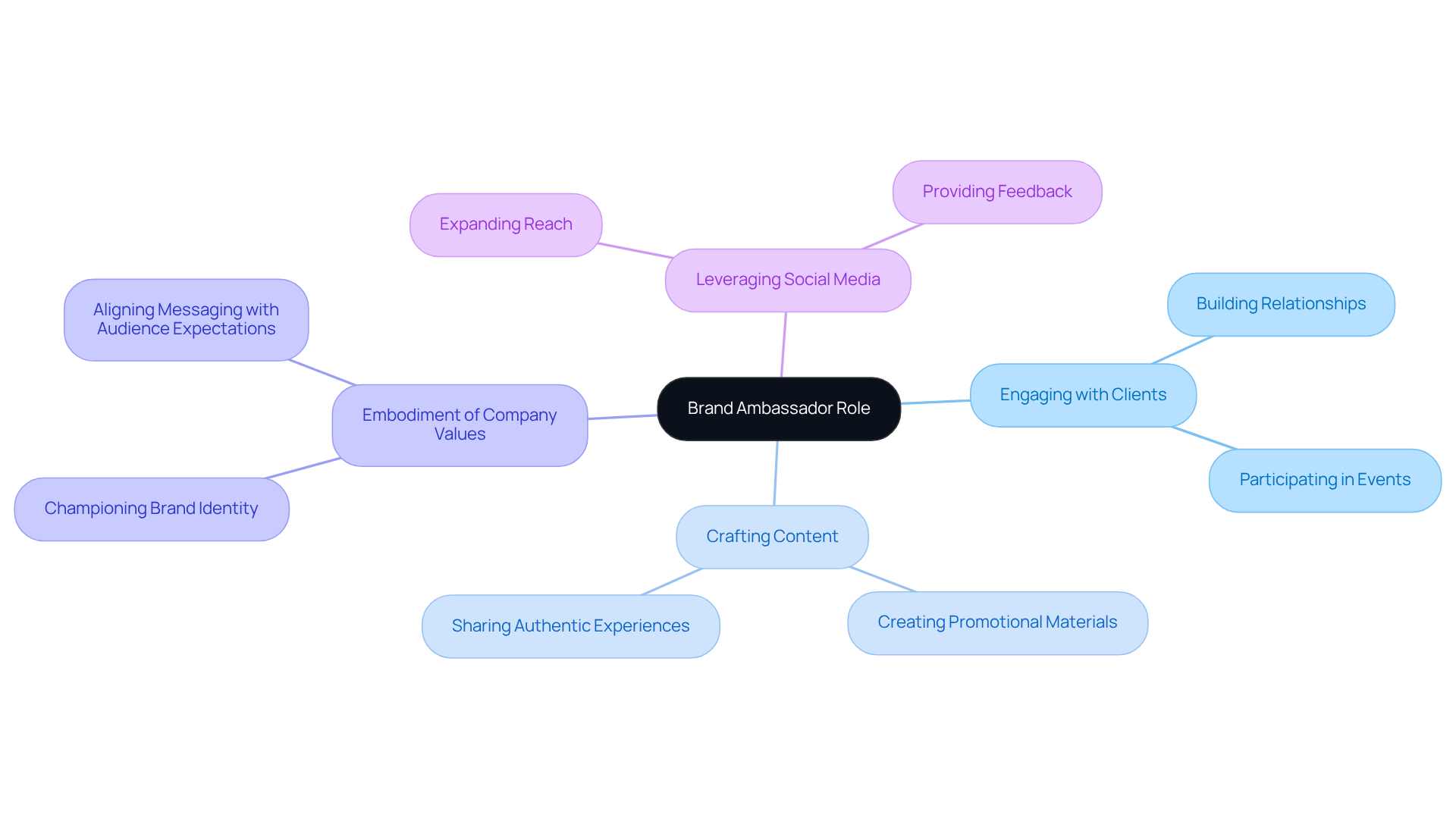
A company representative acts as a , embodying and championing an organization's identity, offerings, or services, which plays a pivotal role in and driving sales. Their primary responsibilities include:
- Engaging with potential clients
- Crafting content that resonates with the target audience
- Acting as a by embodying the company's values in every interaction
As a , brand representatives leverage their to reach a wider audience, acting as a vital link between the company and its customers. They participate in events, create promotional materials, and provide valuable feedback to the company based on user interactions, ensuring that the messaging aligns with audience expectations.
This role as a is essential for among consumers. As a , representatives often share authentic experiences with the company, making them relatable and credible advocates. Notably, statistics reveal that , while 86% contribute minimally. This underscores the importance of focusing on to boost engagement and effectiveness.
MediaNug empowers these creators through its , enabling them to earn fair compensation for every project while fostering their creative freedom. As companies navigate the evolving landscape of marketing, strategically managing programs that include a becomes crucial for increasing awareness and . This entails nurturing potential representatives, rewarding top achievers, and implementing actionable strategies to enhance program effectiveness.
Trace the Evolution of Brand Ambassadors in Marketing
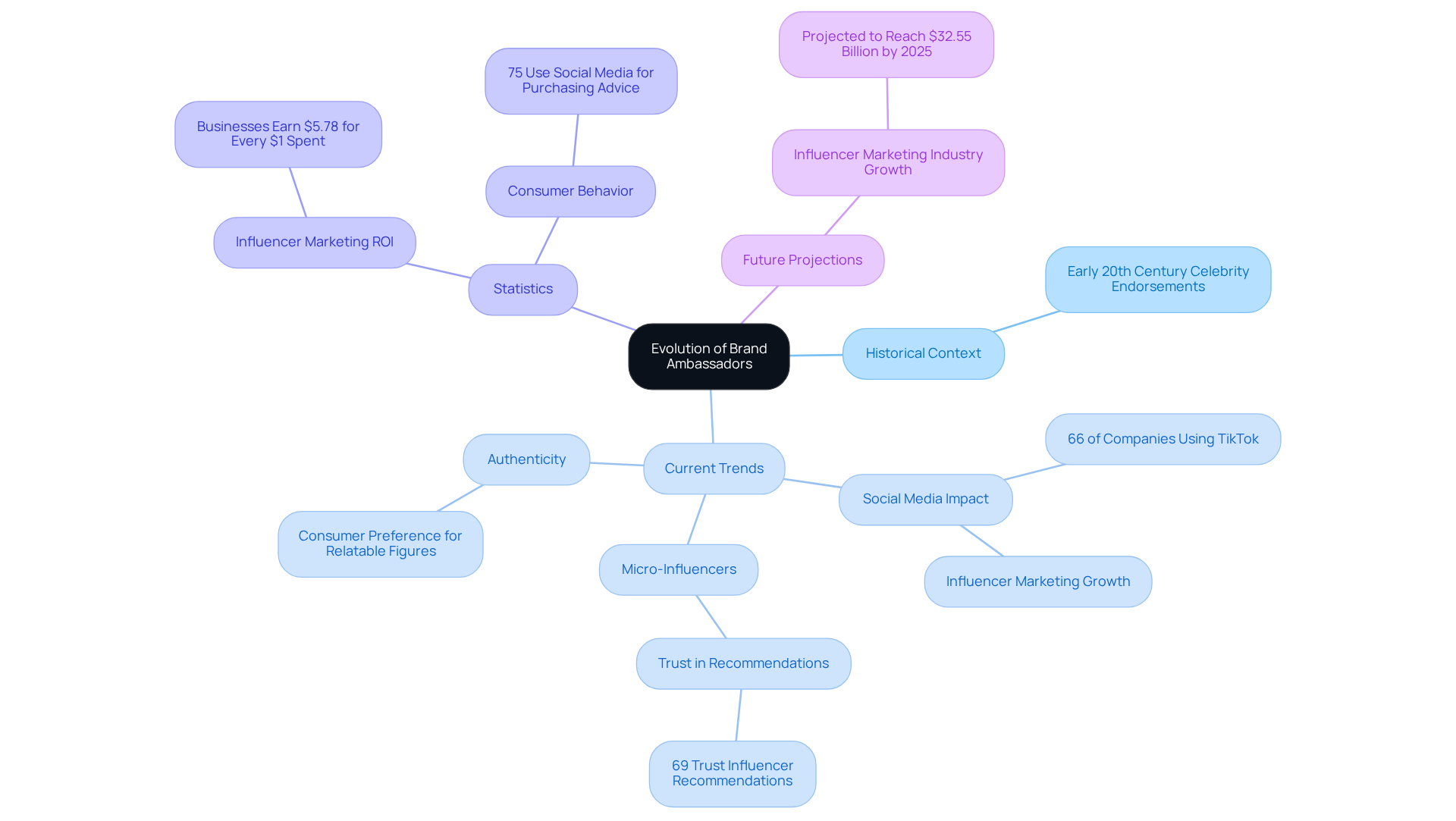
The concept of ambassadorial representation has undergone a remarkable transformation over the decades. Initially, were primarily well-known figures leveraging their fame to influence consumer behavior. This practice traces back to the early 20th century when businesses began to appreciate the impact of . However, has dramatically altered this landscape. Today, can include everyday individuals, , or who act as a to connect with audiences on a more personal level.
This evolution mirrors a broader trend towards authenticity in marketing, where consumers increasingly favor relatable figures over traditional celebrities. The emergence of platforms like Instagram and TikTok has democratized the role of a , enabling companies to reach diverse audiences through various voices and perspectives. As we approach 2025, the influence of social media on roles continues to expand. Notably, 66% of companies are now utilizing TikTok for , indicating a strategic shift towards who resonate more profoundly with niche communities.
This shift is underscored by the statistic that 69% of individuals . Furthermore, the industry is projected to soar to $32.55 billion by 2025, highlighting . While this evolution enhances credibility and fosters a sense of belonging among consumers, companies must navigate potential challenges in . It is crucial that their partnerships align with their values and resonate authentically with their target audiences.
Identify Key Traits of Successful Brand Ambassadors
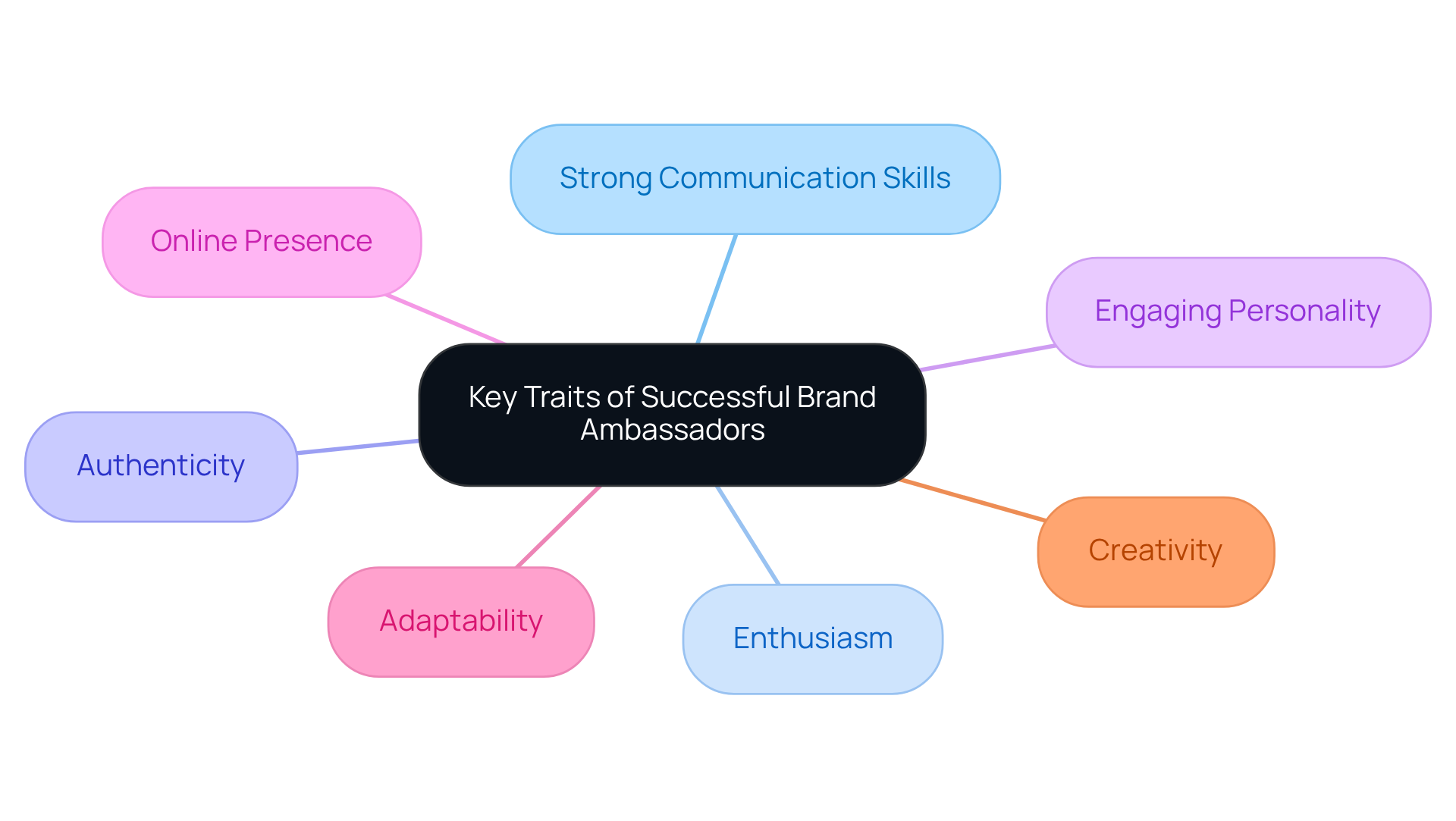
Successful representatives of companies serve as a by embodying several key traits that enable them to effectively represent their organizations. are paramount, allowing them to convey messages clearly and engage with their audience. A true enthusiasm for the label boosts their credibility; individuals are more inclined to trust advocates who share genuine experiences and views. This . In fact, studies show that 69% of consumers trust , significantly impacting purchase decisions. As brand expert Sarah Nesheim notes, "It dilutes the brand identity and confuses customers" when authenticity is lacking.
An is also crucial. To expand their reach and influence, a should maintain a robust online presence. Furthermore, adaptability and creativity are essential qualities, as representatives often need to customize their messaging to suit different platforms and audience segments. For instance, companies like MAC have effectively selected a who not only possesses excellent communication abilities but also resonates with the organization's values, . The effectiveness of MAC's strategy is clear; their representative campaigns have significantly boosted visibility and sales.
By embodying these characteristics, representatives can and , making them invaluable assets in today's marketing landscape. With the expected to hit $32.55 billion by the conclusion of 2025, .
Explore Different Types of Brand Ambassador Programs
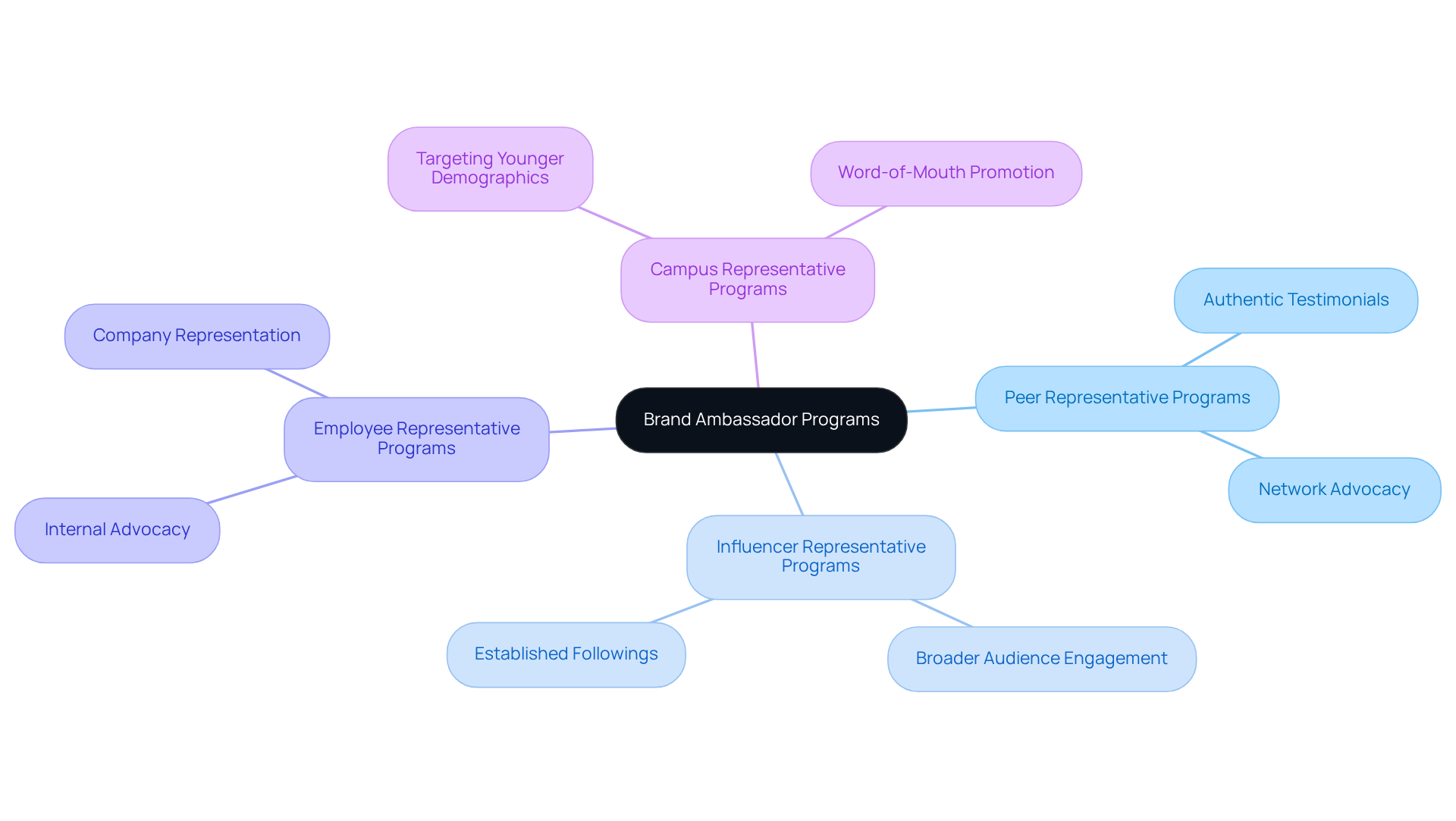
Brand representative programs come in various forms, each meticulously crafted to achieve specific . Consider , where within their networks. Then there are , leveraging social media influencers to engage broader audiences. Additionally, allow company personnel to represent the organization externally. Furthermore, companies may establish aimed at college students, effectively reaching younger demographics.
Each type of program offers unique advantages, empowering companies to choose the method that best aligns with their target audience and marketing objectives. For instance, peer representatives provide authentic testimonials that resonate with potential clients, while through their established followings. By grasping these different types, brands can strategically design and implement programs that utilize a to drive engagement and boost sales.
Are you ready to explore how these programs can transform your ? Understanding the nuances of each type can lead to more and stronger connections with your audience.
Conclusion
A brand ambassador is not just a representative; they are a crucial pillar for any company, embodying its core values and amplifying its presence in the marketplace. This role has undergone a remarkable transformation, shifting from traditional celebrity endorsements to everyday individuals who resonate more authentically with consumers. As brand ambassadors engage with potential clients and craft meaningful content, they play an indispensable role in building trust and loyalty-two key elements that drive sales and enhance brand recognition.
Key points throughout this discussion highlight the responsibilities of brand ambassadors, the evolution of their roles in marketing, and the essential traits that contribute to their success. Effective brand ambassadors are characterized by:
- Strong communication skills
- A genuine enthusiasm for the brand
- An engaging personality
These attributes are critical in forging authentic connections with audiences. Moreover, the exploration of various types of brand ambassador programs underscores the necessity of selecting the right approach to align with specific marketing objectives.
As the marketing landscape increasingly prioritizes authenticity and relatability, the significance of brand ambassadors continues to grow. Companies must embrace this evolution by strategically harnessing the power of brand ambassadors to cultivate deeper connections with their audiences. Investing in the right individuals and programs can lead to enhanced engagement and measurable growth, ultimately shaping the future of brand marketing. Are you ready to leverage the potential of brand ambassadors in your marketing strategy?
Frequently Asked Questions
What is a brand ambassador?
A brand ambassador is a company representative who embodies and champions an organization's identity, offerings, or services to enhance recognition and drive sales.
What are the primary responsibilities of a brand ambassador?
The primary responsibilities of a brand ambassador include engaging with potential clients, crafting content that resonates with the target audience, and embodying the company's values in every interaction.
How do brand ambassadors leverage social media?
Brand ambassadors leverage their social media influence to reach a wider audience, acting as a vital link between the company and its customers.
What activities do brand ambassadors participate in?
Brand ambassadors participate in events, create promotional materials, and provide valuable feedback to the company based on user interactions.
Why is the role of a brand ambassador important?
The role of a brand ambassador is essential for building trust and loyalty among consumers, as they share authentic experiences with the company, making them relatable and credible advocates.
What do statistics reveal about brand ambassador effectiveness?
Statistics show that 14% of brand ambassadors generate 80% of influence, while 86% contribute minimally, highlighting the importance of focusing on high-performing individuals to boost engagement and effectiveness.
How does MediaNug support brand ambassadors?
MediaNug empowers brand ambassadors through its NugVerse platform, enabling them to earn fair compensation for every project while fostering their creative freedom.
What strategies should companies implement for effective brand ambassador programs?
Companies should strategically manage programs that include brand ambassadors by nurturing potential representatives, rewarding top achievers, and implementing actionable strategies to enhance program effectiveness.
List of Sources
- Define Brand Ambassador: Role and Responsibilities
- socialladderapp.com (https://socialladderapp.com/blog/the-80-20-rule-ambassador-marketing-white-paper)
- Trace the Evolution of Brand Ambassadors in Marketing
- 20 Surprising Influencer Marketing Statistics | Digital Marketing Institute (https://digitalmarketinginstitute.com/blog/20-influencer-marketing-statistics-that-will-surprise-you)
- 2026 Influencer Marketing Statistics: ROI, Trends & Platform Data (https://sociallyin.com/influencer-marketing-statistics)
- The New Rules of Brand Ambassadorship (https://businessoffashion.com/articles/celebrity-influencers/the-new-rules-of-brand-ambassadorship)
- warc.com (https://warc.com/content/feed/marketers-plan-to-invest-more-in-brand-ambassadors-in-2025/en-GB/10152)
- Identify Key Traits of Successful Brand Ambassadors
- 20 Surprising Influencer Marketing Statistics | Digital Marketing Institute (https://digitalmarketinginstitute.com/blog/20-influencer-marketing-statistics-that-will-surprise-you)
- fromdayone.com (https://fromdayone.com/stories/2025/6/5/authentic-marketing-that-actually-resonates-with-gen-z)
- The New Rules of Brand Ambassadorship (https://businessoffashion.com/articles/celebrity-influencers/the-new-rules-of-brand-ambassadorship)
- stackinfluence.com (https://stackinfluence.com/the-rise-of-ambassador-marketing)
- businessoffashion.com (https://businessoffashion.com/articles/marketing-pr/rethinking-success-metrics-for-brand-ambassadors)
- Explore Different Types of Brand Ambassador Programs
- brands.joinstatus.com (https://brands.joinstatus.com/brand-ambassador-programs)
- aspire.io (https://aspire.io/blog/10-influencer-marketing-statistics-you-need-to-know-in-2023)
- socialrails.com (https://socialrails.com/blog/best-brand-ambassador-programs)
- poptribe.com (https://poptribe.com/blog/companies-looking-for-brand-ambassadors)